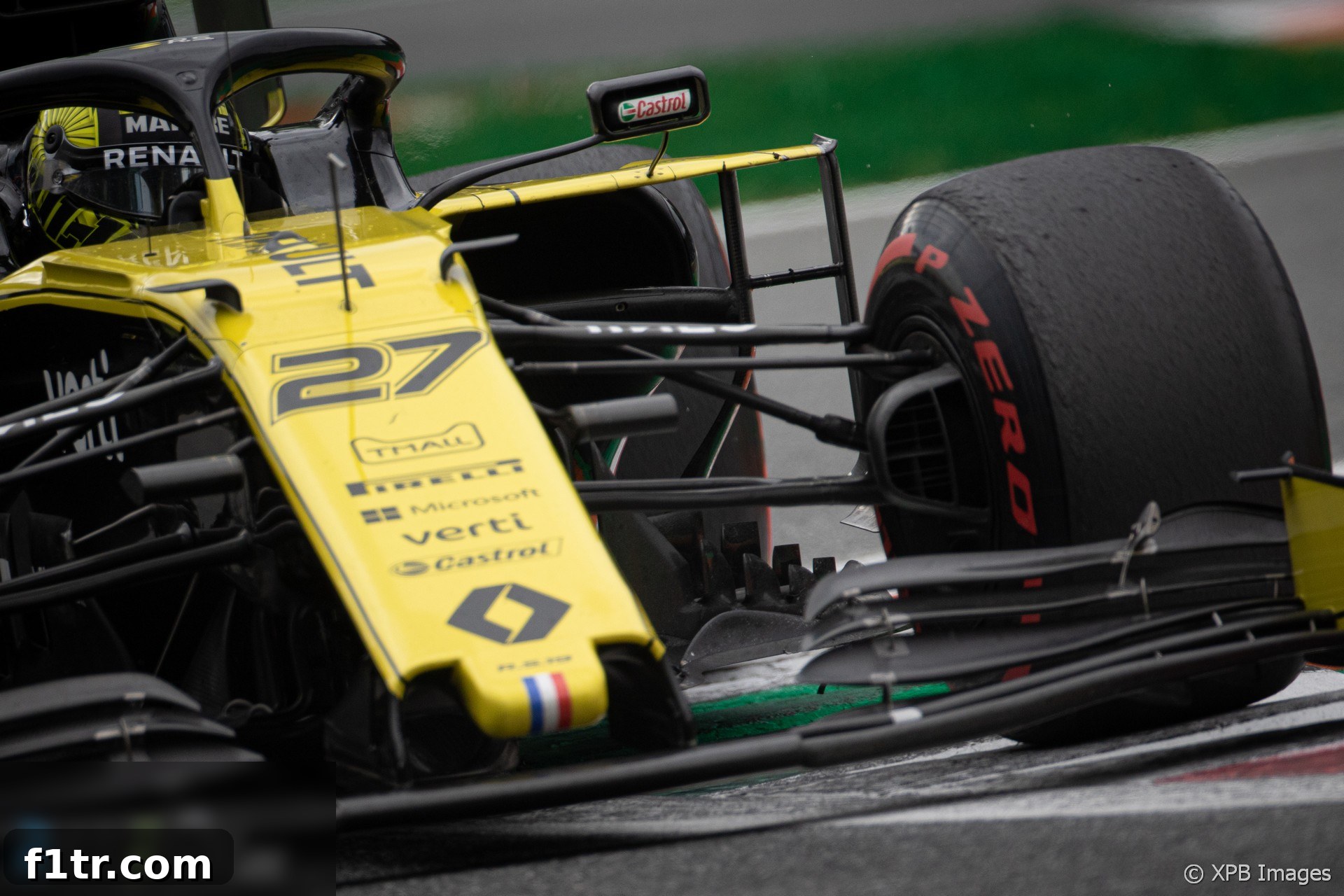
In the high-stakes world of Formula 1 qualifying, every millisecond and every track limit counts. Drivers push their cars and skills to the absolute edge, often resulting in contentious incidents and complex decisions from the race stewards. One such instance recently saw Nico Hulkenberg, then driving for Renault, escape a penalty despite cutting Turn 1 without what some might initially perceive as a justifiable reason during a crucial qualifying session.
The incident unfolded during the tense final runs of Q3, the segment where the top ten drivers battle for pole position and critical grid advantages. As Hulkenberg exited the pits ahead of his eight rivals, he approached Turn 1 – a chicane – and, instead of navigating it precisely, cut straight across it. This action immediately drew the attention of the stewards, especially given the context of Q3 where maintaining track position and not impeding competitors is paramount. The initial accusation against the German driver was that his maneuver potentially held up other cars, a serious infraction that could lead to grid penalties or even the deletion of lap times.
During the subsequent investigation, Hulkenberg provided his account of the event. He stated that his primary focus at that moment was on the cars behind him, suggesting a concern for not impeding their fast laps or perhaps being aware of the traffic situation building up. This distraction, he claimed, led him to leave it too late to turn into the corner, causing him to instinctively drive straight through the chicane. Such explanations are common in motorsport, where drivers often have to make split-second decisions under immense pressure, with multiple factors vying for their attention.
The stewards, however, rely on more than just a driver’s statement. They meticulously review telemetry data, on-board camera footage, and timing sheets to establish the facts. Their findings revealed interesting details that played a crucial role in their final verdict. They noted that Hulkenberg entered Turn 1 at the same speed as he had on his previous fast lap, suggesting it wasn’t a case of excessive speed leading to an unavoidable error. More tellingly, they observed that he was in third gear instead of second gear, which he had used on his preceding out lap through the same corner. This shift in gear choice could imply a deliberate deviation from the standard racing line or, at the very least, a lapse in concentration that altered his usual approach to the corner.
Despite these observations, the stewards ultimately decided against imposing a penalty. Their reasoning hinged on a critical interpretation of the sporting regulations, which typically refer to “deliberately” leaving the track. In their official statement, the stewards clarified, “The stewards note that the regulation refers to ‘deliberately’ leaving the track and in this case we are unable to determine that the driver deliberately left the track.” This distinction between an intentional act and an unintentional mistake, however negligent, is fundamental to how penalties are applied in Formula 1. The burden of proof lies with the stewards to demonstrate intent, and in this instance, they couldn’t definitively conclude that Hulkenberg intended to gain an advantage or cut the corner on purpose.
The decision highlighted the complexities of regulating driver conduct and track limits in Formula 1. While some fans and competitors might argue that cutting a corner, regardless of intent, should always result in a penalty to ensure fairness, the regulations are designed to differentiate between malicious intent and genuine error. The stewards’ role is not merely to punish infractions but to ensure the consistent and equitable application of rules, maintaining the integrity of the sport. Their reliance on objective data, coupled with a nuanced understanding of driver psychology under pressure, forms the cornerstone of their often-controversial judgments.
While Nico Hulkenberg avoided a penalty for this particular incident, it wasn’t his only brush with the stewards during that session. He was also placed under investigation for allegedly driving unnecessarily slowly, a common charge in qualifying sessions designed to prevent drivers from impeding others or creating unsafe situations. This rule is crucial, especially during Q3, where drivers strategically create gaps to get clean air for their flying laps. Driving too slowly can disrupt these delicate strategies and potentially lead to dangerous scenarios on track.
Hulkenberg was not alone in facing scrutiny for slow driving. Lance Stroll and Carlos Sainz Jnr were also summoned for similar investigations, underscoring the FIA’s proactive approach to monitoring driver conduct regarding track speed and potential impedance. These incidents collectively illustrate the tightrope walk drivers perform in qualifying: they must be fast enough, yet not so slow as to be a hazard or a hindrance to others, all while adhering to the ever-present track limits.
Adding to the list of inquiries, Sebastian Vettel faced his own summons for allegedly leaving the track and gaining a lasting advantage at the challenging Parabolica corner. The Parabolica, with its long, sweeping nature, is notorious for drivers pushing the limits, and any excursion off-track that results in an advantage, however slight, is typically met with stern action. These multiple investigations across different drivers and types of infractions underscore the vigilance of the race stewards in ensuring fair play and adherence to the sporting regulations throughout a Grand Prix weekend.
Ultimately, while Hulkenberg’s incident might seem minor in isolation, it offers a fascinating glimpse into the intricate world of F1 race control, where intent, evidence, and the precise wording of regulations converge to shape the outcome of a driver’s race weekend. Avoiding a penalty, especially in Q3, can be crucial for grid position, which in turn can significantly impact a driver’s chances in the main race and potentially influence championship standings.
Don’t miss anything new from RaceFans
Follow RaceFans on social media for the latest updates, news, and insights from the world of Formula 1 and motorsport:
- Join RaceFans on Facebook
- Follow RaceFans on Twitter
- Get daily email updates from RaceFans
Advert | Become a RaceFans supporter andgo ad-free
2019 F1 season insights and analysis
Explore more articles and in-depth analysis from the action-packed 2019 Formula 1 season. Dive into the key moments, controversies, and performances that defined a memorable year in motorsport history:
- Crying in the Melbourne car park at 2019 grand prix was my career low – Ocon
- McLaren Racing reports reduced £71 million loss in 2019
- Kvyat: Hockenheim podium last year was “my biggest achievement” so far
- How the FIA’s new encrypted fuel flow meter targets Ferrari’s suspected ‘aliasing’ trick
- “He smashed my office door”: 23 must-see moments from ‘Drive to Survive’ season two
Browse all 2019 F1 season articles