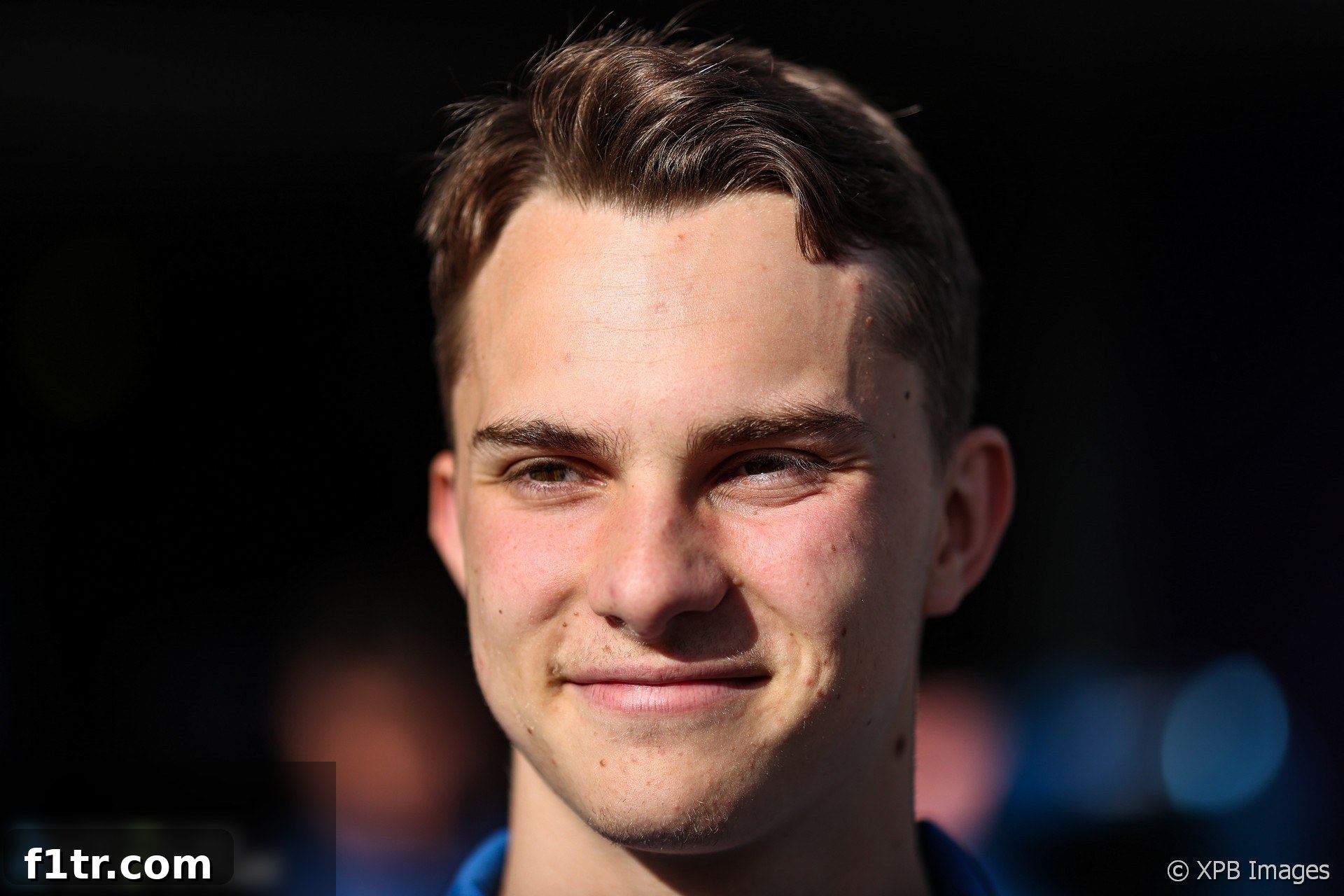
The Unstoppable Rise of Oscar Piastri: From Junior Champion to F1 Contender Amidst Contract Drama
Formula 1 is a realm of cutthroat competition and fleeting opportunities. While digital interactions are commonplace, authentic, real-world connections remain invaluable. For aspiring racing drivers, gaining the attention of the F1 paddock usually requires them to be already competing on the sport’s direct support bill. Few within the intense F1 ecosystem have the luxury of time to scout talent globally. However, some exceptions exist, and one prominent figure in this narrative is Mark Webber.
The esteemed former Red Bull Racing driver and World Endurance Champion is a familiar face in the British Formula 4 paddock. It was here that Oscar Piastri commenced his full-time single-seater career, marking the genesis of a journey that would captivate the motorsport world. Webber’s connection to Piastri’s early team, Arden, was already strong, having previously overseen his protégé Mitch Evans race for Arden International in GP3, a period when the team operated under an Australian flag and incorporated Webber’s initials into its name. This established relationship provided Piastri with an early, invaluable link to a highly respected figure in F1.
Piastri’s progression continued with Arden as he transitioned to European racing in the Formula Renault 2.0 category, concluding his 2018 Eurocup season in eighth place. During this pivotal rookie year in cars, Piastri was partnered with Pedro Matos, who would later emerge as a highly-rated engineer in junior single-seater championships. The strong bond forged between Piastri and Matos proved to be a significant asset, leading to their reunion later in Piastri’s career, a testament to the effectiveness of their collaboration.
Overcoming Early Hurdles: The Road Through Formula Regional Eurocup
Despite the promise Piastri showed, his first year in Formula Renault 2.0 presented challenges. Arden, as a team, struggled for competitiveness that season. This situation, compounded by the fact that his British F4 rival, Logan Sargeant, nearly doubled Piastri’s points tally, and fellow rookie Christian Lundgaard narrowly missed out on the title, somewhat dimmed the bright momentum Piastri had meticulously built with his stellar British F4 campaign the previous year. The career trajectories of these young drivers often hinge on such fine margins, filled with “what if” scenarios that could easily alter their destinies, potentially placing them in the complex position Piastri finds himself in today regarding his F1 future.
Undeterred, Piastri embarked on a second year in the Eurocup, which for the 2019 season adopted Formula Regional cars while retaining its original name. This move to the formidable R-ace GP team proved to be a game-changer. It instantly positioned Piastri as a leading title contender, an opportunity he seized with both hands, claiming an impressive seven victories throughout the season. His performances underscored his inherent talent and adaptability to new machinery, laying a crucial foundation for his continued ascent.
The championship decider at Yas Marina was a nail-biting affair. Piastri’s main rival, Victor Martins, initially snatched pole position for the opening race. However, a crucial slow getaway from Martins allowed Piastri to take the lead, which he resolutely held to the checkered flag. The true competitive spirit between them was unleashed in the title-deciding second race; Martins started brilliantly and delivered an utterly dominant victory. Piastri, with a strategic fourth-place finish, amassed just enough points to be crowned champion, a testament to his consistency and race management under immense pressure.
Had Martins not faltered with his start in the first race, their careers might have diverged significantly. The coveted backing of the Renault F1 team for the subsequent year was contingent on the championship outcome. Piastri’s triumph secured him a place in the Renault (later Alpine) junior academy, while Martins, an existing junior, was temporarily dropped, though he earned a rare recall in 2021. This single championship moment proved instrumental, opening the door to F1 for Piastri while momentarily closing it for Martins.
The Prema Partnership and Mark Webber’s Crucial Mentorship in F3
During the off-season following his Eurocup victory, Piastri secured the pivotal backing of Mark Webber, who formally became his manager. This coincided with Piastri’s promotion to the FIA Formula 3 Championship with the powerhouse Prema Racing team. The 2020 season, significantly impacted by the global pandemic, saw Piastri and Webber in almost daily communication, meticulously planning and adapting to the unprecedented circumstances. Simultaneously, Webber began leveraging his extensive network and connections within the Formula 1 world, subtly yet effectively raising Piastri’s profile. This partnership was more than just management; it was a strategic alliance aimed at navigating the complex path to F1.
Piastri’s perception and visibility within the F1 community dramatically increased now that he was racing on the F1 support bill. The season-opening Austrian Grand Prix, with F3 as the weekend’s inaugural race, presented a unique opportunity. The entire F1 world, keen to assess any rustiness in race operations after a half-year hiatus, watched closely. Piastri seized the moment, winning the first race of the season. For those previously unaware of him, the combination of being an F1 junior, managed by one of F1’s most respected recent drivers, and competing for a team renowned for nurturing numerous Formula 2 and F3 champions, instantly bestowed upon him the aura of a future star.
This is not to imply Piastri lacked star quality before, but it powerfully illustrated the impact of perception. His stock soared as he consistently led the championship through the initial four rounds. While his next victory didn’t come until round six, and despite never qualifying on the front row in nine attempts, his remarkable consistency and strategic racecraft culminated in him being crowned champion in the season finale. He clinched the title by a mere three points, fending off the formidable Sauber starlet Theo Pourchaire and the experienced F3 sophomore Sargeant, proving his mettle under extreme pressure.
Being a Prema driver often carries a self-fulfilling prophecy. The team’s unparalleled quality means drivers are expected to win, and equally, Prema is expected to sign only the most exceptional talents. A contract with Prema is frequently seen as a profound vote of confidence in a driver’s abilities. However, like any other team, Prema also considers the financial aspects, often requiring drivers who can secure budgets, highlighting the multifaceted nature of junior category racing.
Dominance in F2 and the Genesis of the Alpine Dilemma
Despite his FIA F3 title, there were whispers of doubt regarding Piastri’s potential, specifically concerning his one-lap pace and the sharpness of his racecraft, acknowledging the inherent limitations of F3 cars for close racing. Yet, in his solitary F2 season, Piastri not only silenced his critics but emphatically exceeded expectations. Continuing with Prema and reunited with his trusted F4 engineer Matos, Piastri embarked on an astonishing run: five consecutive pole positions and four consecutive feature race victories. This dominant streak culminated in him being crowned champion with two races to spare, a truly historic achievement in a highly competitive series. However, this period of immense success, occurring late in the season, came too late to significantly strengthen his hand during F1’s highly volatile “silly season.”
Piastri’s unprecedented success invites direct comparisons with recent F1 luminaries such as George Russell and Charles Leclerc. Like Piastri, both Russell and Leclerc won the F3 (or its predecessor, GP3) and F2 championships back-to-back as rookies. These were the drivers around whom Mercedes and Ferrari, respectively, decided to build their futures. While Leclerc achieved six consecutive F2 poles, neither he nor Russell quite matched Piastri’s consistent race form during their own title-winning rookie F2 campaigns. Given this exceptional record, it would be entirely logical for a team like McLaren to actively pursue a driver of Piastri’s caliber, especially at a time when one of its own drivers was perceived to be underperforming, and, just over a week ago, seemingly no other team was readily offering Piastri an F1 seat.
Before Esteban Ocon’s long-term deal with Alpine was announced in June of last year, Piastri was asked about his future if Ocon secured the contract. His response was notably matter-of-fact: “it changes nothing.” Piastri simply stated he would “let my management and Alpine sort out if they want to give me an F1 seat.” This early demonstration of calm confidence hinted at a growing self-belief and a clear understanding of his value.
Growing Assertiveness and the F1 Contract Shockwave
Piastri also expressed his desire for Webber not to “hold his hand” in F2, preferring to focus intensely on his own development within the pandemic-enforced F1 paddock bubble. In 2021, for the second consecutive year, Piastri commenced his season with a lengthy quarantine period upon arriving in Europe from Australia. This isolated time likely had a profound impact on his mindset, fostering a sense of self-reliance. Significantly, rather than residing in Italy near his F2 team, he opted to move closer to Alpine’s Enstone headquarters, a clear sign of his F1 aspirations.
Following Ocon’s confirmation at Alpine, Piastri’s self-confidence became even more apparent. He frequently spoke positively about his own performances during his F2 triumphs and was inevitably often questioned about his F1 prospects. A recurring theme in his answers after poles or wins was: “It’s a bit disappointing the way it’s kind of played out, because I really don’t know what more I could have done. And today was quite nice to make a statement I’m still here.” These statements were not just rhetorical flourishes; they were clear signals that he believed his talent warranted an F1 seat, and he was not afraid to voice his frustration.
Despite becoming the most obvious F1 prospect in junior single-seaters, Piastri’s position on Alpine’s potential F1 driver shortlist was gradually weakening. The French brand’s broader strategy in Australia was reportedly in disarray, and consequently, as a driver who was not bringing a significant budget to an F1 seat, his commercial value for marketing and team financing was perceived as limited. Furthermore, if Zhou Guanyu had not departed Alpine for Alfa Romeo that year, there would not have even been a reserve driver position for Piastri to fill within the team. This meant Piastri’s impactful performances throughout 2021 were aimed at attracting attention from more than just Alpine.
His increasing confidence reached its zenith in his counter-statement after Alpine prematurely announced him as one of its race drivers for 2023. This bold move showcased not only his unwavering confidence that Webber had indeed secured him a seat elsewhere, but also an extraordinary degree of self-worth and bravado to publicly deny Alpine. Crucially, his statement did not merely suggest Alpine’s announcement was incorrect; it concluded with the resolute declaration: “I will not be driving for Alpine next year.”
The Contractual Labyrinth and Piastri’s F1 Future
While racing for Alpine might still technically be an outcome of this perplexing contract situation, and not a door that should be entirely closed, Piastri’s public denial demonstrated a willingness to decisively slam it shut. This audacious comment and strategic move could potentially backfire if he finds himself spending a second season on F1’s sidelines. However, it also revealed the kind of formidable qualities typically associated with a driver possessing far greater “industry clout.” One cannot imagine Yuki Tsunoda, for instance, publicly dismissing his employer. Yet, his race-winning AlphaTauri teammate, Pierre Gasly, occupies a comfortable enough position to be openly critical of Red Bull or to determine his future away from them with similar brazenness. Piastri’s actions suggest a belief in his own negotiating power, even as a newcomer.
Reports indicate that the bridge at McLaren, specifically the contract intending to bring Piastri to the team, is already considered watertight and ready for him to cross. Conversely, Alpine firmly believes its contract with Piastri is valid and has publicly stated its willingness to keep its bridge open should Piastri ultimately need to drive back across. Whether they are genuinely prepared to do so – particularly after team principal Otmar Szafnauer expressed his frustration and publicly fumed in the Spanish press about Piastri’s perceived lack of “loyalty” – remains a significant and open question in this escalating F1 drama. The unfolding saga underscores the intense political landscape of Formula 1, where raw talent must often navigate a complex web of contracts, loyalties, and strategic maneuvers to secure a coveted seat at the pinnacle of motorsport.