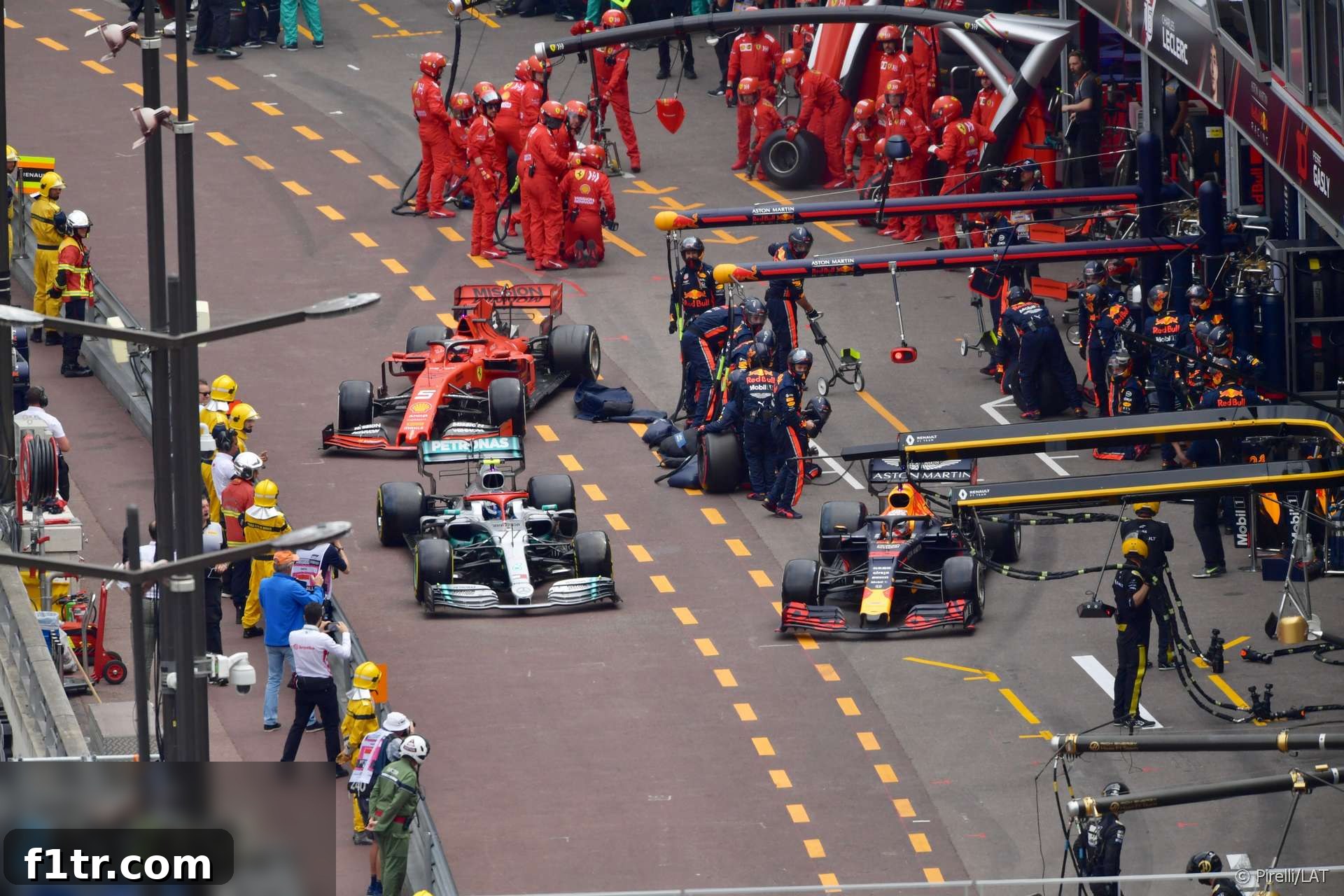
Formula 1 has introduced a one-off tyre rule for the Monaco Grand Prix to avoid a repeat of last year’s procession. The aim is to generate more strategic variety and on-track position changes by requiring drivers to use three different sets of tyres during the race instead of the usual two. Whether this measure creates genuine overtaking and excitement or produces contrived outcomes remains uncertain.
The idea behind the rule is simple, but some detailed provisions could produce unexpected results. Teams’ strategists will be watching closely for any loopholes or tactical advantages that might arise from the untested regulation.
What the rule says
The main elements of the Monaco-only requirement are:
- Every driver must use at least three different sets of tyres during the grand prix, rather than the normal two.
- Drivers must still use at least two different dry-weather tyre compounds (for example, soft and medium) as before.
- If a driver uses either wet-weather specification (intermediate or full wet), they are exempt from the two-dry-compound requirement in normal races — but Monaco’s rule still requires three separate sets overall.
- Penalties for non-compliance have been updated. A driver who finishes the race without using the required number of tyre sets will be disqualified. If the race is suspended and cannot be restarted, a driver who used only two sets will receive a 30-second time penalty and a driver who used only one set will receive a 60-second penalty.
Advert | Become a RaceFans supporter andgo ad-free
No mandatory pit stops
It’s important to note what the rule does not mandate: pit stops. The requirement is to use three different sets of tyres, not explicitly to make three pit stops. That distinction matters because tyre changes made during red-flag periods count toward the requirement. Last year’s race was red-flagged on the opening lap, allowing every driver to change tyres without making further pit stops — the very situation this rule aims to prevent.
If a similar red-flag scenario occurs this year, drivers would still have one mandatory pit stop to make after the restart to meet the rule. A second red flag could again allow teams to satisfy tyre-change obligations without a green-flag pit stop, but multiple red flags in a single race are unlikely, even at Monaco.
Wet races are affected too
Under the previous framework, mandatory tyre-change rules did not apply in the same way to wet races because fitting intermediates or full wets removed the obligation to use two different dry compounds. Monaco’s special rule changes that: even if a driver uses intermediate or full wet tyres during the race, they must still use three separate sets of tyres in total.
Strategy implications
Teams will attempt to complete their required tyre changes in ways that cost the least time. That typically means waiting for a Safety Car, Virtual Safety Car or a red flag, since tyre changes under a red flag are effectively time-free and changes under safety-car conditions are less damaging than pitting under green-flag running.
Previously at Monaco, the two main options were to start on the soft tyre and pit when a clean window opened, or start on the medium and try to run longer while hoping a safety car would mitigate the time loss from stopping. Needing two pit stops instead of one will likely make starting on the harder tyre even less appealing, as a rival who began on softer rubber could gain places at the start.
The rear of the field is where the first strategic deviations are most likely to appear. Last year demonstrated that even the softest tyre could cover the full Monaco distance, and the new C6 soft compound is also expected to be durable given Monaco’s low tyre degradation. That invites teams at the back to consider pitting early to complete one or two of the required tyre changes under safety-car conditions, especially if an early incident produces a neutralisation. If a first-lap Safety Car is deployed, backmarkers would almost certainly pit and could even manage two stops early, positioning themselves to gain if rivals pit after the restart.
Those running just ahead of the backmarkers may try to pre-empt such moves, and drivers up into the lower points positions with little to lose could adopt similar aggressive strategies. Even without an early Safety Car, teams near the rear might still be tempted to pit sooner than usual because they must now make two stops; the way the field spreads across the opening laps can make an early stop viable, as demonstrated by Haas’s first-lap stop for Esteban Ocon at Imola.
Any loopholes?
Formula 1 teams are famously adept at exploiting any regulatory wiggle room, so potential loopholes were an immediate concern. The rules already address some obvious dodges. For example, a team cannot simply fit tyres in the pit lane and then swap them again in the pit box to count those fits as “used” sets. The regulations specify that tyres fitted in the pit lane are only deemed used once the car’s timing transponder shows it has left the pit lane with those tyres fitted. That prevents superficial tyre swaps from counting toward the requirement.
A more nuanced tactical approach is already within reach under the rules: using one car to manipulate the pace of the field to help a teammate. A second car can hold up opponents, creating a gap into which the lead car can pit with reduced time loss. This kind of team tactics has been seen before and remains possible under the new Monaco rule; the added complexity of three required tyre sets may make such strategies more tempting.
Ultimately, how teams exploit the regulation will depend on qualifying positions and race starts. The new rule guarantees this year’s Monaco Grand Prix will be as much a strategic contest as a test of driver skill around the narrow, demanding circuit. Success will depend on avoiding mistakes while meeting a tactical requirement that is, admittedly, artificial.
Miss nothing from RaceFans
Get a daily email with all our latest stories – and nothing else. No marketing, no ads. Sign up here:
Go ad-free for just £1 per month>> Find out more and sign up
2025 Monaco Grand Prix
- Norris predicts his Monaco pole record should stand “for a very long time”
- Bearman is right: Formula 1 should let Monaco be Monaco
- Wurz’s proposed Monaco track changes would make ‘1 to 5%’ difference – Sainz
- Bortoleto claims his “put him in the wall” radio message was taken out of context
- “I deserved penalty, deliberate rule breaking ‘should never be allowed’” – Russell
Browse all 2025 Monaco Grand Prix articles