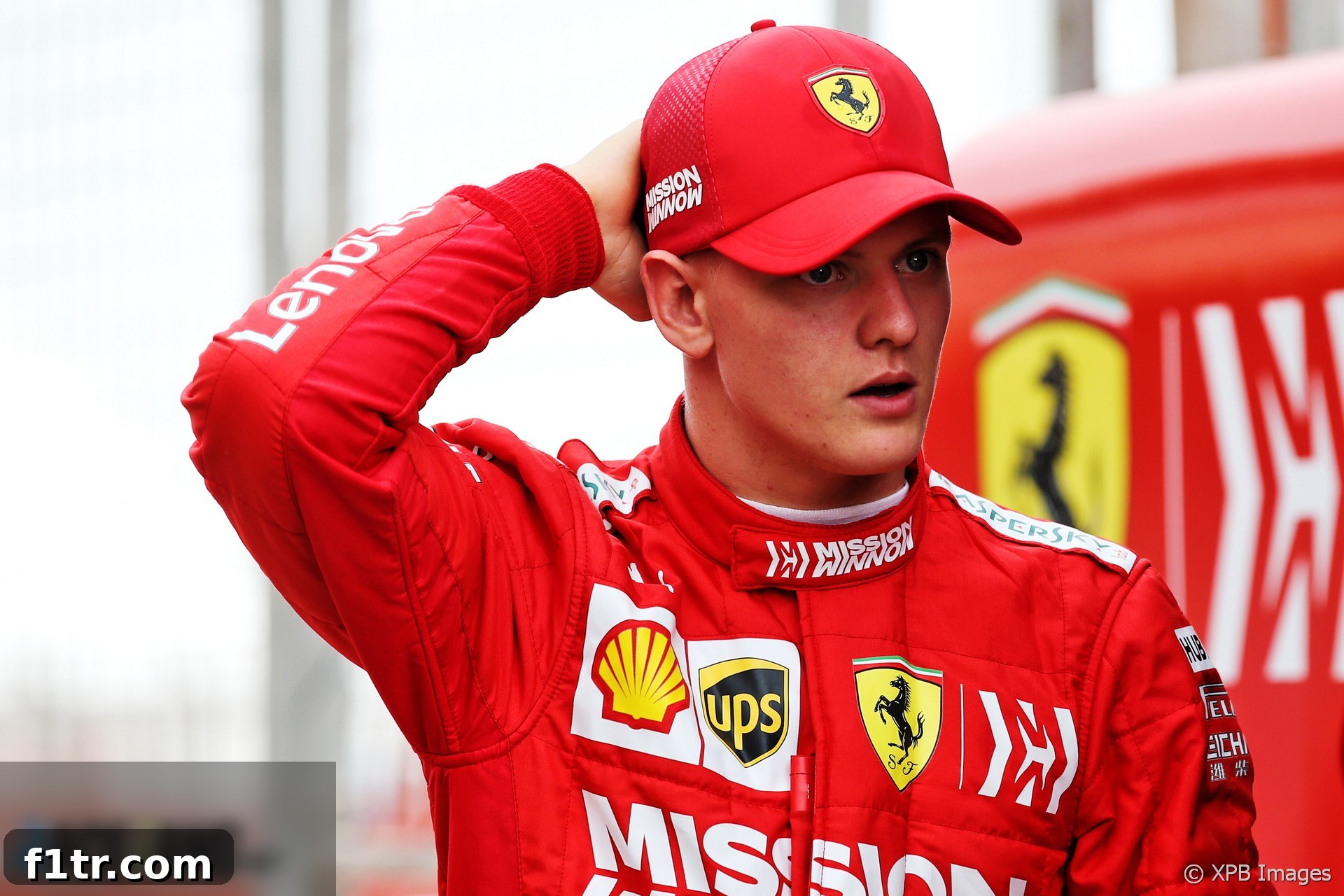
Sebastian Vettel: Mick Schumacher Deserves His Own Path in Formula 1
The name Schumacher is synonymous with Formula 1 greatness, a legacy forged by the seven-time world champion, Michael Schumacher. Yet, as his son, Mick Schumacher, stood on the precipice of a potential F1 career, fellow four-time champion Sebastian Vettel offered a poignant plea. Speaking during the German Grand Prix weekend, where Mick was set to perform a special demonstration, Vettel emphatically stated that Mick should be judged solely on his own abilities, rather than being overshadowed by the monumental achievements of his father.
Advert | Become a Supporter & go ad-free
A Champion’s Perspective: The Call for Individual Judgment
Sebastian Vettel, a driver who grew up idolizing Michael Schumacher and who later inherited his seat at Ferrari, understands the immense weight of expectation that comes with being a top Formula 1 talent. His words regarding Mick Schumacher were not just advice, but a protective sentiment from one generation of German motorsport heroes to the next. Vettel emphasized the critical importance of allowing Mick the necessary time and space to develop, free from the relentless scrutiny of his lineage.
“It’s crucial that he’s given the time he needs,” Vettel affirmed. “I think it’s fair to judge him and his racing like every one of us has been judged and will be judged. But it’s not right to measure and compare too much to other people and to his father. I don’t think it’s fair.” This statement encapsulates the core message: every driver’s journey is unique, and comparisons, especially to a legend of Michael’s stature, can become an unfair burden, potentially stifling a young driver’s natural progression and confidence.
The Unavoidable Legacy: Michael Schumacher’s Impact on German Motorsport
Vettel openly acknowledged the undeniable influence of Michael Schumacher on Formula 1’s popularity in Germany. For an entire generation, Michael was more than just a racing driver; he was a national icon who single-handedly ignited a passion for motorsport across the country. His dominance, his charisma, and his sheer will to win captivated millions, leaving an indelible mark on German sports culture. This enduring legacy, while a source of immense pride, also places a significant, almost unparalleled, pressure on his son.
“Michael was the one who set off a huge hype when we were kids and therefore the name Schumacher is one hundred percent known in Germany due to him,” Vettel explained. This widespread recognition means that Mick, simply by bearing the surname, enters the motorsport arena with a spotlight brighter than most. Every move, every victory, and every setback is magnified, not just by fans but by media and pundits eager to draw parallels to his legendary father. The public’s yearning for a return to the glory days of Schumacher dominance undoubtedly contributes to this intense scrutiny, making Vettel’s call for patience even more relevant.
Mick’s Journey to F1: Building His Own Credentials
Despite the immense shadow cast by his father, Mick Schumacher has consistently strived to carve out his own identity in the racing world. His career trajectory through junior categories has been marked by determination and steady progress, showcasing a talent that is distinctly his own. After graduating from karting, Mick competed in Formula 4, eventually winning the German and Italian F4 vice-championships. He then moved to Formula 3, where he truly made his mark, securing the FIA Formula 3 European Championship title in 2018 with eight wins, further establishing his credentials as a future star.
This success propelled him into Formula 2, often considered the final stepping stone to Formula 1. His performances there continued to draw attention, culminating in the 2020 Formula 2 Championship title. These achievements were not handed to him; they were earned through hard work, strategic racing, and consistent improvement, demonstrating a clear racing aptitude independent of his famous surname.
F1 Tests and Aspirations: A Glimpse into the Future
Prior to Vettel’s comments at the 2019 German Grand Prix, Mick had already begun to gain experience in Formula 1 machinery, a crucial step for any aspiring driver. He notably tested Vettel’s Ferrari SF90 and an Alfa Romeo F1 car earlier that year, providing valuable insight into the demands of elite-level motorsport. These opportunities allowed him to understand the complexities of modern F1 cars, work with top-tier teams, and begin to adapt to the speed and precision required at the pinnacle of racing. Such tests are invaluable, not just for technical development but also for mental preparation and building confidence within the F1 paddock.
Vettel expressed genuine optimism for Mick’s future, hoping that these experiences would eventually pave the way for a full-time F1 seat. “Hopefully he gets the chance one day and does well and brings some more enthusiasm,” Vettel added, reflecting a broader hope within the German motorsport community for a resurgence in national interest, similar to the “Michael-mania” of previous decades. Having a Schumacher back on the F1 grid, particularly one who performs well, could indeed provide a significant boost to the sport’s popularity in Germany and beyond.
The Iconic F2004 Demonstration: A Bridge Between Eras
The 2019 German Grand Prix weekend was not just significant for Vettel’s comments; it was also the stage for a poignant moment that visibly linked Mick to his father’s legendary career. Mick Schumacher performed a demonstration run in a Ferrari F2004, the very type of car Michael Schumacher masterfully piloted to win his record-setting seventh and final Formula 1 world championship. This specific car represents the zenith of Ferrari’s dominance in the early 2000s and a golden era for Michael.
Driving such an iconic machine, at his home Grand Prix, was a powerful symbolic gesture. It allowed fans to witness a glimpse of the past through the lens of the future, connecting two generations of Schumachers in a single, emotional spectacle. For Mick, it was an opportunity to feel the raw power and engineering brilliance that defined his father’s most successful period, while also showcasing his own growing talent to a global audience. The demonstration, however, also served as a stark reminder of the immense standard against which he might inevitably be measured, underscoring the very pressure Vettel was keen to mitigate.
Navigating the Pressures of a Famous Name in Motorsport
While the Schumacher name opens doors and garners immediate attention, it also brings with it an unparalleled level of expectation and scrutiny. Many talented young drivers struggle to make it to Formula 1, let alone thrive there. For Mick, the challenge is compounded by the almost mythical status of his father. Every overtake, every spin, every qualifying session is analyzed not just on its own merit, but often through the filter of “how Michael would have done it.” This can be a double-edged sword: the fame provides a platform, but the comparison creates an extraordinary mental burden.
Sebastian Vettel, having forged his own path to greatness, is uniquely positioned to offer this perspective. He understands the psychological demands of F1 and the need for a driver to feel secure in their own abilities. His advocacy for Mick is a testament to the belief that true talent should be allowed to flourish organically, without the undue weight of a legendary surname overshadowing individual potential. It’s a call for fans, media, and even teams to embrace Mick for who he is as a driver, rather than as a mere extension of his father’s legacy.
Conclusion: A Future Defined by His Own Race
Ultimately, Sebastian Vettel’s message regarding Mick Schumacher is one of profound respect for the individual and the sporting journey. He reminds the Formula 1 world that while Michael Schumacher’s achievements are etched into history, Mick’s story is yet to be fully written. By advocating for patience and individual judgment, Vettel champions the idea that Mick should be afforded the same opportunities to learn, grow, and prove himself as any other aspiring talent. The hope is that Mick will indeed get his rightful chance in Formula 1, not as the “son of Michael,” but as Mick Schumacher, a skilled driver capable of carving his own unique legacy in the sport.
His path may be challenging, but with the support of figures like Sebastian Vettel and the enduring appeal of his own racing prowess, Mick has every opportunity to live up to his potential and define his own remarkable chapter in the annals of motorsport.
2019 F1 season
- Crying in the Melbourne car park at 2019 grand prix was my career low – Ocon
- McLaren Racing reports reduced £71 million loss in 2019
- Kvyat: Hockenheim podium last year was “my biggest achievement” so far
- How the FIA’s new encrypted fuel flow meter targets Ferrari’s suspected ‘aliasing’ trick
- “He smashed my office door”: 23 must-see moments from ‘Drive to Survive’ season two
Browse all 2019 F1 season articles