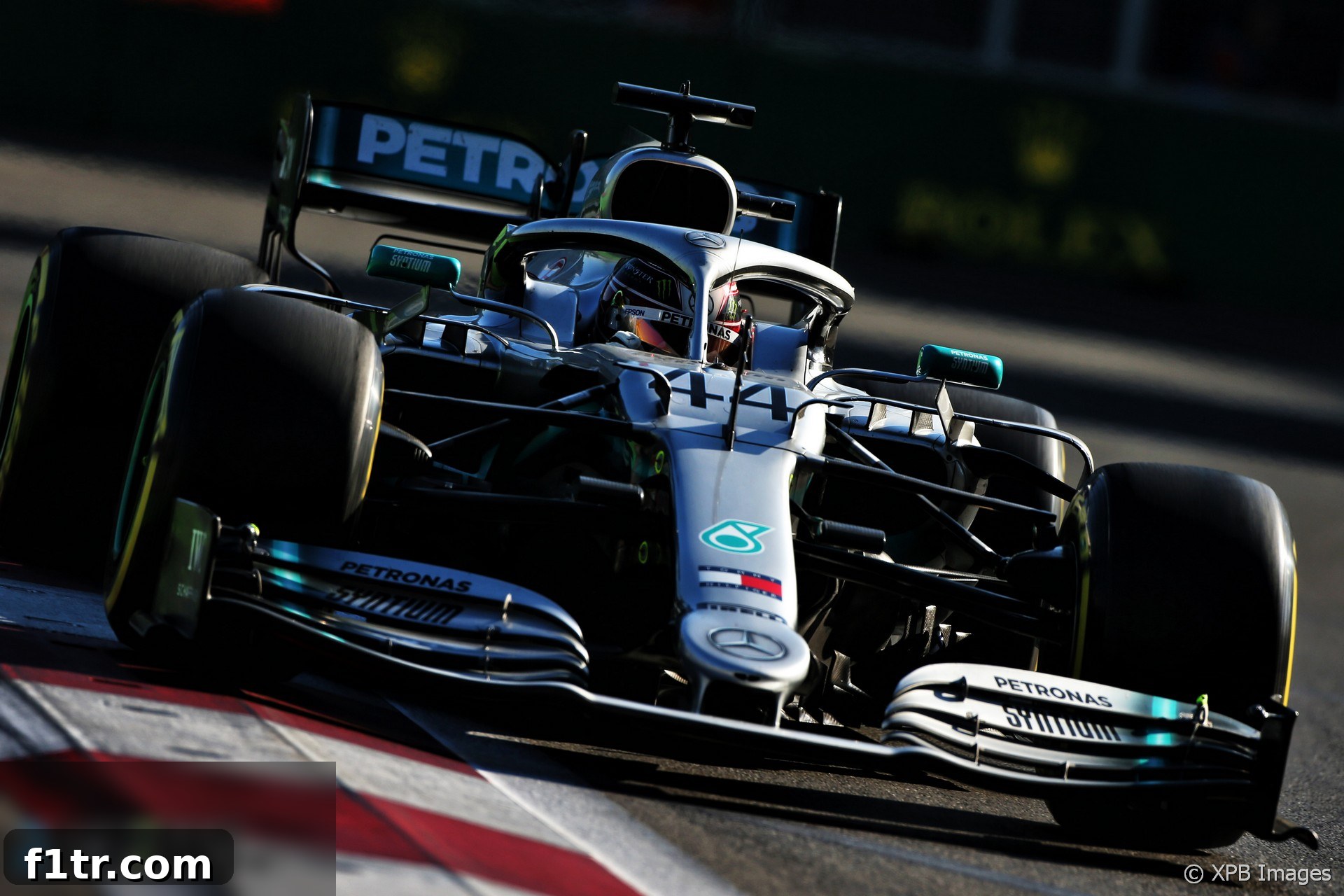
In the dynamic world of Formula 1, where every fraction of a second and every technical nuance can spell the difference between victory and defeat, tyre management remains one of the most critical and complex challenges. Recent insights from reigning champion Lewis Hamilton underscore this perpetual struggle, as he articulated that keeping Formula 1’s latest generation of Pirelli tyres performing optimally has become an even more formidable task. This sentiment reflects a broader challenge faced by all teams and drivers in modern F1, where the delicate balance of tyre temperature, pressure, and compound degradation dictates race strategy and overall performance.
Navigating the Nuances: Hamilton on F1 Tyre Management
“I think the tyre this year seems to be a little more complex than last year, understanding it,” Hamilton revealed, highlighting the ongoing evolution and increased intricacy of the Pirelli compounds. Each new season often brings with it subtle but significant changes to tyre construction and characteristics, demanding a fresh learning curve from engineers and drivers alike. “The beginning of every season we’re always struggling. Everyone is trying to understand the different tyre windows.”
The concept of the “tyre window” is central to F1 performance. It refers to the specific temperature and pressure range within which a tyre compound delivers its optimal grip and durability. Operating outside this narrow window, either too hot or too cold, can lead to severe performance drops, excessive wear, or sudden degradation. Hamilton emphasized just how challenging this has become: “The window of these tyres is even more narrow than it was in the past, which was pretty small before and it’s even smaller now. They keep putting up the pressures every weekend or every year so it gets harder and harder.” Increased tyre pressures, often mandated for safety reasons, further restrict the working window, pushing teams to the absolute limits of their understanding and car setup.
This tyre sensitivity directly impacts car development. “We build a car to try to work on as many of the circuits, 21 Grands Prix, so trying to find the balance is very, very difficult because there’s never a perfect balance on each one,” Hamilton explained. The diverse nature of the F1 calendar, featuring high-speed circuits, street tracks, and technical layouts, means that a car setup optimized for one venue might be far from ideal for another. Teams aim for an “average balance” that offers competitive performance across the board, but when the tyres and engine characteristics are factored in, achieving this versatility becomes progressively harder.
Despite these inherent challenges, the season is a journey of continuous learning and adaptation. “But as we get through the season we’ll learn more and more,” Hamilton noted optimistically. He also reflected on early season successes: “I think we’ve definitely lucked [in] at least in one race, which was in Bahrain, but we were pretty good in the race and [China] was obviously spectacular for us.” These comments highlight how a combination of strategic brilliance, driver skill, and a deep understanding of the car-tyre interaction can lead to dominant performances, even when the underlying conditions are notoriously difficult to master. The ability to extract maximum performance from the tyres under varying conditions is a hallmark of champions, and Hamilton’s observations offer a rare glimpse into the relentless pursuit of perfection that defines Formula 1.
Quotes courtesy of Dieter Rencken
Advertisement: Consider becoming a RaceFans supporter to enjoy an an ad-free experience.
Social Media: Connecting F1 with a Global Audience
In an era defined by digital connectivity, social media platforms have become indispensable tools for Formula 1 to engage with its massive global fanbase. From behind-the-scenes glimpses to real-time race reactions, drivers, teams, and official F1 accounts leverage platforms like Instagram and Twitter to offer an immersive experience. These channels not only humanize the sport but also provide immediate updates and exclusive content that traditional media often cannot match. The link provided below offers a snapshot of the engaging content shared by the F1 community:
View Instagram Post
- For a comprehensive guide to official F1 accounts and drivers, explore our dedicated F1 Twitter Directory.
Motor Racing Links and Latest Insights
Stay updated with the latest happenings and discussions from across the motor racing world with our curated selection of links, offering deeper dives into significant developments, team insights, and strategic moves.
Advertisement: Become a Supporter & go ad-free
New Rio de Janeiro Autodrome to be named after Ayrton Senna by presidential suggestion (Globo – Portuguese)
This report from Globo sheds light on a significant potential shift for the Brazilian Grand Prix. Jair Bolsonaro, Brazil’s president elected last year, has proposed relocating the race from its historic home at Interlagos in Sao Paulo to a brand new circuit in Rio de Janeiro’s Deodoro district next year, suggesting it be named after the legendary Ayrton Senna. Such a move would mark a profound change for F1 in Brazil, potentially introducing a modern facility while honoring one of the sport’s greatest icons. The choice of location and the name would undoubtedly resonate deeply with Brazilian motorsport fans and the wider F1 community.
- Planning ahead for the next season? Consult the provisional 2020 F1 calendar.
Strong Recovery – Q&A with Nick Chester (Renault)
In this insightful Q&A, Nick Chester, then Technical Director at Renault, provides an update on the team’s development trajectory. He discusses the continuous quest for performance enhancements, stating, “We have a few aero parts to add to the front wing and rear of the car. We are also looking at some mechanical tweaks to improve car balance.” This highlights the relentless nature of F1 car development, where incremental aerodynamic and mechanical improvements are crucial for gaining an edge in the highly competitive midfield. The focus on both aero efficiency and car balance indicates a holistic approach to extracting more speed from their chassis.
Harding Seeing Results of Building Team From Ground Up (IndyCar)
This IndyCar feature chronicles the journey of Mike Harding and his team, illustrating the immense challenges and rewards of building a competitive motorsport outfit from scratch. The quote, “When you tell people we’ve won COTA, people tend to listen to you a little more,” perfectly encapsulates the impact of early successes. A victory at a prestigious venue like Circuit of the Americas not only boosts morale and validates hard work but also significantly enhances a team’s credibility and attractiveness to potential sponsors and talent in the fiercely competitive IndyCar series. It’s a testament to perseverance and strategic growth in motorsport.
Can Red Bull Become F1 2019 Contenders with Upgrades? (Sky Sports F1)
Sky Sports F1 delves into the perennial question surrounding Red Bull Racing’s title aspirations, particularly in light of planned upgrades for the Spanish Grand Prix. The article examines Red Bull’s characteristic strengths, such as their exceptional low-speed corner entry speed, and ponders whether new developments can couple this with “more consistency on corner exit.” This balance is often the key to unlocking true championship potential. The analysis suggests that if achieved, this could rekindle the kind of performance that saw their previous year’s car dominate at circuits like Monaco. The performance through sector three at Barcelona is cited as a crucial barometer, as it often highlights a car’s overall balance and aerodynamic efficiency.
Formula 1 Roars into Chicago with Festival at Soldier Field in June (Formula1.com)
Formula 1’s official website announced the exciting news that the Emirates F1 Chicago Festival would be held at Soldier Field in June. This initiative is part of F1’s broader strategy to expand its global footprint and engage new audiences, particularly in key markets like the United States. Following the immense success of similar festivals in other cities, including Shanghai (which coincided with the sport’s 1000th Grand Prix), these events offer fans a unique opportunity to experience the thrill of F1 cars up close, often featuring live demonstrations, driver appearances, and interactive displays. It’s a crucial way for the sport to bring its excitement directly to the people.
We always endeavour to credit original sources. If you have a tip for a link to feature in the next RaceFans round-up please send it in via the contact form.
Advertisement: Become a RaceFans supporter and enjoy an ad-free experience.
Comment of the Day: The Driver’s Impact in Modern F1
A thought-provoking discussion emerged regarding Jean Todt’s assertion that the driver needs to make more of a difference in motorsports like F1. This sentiment taps into a long-standing debate about the balance between human skill and technological prowess in determining race outcomes.
“I don’t think Todt is necessarily talking about a spec series, but an F1 in which the performance of all the teams is so close that the driver can make a difference.” This astute observation by @Mashiat cuts to the core of Todt’s argument. It’s not about stripping F1 of its technological innovation and making all cars identical, but rather about narrowing the performance gaps between teams to a point where raw driver talent and precision become the decisive factor.
The commenter further illustrates this point: “Essentially, think of it as F1 without any of the ‘big three’. In the midfield, any combination of car or driver could win on their day. If Sainz has a blinding weekend for example, more often than not, he will come best of the rest, or at least challenging up there. If Verstappen does the same, it just means that he’ll still finish fifth, barring any issues for the cars ahead.” This comparison powerfully highlights the current disparity. In the highly competitive midfield, a driver’s exceptional performance can elevate their car significantly. However, for a driver in a top-tier team, even a phenomenal drive might only secure a position slightly above their car’s baseline performance, given the inherent advantage of their machinery over the rest of the grid. Todt’s vision likely seeks to create a scenario where driver heroics consistently translate into significant gains across the entire field, enhancing the unpredictability and excitement of the sport.
From the Forum
- Engage with fellow fans and test your F1 knowledge: We’re still looking for a correct answer to our latest Only Connect question…
Happy Birthday!
Wishing a very happy birthday to Kbc and Taurus! Your passion helps fuel our community.
If you’d like to receive a birthday shout-out on RaceFans, simply inform us of your special day via the contact form or by adding your details to our dedicated list here.
On This Day in F1 History
- Ten years ago today, in a memorable qualifying session for the Spanish Grand Prix, Brawn GP’s Jenson Button delivered a last-gasp effort to snatch pole position. This dramatic lap denied Red Bull’s Sebastian Vettel, underscoring Button’s exceptional form and Brawn GP’s fairytale start to the 2009 season. It was a testament to Brawn’s ingenious double diffuser and Button’s masterful ability to extract maximum performance from the car, setting the stage for one of F1’s most compelling championship battles.