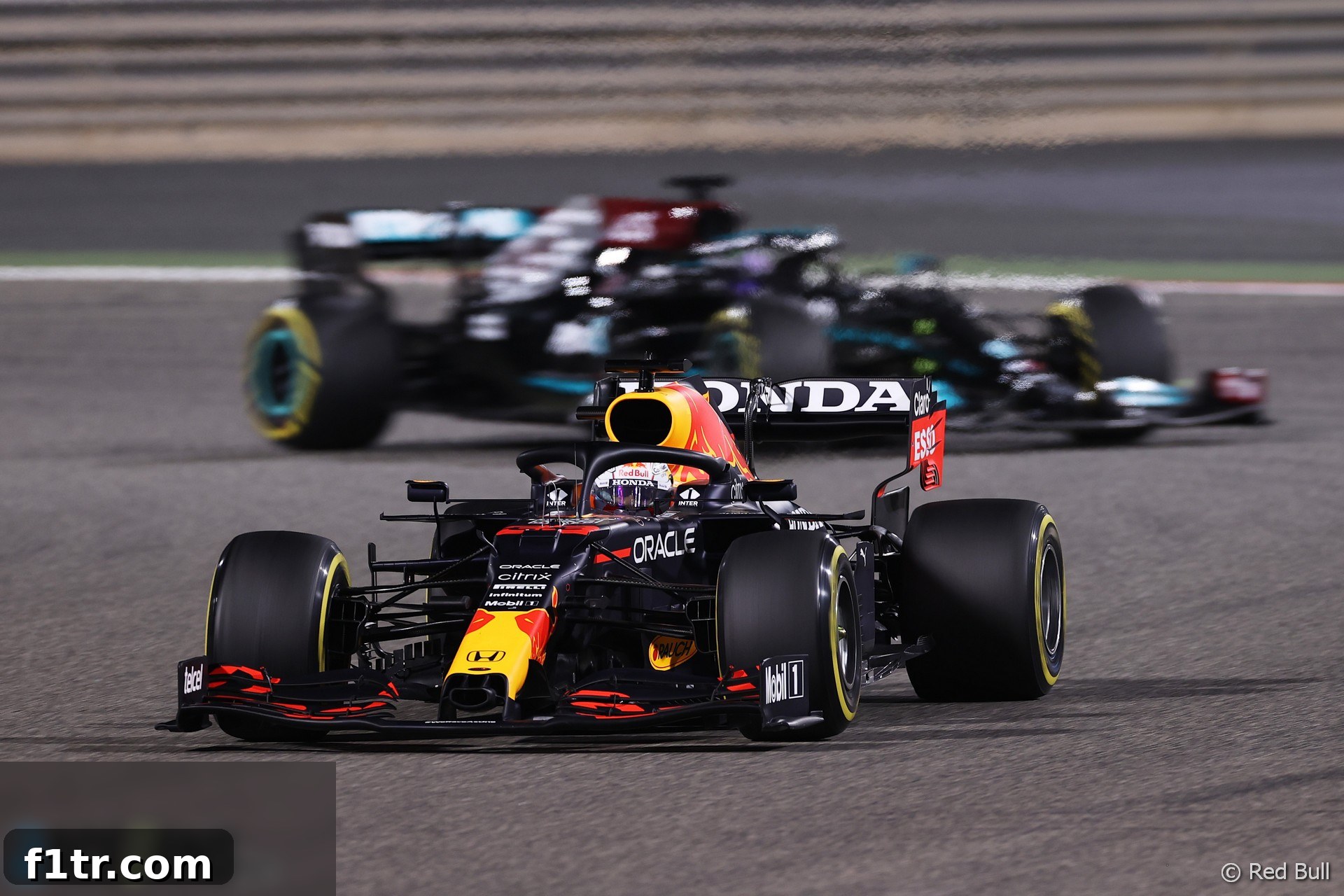
The thrilling opening race of the 2021 Formula 1 season, the Bahrain Grand Prix, delivered immediate drama and set the stage for one of the most intense championship battles in recent memory. At the heart of the controversy surrounding the race’s closing stages was Red Bull Racing’s team principal, Christian Horner, who staunchly defended Max Verstappen’s decision to cede the lead to Lewis Hamilton in the final laps, a move that ultimately cost the Dutchman a potential victory. This contentious moment sparked widespread debate over track limits, race officiating, and the very essence of sporting fairness in elite motorsport.
Verstappen’s Decisive Overtake and the Immediate Reversal
The climax of the Bahrain Grand Prix saw a fierce wheel-to-wheel battle between the reigning champion, Lewis Hamilton, and his ascendant challenger, Max Verstappen. With just three laps remaining, Verstappen, driving with characteristic aggression and precision, executed a spectacular overtake on Hamilton for the race lead. The move brought fans to their feet, promising a thrilling conclusion to an already epic encounter. However, the elation for Red Bull and Verstappen was short-lived.
As Verstappen completed the overtake, he ventured beyond the white line marking the edge of the track at Turn 4, effectively using the run-off area to complete the maneuver. Race control was swift to act. Red Bull was immediately informed that Verstappen had gained an unfair advantage by exceeding track limits during the overtake and was instructed to give the position back to Hamilton without delay. This instruction was relayed to Verstappen, who, though undoubtedly frustrated, complied with the directive. The position change effectively handed Hamilton the victory, leaving Verstappen to finish a close second.
Christian Horner’s Strategic Defense: A Calculated Surrender
Following the race, Christian Horner faced the media to explain the team’s decision, which many fans questioned given Verstappen’s competitive spirit. Horner confirmed the instruction from race control, emphasizing the immediate and unequivocal nature of the directive. “We had an instruction from the race director to give the place back immediately,” Horner stated. “Max was very sporting and did that. It was frustrating, and Lewis had just enough to retain his position to the end of the race.”
Verstappen himself expressed frustration over the team radio, believing he could have pulled out a sufficient lead had he held onto the position. He speculated that a five-second time penalty, often applied for such infringements, would not have cost him the victory, as he felt confident he could establish a five-second gap over Hamilton in the remaining laps. However, Horner revealed the strategic thinking behind Red Bull’s compliance, highlighting the potentially far more severe consequences of defying race control.
“There’s no guarantee we could have got the five seconds, if that had been the penalty,” Horner explained. The Red Bull principal pointed out that race control possessed the authority to issue a stiffer penalty, potentially a drive-through or even a stop-go penalty, which would have been far more detrimental to Verstappen’s race result. In a championship where every point mattered, risking a harsher penalty for a gamble on a five-second lead was simply not a viable strategy. “So he did the right thing,” Horner concluded, underscoring the pragmatic decision to obey the stewards’ directive, even if it meant sacrificing a win.
The Pervasive Problem of Track Limits at Turn 4
The controversy surrounding Verstappen’s overtake was inextricably linked to the broader, more pervasive issue of track limits at Turn 4 of the Bahrain International Circuit. This particular corner, with its wide tarmac run-off, proved to be a constant source of contention throughout the entire race weekend. The policing of track limits here was a confusing and frustrating saga for drivers and teams alike, ultimately contributing to the decisive moment in the race.
On Friday, during practice and qualifying sessions, drivers were explicitly instructed not to use the full extent of the run-off area at Turn 4, with infringements leading to lap times being deleted. However, a significant shift in interpretation occurred for the race itself. Drivers were then informed they would be allowed to use the run-off during the race, as long as they didn’t gain a lasting advantage. This seemingly subtle change created an immediate grey area, fostering confusion and inconsistency.
Red Bull quickly noticed that Mercedes drivers, particularly Lewis Hamilton and Valtteri Bottas, were exploiting this relaxed interpretation, consistently running wide at Turn 4 to carry more speed through the corner. This prompted Red Bull to question race control and, at one point, even instruct Verstappen to do the same. “Both Lewis and Valtteri [Bottas] using the exit at Turn 4, so feel free to do the same until we’re told not to,” Verstappen was told over the radio. His immediate reply highlighted the frustration: “Yeah, how is that legal, man? The whole weekend we couldn’t do it.”
Horner elaborated on this observation: “We could see as soon as Mercedes started to push, they just used that part of the track. We questioned with race control: If that’s the case, can we do this? Because when you’re in a nip-and-tuck battle, there’s a two-tenth advantage using that part of the circuit. So they did it lap after lap.” The repeated use of the run-off by Mercedes eventually led race control to intervene, issuing a warning to the team to respect the limits, otherwise a black-and-white flag (for unsportsmanlike conduct) would be shown.
The Crucial Distinction: Gaining an Advantage During an Overtake
Despite the fluctuating rules regarding the general use of Turn 4’s run-off for lap time, a specific rule remained crystal clear: drivers were not allowed to keep any position gained by overtaking beyond track limits at that corner. This distinction was critical. While Mercedes’ earlier use of the run-off might have been tolerated for improving lap times before race control’s warning, gaining a position by executing an overtake outside the defined track boundaries was strictly forbidden.
“Obviously Max then went wide on the pass there, which had been made clear before the race that if somebody got an advantage by going out there, they’d have to give it back,” Horner clarified. “And he did that immediately and the team instructed him to do it following race control instructing us.” This highlights that while the general track limits debate raged, the specific protocol for gaining a position through an illegal maneuver was understood, if reluctantly accepted, by Red Bull.
The Call for Consistency: Black or White, Not Shades of Grey
Beyond the immediate outcome of the Bahrain Grand Prix, Christian Horner’s most significant message revolved around the desperate need for consistency in the application of track limits rules. The shifting interpretations and perceived ambiguities created an uneven playing field and sowed seeds of doubt and frustration among teams and drivers.
“With these track limits things, they are always going to be contentious,” Horner acknowledged. “But we do just need to have a consistent situation. You can’t say ‘it’s okay to use it in a race, but you can’t overtake out there’. They should be black or white, they shouldn’t be shades of grey.” This powerful statement perfectly encapsulated the sport’s ongoing challenge. For fair competition and clear understanding by fans, rules must be unambiguous and applied uniformly, irrespective of the driver or team involved.
The Bahrain Grand Prix incident underscored how crucial clear officiating is, especially in a sport where milliseconds and inches can dictate victory or defeat. The lack of a definitive “black or white” rule at Turn 4 caused confusion, allowed for varying interpretations, and ultimately led to a contentious decision that shaped the outcome of the season’s opening race. This incident served as a stark reminder to the FIA and race control that consistency in rule enforcement is paramount for maintaining the integrity and fairness of Formula 1.
The Broader Implications for the 2021 Championship Battle
The Bahrain Grand Prix incident, particularly the track limits controversy, set an early tone for the epic 2021 Formula 1 season. It immediately highlighted the competitive intensity between Mercedes and Red Bull, and between Hamilton and Verstappen. It also brought into sharp focus the role of officiating and the interpretation of rules in deciding races, a theme that would recur throughout the year.
While Verstappen’s decision to hand back the position was a sporting gesture and a pragmatic strategic choice, it underscored the fine margins on which championship battles are fought. Every point, every decision, and every rule interpretation carried immense weight. The frustration expressed by Verstappen and Horner was a testament to the belief that they had the pace to win, but were constrained by a complex web of regulations that lacked consistent application. This set the stage for a season-long narrative where track limits, penalties, and strategic calls would frequently be under the microscope, adding another layer of drama to an already captivating rivalry.
Ultimately, while the Bahrain Grand Prix ended in disappointment for Red Bull and Verstappen, Horner’s defense of the decision showcased the team’s commitment to compliance and their strategic acumen in navigating the complex regulatory landscape of Formula 1. More importantly, it amplified the ongoing call from across the paddock for clearer, more consistent rule enforcement – a goal that continues to be a cornerstone of fair play in motorsport.
2021 Bahrain Grand Prix Further Reading
- Why one driver says there’s no easy solution to F1’s ‘messy’ track limits problem
- Verstappen: Lost win in Bahrain “is not going to matter” if we have fastest car
- The classic rivalry for ‘best of the rest’ and six more Imola talking points
- Ocon: We need to extract the maximum from the car to score points
- Vettel feeling “not at home in the car yet” after tough weekend
Browse all 2021 Bahrain Grand Prix articles