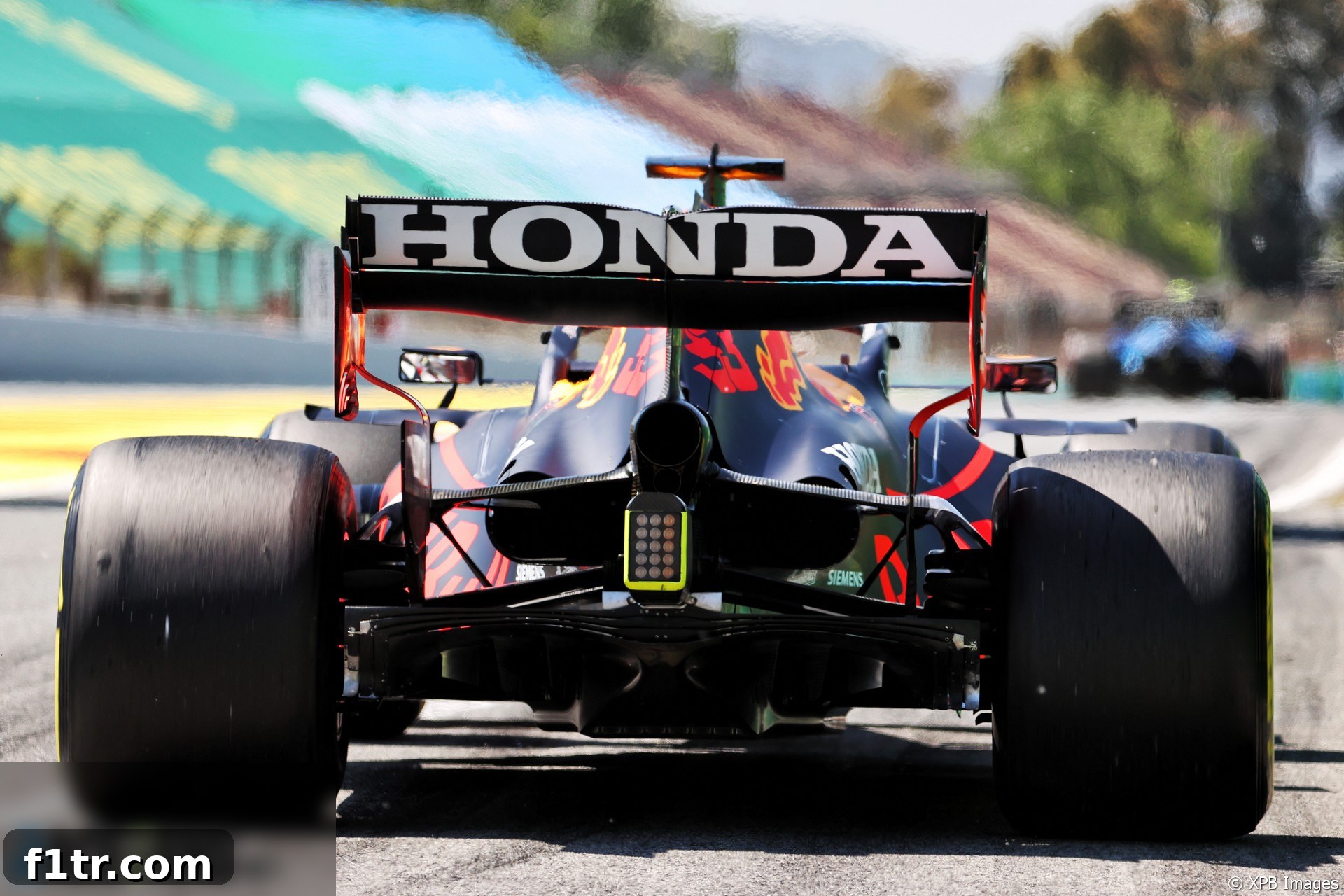
The high-stakes world of Formula 1 is perpetually a crucible of engineering marvels and competitive controversies. At the heart of a recent technical debate, Red Bull Racing found itself under the spotlight during the 2021 Spanish Grand Prix, specifically concerning its rear wing design. Team Principal Christian Horner adamantly defended the team’s aero components, asserting full compliance with Formula 1’s stringent regulations, following observations of the wing appearing to deflect at high speeds during the race weekend.
Advert | Become a Supporter & go ad-free
Footage captured from the Circuit de Catalunya, a renowned testing ground for F1 machinery, clearly indicated a subtle movement in the Red Bull car’s rear wing when operating at peak velocities. This visual anomaly did not go unnoticed, particularly by rival teams. Reigning world champion Lewis Hamilton, a driver known for his acute technical awareness, publicly commented on the “bendy” nature of the wing following qualifying sessions, igniting a fresh wave of speculation and technical scrutiny within the paddock.
The Quest for Aerodynamic Advantage: Flexible Wings in F1 History
The concept of flexible wings is far from new in Formula 1. Teams have historically explored and exploited the boundaries of aerodynamic design to gain a competitive edge. The primary motivation behind a wing designed to subtly deform at speed is straightforward: to reduce drag on straight lines, thereby boosting top speed, while maintaining crucial downforce through corners. This dynamic characteristic allows for a car to be faster on straights without compromising its stability and grip in the bends, an ideal scenario for any F1 team seeking marginal gains.
Over the decades, there have been numerous instances where teams have been accused of running flexible aerodynamic elements. From front wings that dipped at speed to rear wings that visibly flexed under load, the FIA (Fédération Internationale de l’Automobile), the sport’s governing body, has consistently tightened regulations to ensure a level playing field. The challenge for the FIA lies in defining “flexibility” and establishing objective tests, as all materials will flex to some degree under extreme loads. The line between natural material compliance and deliberate design exploitation is often a thin one, leading to an ongoing technical arms race between constructors and regulators.
FIA Scrutiny and Red Bull’s Defense
Formula 1 cars undergo an exhaustive and rigorous scrutineering process before, during, and after each race weekend. These checks are designed to ensure that every component, particularly those with aerodynamic implications, adheres strictly to the technical regulations. Christian Horner was quick to dismiss any suggestions of wrongdoing, emphasizing the extensive nature of these checks.
“Of course, the car’s scrutineered thoroughly and there are pull-back tests, there are all kinds of different tests it has to pass,” Horner stated, outlining the detailed examination his team’s car undergoes. He further stressed that the FIA, the ultimate arbiter of compliance, had given Red Bull’s design a clean bill of health. “The FIA are completely happy with the car; it’s passed all of those tests that are pretty stringent.” This assertion from the Red Bull boss aimed to definitively shut down the burgeoning controversy, grounding his team’s position in the official approval of the governing body.
The FIA employs various static load tests, including the aforementioned pull-back tests, where specific forces are applied to aerodynamic components. The deflection under these forces must remain within prescribed limits. While static tests are robust, the dynamic forces exerted on a wing at 300 km/h (over 180 mph) are vastly different, making the design of compliant yet aerodynamically advantageous flexible structures a perpetual engineering challenge and a point of contention.
The Art of F1 Mind Games: Horner vs. Hamilton & Wolff
Beyond the technical intricacies, the rear wing debate quickly spiraled into a psychological battle, a common occurrence in the intensely competitive F1 paddock. Christian Horner expressed genuine surprise at Lewis Hamilton’s public comments, implying that the observation might not have originated directly from the seven-time world champion himself.
“It’s something that Toto has mentioned to me previously,” Horner revealed, pointing a finger at Mercedes team CEO Toto Wolff. “I doubt it was Lewis’s opinion; it probably came from elsewhere.” This statement highlights the intricate web of alliances and rivalries that define Formula 1. It suggests that Hamilton’s remarks were potentially part of a broader strategy orchestrated by Mercedes to apply pressure on Red Bull, forcing them into a defensive position or prompting the FIA to review their designs more stringently. Such veiled accusations and strategic comments are a hallmark of the F1 championship, where every perceived advantage, technical or psychological, is meticulously scrutinized and exploited.
The 2021 season was already shaping up to be an epic showdown between Red Bull and Mercedes, with Max Verstappen and Lewis Hamilton locked in a fierce title fight. In such a high-stakes environment, even the slightest hint of a technical advantage, whether real or perceived, becomes a powerful tool in the hands of rival team principals looking to unsettle their competitors. This episode served as a clear illustration of the “mind games” inherent in Formula 1, where words can be as potent as lap times.
The Spanish Grand Prix: A Pivotal Battleground
The Spanish Grand Prix, held at the Circuit de Catalunya, traditionally marks a crucial point in the Formula 1 calendar. Its characteristics – a mix of high-speed corners, sweeping bends, and a long main straight – make it an excellent barometer for a car’s overall performance. Red Bull had shown strong pace throughout the weekend and led a significant portion of the race, demonstrating their raw speed and competitive edge. However, they ultimately conceded victory to Mercedes, marking the third time in four races that year that Mercedes had managed to snatch victory from Red Bull’s grasp.
This outcome further intensified the championship battle, underscoring Mercedes’ formidable race pace, which, according to Horner, had not been fully evident during pre-season testing. “Mercedes didn’t show their true potential at the [pre-season] test. From Bahrain, they’ve been right there, particularly on race pace,” Horner observed. This realization meant that Red Bull could not afford to rest on its laurels; continuous development would be paramount.
The Relentless Development Push and Future Challenges
In the relentless pursuit of championship glory, stagnation is not an option. Christian Horner reiterated Red Bull’s unwavering commitment to aggressive development to maintain their competitive edge in the title fight. This commitment, however, is complicated by a confluence of factors, including the sport’s new budget cap regulations and the impending major technical regulation changes for the 2022 season.
“So of course, it is going to be about developing and developing efficiently, developing within the constraints of obviously designing a new car for next year as well, so that poses its own challenge,” Horner elaborated. Teams faced the daunting task of simultaneously developing their current-year cars to win the championship while diverting significant resources to design and build entirely new cars conforming to the drastically different 2022 regulations. This balancing act required meticulous planning, strategic allocation of resources, and a deep understanding of priorities, all under the watchful eye of the cost cap.
Furthermore, the 2021 calendar featured an unprecedented 23 races, a true test of endurance for teams and machinery alike. Horner highlighted the marathon nature of the season: “Of course, a 23-race calendar is a marathon season. We need to make sure that we’re there for the second half so that that’s been generally where we’ve been stronger.” This long-term strategic outlook underscored the importance of not only front-loading development but also ensuring sustained performance and reliability throughout the latter, often decisive, stages of the championship. The ability to bring effective upgrades consistently, while managing logistical and personnel strain, would be crucial in determining the ultimate victor.
Conclusion: The Ever-Evolving Technical Battleground of F1
The Red Bull rear wing controversy at the 2021 Spanish Grand Prix serves as a vivid reminder of the multifaceted nature of Formula 1. It’s a sport where cutting-edge engineering meets the meticulous scrutiny of regulators, where on-track performance intertwines with off-track psychological warfare, and where every tenth of a second is fought for with unwavering intensity. Christian Horner’s defense of his team’s design, coupled with Lewis Hamilton’s observations and the subsequent comments from Toto Wolff, encapsulated the fierce rivalry that defined the 2021 season.
As teams navigate the complexities of technical regulations, budget caps, and the dual challenge of current and future car development, the saga of the flexible rear wing became more than just a technical discussion; it became a symbol of the relentless pursuit of excellence and the unyielding spirit of competition that makes Formula 1 such a captivating spectacle. The eventual outcome of such debates often shapes the championship narrative, adding layers of intrigue to an already thrilling contest for supremacy.
Advert | Become a RaceFans supporter andgo ad-free
2021 Spanish Grand Prix: Further Insights
- Two reasons why Catalunya may not predict the championship – at least this year
- McLaren to keep “drip-feeding” updates onto 2021 car
- Working group tackling F1’s track limits problem
- ‘We’ll discuss what went wrong’: Hamilton and Verstappen team radio transcript analysis
- 2021 Spanish Grand Prix Star Performers
Browse all 2021 Spanish Grand Prix articles