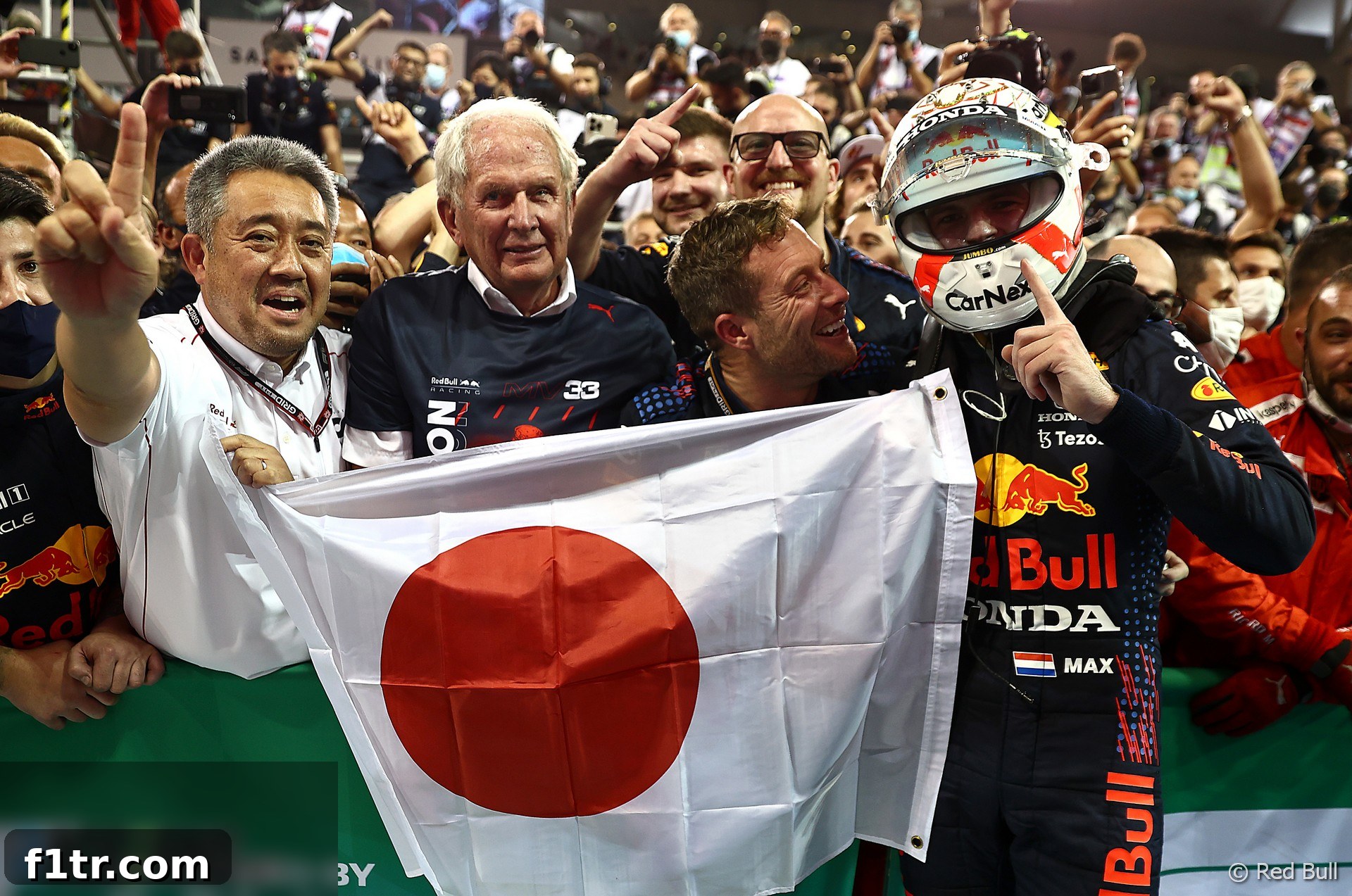
Honda’s remarkable fourth, and potentially final, chapter as a Formula 1 power unit manufacturer concluded on an unprecedented high, a triumph that seemed almost inconceivable during its challenging re-entry into the sport in 2015. This journey, marked by perseverance and relentless innovation, transformed an initial period of struggle into a glorious world championship victory, etching Honda’s name firmly in the annals of F1 history.
In the highly competitive landscape of Formula 1’s V6 hybrid turbo regulations, Honda took a courageous leap, becoming the last major manufacturer to commit to developing a power unit from scratch under these complex rules. Yet, with its ultimate mission accomplished, it also became the first of these new-era entrants to announce its departure, citing a strategic imperative to redirect its extensive research and development resources towards the electrification of its mainstream road car fleet. This decision underscores a broader industry shift, but Honda’s exit is far from quiet, leaving behind a legacy of overcoming adversity.
As it exits the pinnacle of motorsport, Honda stands as the sole manufacturer, apart from Mercedes, to have powered a driver to the coveted World Championship title in the challenging hybrid era. This achievement is particularly poignant when considering the performance of other legacy manufacturers. Renault, which previously supplied Red Bull Racing, has conspicuously struggled to replicate its V8-era championship successes. Similarly, Ferrari, despite its storied history and substantial investment, has yet to clinch a drivers’ title in this era, making Honda’s accomplishment all the more significant.
The announcement of Honda’s fourth return to Formula 1 for the 2015 season, rekindling its legendary partnership with McLaren, ignited immense excitement and soaring expectations. The reunion of these iconic names, once synonymous with unparalleled success, was further bolstered by an formidable driver lineup. Jenson Button, a seasoned world champion, was joined by Fernando Alonso, who made a surprising return to the Woking-based team after a bitter parting in 2007. This pairing promised a blend of experience, speed, and strategic acumen, raising hopes for an immediate impact.
However, the sheer dominance of Lewis Hamilton and Mercedes in the 2014 season might have cast a subtle shadow of foreboding over these high aspirations. Mercedes had effortlessly romped to both titles, setting a new benchmark for hybrid performance. Despite this, few, if any, within the F1 paddock or among its ardent fans, could have predicted the extent of the disaster that awaited the reunited McLaren-Honda partnership. What began with grand ambitions quickly descended into a protracted and painful struggle.
The pre-season testing for the 2015 season was nothing short of cursed for McLaren-Honda. The new power unit proved problematic from the outset, plagued by a complex “size-zero” concept that prioritized aerodynamic efficiency over raw power and reliability. Fernando Alonso suffered a heavy crash under initially mysterious circumstances, which he later attributed to a steering issue. This incident forced him to miss the opening round of the 2015 season, with Kevin Magnussen stepping in as a temporary replacement. The scale of their struggles became starkly evident in the numbers: McLaren managed a mere 380 laps over 12 days of pre-season testing, a stark contrast to reigning champions Mercedes, who clocked an astonishing 1,340 laps. It was an ominous start, and unfortunately, things scarcely improved from there.
Reliability, or rather the lack thereof, proved to be a critical flaw of the Honda power unit. Mechanical failures were frequent, undermining any potential for consistent performance. The McLaren team plummeted to a dismal ninth place in the Constructors’ Championship by the end of the season, accumulating a meagre 27 points. Drivers frequently found themselves managing persistent issues, with Button describing some races as a “scary” experience, struggling to stay competitive or even finish. The frustration within the team was palpable, and it often spilled over during races.
Fernando Alonso, known for his outspoken nature, became the voice of this frustration. During Honda’s home race at Suzuka, a circuit demanding maximum power, his infamous radio remark about having a “GP2 engine” went viral, deeply embarrassing the Japanese manufacturer. Alonso later criticised F1 bosses for broadcasting his private comments, but the damage was done. This damning assessment would forever haunt the remainder of the McLaren-Honda partnership, symbolizing the deep chasm between their ambitions and their reality.
Any flickering hope that the situation would drastically improve for the 2016 season quickly faded, although the year did mark a marginal betterment for the struggling partnership. They managed to score 76 points, climbing to sixth in the championship, a modest improvement but still far from their championship aspirations. This period also saw an increasingly disillusioned Jenson Button contemplating retirement, while Fernando Alonso endured another spectacular accident, forcing him to cede his car to Stoffel Vandoorne for the Bahrain Grand Prix. The fundamental issues with the power unit’s performance and reliability remained largely unresolved, despite strenuous efforts from both McLaren and Honda engineers.
The persistent struggles reached a head in 2017. Alonso again failed to complete a full F1 season in his Honda-powered car, though this time it was by choice. He famously skipped the prestigious Monaco Grand Prix – with Button returning from retirement as a one-off substitute – to compete in the Indianapolis 500. Alonso led convincingly in America, showcasing his immense talent, only for his race to end prematurely due to, ironically, another Honda engine failure. This highly publicized incident underscored the pervasive reliability issues that continued to plague Honda’s F1 program, casting a long shadow over their efforts.
By the 2017 season, the relationship between McLaren and Honda had deteriorated beyond repair, becoming irrevocably strained. Despite another extensive overhaul of the power unit’s design, intended to rectify its deep-seated problems, the team’s performance regressed. Their meagre gains from 2016 relative to their competitors evaporated, and they slid back to ninth place in the Constructors’ Championship. The inevitable divorce was formally announced before the season’s conclusion, signaling the end of a partnership that promised so much but delivered so little. McLaren would seek solace with Renault engines, while Honda searched for a new partner.
Earlier in the year, Honda had announced an agreement to supply a second team, Sauber, with their engines starting in 2018. This was seen as a vital opportunity for Honda to gain more data and accelerate development. However, within a mere three months, a significant change in Sauber’s leadership occurred: Frederic Vasseur replaced Monisha Kaltenborn as team principal. Vasseur swiftly assessed the situation and, understanding the dire state of the Honda project at the time, made the decisive call to terminate the deal, leaving Honda once again with only one team, and soon, none.
Shortly after the announcement of McLaren’s termination, a lifeline appeared for Honda. News broke that Toro Rosso, Red Bull’s junior team, would take a chance on the Japanese power units for the 2018 season. This move was part of a larger engine reshuffle, which saw Red Bull Junior Team driver Pierre Gasly, who had developed strong links with Honda during his successful stint in Japanese Super Formula and narrowly missed the title, swapped in to replace Carlos Sainz Jnr. Sainz, in turn, was shuffled over to Renault to appease the French manufacturer after losing the power unit contract with the Faenza-based squad. This complex exchange highlighted the desperate scramble for engine deals within F1.
At the time, Toro Rosso had endured a run of unfortunate luck with its power unit suppliers. Having been relegated to using a year-old 2015 Ferrari power unit in 2016, and then being re-integrated into Red Bull’s main Renault deal in 2017, the junior outfit was in no position to be overly selective. They essentially had to take whatever opportunity arose. Despite Honda’s troubled reputation, this partnership proved to be a pivotal moment. In its fourth year back in Formula 1, Honda’s engine program finally began to show tangible signs of bearing fruit, benefiting immensely from a fresh start and a team willing to collaborate closely on development.
On the surface, the 2018 season might not have immediately suggested a paradigm shift. McLaren-Renault still out-scored Toro Rosso-Honda by 62 points to 33. However, Red Bull Racing, with its keen engineering insight, recognized the potential. They observed how their junior squad, despite limited resources, could achieve meaningful results with an engine that was meticulously tailored to their chassis, rather than a generic customer Renault unit. This observation instilled a crucial belief within the senior team. Consequently, Red Bull made the bold, almost audacious, decision to switch from their long-standing Renault supplier to Honda, opting for a power unit that had not yielded a single podium finish in its entire four-year hybrid era history. This was a calculated risk, a testament to their trust in Honda’s development trajectory.
That audacious gamble paid off, and it did so remarkably quickly. In the very first race of the 2019 season, Max Verstappen secured a third-place finish in Australia, marking Honda’s first podium of its return. This promising start was swiftly followed by even greater achievements. The long-awaited first victory of Honda’s fourth F1 stint arrived dramatically at Red Bull’s home race, the Austrian Grand Prix, with Max Verstappen expertly navigating to the top step of the podium. While Mercedes maintained its overall dominance and Ferrari clinched second place in the constructors’ standings, nearly 100 points ahead of Red Bull, the revitalized Red Bull-Honda partnership scored an impressive 417 points, including three momentous victories. The transformation was undeniable, and Honda was back in the winning circle.
The newfound success led both Red Bull and Toro Rosso (soon to be rebranded as AlphaTauri) to extend their deals to use Honda power units. However, these extensions were only for a single season, a detail that foreshadowed a significant development. The reason behind these short-term agreements emerged the following year, revealing a corporate decision that would send ripples through the F1 paddock despite the ongoing sporting success.
In 2020, Honda continued its upward trajectory, achieving a significant milestone by becoming the first hybrid-era manufacturer to power two separate teams to victories. Pierre Gasly delivered a sensational win for AlphaTauri at Monza, a testament to both his talent and the improving Honda engine. Red Bull, meanwhile, added two more victories to their tally, solidifying the partnership’s growing strength. Despite these successes and the clear performance gains, the top executives at Honda Motor Company determined that the substantial financial investment and resources dedicated to the F1 project could no longer be justified in the context of their evolving global strategy towards electrification. In October 2020, Honda officially announced its intention to withdraw from Formula 1 at the end of the 2021 season, sending shockwaves through the sport.
However, alongside the announcement, Honda made a solemn promise: to dedicate its full focus and resources to its final season, aiming for the ultimate prize. And they delivered on that claim with unparalleled dedication. The 2021 season witnessed a relentless pursuit of perfection from Honda, culminating in Max Verstappen and Red Bull remaining fierce contenders in both the Drivers’ and Constructors’ Championship fights right up until the dramatic final round. The commitment was absolute, and the results spoke for themselves.
Significant performance gains, particularly in crucial areas such as energy recovery and power output, had been found thanks in part to an unlikely collaboration: expertise from Honda’s jet engine division was leveraged to solve complex power unit problems, demonstrating Honda’s holistic engineering capabilities. Crucially, their reliability was also much improved, a stark contrast to their early hybrid struggles. In Honda’s final year, Red Bull and AlphaTauri drivers primarily incurred penalties for crash damage, rather than technical engine failures. Meanwhile, several rival Mercedes-powered cars struggled with performance degradation on their internal combustion engines, highlighting Honda’s impressive stride forward. The Red Bull-Honda partnership flourished, with Max Verstappen and his teammate Sergio Perez securing an impressive 11 victories and a further 12 podium finishes, complemented by another top-three finish for Pierre Gasly at AlphaTauri. This incredible season built to an unforgettable climax.
Then, in circumstances nothing short of extraordinary, a Drivers’ World Championship title that had appeared tantalizingly out of reach for almost every single lap of the season’s final race, the Abu Dhabi Grand Prix, finally fell to Max Verstappen, Red Bull, and Honda on the very last lap. A Safety Car period, a controversial un-lapping decision, and a final, heroic overtake catapulted Verstappen to his maiden championship, delivering Honda the fairytale ending they had relentlessly pursued. It was a moment of pure sporting theatre, cementing Honda’s incredible comeback.
After the profound pain and immense frustration of their initial years back in the sport, and the immense pressure of knowing that this was their absolute last chance to clinch a title before their planned departure, Honda’s first Formula 1 championship triumph in 30 years was an overwhelmingly emotional moment for everyone involved. It was a victory forged in resilience and determination.
“All the emotion came out from everyone,” a jubilant Max Verstappen reflected after his historic win. “It’s a real story of ‘never give up’ and ‘keep pushing’ because it was, of course, a very difficult situation for them back in the day. To be able to win this for them, it’s just incredible.” Verstappen emphasized that Red Bull had given Honda the essential self-belief and unwavering support they needed to transform their F1 project into a resounding success.
“Everyone in the team told them we can do this together. You just have to believe and that’s what they did,” Verstappen continued, highlighting the synergy between the two organizations. “Luckily, of course, there was a lot of investment involved, but that’s normal in Formula 1, you need to do that. And to, of course, then win the championship all together, also in their final race of being fully part of the team, was insane. Everything came out in the emotions.” This heartfelt reflection perfectly encapsulated the epic journey of Honda in its final, glorious F1 chapter, a true testament to grit, innovation, and the spirit of perseverance.
2021 F1 Season Review: Highlights and Key Performers
- 2021 F1 Driver Rankings #1: Max Verstappen
- 2021 F1 Driver Rankings #2: Lewis Hamilton
- 2021 F1 Driver Rankings #3: Lando Norris
- 2021 F1 Driver Rankings #4: Charles Leclerc
- 2021 F1 Driver Rankings #5: Carlos Sainz Jnr
Browse all 2021 F1 season review articles