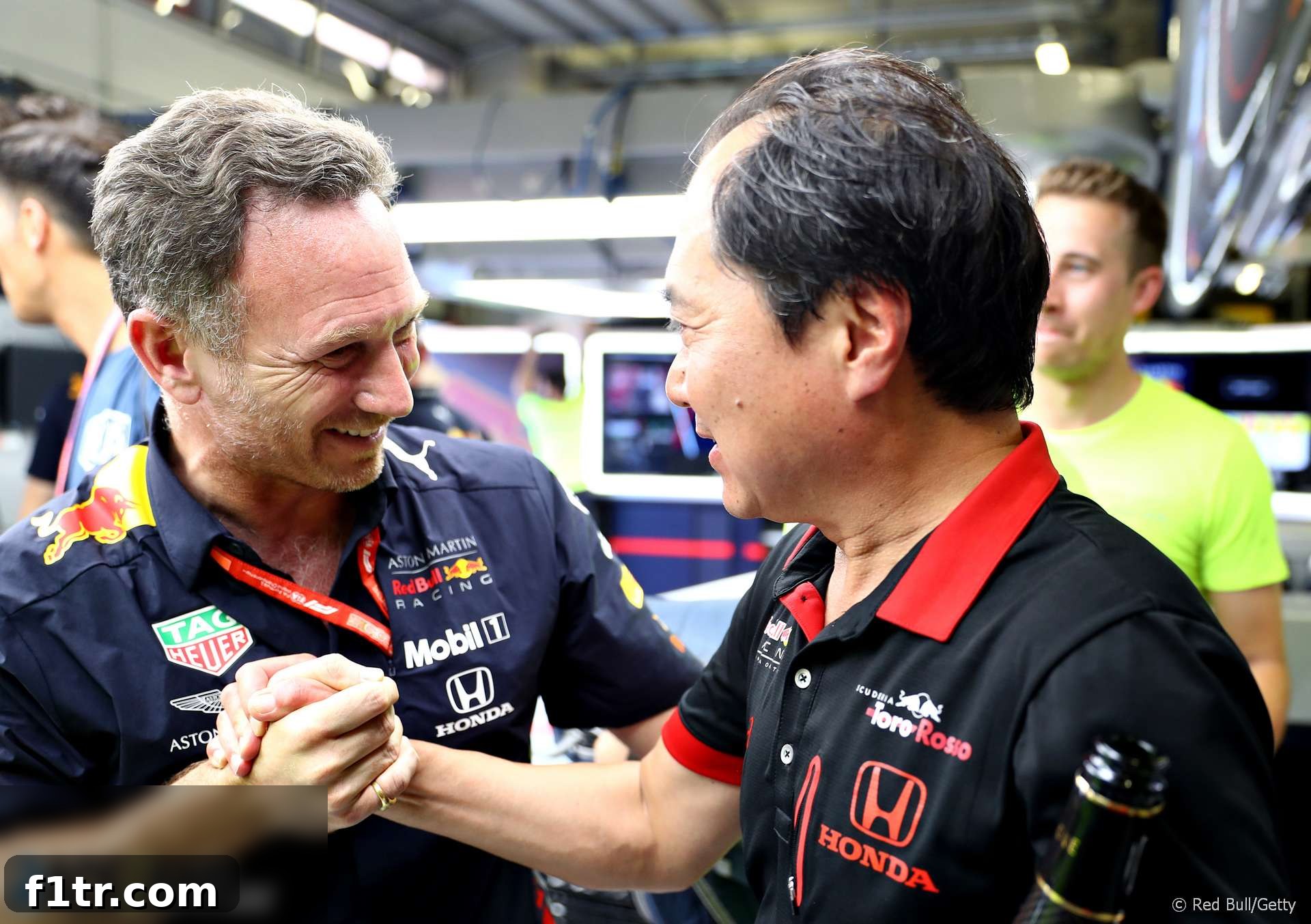
The roar of a Honda-powered Formula 1 engine crossing the finish line first at the Austrian Grand Prix marked a monumental turning point, a true “new beginning” for the Japanese manufacturer. Toyoharu Tanabe, Honda’s F1 Technical Director, encapsulated the emotion and significance of this triumph, the company’s first victory since their return to the pinnacle of motorsport four years prior, describing it as a fresh start after years of relentless effort and perseverance.
Advert | Become a Supporter & go ad-free
Honda’s journey back to the top tier of Formula 1 has been anything but smooth. Their much-anticipated return in 2015 as McLaren’s engine supplier was marred by severe technical challenges. The V6 hybrid turbo power units, ambitious in their compact “size zero” concept, consistently proved to be under-powered and plagued by chronic reliability issues. This period was incredibly difficult for all involved, with McLaren enduring some of their worst seasons in decades and Honda’s reputation taking a significant hit. Despite the immense resources poured into development, progress was agonizingly slow, leading to a frustrating three-season partnership that ultimately ended with McLaren seeking power elsewhere, leaving Honda at a critical juncture in its F1 commitment.
In a strategic move that would prove pivotal, Honda forged a new partnership with Scuderia Toro Rosso, Red Bull’s junior team, in 2018. This collaboration allowed Honda to develop and refine their power unit in a less high-pressure environment, learning crucial lessons and making steady, albeit incremental, improvements. The data gathered, the experience gained, and the visible progress made with Toro Rosso instilled a newfound confidence not only within Honda but also within the wider F1 paddock. This groundwork was crucial, ultimately convincing Red Bull Racing, a team with championship aspirations, to switch from their long-time supplier Renault to Honda power for the 2019 season. It was a bold decision, a calculated risk by Red Bull, reflecting their belief in Honda’s renewed potential and the clear trajectory of improvement observed at Toro Rosso.
The alliance between Red Bull Racing and Honda quickly showed promise, but it was at the Austrian Grand Prix that the partnership delivered its first spectacular success. Max Verstappen’s thrilling victory in a dramatic race marked not only the first win for the Red Bull-Honda pairing in their ninth race together but also ended Honda’s arduous 13-year wait for an F1 engine victory. The last time a Honda engine tasted victory was back in 2006, when Jenson Button triumphed at the Hungaroring for the Honda works team. This win in Austria was more than just a race victory; it was a powerful statement, a culmination of years of dedicated work, resilience, and unwavering belief from everyone associated with the Honda F1 project. The emotion in the pit lane and in the Honda motorhome was palpable, a mix of relief, joy, and immense pride.
Toyoharu Tanabe, reflecting on the magnitude of this achievement, conveyed heartfelt gratitude to the countless individuals whose tireless efforts made this moment possible. “Thanks to the efforts of all the Honda F1 staff in Japan and the UK, who worked tirelessly on our PU development, we finally made it,” he stated, acknowledging the immense pressure and dedication of his teams. He emphasized the historical significance: “Our first win in the hybrid era, the first since Hungary 2006.” This victory represented a significant milestone in the complex and highly competitive hybrid engine era of Formula 1, proving Honda’s capability to compete at the very highest level. Tanabe also extended a special word of thanks to the families of all staff members, recognizing the crucial support they provided behind the scenes, allowing engineers and technicians to commit fully to the demanding world of Formula 1.
The Honda F1 Technical Director was also quick to highlight the pivotal roles played by their partners in this success. “Thanks of course to Max for a great drive and to Aston Martin Red Bull Racing for providing him with a fantastic car,” he affirmed, recognizing Verstappen’s exceptional talent and the robust machinery supplied by the team. Verstappen’s aggressive yet controlled driving style perfectly complemented the potent Honda power unit, leading to a formidable combination on track. Tanabe further emphasized, “We must not forget the great contribution made by Scuderia Toro Rosso, who helped us get back on the right path last year.” This acknowledgment underscores the strategic importance of the Toro Rosso collaboration, which served as an invaluable testing ground and catalyst for Honda’s resurgence. The lessons learned and the developments made with the junior team were instrumental in preparing Honda for the demands of a top-tier team like Red Bull Racing.
Beyond the immediate teams, Tanabe also recognized the broader ecosystem that contributes to such a complex operation. “Honda has not done this alone and so we want to acknowledge the contribution of our outside suppliers,” he said, highlighting the collaborative nature of modern Formula 1 and the reliance on specialized partners for various components and technologies. Finally, he extended his thanks to the bedrock of any motorsport endeavor: the fans. “This win is also a way of saying thank you to all our fans, all over the world, for their continued support.” Through the difficult years, loyal supporters continued to believe in Honda’s potential, and this victory served as a profound vindication of their faith, reigniting passion and hope among the global fanbase.
Despite the euphoria surrounding the victory, Tanabe maintained a pragmatic outlook, acknowledging that the journey is far from over. “We have been back in this sport since 2015, but today feels like a new beginning,” he reiterated, reinforcing the idea that this victory is a foundation, not an end. The competitive landscape of Formula 1 remains incredibly challenging, with powerhouses like Ferrari and Mercedes having set exceptionally high benchmarks for performance and reliability. Tanabe underscored Honda’s commitment to continuous improvement: “While we can enjoy the celebrations for a short while, we must get back to work as soon as possible, because we still need to close our performance gap to the quickest teams.” This statement reflects the relentless pursuit of excellence inherent in Formula 1, where standing still means falling behind. The Austrian Grand Prix win served as powerful motivation, a clear demonstration of what can be achieved, and a firm commitment to further develop their power unit to challenge for more victories and ultimately, a world championship.
Advert | Become a RaceFans supporter andgo ad-free
2019 F1 season
- Crying in the Melbourne car park at 2019 grand prix was my career low – Ocon
- McLaren Racing reports reduced £71 million loss in 2019
- Kvyat: Hockenheim podium last year was “my biggest achievement” so far
- How the FIA’s new encrypted fuel flow meter targets Ferrari’s suspected ‘aliasing’ trick
- “He smashed my office door”: 23 must-see moments from ‘Drive to Survive’ season two
Browse all 2019 F1 season articles