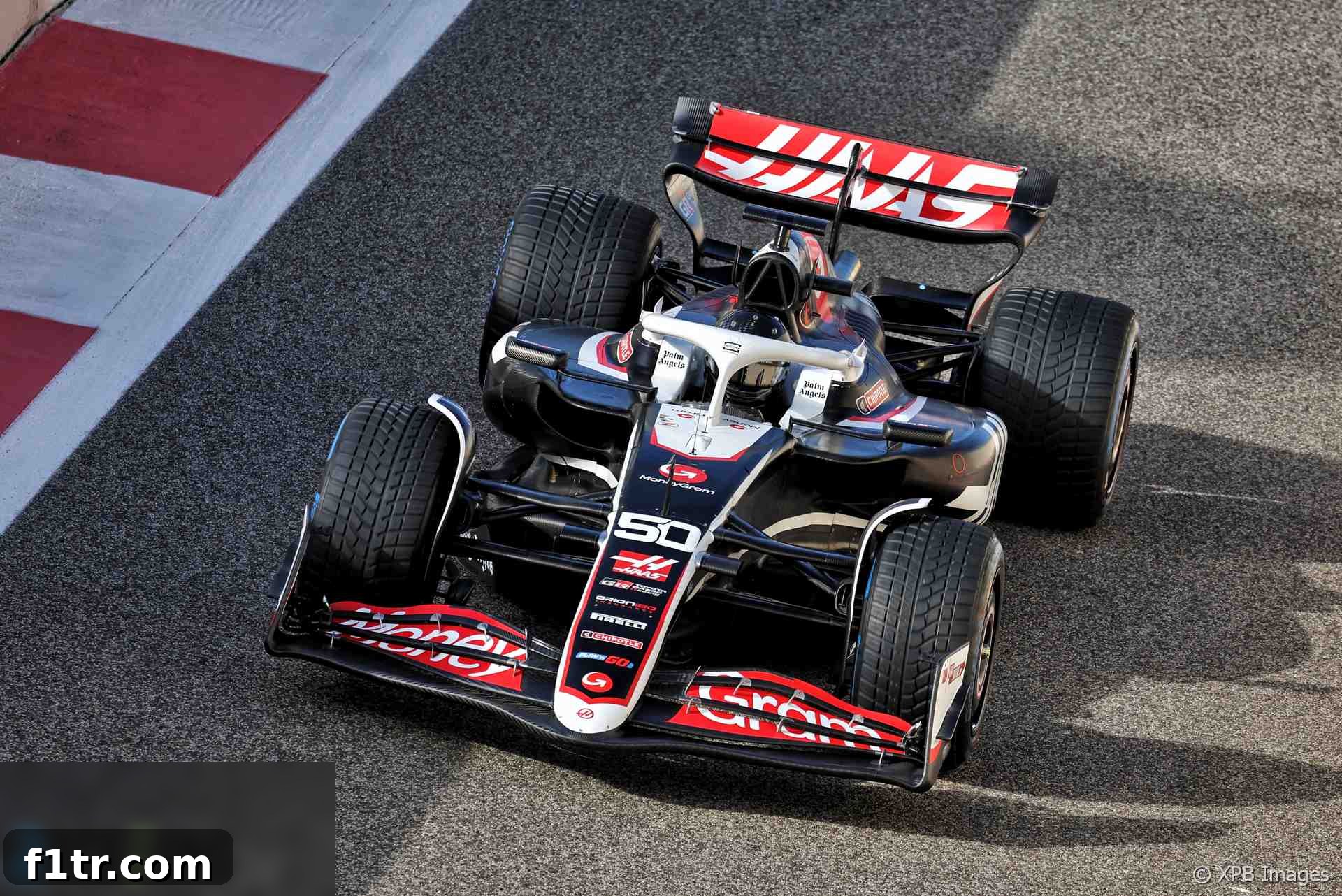
Ryo Hirakawa Makes Strategic Move to Haas F1 as Test and Reserve Driver, Departing Alpine
In a notable development within the ever-dynamic world of Formula 1, Ryo Hirakawa, a highly accomplished endurance racing driver, has concluded his tenure as a test and reserve driver for the Alpine F1 team. This move comes just three months after his initial appointment with the French outfit. Hirakawa has now officially joined the Haas F1 Team, taking on an identical test and reserve driver role, signaling a significant shift in his pursuit of Formula 1 opportunities and aligning himself with a fresh strategic partnership. This transition underscores the fluidity of driver rosters and the strategic alliances that shape the modern F1 paddock.
Hirakawa’s Illustrious Racing Pedigree
Ryo Hirakawa brings a wealth of experience and a distinguished track record to the Haas F1 Team. Renowned for his exceptional talent in endurance racing, he is a two-time World Endurance Champion (WEC) and a proud winner of the prestigious Le Mans 24 Hours. These accolades highlight his profound understanding of high-performance machinery, strategic race management, and the rigorous demands of top-tier international motorsport. His ability to deliver consistent performance under pressure across varied conditions makes him a valuable asset, not just as a test driver, but as a seasoned professional capable of contributing meaningfully to an F1 team’s development program. While embarking on this new F1 venture, Hirakawa remains a pivotal figure in Toyota Gazoo Racing’s highly successful WEC program, maintaining his competitive edge in a different, yet equally demanding, discipline of racing.
A Brief Stint with Alpine: Suzuka Debut
Hirakawa’s brief period with Alpine culminated in a single, high-profile outing in a Formula 1 car during the first free practice session of the Japanese Grand Prix at Suzuka. This appearance offered a rare opportunity for him to showcase his F1 capabilities on one of the sport’s most challenging circuits. Driving Jack Doohan’s car, Hirakawa delivered a commendable performance, setting the 12th fastest time. Remarkably, his lap was a tenth of a second quicker than that of Alpine’s regular race driver, Pierre Gasly, an impressive feat for a driver making his debut in an F1 practice session. Despite this promising start and the initial announcement of his long-term role, the swift nature of his departure from Alpine suggests a re-evaluation of strategic priorities, paving the way for his move to Haas.
Haas F1 and the Toyota Collaboration: A New Chapter
Hirakawa’s transition to the Haas F1 Team is more than just a change of allegiance; it represents a key component of a broader strategic alliance. Haas has a significant technical collaboration agreement with Toyota Gazoo Racing, a partnership designed to create synergistic opportunities, particularly for Toyota’s pool of talented junior drivers, to gain invaluable exposure and track time within Formula 1. Hirakawa, being a prominent driver for Toyota in WEC, perfectly embodies this collaboration. His recruitment by Haas leverages existing relationships and mutual strategic interests, providing Haas with an experienced driver with deep roots in a respected manufacturer’s motorsport program. This collaboration allows for cross-pollination of expertise and talent, benefiting both parties in their respective competitive endeavors.
Fulfilling FIA Junior Driver Regulations with Strategic Precision
Formula 1 regulations mandate that each team must dedicate at least two free practice sessions per season to drivers who have not competed in more than two F1 World Championship races. These “junior driver” sessions are crucial for nurturing emerging talent and providing necessary development opportunities for future generations of F1 stars. Haas plans to utilize Ryo Hirakawa to fulfill a significant portion of these mandatory runs for the remainder of the current season. By strategically deploying a driver of Hirakawa’s caliber and experience, Haas not only adheres to these regulatory requirements but also maximizes the benefit derived from these sessions. His ability to provide precise, actionable feedback on the car’s performance will be invaluable for the team’s ongoing development, far exceeding the typical expectations for a rookie driver fulfilling these obligations.
Hirakawa’s Extensive F1 Practice Schedule
Hirakawa, who celebrates his 31st birthday today, is set to make his much-anticipated inaugural appearance for the Haas F1 team this weekend. He will participate in the first practice session for the Bahrain Grand Prix, stepping into the car usually driven by Oliver Bearman. This initial outing will kick off a busy schedule of F1 track time for the Japanese driver throughout the season. He is also scheduled to return to the cockpit at the Spanish Grand Prix, where he will pilot Esteban Ocon’s VF-25, offering critical feedback on the team’s current challenger across a distinct circuit profile. The diversity of tracks is key, allowing Haas to gather comprehensive data on the VF-25’s performance under varying aerodynamic loads, tire demands, and environmental conditions.
Beyond these early engagements, Haas has outlined further significant practice sessions for Hirakawa, underscoring the depth of their commitment to integrating his experience into their technical development. He is scheduled to drive Bearman’s car again at the Mexican Grand Prix, a circuit famously known for its high altitude and unique aerodynamic challenges, which will test the VF-25 in specific ways. His final planned appearance for the season will be at the Abu Dhabi Grand Prix, the championship finale, where he will once more take the wheel of Esteban Ocon’s VF-25. These four allocated practice sessions are meticulously chosen to provide a broad spectrum of data, aiding the team’s continuous evolution of the VF-25 and its strategic preparation for future seasons.
Prior F1 Experience and Team Principal’s Vision
Ryo Hirakawa is not a complete newcomer to either the Haas environment or the intricate world of Formula 1 machinery. He previously gained valuable experience sampling a Haas F1 car during the post-season test at Yas Marina last year. This prior exposure means he already possesses a foundational understanding of the team’s operational procedures and the fundamental characteristics of their vehicle, ensuring a smoother integration into their testing program. Furthermore, his F1 experience extends beyond Haas; he also drove for McLaren in a first practice session at a previous Grand Prix, demonstrating his adaptability and readiness for the F1 stage. These prior engagements provide him with a broader perspective on F1 car behavior and team dynamics.
Ayao Komatsu, the Team Principal for Haas F1, expressed considerable enthusiasm for Hirakawa’s arrival, emphasizing the substantial value he is expected to bring to the team. Komatsu highlighted Hirakawa’s comprehensive experience and his proven ability to deliver precise and actionable feedback, which he believes will be instrumental in enhancing the team’s “knowledge and understanding of the VF-25.” In the highly technical and competitive environment of F1, such detailed driver input is paramount. It directly informs aerodynamic adjustments, suspension setups, and overall car development strategies, making Hirakawa’s contribution critical beyond merely fulfilling regulatory requirements.
The Value of Detailed Driver Feedback in F1 Development
Komatsu further elaborated on his expectations regarding Hirakawa’s contribution, stating, “His feedback was very detailed at the post-season test last year, so being able to provide Ryo valuable track time across four different circuits this year will help the entire team.” This statement underscores the analytical depth that Hirakawa provides and the comprehensive data collection that Haas aims to achieve. The opportunity for Hirakawa to drive the VF-25 on a variety of tracks—Bahrain, Spain, Mexico, and Abu Dhabi—will yield a rich tapestry of data. This diverse set of experiences will enable the team to assess the car’s performance under a wide range of conditions, from high-speed corners to low-speed technical sections, and in varying atmospheric pressures and temperatures, all crucial for refining the VF-25.
The strategic alliance with Toyota Gazoo Racing remains a cornerstone of this arrangement, and Komatsu enthusiastically acknowledged its benefits: “As part of our collaboration with Toyota Gazoo Racing, it’s great to welcome new talent into the team – it’s a real pleasure to work with a racer of his driving acumen.” This partnership exemplifies how Formula 1 teams can effectively leverage broader motorsport alliances for mutual benefit. Toyota gains valuable F1 exposure for its drivers, fostering a potential career pathway, while Haas benefits from access to highly skilled professionals like Hirakawa, who brings an external perspective and a wealth of experience from another intensely demanding discipline of racing. This synergy is designed to enhance the competitiveness and technical capabilities of both entities.
Alpine’s Evolving Reserve Driver Line-up
Ryo Hirakawa’s departure from Alpine leaves that team with a revised roster of test and reserve drivers. Earlier this year, Alpine had proudly announced Hirakawa’s appointment, keen to integrate his experience. His commendable performance at Suzuka, where he was marginally faster than a regular race driver, highlighted the talent Alpine had initially secured. However, with his move to Haas, Alpine now relies on a promising trio to serve as their reserve contingent: Franco Colapinto, Paul Aron, and Kush Maini. These young talents represent the next generation of motorsport, and their roles as reserve drivers are crucial for providing emergency cover in case of driver illness or injury, as well as contributing to vital simulator work and promotional duties. The swift nature of Hirakawa’s transfer highlights the dynamic and competitive environment of Formula 1, where driver opportunities can emerge and shift rapidly, influenced by strategic alliances, regulatory requirements, and the constant pursuit of performance advantage.
The Critical Role of F1 Test and Reserve Drivers
The role of a test and reserve driver in Formula 1 is profoundly important and multifaceted, far exceeding mere backup duties. These individuals are integral to a team’s ongoing development cycle of the F1 car. Their responsibilities typically include extensive simulator work, where they help to refine car setups, test new components in a virtual environment, and assist engineers in understanding vehicle dynamics and tire behavior long before physical parts are manufactured. On-track, during permitted practice sessions, they gather critical real-world data that complements the primary drivers’ feedback, offering alternative perspectives and verifying developmental directions. This systematic approach to data collection and driver feedback is vital for continuous improvement throughout an F1 season, especially under the stringent budget caps and limited testing opportunities that characterize modern Formula 1. A capable test driver can significantly accelerate a team’s understanding of their car and its potential.
Bridging Worlds: WEC Expertise in F1 Development
For a driver of Hirakawa’s caliber, bridging the gap between the World Endurance Championship and Formula 1 presents both unique advantages and distinct challenges. His background in endurance racing instills a deep understanding of race strategy, tire management, and car preservation over long stints—qualities that are highly transferable to the strategic intricacies and demands of a Formula 1 Grand Prix weekend. Furthermore, his experience in a highly competitive factory program like Toyota Gazoo Racing means he is accustomed to working within a high-performance engineering environment, a skill set invaluable to any F1 team seeking methodical and precise technical feedback. His recruitment by Haas F1 underscores the increasing value placed on experienced, versatile drivers who can contribute immediately to car development and provide robust feedback, rather than solely focusing on young, unproven talent. This strategic choice reflects Haas’s ambition to bolster their technical understanding and competitive edge with a proven professional. This move not only benefits Hirakawa by keeping his F1 dream alive and providing crucial F1 mileage but also provides Haas with an invaluable resource in their ongoing quest for performance in the relentlessly competitive world of Formula 1, potentially shaping their future development trajectory.
Miss nothing from RaceFans
Get a daily email with all our latest stories – and nothing else. No marketing, no ads. Sign up here:
2025 Japanese Grand Prix
- McLaren has to accept upsetting either of its drivers sometimes – Stella
- Verstappen ‘can test our car, I look forward to seeing his disappointment’ – Norris
- Verstappen insists McLaren domination claim was ‘no joke’ after Piastri’s doubt
- Extra mandatory pit stop won’t create more passing at tracks like Suzuka – Sainz
- Mercedes took note of Verstappen’s out-lap tactics after stunning Suzuka pole position
Browse all 2025 Japanese Grand Prix articles