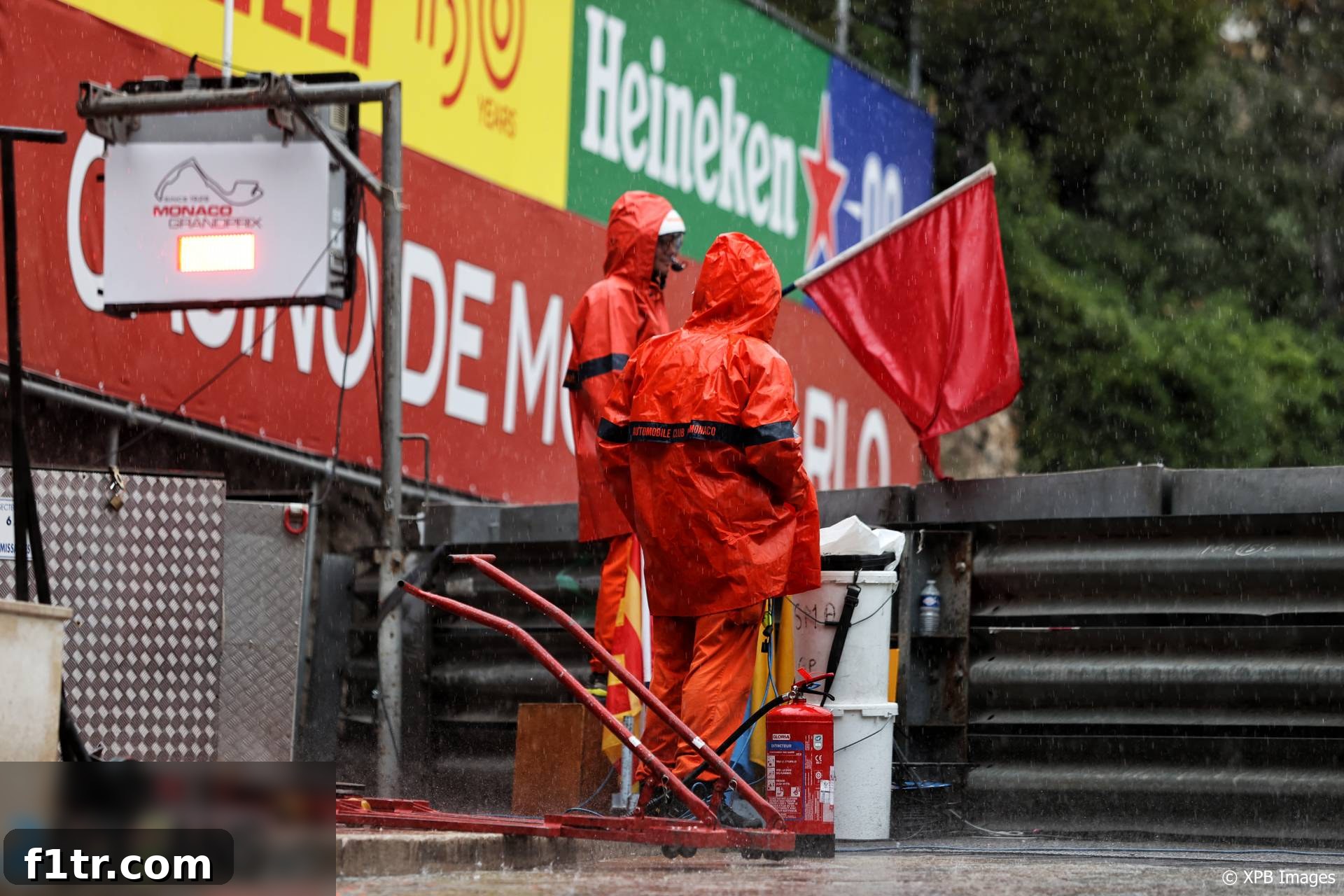
The 2022 Monaco Grand Prix will be remembered as a race steeped in drama, not just for its on-track action but for the unprecedented sequence of events that unfolded before the lights even went out. Torrential rain played a central role, triggering a series of delays, power failures, and procedural complexities that tested the patience of drivers, teams, and fans alike. This iconic street circuit, already renowned for its unpredictable nature, truly lived up to its reputation as a cascade of heavy rainfall plunged the event into an extraordinary state of flux, necessitating adaptive decisions from race control and showcasing the resilience required in Formula 1. The cumulative effect of these challenges created a spectacle that, while frustrating at times, ultimately highlighted the intricate dance between human skill, advanced machinery, and the raw power of nature.
Advert | Become a Supporter & go ad-free
The initial signs of trouble emerged just moments before the scheduled start when moderate rain began to fall across the grid. This immediate change in weather conditions prompted a swift, precautionary measure from the FIA race director: the traditional standing start procedure was immediately aborted. Instead, the cars were directed to embark on their formation lap behind the Safety Car, a full nine minutes after the originally scheduled start time. This decision aimed to allow drivers to safely assess the rapidly changing track conditions and navigate the narrow, often treacherous streets of Monte Carlo, which become infinitely more challenging and unforgiving when wet. The formation lap provides a crucial opportunity for drivers to warm up their tires and brakes, as well as to gauge grip levels, a necessity amplified by the sudden precipitation.
However, what began as moderate rain quickly intensified into a full-blown downpour, transforming the circuit into a veritable lake. The already damp surface became completely saturated, and visibility plummeted to critical levels, making racing incredibly hazardous. Faced with these rapidly deteriorating and extremely dangerous conditions, FIA F1 Race Director Eduardo Freitas made the crucial and decisive call to abandon the initial start attempt entirely. The drivers, who had just begun their cautious formation lap behind the Safety Car, were summoned back into the pits. This immediate intervention underscored the paramount importance of driver safety, even at the cost of significant race delays, particularly at a circuit with such unforgiving barriers and limited run-off areas like Monaco.
Beyond the direct impact on track conditions, the heavy rainfall also wreaked havoc with the circuit’s sophisticated electrical infrastructure. Crucial hardware, including the intricate starting gantry system responsible for the five lights that signal the start of the race, and the associated lights panel, was significantly affected by a power disruption. This unexpected electrical interference presented a formidable obstacle to resuming the race, compounding the initial delays and necessitating extensive checks and repairs to ensure the integrity and reliability of the starting procedure. The complexities of diagnosing and rectifying such issues in adverse weather conditions further prolonged the agonizing wait for the race to begin, testing the resolve of everyone involved. It served as a stark reminder of how interconnected the various systems are in modern motorsport, and how vulnerable even the most advanced technology can be to extreme environmental factors.
After a protracted and tense delay, during which engineers worked tirelessly to restore full functionality to the critical systems and race control meticulously assessed the ever-evolving weather patterns, the cars were finally sent out from the pits. This momentous restart occurred at 4:05 PM local time, a staggering 65 minutes after the originally scheduled start time. The extended wait had built considerable anticipation and tension among teams and fans alike, but the collective relief was palpable as the powerful Formula 1 engines roared back to life, signaling the imminent commencement of the eagerly anticipated Monaco Grand Prix. The delay had not only challenged the operational capabilities of the circuit but also tested the mental fortitude of the drivers, who had to remain focused and ready to race despite the uncertainty.
Given the persistently wet conditions and the earlier electrical issues impacting the starting system, the decision was unequivocally made to commence the race with a rolling start. This specific procedure, where cars follow the Safety Car for an initial lap or two before the green flags are waved to signal the start, allows for a significantly safer commencement in adverse conditions. It effectively minimizes the risk of multi-car collisions that frequently occur during traditional standing starts on a slippery track, where differences in traction can lead to immediate chaos and pile-ups. This measured approach was deemed absolutely essential to ensure a clean and safe commencement to a race already fraught with numerous challenges. Interestingly, and uniquely for this event, the rolling start procedure was invoked again later in the race, following a major incident even after drivers had switched to dry-weather slick tyres, demonstrating its versatility and utility as a critical safety measure under various circumstances.
The decision to forgo a traditional standing start was not taken lightly and stemmed from multiple critical considerations, all prioritizing safety and fairness. Firstly, there were legitimate and significant concerns regarding the complete and reliable functionality of the starting system due to the earlier power disruption caused by the torrential downpour. Race control rightfully prioritised avoiding any potential technical malfunctions that could compromise the safety or the competitive integrity of the race start. A faulty start sequence could lead to dangerous situations or unfair advantages. Secondly, the race direction team meticulously analyzed the track surface, which presented a challenging mosaic of varying grip levels. Despite the passage of time and the reduced rainfall, certain sections of the notoriously narrow and winding circuit remained dangerously damp, while others had begun to dry, creating highly unpredictable grip variations. A standing start under such inconsistent conditions would have introduced an unacceptable level of risk, potentially leading to immediate incidents as cars struggled for uniform traction off the line, especially with 20 drivers vying for position into Sainte Dévote. The rolling start, therefore, served as a prudent and necessary measure to mitigate these inherent dangers, allowing drivers to gradually build speed, adapt to the inconsistent grip across the challenging Monaco circuit, and focus on racing rather than merely surviving the start.
The saga of disruptions was far from over for the 2022 Monaco Grand Prix. A significant incident later in the race involved Haas driver Mick Schumacher, whose car suffered a dramatic and high-speed crash at the iconic Swimming Pool section. The severity of the impact was so profound that it unfortunately split his VF-22 chassis clean in two, a testament to the forces involved and the robust safety design of modern F1 cars. This extensive and dangerous incident necessitated a second red flag stoppage, bringing the race to a complete halt once more. This lengthy halt was absolutely crucial for the immediate repair of the TecPro barrier that Schumacher had collided with. TecPro barriers are advanced, highly effective energy-absorbing barriers designed to dissipate impact forces much more efficiently and safely than traditional tire walls, significantly enhancing driver protection. Their rapid and thorough repair is vital to maintain the rigorous safety standards of the circuit for the remainder of the event, particularly on a circuit like Monaco where high-speed impacts are an ever-present and serious risk.
The immediate aftermath of Mick Schumacher’s dramatic crash saw the swift deployment of a Virtual Safety Car (VSC) initially. This crucial safety system, signaled to all drivers simultaneously via their steering wheel displays, mandates an immediate and significant reduction in speed and strictly prohibits overtaking, thereby effectively neutralising the entire field without physically deploying the Safety Car onto the track. The VSC’s initial use was a highly strategic decision, allowing for the immediate safeguarding of the crash site and providing marshals with a safer environment to begin assessing the situation and removing debris. Crucially, this pre-emptive VSC deployment enabled the physical Safety Car to be deployed onto the track only once the race leader had reached the pit straight. This specific sequence of events meant the Safety Car did not need to “wave any cars by” – a time-consuming and often complex procedure where cars positioned between the race leader and the Safety Car are allowed to unlap themselves under specific instructions. By strategically avoiding this unlapping procedure, valuable time was saved, significantly accelerating the recovery work at the crash scene and minimizing the overall duration of the race stoppage, a critical factor given the extensive earlier delays already incurred.
Advert | Become a RaceFans supporter andgo ad-free
Ultimately, the cumulative effect of these extraordinary and multifaceted disruptions meant that the 2022 Monaco Grand Prix could not complete its full scheduled distance. Only 64 of the anticipated 78 laps were finished within the mandated three-hour time limit for Formula 1 races, further highlighting the extent of the delays. This reduced lap count is particularly notable for the Monaco Grand Prix, which is already unique on the F1 calendar for its inherently shorter race distance, approximately 45 kilometers less than other events due to its tight, challenging nature. The combination of early delays, persistently challenging wet conditions, the impact of the earlier power failures, and a significant on-track incident requiring extensive barrier repair, all culminated in an event that tested the very limits of race management, operational efficiency, and the resilience of everyone involved, underscoring the formidable and unique challenges presented by motorsport at its most demanding and iconic circuits.
2022 Monaco Grand Prix – Related Articles & Features
Delve deeper into the myriad storylines and expert analyses surrounding one of the most talked-about races of the 2022 Formula 1 season. From exclusive driver perspectives and tactical breakdowns to in-depth technical insights and post-race reactions, these related articles offer comprehensive coverage of the event that left an indelible mark on the championship narrative, providing further context to the chaos and the eventual outcome.
- Whatever triggered it, Verstappen’s defiance of his own team makes little sense
- Transcript: How Red Bull seized a win that ‘Ferrari looked like they had in the bag’
- Verstappen now has as many poles as Leclerc – but six times as many wins
- Schumacher’s chassis-splitting crash shows effects of rising car weight – Alonso
- Norris still can’t drive McLaren the way he wants to, despite strong results
Browse all 2022 Monaco Grand Prix articles