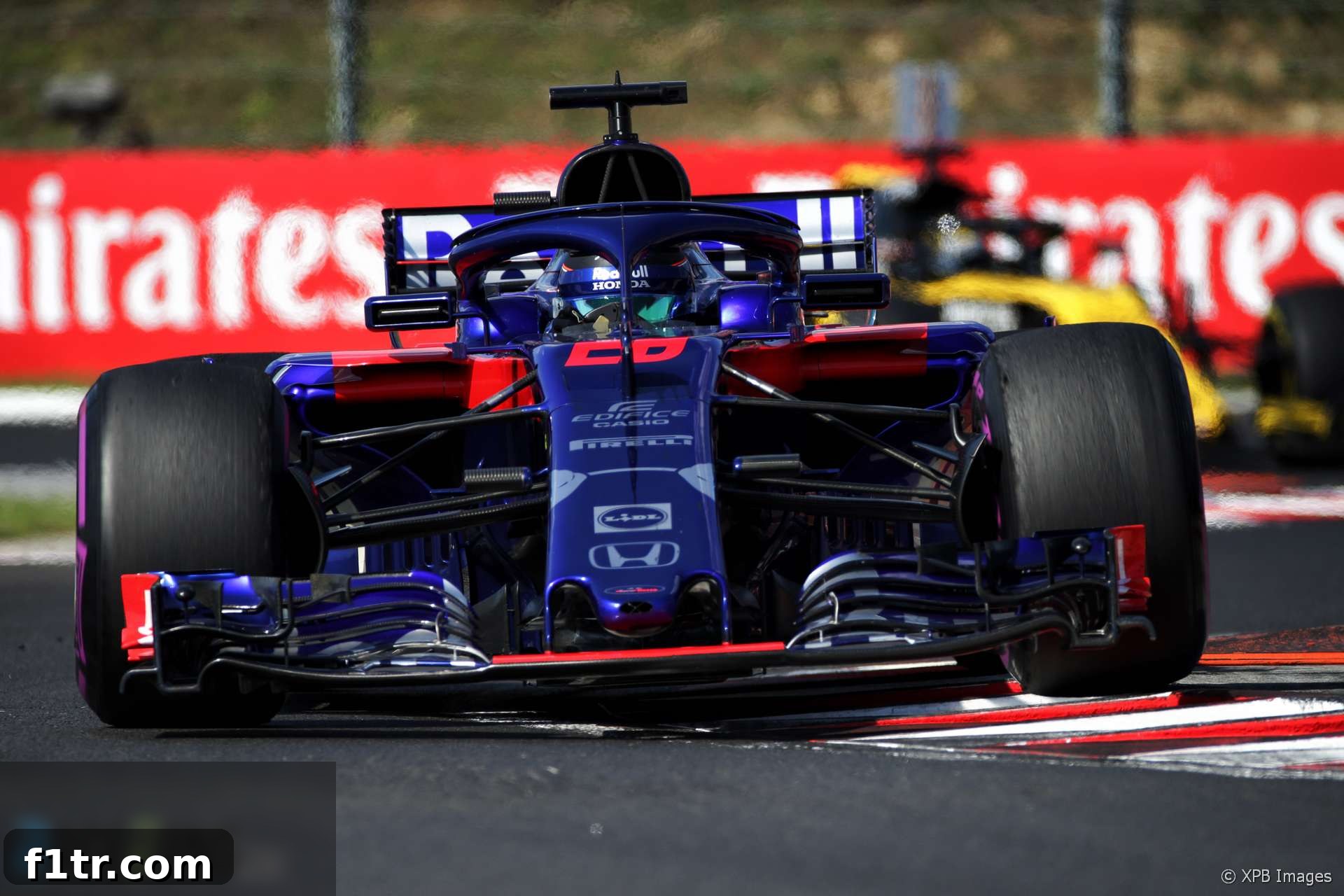
Brendon Hartley’s Hungarian GP Woes: A “Double Negative” Strategy Undermines His Race
The 2018 Formula 1 Hungarian Grand Prix proved to be a weekend of contrasting fortunes for Toro Rosso, with Brendon Hartley expressing significant disappointment after his race was crippled by what he described as a “double negative” strategy. While his teammate Pierre Gasly delivered a strong sixth-place finish, Hartley found himself out of the points, a frustrating outcome he felt was largely beyond his control despite his best efforts on track.
A Tricky Start: Avoiding Collision, Losing Ground
Hartley’s race at the Hungaroring began with immediate adversity. Despite a promising launch off the grid, the Kiwi driver found himself in a precarious position on the approach to Turn 1, needing to take evasive action to prevent a collision with his teammate, Pierre Gasly. This necessary caution, while preventing an intra-team incident, came at a significant cost to Hartley’s track position.
“I had a really good start, honestly,” Hartley recounted, detailing the opening moments. “My nose was up the inside of Pierre [Gasly] at Turn 1, and I was feeling confident. But obviously, I had to get out of it; Pierre braked pretty early, which actually worked out well for him as he maintained his line.”
The consequence of this defensive maneuver was swift and detrimental. Hartley explained, “I ended up losing the place to Kevin Magnussen. Their start was very strong, and he capitalized on the slight hesitation. I almost got past Carlos Sainz Jnr at Turn 2, but not quite.” This early loss of position put Hartley on the back foot, stuck in traffic with limited overtaking opportunities on the tight and twisty Hungarian circuit.
The initial stint further highlighted his predicament. “For the first stint, Magnussen was on the harder compound tyre, while I was on the softer compound. I had a lot of pace, genuinely felt like I could push, but there was nowhere to overtake. The car felt good, but track position is everything here, and I just couldn’t make any progress.” Hartley found himself bottled up, his superior tyre performance negated by the difficulty of passing.
The Strategy Gamble: An Early Pit Stop and Its Repercussions
The pivotal moment in Hartley’s race came when Toro Rosso decided to bring forward his pit stop. The decision was made in response to Nico Hulkenberg, who was running behind Hartley, opting for an early stop himself. The team’s intention was likely to cover Hulkenberg and ensure Hartley maintained track position, but the execution and subsequent unfolding of events did not yield the desired outcome.
“We pitted very early onto the medium tyres,” Hartley explained, reflecting on the critical strategic call. “I haven’t had a full debrief with the team yet on the exact strategy and the thinking behind it, but what’s crystal clear to me is that it simply didn’t work out for us on this occasion. It felt like a gamble that didn’t pay off.”
Advert | Become a Supporter & go ad-free
The “Double Negative” Effect: Overcut and Blue Flags
Hartley elaborated on the two distinct, yet interconnected, negative consequences of his early pit stop strategy, which collectively derailed his race. This “double negative” effect illustrates the fine margins and cruel realities of Formula 1 strategy.
Negative One: The Overcut
The first significant blow came in the form of the “overcut.” For those drivers who chose to extend their first stint on the softer compound tyres, the strategy paid dividends. By staying out longer, they were able to run in clear air, set faster lap times as their fuel load diminished, and then pit for fresh tyres without losing as much time. When they rejoined the track, they found themselves ahead of Hartley, who had pitted much earlier.
“The ones that stayed out on the softer compound tyres, maintaining good pace, managed to overcut us,” Hartley lamented. “It meant that when they eventually pitted, they emerged from the pits ahead of where I was. We lost places to drivers like Romain Grosjean, and both McLarens were able to get past. I’m not entirely sure who else gained, but it was a significant drop in track position that was incredibly difficult to recover from.” This highlighted the risk of an early stop on a circuit where tyre degradation might not be as severe as anticipated, or where clear air pace can be exploited by competitors.
Negative Two: The Blue Flags Conundrum
Compounding the problem of the overcut was the subsequent onslaught of blue flags. Having fallen further down the order, Hartley soon found himself being lapped by the faster cars at the front of the field. While complying with blue flags is mandatory for safety and fair play, it comes at a substantial cost to a driver’s lap time and rhythm, further entrenching them in their compromised position.
“And then, to make matters worse, I had blue flags as well,” Hartley continued. “Being constantly asked to move aside for the leaders meant I was losing even more time and momentum. It’s a double whammy: you lose positions through strategy, and then those losses are exacerbated by having to yield to faster cars. It just compounds the problem and makes any chance of fighting back incredibly slim.” The blue flags effectively locked Hartley into his lower position, extinguishing any hope of regaining lost ground.
Team Dynamics and Disappointment
While the strategy clearly backfired for Hartley, he acknowledged the complexities of team strategy in Formula 1. “Obviously, as a team, sometimes you have to split the strategy between drivers,” he noted, referring to the common practice of attempting different approaches to maximize the team’s chances. “But today, it just didn’t work out for me. It’s disappointing when you feel like you’ve driven well, but the result doesn’t reflect that.”
The contrast with his teammate, Pierre Gasly, who secured an impressive sixth place, amplified Hartley’s frustration. Gasly’s strong performance underscored the potential of the Toro Rosso-Honda package on the day, making Hartley’s strategic misfortune even harder to swallow.
“It’s hugely disappointing,” Hartley reiterated. “I honestly don’t feel like I made any significant mistakes today on track. I didn’t lose any places due to driver error. But despite that, I ended up out of the points. When your teammate has such a strong result, it makes you wonder what might have been if a different strategic path had been taken for my car.”
The 2018 season was a challenging one for Brendon Hartley, his first full year in Formula 1. He faced immense pressure to perform, and races like the Hungarian Grand Prix, where external factors heavily influenced his outcome, were particularly taxing. The partnership between Toro Rosso and Honda was in its infancy, and while Gasly often found ways to extract strong results, Hartley often seemed to be on the receiving end of strategic missteps or unfortunate circumstances.
Lessons from the Hungaroring
The Hungarian Grand Prix served as a stark reminder of the critical role strategy plays in Formula 1. While raw pace and driver skill are paramount, the ability to adapt to race conditions, predict competitor moves, and make split-second decisions from the pit wall can be the difference between points and disappointment. For Toro Rosso, the decision to pit Hartley early, while perhaps a logical response to Hulkenberg, ultimately exposed him to the devastating “double negative” of the overcut and blue flags, illustrating the high stakes of F1 strategy.
Brendon Hartley’s Hungarian GP story is a classic example of how a race can unravel for a driver through no fault of their own. His composure and candid assessment of the situation spoke volumes about the frustrations inherent in top-tier motorsport when strategy takes center stage. While his teammate celebrated, Hartley was left to reflect on a race where the strategic dice rolled firmly against him, robbing him of a potential points finish despite his best efforts.
Advert | Become a RaceFans supporter andgo ad-free
2018 F1 season
- F1 feared “death knell” for Drive to Survive after Ferrari and Mercedes snub
- McLaren staff told us we were “totally crazy” to take Honda engines in 2018 – Tost
- ‘It doesn’t matter if we start last’: How Red Bull’s junior team aided Honda’s leap forward
- Honda’s jet division helped F1 engineers solve power unit problem
- McLaren Racing losses rise after Honda split
Browse all 2018 F1 season articles