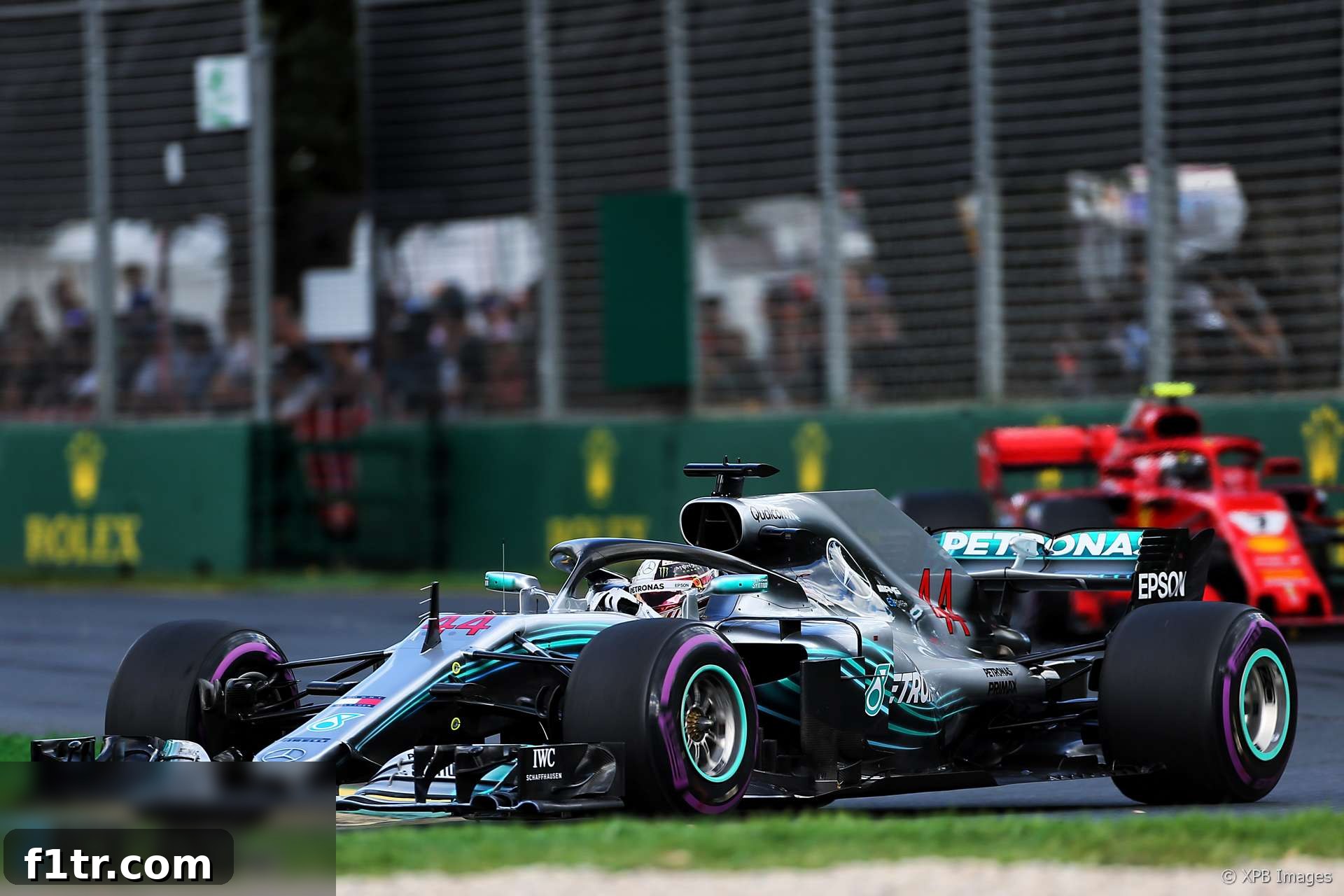
The 2018 Formula 1 season kicked off with high expectations at the iconic Melbourne Grand Prix Circuit, promising another enthralling championship battle between titans Lewis Hamilton and Sebastian Vettel. As the reigning champion, Hamilton, driving for Mercedes-AMG Petronas, aimed to start his title defence strong. Meanwhile, Vettel, leading the charge for Scuderia Ferrari, was equally determined to challenge for supremacy. The Australian Grand Prix, renowned for its unpredictable nature and strategic complexities, did not disappoint, delivering an early shock that would send ripples through the paddock and set the stage for a fiercely contested season. At the heart of this dramatic opening race was a pivotal pit stop decision and the timing of a Virtual Safety Car, elements that ultimately swung victory in favour of Ferrari, much to Hamilton’s frustration and bewilderment.
The Battle Commences: Early Dominance and Strategic Undercurrents
From the moment the lights went out, the tension was palpable. Lewis Hamilton, having secured pole position with a stunning lap, initially controlled the race from the front. His Mercedes W09 appeared dominant, maintaining a comfortable lead over Kimi Raikkonen’s Ferrari, with Sebastian Vettel close behind in third. The early laps saw Hamilton demonstrate exceptional pace, gradually extending his gap and managing his tyres meticulously. The strategy discussions on the pit wall would have been intense, with both Mercedes and Ferrari closely monitoring tyre degradation and the performance windows of their respective cars. Hamilton himself was feeling confident, settling into a rhythm that suggested another dominant victory was well within his grasp. The Australian circuit, while challenging, was a track where Hamilton had historically performed well, and his initial performance reinforced this expectation. The strategic chess match had already begun, with teams analyzing every lap, every sector time, and every tyre compound choice.
The Pivotal Pit Stop: Hamilton’s Reservations and Mercedes’ Decision
As the race progressed, the focus shifted to the mandatory pit stops for fresh tyres. Hamilton was brought in by Mercedes on lap 19, immediately after Kimi Raikkonen had pitted from second place. This move was standard procedure, aiming to protect against the “undercut” – a strategy where a trailing car pits early on fresh tyres and uses their superior grip to set faster lap times, thereby leapfrogging the car ahead when it eventually pits. However, Lewis Hamilton harbored reservations about this timing. He felt he had significant life left in his tyres and could have extended his stint, preferring to push further and build a larger buffer against his primary rival, Sebastian Vettel. “What I felt I could have done is I’d looked after my tyres really well and I could have gone further. I personally like to always go further,” Hamilton later reflected, indicating his strategic instinct was at odds with the team’s immediate decision. His concern was squarely on Vettel, whom he perceived as the greatest threat. “In my mind I was racing Sebastian,” he stated, highlighting his awareness of Ferrari’s two-pronged attack.
The Virtual Safety Car: A Twist of Fate
The turning point of the race, and indeed the entire strategic battle, arrived shortly after Hamilton’s pit stop. On lap 24, Romain Grosjean’s Haas suffered a catastrophic wheel nut issue after its own pit stop, forcing him to pull over at the side of the track. This incident triggered a Virtual Safety Car (VSC) period. Under VSC conditions, cars are required to slow down to a predetermined delta time, maintaining specific speeds. Crucially, the time lost when entering and exiting the pit lane is significantly reduced under VSC compared to a normal race scenario. While Hamilton had pitted under green flag conditions, Sebastian Vettel was still out on track, now leading the race. Seizing this golden opportunity, Ferrari called Vettel into the pits during the VSC. The strategic gamble paid off handsomely. Vettel emerged from the pit lane just ahead of Hamilton, having gained a considerable advantage due to the reduced pit stop time under the VSC. The timing could not have been more perfect for Ferrari and more detrimental for Mercedes. This unexpected stroke of luck for Vettel was a bitter pill for Hamilton and his team, transforming a comfortable lead into a deficit within a matter of moments.
Hamilton’s Post-Race Reflections: Frustration and Analysis
The loss was a hard one for Lewis Hamilton to swallow. Post-race, he expressed his frustration and a degree of confusion over how the victory had slipped away. Mercedes, he admitted, “don’t fully understand” why Vettel was able to get ahead, with team explanations failing to provide a clear, definitive reason for the strategic misstep. “They couldn’t give me an exact reason as to why it was the way it was,” he commented, underscoring the team’s struggle to fully comprehend the sequence of events that led to their defeat. Despite the disappointment, Hamilton sought to find positives, acknowledging the strength of his own performance and the car’s pace. Yet, the sting of losing a Grand Prix is never easy, especially when it feels like a victory was within reach. He strongly believed he could have extended his opening stint on the ultrasoft tyres, potentially building enough of a gap to counter any strategic moves from Ferrari, even before the VSC came into play. His focus throughout the race was intently on Vettel, whom he described as “number three,” recognising him as his direct competitor for the championship.
Strategic Nuances and Ferrari’s Double-Edged Threat
Hamilton’s insights into the Ferrari strategy reveal a deep understanding of multi-car team dynamics. He observed, “The Ferraris are always going to play one off the other. There was two of them so there’s two aces, one guy which forces you to protect yourself from the undercut, but the other guy’s in the clear.” This statement perfectly encapsulates the strategic pressure a two-car team like Ferrari can exert. With Kimi Raikkonen running in second and Sebastian Vettel in third, Ferrari had multiple options. By pitting Raikkonen early, they created an immediate threat of the undercut, compelling Mercedes to react by pitting Hamilton to protect his track position. This then left Vettel out on track, allowing him to capitalize on any unforeseen circumstances, such as the VSC. Hamilton acknowledged Raikkonen’s strong performance throughout the weekend, noting, “Kimi drove fantastically well. He was quicker all weekend.” He also speculated that Ferrari’s true pace might have been masked during qualifying, suggesting they were even stronger than they appeared. “I’m not convinced that Sebastian did a good lap yesterday and so I think dimmed their performance through qualifying I think their performance is better than what it looked.” This demonstrated Hamilton’s acute awareness of the raw speed Ferrari possessed, and the formidable challenge they posed, even in the season’s opening race.
Implications for the Season Ahead: A Precedent Set
The outcome of the 2018 Australian Grand Prix served as a powerful reminder of Formula 1’s strategic depth and the fine margins that separate victory from defeat. For Lewis Hamilton and Mercedes, it was a harsh lesson learned early in the season, highlighting areas where communication and strategic execution needed refinement. For Sebastian Vettel and Ferrari, it was a morale-boosting victory, signaling their strong intent to challenge for both the Drivers’ and Constructors’ Championships. This race set a compelling precedent for the rest of the 2018 F1 season, foreshadowing a year filled with intense strategic battles, high-stakes decisions, and the thrilling rivalry between two of the sport’s greatest drivers. The strategic gamble, the stroke of luck, and the subsequent reflections from Hamilton underscored the unpredictable nature of F1 and the constant need for adaptability and precision in the high-pressure environment of Grand Prix racing.
Conclusion: A Dramatic Opening to the 2018 F1 Season
In summary, Lewis Hamilton’s desire to extend his opening stint at the 2018 Australian Grand Prix was ultimately overridden by a team decision aimed at countering the undercut threat from Ferrari. However, the subsequent timing of a Virtual Safety Car period, which unexpectedly benefited Sebastian Vettel, proved to be the decisive factor in the race’s outcome. Hamilton’s post-race comments revealed his perplexity and frustration, yet also his analytical understanding of the strategic chess match played out by Ferrari. This enthralling season opener not only provided an immediate classic but also underscored the critical role of strategy, timing, and a touch of fortune in the unpredictable world of Formula 1, igniting a championship fight that promised excitement until the very end.
2018 F1 season
- F1 feared “death knell” for Drive to Survive after Ferrari and Mercedes snub
- McLaren staff told us we were “totally crazy” to take Honda engines in 2018 – Tost
- ‘It doesn’t matter if we start last’: How Red Bull’s junior team aided Honda’s leap forward
- Honda’s jet division helped F1 engineers solve power unit problem
- McLaren Racing losses rise after Honda split
Browse all 2018 F1 season articles