The world of Formula 1 is on the brink of a pivotal moment as the sport’s governing body, the FIA, prepares to unveil its inaugural assessment of team finances. This unprecedented review marks a crucial step in the enforcement of the F1 budget cap, a regulation designed to foster competitive balance and financial sustainability within the pinnacle of motorsport. Amidst mounting speculation and escalating tensions, seven-time world champion Lewis Hamilton has publicly voiced his unwavering support for the FIA’s process, emphasizing the critical importance of strict adherence to these new financial rules.
The much-anticipated announcement, expected to confirm compliance with the $145 million spending cap for the 2021 F1 season, comes after months of meticulous auditing. However, the lead-up to this disclosure has been overshadowed by persistent rumors circulating within the paddock, suggesting that at least two teams may have failed to meet the stringent financial requirements. Chief among these allegations are claims directed at Red Bull Racing, the team whose driver Max Verstappen famously clinched the 2021 Drivers’ Championship title from Hamilton in a dramatic finale.
The Genesis and Importance of F1’s Budget Cap
Introduced in 2021, the Formula 1 budget cap was a revolutionary initiative aimed at reining in the colossal spending that had long characterized the sport. Historically, F1 was an arena where financial might often translated directly into on-track performance, creating a significant divide between the wealthiest factory teams and their more modestly funded competitors. The primary objectives of the cap were multifaceted: to level the playing field, encourage closer racing, and ensure the long-term economic viability of all ten participating teams.
Under the stewardship of FIA President Mohammed Ben Sulayem, the governing body embarked on a complex mission to monitor and enforce these groundbreaking financial regulations. The initial cap was set at $145 million for the 2021 season, with subsequent reductions planned for future years. This figure, while still substantial, represented a significant shift from an era of virtually unlimited expenditure. The implementation process, however, has proven to be incredibly intricate, requiring teams to submit detailed financial data and collaborate extensively with the FIA’s financial auditors. This initial compliance assessment is therefore not just a procedural formality, but a foundational test of the regulation’s integrity and the FIA’s capacity to uphold it.
Hamilton’s Stance: Trust in the FIA and the Value of Integrity
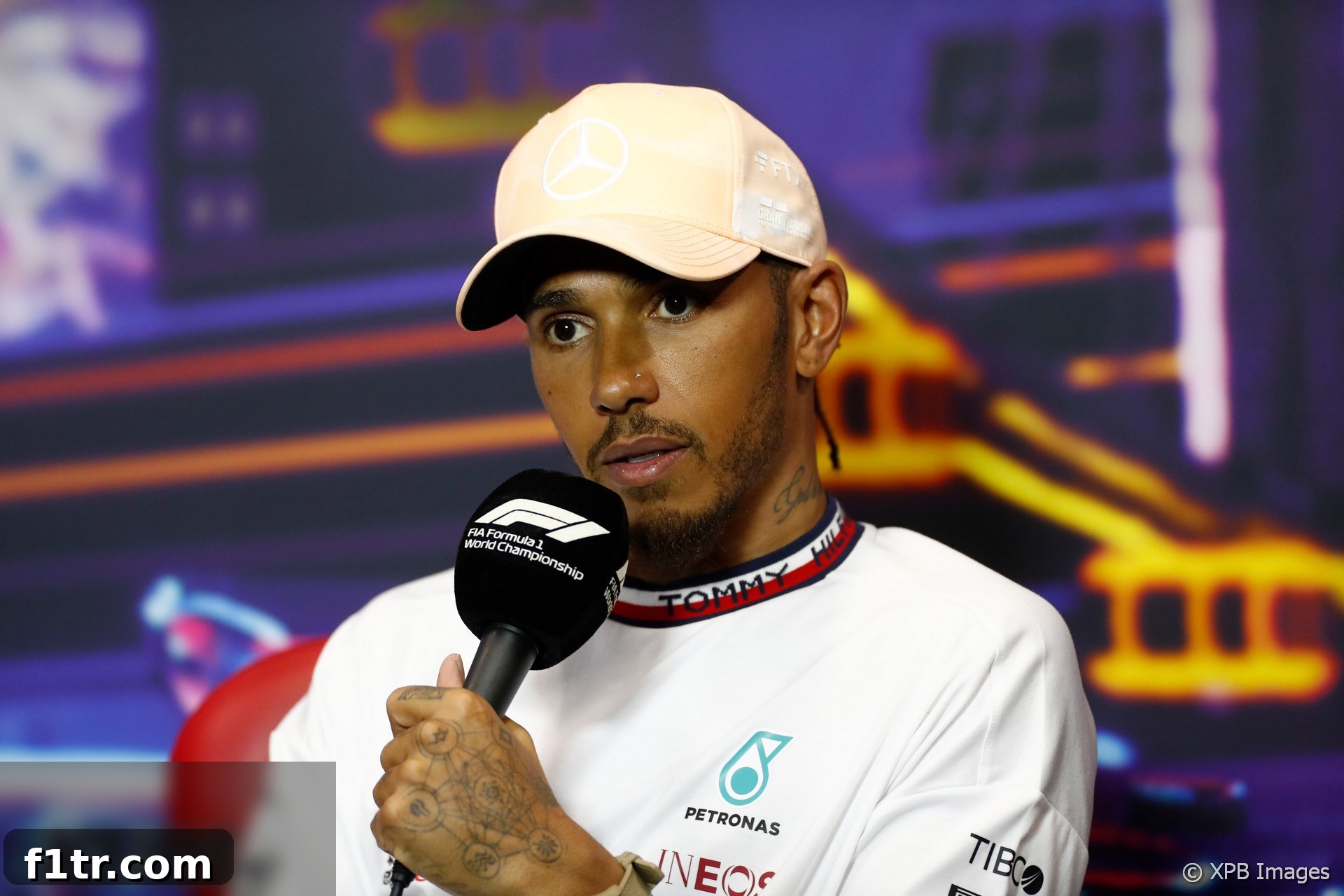
Despite the swirling rumors and heightened media scrutiny, Lewis Hamilton has chosen to place his full confidence in the FIA’s ability to make fair and correct decisions. Speaking ahead of the Singapore Grand Prix weekend, Hamilton acknowledged the speculative nature of the reports but underscored his belief in the transparent and rigorous process undertaken by the motorsport governing body.
“I’m not really giving much attention to it,” Hamilton stated, referring to the whispers of breaches. “It’s all whispers at the moment.” His primary focus, he reiterated, remained on his team’s performance and their own exemplary adherence to the rules. “I’m proud of my team for the diligence that they’ve done to run to the rules. And I honestly have full confidence in Mohammed in the way that he’s conducted himself to this point and in terms of being strict and being clear with the rules.”
Hamilton’s remarks are particularly poignant given the intensity of the 2021 championship battle, where he and Max Verstappen went head-to-head until the very last lap of the season. A financial breach, especially one that could grant a performance advantage, would naturally cast a long shadow over such a closely contested title fight. He emphasized the severe implications of any non-compliance: “The rules are rules and for those sort of things, which can lead to real alterations in terms of car performance, those sorts of things, we definitely have to take it seriously.” His measured yet firm tone highlighted the crucial role of the budget cap in maintaining the integrity and fairness of Formula 1, underscoring that any violation must be met with appropriate action to preserve the sport’s competitive spirit.
The Battle of Words: Wolff vs. Horner
The escalating speculation inevitably led to a verbal confrontation between Mercedes team principal Toto Wolff and his Red Bull counterpart, Christian Horner. Their long-standing rivalry, intensified by the 2021 title fight, once again took center stage as the budget cap issue came to the fore.
Christian Horner vehemently denied any wrongdoing by Red Bull, questioning the source and validity of the information being circulated. He voiced strong concerns about how rival teams seemingly had access to confidential details regarding Red Bull’s submissions to the FIA. “How on earth do they have this information, where do they have this knowledge?” Horner challenged. He further pointed out that the FIA itself had stated its process was not yet complete, suggesting that any premature claims were unfounded and malicious. Horner went as far as to accuse rival teams of engaging in “an underhand tactic that’s been employed to detract from perhaps a lack of performance this year,” implying a deliberate campaign to destabilize Red Bull amidst their dominant 2022 season.
Conversely, Toto Wolff provided a more detailed perspective on the financial audit process, refuting any notion of sudden revelations or leaks. He clarified that the assessment had been an ongoing and exhaustive undertaking spanning many months. “This is not just a moment in time where suddenly you discover a breach or not,” Wolff explained. “The audits have been going on for a long time, every team has collaborated with the FIA. They’ve been discussing forward and backwards about how the interpretations go. So it’s over many months, but you come to certain conclusions.”
Wolff reiterated his unwavering faith in the FIA’s diligence and commitment to its own governance. “I have no reason to doubt that the FIA will not 100% act following their own governance and their own regulations, because they know how important that is going forward,” he asserted. He underscored that all regulations – technical, sporting, and now financial – must be meticulously policed to ensure the sport’s credibility. “We are all aware that regulations… have to be regulated, policed in the right way and we just need to adhere. So there’s 100% confidence in the process and the FIA and that’s why everything else is just noise.”
Potential Penalties and Future Implications for Formula 1
The FIA’s Financial Regulations outline a range of potential penalties for teams found to be in breach of the budget cap, varying based on the severity and nature of the infraction. These sanctions can include financial penalties, deduction of constructors’ and/or drivers’ championship points, restrictions on future testing, or even a reduction in the team’s future budget cap allowance. A minor breach, defined as exceeding the cap by less than 5%, might result in a less severe penalty, whereas a material breach (over 5%) could lead to far more drastic consequences, potentially impacting championship standings.
This inaugural ruling is not merely about past compliance; it sets a crucial precedent for the future of financial regulation in Formula 1. The credibility of the sport, the effectiveness of the budget cap as a tool for competitive balance, and the confidence of teams, sponsors, and fans alike hinge on the FIA’s ability to enforce its rules firmly and transparently. A weak or inconsistent response could undermine the entire regulatory framework, potentially leading to a slippery slope where teams feel emboldened to push boundaries, knowing that consequences might be negligible.
The budget cap was envisioned as a cornerstone for a more equitable and sustainable Formula 1, fostering an environment where innovation and driver skill are paramount, rather than sheer financial muscle. The FIA’s forthcoming announcement is therefore a defining moment, one that will shape the narrative of the sport for years to come. It will demonstrate the FIA’s resolve in ensuring fair play and upholding the integrity of competition, and it will be scrutinized by every stakeholder with a vested interest in the future direction of Formula 1.
Conclusion: A Defining Moment for F1’s Future
As the Formula 1 community awaits the FIA’s definitive assessment, the tension is palpable. The unwavering support from figures like Lewis Hamilton, juxtaposed with the heated exchanges between team principals, underscores the monumental importance of this financial compliance review. The budget cap, a relatively new addition to F1’s extensive rulebook, represents a bold step towards a more sustainable and competitive era.
The FIA’s ruling will do more than just confirm compliance; it will send a clear message about the integrity and enforceability of its financial regulations. For the long-term health of Formula 1, a firm, fair, and transparent outcome is essential. It will determine whether the budget cap truly delivers on its promise of a more level playing field, or if it becomes another point of contention in the relentless pursuit of motorsport supremacy. All eyes are now on the FIA, as it navigates this critical juncture and charts the course for the financial future of Formula 1.
2022 Singapore Grand Prix Related Articles
- How many victory chances did Hamilton have in his first winless F1 season?
- Alfa Romeo expect another step from Zhou after confirming 2023 deal
- Closest three-team pole fight for almost 20 years in Singapore
- F1 teams back race control’s decisions on delayed start and DRS activation
- It’s “game over” if F1 fails first “vital test” of budget cap rules – Ferrari
Browse all 2022 Singapore Grand Prix articles