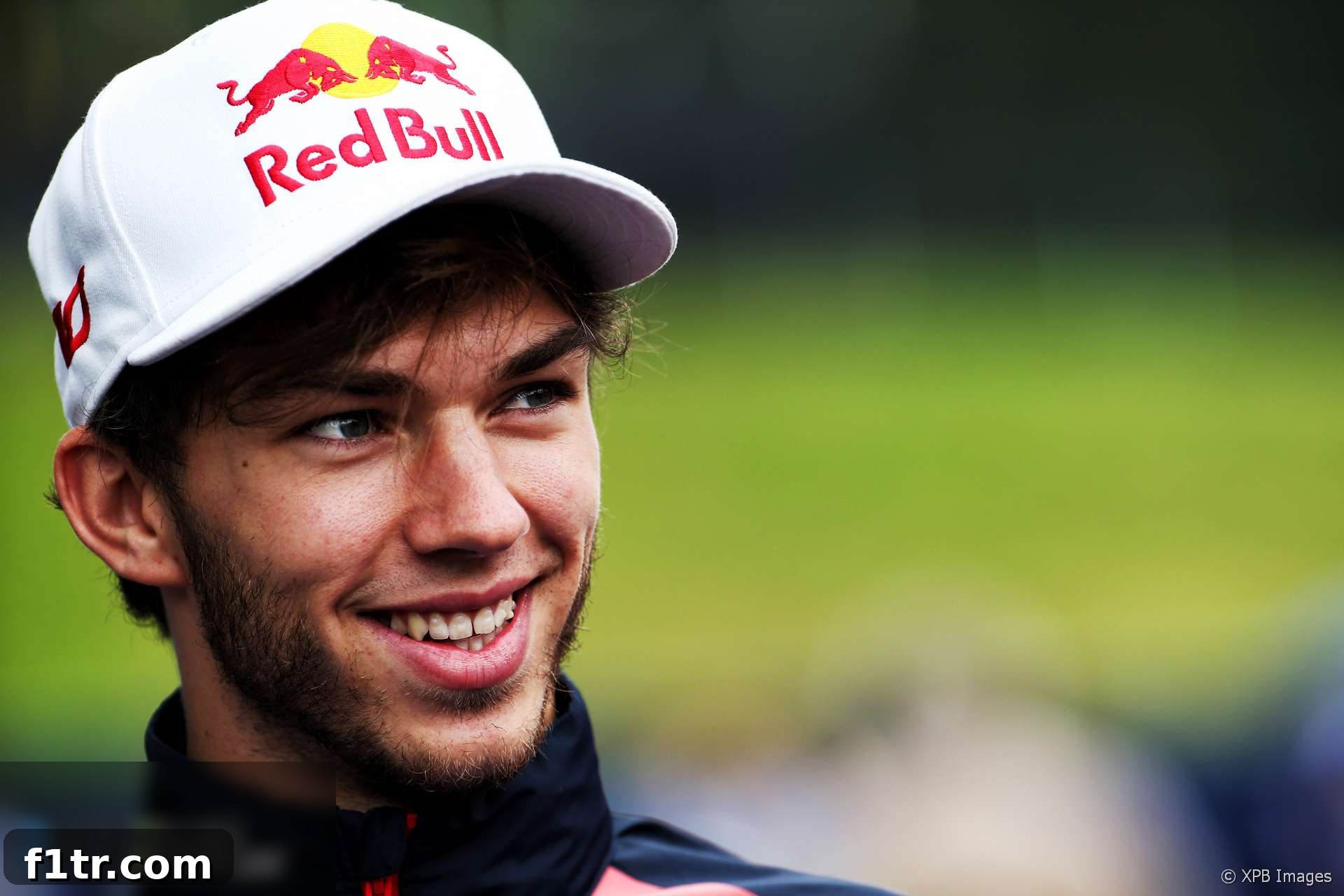
The upcoming 2019 Formula 1 season promised to be a pivotal year for several teams and drivers, none more so than for the burgeoning partnership between Red Bull Racing and Honda. As the racing world buzzed with anticipation, Pierre Gasly, then a rising star within the Red Bull family, shared significant insights into what this formidable alliance could mean. Gasly, who was set to transition from Toro Rosso to the senior Red Bull team, firmly believed that the formidable might and strategic prowess of Red Bull would exert immense pressure on Honda, driving the engine manufacturer to elevate its performance to unprecedented levels. This strategic move was widely seen as a game-changer, with Red Bull aiming to reclaim its position at the pinnacle of Formula 1, powered by a Honda engine that had shown flashes of potential but also periods of profound struggle. The transition marked a significant commitment from both parties, signaling a clear intent to challenge for championships and reshape the competitive landscape of the sport.
Red Bull’s Push for Honda Excellence
Speaking in the period leading up to the official announcement of Daniel Ricciardo’s unexpected departure for Renault, Pierre Gasly articulated his high expectations for Honda’s development trajectory in the forthcoming 2019 season. His perspective, offered from within the Red Bull fold, carried weight, providing an early glimpse into the internal optimism surrounding the new engine supplier.
“To have four cars instead of two is always better in terms of development, and also with such a big team as Red Bull, we know how big and how strong they are. So for sure they’re going to push Honda massively in the right direction to achieve top performance.”
“The synergy between the two teams, Red Bull Racing and Toro Rosso, operating with the same power unit, presents an unparalleled advantage. This collective effort allows for double the data acquisition, double the feedback, and double the problem-solving capacity compared to a single team operation. Such a comprehensive approach is invaluable in the demanding world of Formula 1 engine development, where every millisecond and every horsepower gain can make a decisive difference on track. Red Bull’s renowned aggressive approach to development, coupled with Honda’s renewed commitment, was expected to create a formidable force.”
“So, if we can share all our strengths together, across both teams, for sure it’s going to be positive. I think also the intense work for next year will be starting now, already, because all the improvements we can make at the moment with Toro Rosso will be incredibly useful for Red Bull and Honda next year, laying the groundwork for a successful partnership.”
Gasly’s comments highlighted the collaborative spirit and strategic foresight within the Red Bull camp. The idea of leveraging the two-team structure (Red Bull Racing and Toro Rosso) with identical Honda power units was central to their development strategy. This arrangement would allow for a rapid testing and iteration cycle, accelerating Honda’s progress. Red Bull’s reputation for demanding excellence and relentless innovation was expected to ignite a new chapter for Honda in F1, a chapter far more successful than their recent struggles with McLaren. The partnership was not just about an engine supply; it was about a deeply integrated technical alliance, with Red Bull’s chassis expertise complementing Honda’s engine aspirations. This mutual push for improvement, starting even before the official 2019 season began, underscored the high stakes and ambitious goals both parties had set for themselves.
Social Media Pulse: Connecting with the F1 World
In the fast-paced realm of Formula 1, social media serves as a vital conduit for news, fan engagement, and behind-the-scenes glimpses into the sport. Notable posts from platforms like Twitter and Instagram frequently offer unique perspectives and immediate reactions from drivers, teams, and journalists alike. These digital interactions enrich the F1 experience for millions of fans worldwide, providing a dynamic overlay to the on-track action.
Was there ever a more elaborate media guide for a rookie driver than this? Nope, there’s not a word about crashing… pic.twitter.com/n2x79SW7s7
— Fritz-Dieter Rencken (@RacingLines) August 5, 2018
One such engaging post, shared by veteran journalist Fritz-Dieter Rencken, humorously questioned the comprehensiveness of a rookie driver’s media guide, poking fun at the typical omissions. This tweet, dating from August 5, 2018, resonated with many, highlighting the often-glossed-over realities of motorsport. Beyond specific tweets, platforms like Instagram often provide visual storytelling, capturing the glamour, intensity, and human element of F1. For instance, a post such as this one from August 2018 might have offered a vibrant photo or video from a race weekend, a driver’s personal moment, or a team celebration, drawing fans deeper into the sport’s narrative. Social media interaction also fosters community, allowing fans to discuss, debate, and celebrate their passion for Formula 1 in real-time. For enthusiasts seeking to expand their F1 social circles, comprehensive resources like the F1 Twitter Directory serve as invaluable guides to finding and following official accounts of teams, drivers, journalists, and other key figures within the sport.
Further Insights from the Motor Racing World
Beyond the immediate headlines of Formula 1, the broader motor racing world consistently generates captivating stories, significant retirements, and groundbreaking achievements. Here are more motor racing links of interest that provide a deeper dive into the diverse facets of global motorsport:
Christian Fittipaldi to retire after Daytona 24 Hours (The Washington Post)
The retirement of a seasoned veteran always marks a significant moment in any sport. Christian Fittipaldi, a name synonymous with versatility and endurance racing, announced his intention to step away from professional racing after the iconic Rolex 24 at Daytona. His decision, as he explained, was not prompted by a dramatic accident or a sudden fear, but rather a reflective choice. Fittipaldi emphasized, “It’s not that I went out there, I had a huge accident and said, ‘Whoa, now I’m afraid of doing this. I can’t do this anymore.’ It wasn’t that.” This candid reflection from a driver with a long and illustrious career, spanning Formula 1, IndyCar, and top-tier endurance racing, offered a rare glimpse into the mindset of athletes contemplating life beyond the track, highlighting the personal considerations that shape such monumental decisions.
Chadwick makes single-seater history with victory in Brands Hatch race two (British F3)
History was made in British F3 as Jamie Chadwick secured a landmark victory at Brands Hatch, a momentous achievement in single-seater racing. Chadwick, already a British GT4 Champion in 2015, initially crossed the line second behind Pavan Ravishankar. However, Ravishankar was later penalized with a 10-second time penalty for a false start, elevating Chadwick to the top step of the podium. This result was not just a win; it represented a significant milestone for women in motorsport, further challenging traditional perceptions and inspiring a new generation of female racers. Her performance underscored the growing talent pool of women competing at high levels of motorsport and proved that sheer skill and determination can overcome any barrier.
- A separate championship for women? No: Girls want to race guys
Calderon on quest to prove her worth in F1 (F1)
Tatiana Calderon’s journey in motorsport has been characterized by an unwavering quest to prove her capabilities in the male-dominated world of Formula 1. In an insightful interview, Calderon discussed her motivations and the unexpected role she found herself in as an inspiration for aspiring female drivers. She articulated, “I meet girls all the time and they say, ‘Oh, you’re my inspiration.’ I never really thought I was going to be that, because that was not my first intention. I do this because I love it.” Her words reflect a genuine passion for racing, a desire to compete at the highest level based on merit, and a humble acknowledgment of the impact she has on younger generations. Calderon’s story is a powerful reminder of the dedication required to chase F1 dreams and the broader significance of representation in diverse fields.
Driver ideas vary on what they would change about IndyCar racing (IndyCar)
A fascinating dive into the minds of IndyCar drivers revealed a spectrum of ideas for evolving the series, particularly concerning technical regulations and racing dynamics. Drivers expressed varied opinions on how to enhance competition and driver engagement. One common sentiment, articulated by a driver in the feature, was the desire for greater technical freedom: “I think we need to open up a few more areas on the development side of the car for the engineers and the teams to have a wider array of options available to us on race day. And I do like the more power part.” This highlights a perennial debate in motorsport – the balance between tightly controlled specifications for parity and open development for innovation and performance differentiation. Such discussions among the athletes themselves offer invaluable perspectives for series organizers looking to fine-tune the sport’s future.
We always endeavour to credit original sources and provide a comprehensive overview of the motor racing world. If you have a tip for a link to feature in the next RaceFans round-up, or any breaking news from the world of Formula 1 and beyond, please send it in via our dedicated contact channels:
- Contact RaceFans
Fan Spotlight: The Rising Star of Charles Leclerc
The F1 paddock, and indeed its global fanbase, is always on the lookout for the next big talent, and in the 2018 season, one name consistently captured the imagination: Charles Leclerc. His electrifying performances with Sauber, a team often battling in the midfield, generated significant buzz and cemented his status as a fan favorite. The enthusiasm was palpable, with many, like Josh (@Canadianjosh), being completely won over by the young Monegasque driver’s raw talent and fearless approach.
“Leclerc is my fav driver week in, week out. To me, he just has that natural instinct to be a great driver, and when you see a 20-year-old rookie in a Sauber making a few Q3s, albeit with Ferrari power, you just have to sit back and appreciate it. When Spa comes a few weeks from now, I won’t be surprised to see some good points from him.”
Josh (@Canadianjosh)
Josh’s sentiment perfectly encapsulated the widespread admiration for Leclerc. At just 20 years old and in his rookie season, his ability to consistently extract maximum performance from the Sauber C37, often pushing it into the Q3 qualifying sessions, was nothing short of remarkable. While the Ferrari power unit provided a necessary boost, Leclerc’s innate car control, strategic intelligence, and audacious overtakes were clearly distinguishing factors. His performances were not just flashes in the pan; they demonstrated a consistency and maturity far beyond his years. Many pundits and fans alike, including Josh, correctly predicted that his strong showings would not only continue but would also translate into valuable championship points, especially at demanding circuits like Spa-Francorchamps, known for rewarding driver skill. Leclerc’s meteoric rise served as a potent reminder that true talent, regardless of the machinery, will always shine brightly in Formula 1.
Community Discussions: Strategic Battles Ahead
- Which teams will get on best at the remaining tracks in this year’s F1 season?
The strategic nuances of Formula 1 extend far beyond individual race weekends, often encompassing the entire championship calendar. A popular topic in the RaceFans forum often revolved around predicting team performance based on track characteristics, especially during the crucial second half of the season. Members engaged in spirited debates about which teams would excel at specific circuits, considering factors like power unit efficiency for high-speed tracks, aerodynamic downforce for twisty layouts, and tire degradation at abrasive venues. These discussions offered a rich platform for fans to share their insights, analyze technical data, and speculate on how the championship battle might unfold as different team strengths and weaknesses were exposed by the varying demands of each circuit on the calendar.
Community Celebrations: Happy Birthday!
A vital part of the RaceFans community is celebrating its members. We extend our warmest wishes and a very Happy Birthday to F1Antics! Such acknowledgments foster a strong sense of community and connection among Formula 1 enthusiasts.
If you’d like to receive a special birthday shout-out on RaceFans, please let us know your special day via the contact form or by adding your details to our dedicated list here. Your participation makes our community vibrant and engaging!
F1 History: On This Day in Motorsport
- 30 years ago today, Ayrton Senna put his McLaren-Honda MP4/4 on pole position for the Hungarian Grand Prix.
Looking back at the rich tapestry of Formula 1 history reveals moments of pure brilliance and unparalleled dominance. On this day, three decades ago, the legendary Ayrton Senna showcased his extraordinary talent by securing pole position for the Hungarian Grand Prix in his iconic McLaren-Honda MP4/4. This particular car, the MP4/4, remains one of the most dominant machines in F1 history, powered by a supremely refined Honda V6 turbo engine. The 1988 season was a testament to the perfect synergy between Senna’s unparalleled driving skill, the engineering marvel of the McLaren chassis, and the sheer power and reliability of the Honda engine. Senna’s qualifying performance in Hungary that year was a classic demonstration of his ability to wring every last tenth of a second out of the car, even on a tight and twisty circuit where overtaking was notoriously difficult. This historical moment serves as a powerful reminder of the golden era of McLaren-Honda and the enduring legacy of one of Formula 1’s greatest champions.