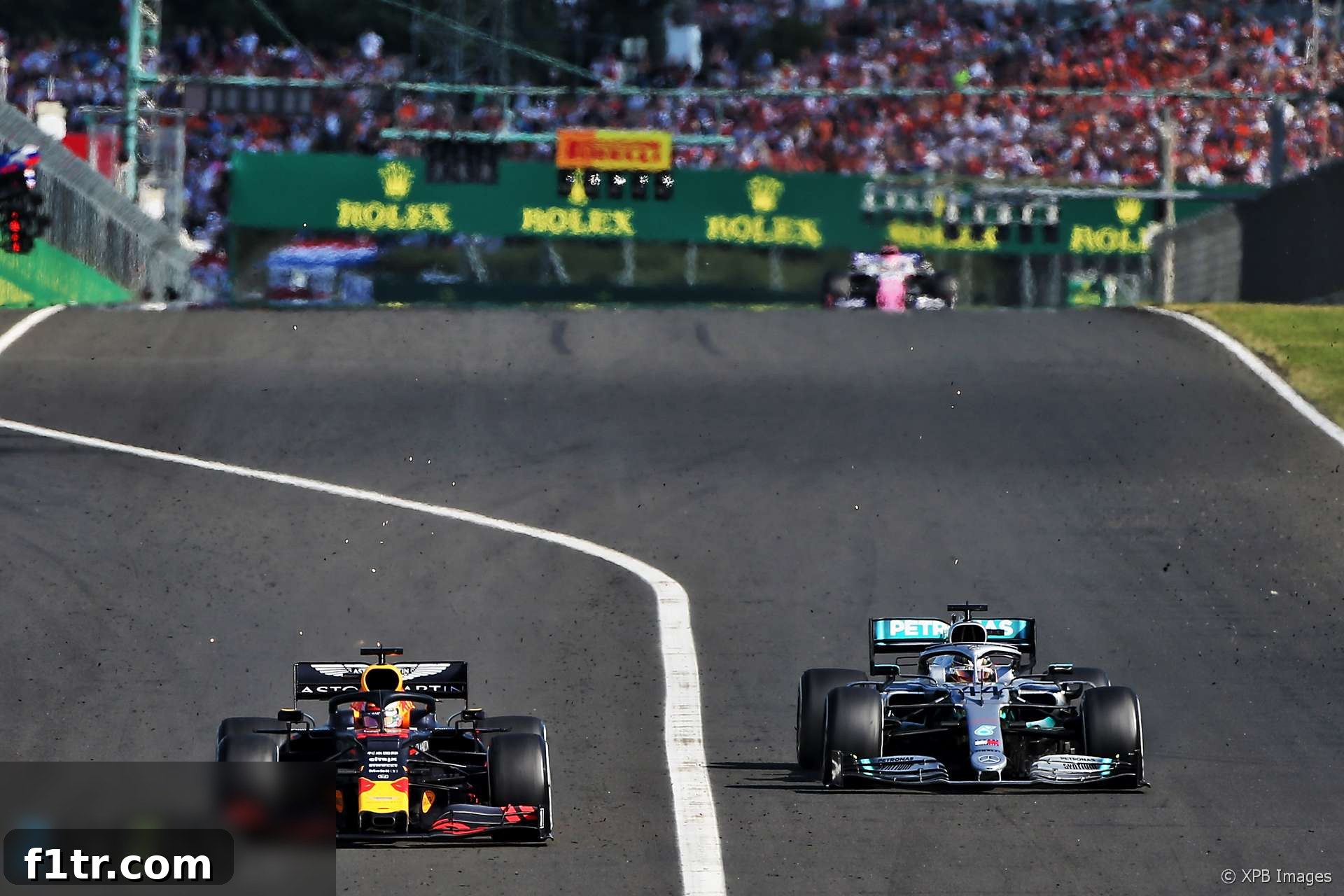
In the high-octane world of Formula 1, where every point and every position can dictate the ultimate outcome of a championship, the approach to on-track battles often varies dramatically depending on the context. This sentiment was vividly articulated by Lewis Hamilton following his masterful victory at the 2019 Hungarian Grand Prix. Hamilton, a seven-time world champion and a titan of the sport, reflected on his intense wheel-to-wheel contest with Red Bull’s formidable young challenger, Max Verstappen. His insightful remarks shed light on the strategic nuances that govern elite motorsport, suggesting that their engagement at the Hungaroring would have been far more aggressive and uncompromising had both drivers been in direct contention for the coveted F1 championship title.
The Hungarian Grand Prix, often dubbed ‘Monaco without the walls’ due to its tight, twisty nature, is a race that demands precision, strategic brilliance, and unwavering focus. For Hamilton, the 2019 edition was a testament to his tactical acumen and racing prowess. Having quickly navigated past his then-teammate, Valtteri Bottas, on the very first lap, Hamilton found himself in a direct chase of Verstappen. It was at this moment, as he later revealed, that he anticipated the much-discussed rivalry between himself and the Dutchman would finally come to a head on the tarmac. “As soon as I got into second, I was like, ‘Okay, this whole battle we’ve been talking about, me and Max having, we’re going to have that today,’” Hamilton recounted with palpable excitement. “And it was really awesome.” This anticipation highlighted the growing buzz around a potential Hamilton-Verstappen rivalry, a clash of generations and driving styles that fans eagerly awaited.
However, despite the thrilling prospect of a head-to-head duel, Hamilton approached the battle with a calculated awareness of the broader championship picture. At that stage of the 2019 season, Hamilton held a comfortable lead in the drivers’ standings, sitting 63 points ahead of Verstappen, who occupied third place. This significant points buffer allowed the Mercedes driver a degree of tactical flexibility that might not have been available under different circumstances. “He put the car in some good places,” Hamilton acknowledged, praising Verstappen’s defensive driving. “I gave him space and more today, but that’s just from the mindset that we’re fighting slightly differently.” This distinction was crucial. Hamilton’s priority was securing the win while minimizing unnecessary risks that could jeopardize his championship aspirations. The ultimate goal was to ensure a clean, decisive overtake rather than an overly aggressive maneuver that could lead to contact or penalties.
Hamilton elaborated on this strategic approach, emphasizing the importance of a well-executed pass. “If we were fighting over the same points, it may have been a lot more aggressive, but there was no need for that today,” he explained. His focus remained on a clinical execution. “It was really just making sure that when we do finally pull off that overtaking manoeuvre, it’s a clean, full sweep by.” This mindset underscored Hamilton’s maturity and his ability to balance the thrill of racing with the long-term demands of a championship campaign. It demonstrated a pragmatic approach to racing that prioritizes the bigger prize over individual skirmishes, a hallmark of elite performers who consistently contend for titles. The Hungarian Grand Prix provided a perfect example of a strategic drive, where patience and precision ultimately paid off.
Beyond the tactical considerations, Hamilton was quick to commend Verstappen for the palpable “respect” demonstrated during their prolonged on-track encounter. In a sport often characterized by fierce competition and intense rivalries, moments of mutual respect between competitors are highly valued. “There is really no better feeling from a racing driver’s point of view when you have a race like today, where you face a really strong competitor and a great driver like Max, obviously at their best,” Hamilton articulated, recognizing the Dutchman’s exceptional talent. “Max at his best and continuing to perform great.” This acknowledgment from a driver of Hamilton’s stature spoke volumes about Verstappen’s burgeoning capabilities and his status as a serious contender. The battle was not just a test of speed, but also a showcase of professional sportsmanship, setting a positive tone for their future engagements.
The champion further expressed his appreciation for the clean racing exhibited by both drivers. “It’s really comforting and awesome to see, firstly, the respect level between us. I think out there was really respectful driving. I hope to continue that,” Hamilton stated. Such comments highlight the underlying code of conduct among top drivers, where hard but fair racing is celebrated. This mutual respect, even amidst intense competition, is vital for the integrity and appeal of Formula 1. It fosters a narrative of gladiators battling honorably, rather than engaging in reckless maneuvers. This particular contest at Hungaroring became a benchmark for how two of the sport’s greatest talents could push the limits without crossing the line, delivering exhilarating action while upholding the spirit of fair play.
Looking ahead, Hamilton expressed genuine enthusiasm for the evolving competitive landscape of Formula 1, particularly with the rise of Red Bull as a consistent frontrunner. The emergence of new challengers injected a fresh wave of excitement into the sport, which had seen periods of dominance by single teams. “I’m so happy that, particularly after a period of time where everyone was so negative talking about the sport, all of a sudden we’ve had this big step up from the Red Bulls,” Hamilton shared. This development was a welcome change, promising more unpredictable and thrilling races for fans worldwide. The increased competition meant that every Grand Prix would carry greater stakes and offer more captivating narratives, moving away from the predictability that sometimes overshadowed the sport.
The prospect of a multi-team battle at the front was a significant boost for the sport’s overall appeal. “Now we’ve got a really good battle on his hands, and it looks like it’s here to stay,” Hamilton confidently predicted, foreseeing a sustained period of intense competition. This prescient observation would indeed prove accurate in the seasons that followed. He also speculated on the potential for other teams, like Ferrari, to join the fray on certain circuits, further enriching the championship narrative. “And I think Ferrari will come back into play in some of these other long, long tracks like Spa and Monza.” These high-speed circuits, known for their lengthy straights, often favor cars with strong power units and aerodynamic efficiency, providing opportunities for different constructors to shine. The anticipation of varying competitive advantages across different track types added another layer of intrigue to the F1 calendar, making each race weekend a unique challenge.
The Hungarian Grand Prix 2019 battle between Lewis Hamilton and Max Verstappen, therefore, transcended a mere race for victory. It was a crucial moment that foreshadowed one of Formula 1’s most iconic rivalries, setting the stage for future epic showdowns. Hamilton’s post-race reflections provided a rare glimpse into the strategic thinking of a champion, highlighting how championship aspirations can influence on-track decisions. His comments underscored the importance of respect between competitors, even when pushing the boundaries of performance. As Red Bull’s challenge grew stronger, the sport benefited immensely from the increased competition, proving that compelling rivalries and unpredictable races are the lifeblood of Formula 1, captivating audiences and ensuring its enduring legacy.
2019 F1 Season Insights
- Crying in the Melbourne car park at 2019 grand prix was my career low – Ocon
- McLaren Racing reports reduced £71 million loss in 2019
- Kvyat: Hockenheim podium last year was “my biggest achievement” so far
- How the FIA’s new encrypted fuel flow meter targets Ferrari’s suspected ‘aliasing’ trick
- “He smashed my office door”: 23 must-see moments from ‘Drive to Survive’ season two
Browse all 2019 F1 season articles