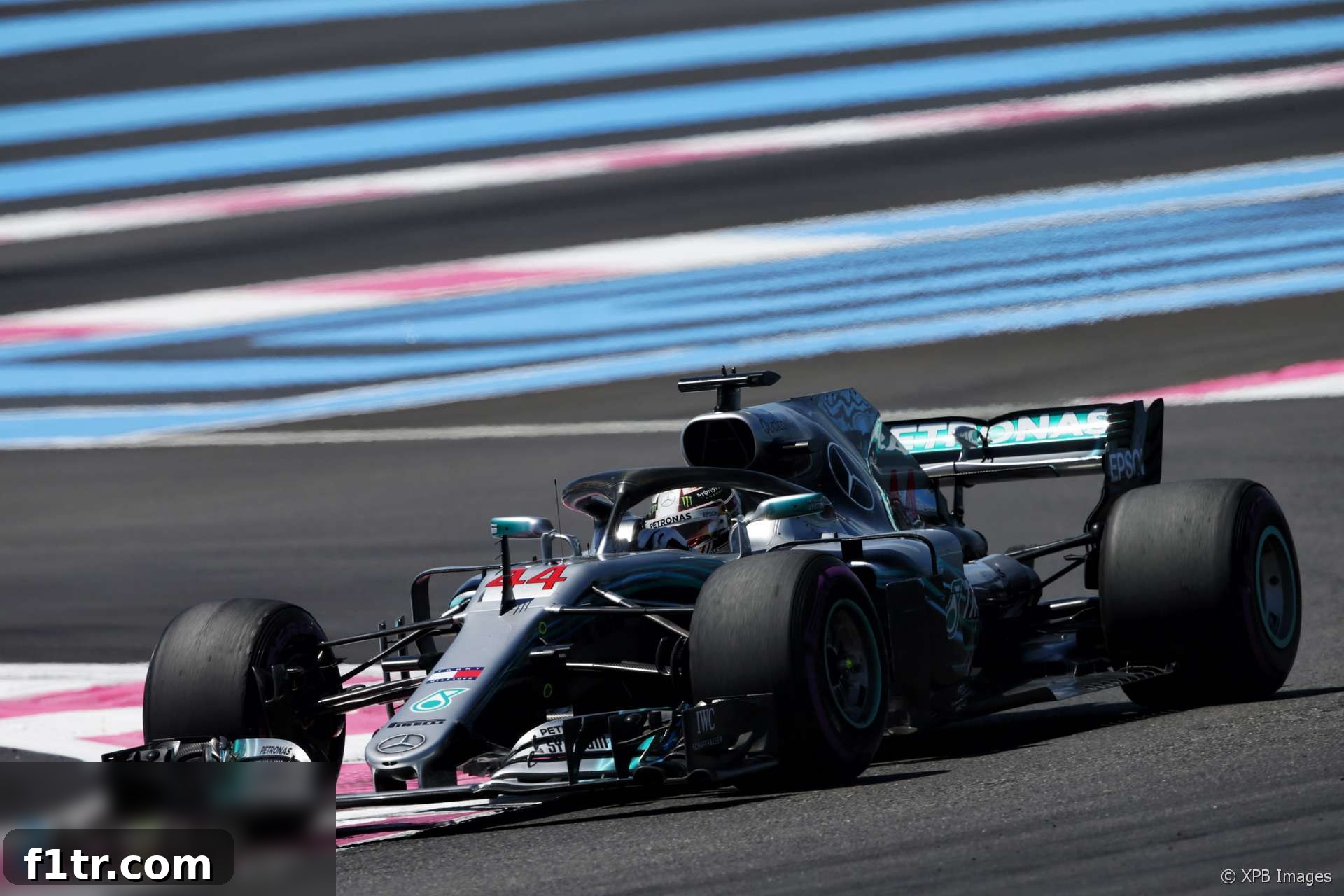
Lewis Hamilton Advocates for More Dynamic F1 Racing: A Call for Strategic Pit Stops and Transparent Practice Sessions
Lewis Hamilton, the seven-time Formula 1 World Champion, has voiced a compelling appeal to the sport’s governing bodies and F1 fans alike: to push for significant changes that could dramatically enhance the spectacle of Grand Prix racing. Hamilton’s primary suggestion revolves around the strategic implementation of more pit stops, a move he believes is crucial for injecting greater excitement and unpredictability into modern F1 events.
The Mercedes driver’s observations often stem from a deep understanding of race dynamics and the fan experience. He recently highlighted concerns over the anticipated one-stop strategy for upcoming races, identifying this trend as a key factor behind what he perceives as a decline in on-track action. According to Hamilton, the solution lies partly with tyre supplier Pirelli, urging them to introduce softer tyre compounds that would necessitate more frequent pit stops and, consequently, more strategic variability.
Advert | Become a Supporter & go ad-free
Your ad here
The Quest for Enhanced Race Dynamics: More Pit Stops, Softer Tyres
Hamilton’s critique of the current tyre philosophy is precise. He notes that the perceived differences between Pirelli’s “ultra-soft,” “super-soft,” and “soft” compounds are often negligible, failing to introduce the strategic diversity that a multi-stop race demands. “They’ve got the ultra-soft – which is soft – and then super-soft and soft. They all seem pretty much the same tyre, there’s not a big difference between them all,” Hamilton explained, emphasizing the lack of performance differentiation that would force teams into varied strategies.
He further elaborated on the unexpected durability of the current tyre offerings. Despite claims from Pirelli about introducing softer compounds, Hamilton remains unconvinced, pointing to the tyres’ robust nature. “There’s going to be some graining. It’s a very hard tyre compared to last year it’s a much, much harder tyre. Even though they said they went softer I don’t believe it. They predicted before the weekend they would do 35, 40 laps each or something like that which is a huge amount.” Such longevity inevitably leads to extended stints and, most frequently, single-stop races, which from a spectator’s perspective can feel less engaging.
The sentiment is clear: longer tyre life often correlates with reduced strategic options and fewer overtaking opportunities. When drivers can complete vast portions of a race on a single set of tyres, the strategic chess match that often unfolds in the pits becomes less prominent. Multi-stop races, conversely, introduce more variables: quicker pit stops, different tyre choices at various stages, and the constant threat of being undercut or overcut, all of which contribute to a more dynamic and unpredictable spectacle for fans.
Empowering the Fans: A Call to Action
Hamilton firmly believes that the collective voice of the fans holds significant power in shaping the future of Formula 1. He directly appealed to the fanbase, encouraging them to vocalize their desire for more exhilarating races. “It’s an unexciting one-stop race most likely. But if you’re a fan and you want more stops vote for it, make some noise, I’m sure F1 will take the peer pressure.” This statement underscores a broader theme in modern sports: the increasing influence of fan feedback on league decisions. Should a significant wave of support emerge for more aggressive tyre strategies and multi-stop races, it could genuinely prompt F1 management and Pirelli to reconsider their approach.
Unveiling True Pace: Standardizing Practice Fuel Loads
Beyond the race strategy, Lewis Hamilton also put forward another intriguing proposal aimed at enhancing transparency and understanding for fans during practice sessions. He suggested a fundamental change to the rules governing fuel loads during Friday and Saturday practice, advocating for all teams to run comparable fuel levels. This seemingly minor adjustment, he argues, would provide a much clearer picture of each team’s true performance potential.
The current scenario often sees teams running vastly different fuel loads during free practice sessions. This strategic variability, while understandable from a team’s perspective (as they gather data for various race scenarios), creates a veil of confusion for spectators trying to gauge competitive order. “It’s kind of frustrating because Friday, Ferrari’s always a second off, they’re on different fuel levels. Everyone’s on different fuel levels and so it’s easy to come out today not really knowing where everyone is,” Hamilton lamented.
The Transparency Gap: Why Fuel Loads Matter to Spectators
For the uninitiated or even seasoned fans, deciphering the genuine pace of a car when its fuel tank capacity is unknown is a significant challenge. A car running a low fuel load will naturally appear quicker than one carrying a heavy load, even if the underlying performance is similar. This disparity makes it incredibly difficult for fans to understand why certain teams are at the top of the time sheets while others lag, or to predict how the weekend might unfold. Hamilton emphasizes this point, stating, “They should change the rule – another rule they should change – and make everyone use the same damn fuel loads. Because for the fans for sure it must be confusing. You don’t know why we are the quickest, you don’t know why Ferraris are that far off.”
Standardizing fuel loads in practice would strip away this layer of complexity, offering a more direct comparison of raw pace. This transparency would allow fans to more accurately assess team and driver performance, fostering a deeper engagement with the sport and generating more informed discussions around potential outcomes. It would transform practice sessions from somewhat opaque data-gathering exercises into clearer showcases of competitive potential, making the lead-up to qualifying and the race more compelling.
While this proposal might face resistance from teams who value the strategic flexibility of current practice regulations, Hamilton believes the benefit to the fan experience outweighs these concerns. “They don’t care about the fuel loads so maybe that’s something they can put in for future,” he added, highlighting that for the average viewer, the technical intricacies of fuel loads are secondary to the desire for clear, comparable performance metrics.
Advert | Become a RaceFans supporter andgo ad-free
Your ad here
Driving F1 Forward: Balancing Sport and Spectacle
Lewis Hamilton’s comments highlight a recurring tension in modern Formula 1: the balance between cutting-edge engineering and pure entertainment. While the sport has always pushed technological boundaries, the ultimate goal is to provide a thrilling spectacle for a global audience. His suggestions are not merely criticisms but constructive proposals aimed at improving the core product. By advocating for changes that directly impact race excitement and viewer comprehension, Hamilton is positioning himself as a champion not just for his team, but for the sport’s overall health and appeal.
The debate around tyre compounds, pit stop strategies, and practice regulations is central to F1’s evolution. As the sport continues to grow its global footprint, particularly through initiatives like ‘Drive to Survive’, the focus on fan engagement becomes paramount. Proposals from high-profile drivers like Lewis Hamilton carry significant weight, often sparking crucial conversations within the paddock and among decision-makers at the FIA and Liberty Media.
Ultimately, the goal is to create races that are not only fair and competitive but also consistently captivating. Whether through adjustments to tyre mandates, strategic rule changes for practice sessions, or a more responsive approach to fan feedback, the collective effort to refine Formula 1’s spectacle is an ongoing process. Hamilton’s interventions serve as a powerful reminder that even at the pinnacle of motorsport, there’s always room for innovation and improvement in delivering the ultimate racing experience.
Explore More F1 Insights and Historical Perspectives
- Understanding Future F1 Regulations and Their Impact
- The Evolution of Pirelli’s Tyre Strategy in Formula 1
- How Formula 1 is Boosting Fan Engagement Globally
- Lewis Hamilton’s Enduring Legacy and Influence on F1
- Key Technical Developments Shaping Modern F1 Racing
Browse all F1 analysis and insights articles