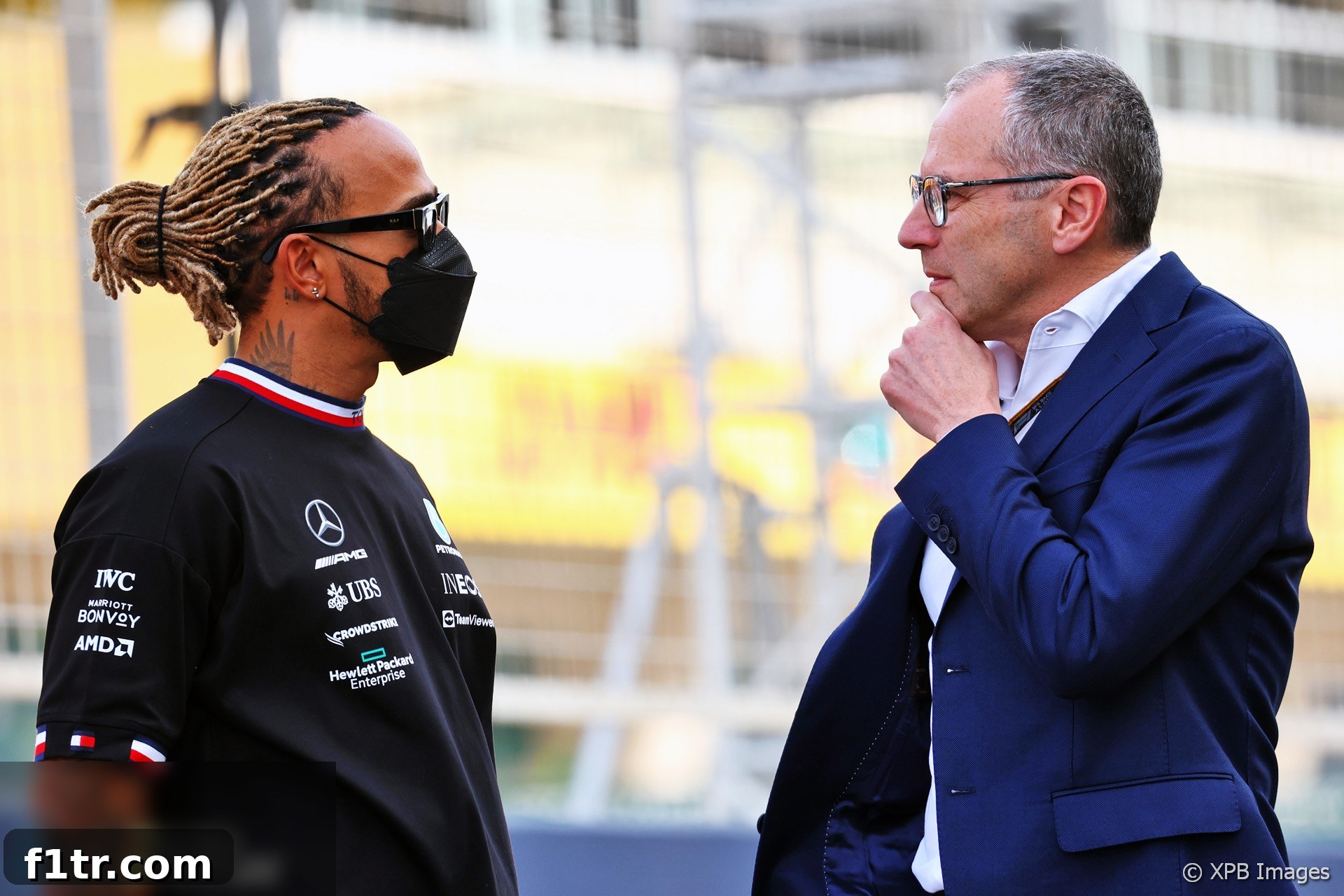
The 2022 Formula 1 season presented an unprecedented challenge for Lewis Hamilton, a driver synonymous with relentless success. Were the season to have concluded prematurely, his sixth-place standing in the Drivers’ Championship would have marked the lowest finish of his illustrious 16-year career. With six races still on the calendar, the prospect of improving his position, even reaching as high as second, remained a mathematical possibility. The remaining races offered crucial opportunities for the Mercedes-AMG Petronas F1 Team driver to accumulate vital points, while his rivals faced their own pressures, creating potential for shifts in the standings.
However, by nearly every measurable standard, the 2022 season was undeniably Hamilton’s most demanding and least fruitful. It saw him endure what many observers considered two of his most challenging race weekends in Formula 1: a tenth-place finish in Jeddah and a thirteenth in Imola. These results were particularly stark when contrasted with his teammate, George Russell, who managed impressive fifth and fourth positions in the same races, respectively. These performances highlighted the inherent difficulties Hamilton and Mercedes faced with the W13 chassis.
Yet, perhaps the nadir of Hamilton’s season arrived at the Belgian Grand Prix. A heartbreaking, accidental first-lap collision with former rival Fernando Alonso not only ended his race prematurely but also resulted in significant damage to a freshly installed power unit. Speaking to selected media, including RaceFans, just four days after this disheartening setback, Hamilton’s candid reflections revealed a complex blend of frustration, guilt, and an unwavering resolve. The raw emotion spurred by the incident was palpable, showcasing the immense pressure and personal investment he places in his sport.
“These past few days have not been easy,” Hamilton confessed from the Zandvoort paddock, underlining his deep sense of responsibility. “And I don’t take lightly mistakes that I make. Some people might say, ‘well, don’t be so hard on yourself,’ but that self-scrutiny is precisely how I’ve become the driver I am today.” He articulated the far-reaching consequences of such errors: “There are so many implications of a mistake, like the one I just made. The team, the damage, the lost points, the impact on morale. I go back to the factory and express my apologies.” However, he quickly pivoted to the shared ethos of his team: “But we win and we lose as a team. We pull back together, and that’s the part I truly cherish and love about this sport.” This sentiment highlights not just his personal accountability but also the strong, collaborative spirit within Mercedes.
Hamilton’s resilience is not solely fueled by internal drive or team support; it is profoundly bolstered by a vast network of external encouragement. Beyond his close circle of friends and family, he receives widespread international support from millions of fans across the globe. Despite the intensity of race weekends, Hamilton remains acutely aware of this unwavering backing. He acknowledges his supporters, even those who might find themselves in a minority amidst opposing fan bases, demonstrating his connection to those who travel far and wide to cheer him on.
“I’m not alone in this emotional rollercoaster ride,” he reflected, empathizing with his fanbase. “I feel for my friends who came to Spa, ready to cheer, even if they were just a couple of faces in a vast orange sea of Max [Verstappen] fans.”
“I am incredibly proud of their bravery,” Hamilton continued, “especially given the atmosphere this year; it’s not easy to stand in a crowd of the opponent’s fans. But they have been amazing, and I know I have to pick myself back up for them too. That’s what motivates me.” This deep appreciation for his fans underscores the personal connection he fosters, transforming their support into a powerful source of motivation amidst the season’s travails.
The arduous task of restoring Mercedes to its competitive pinnacle has seen both Hamilton and Russell push their physical and mental limits. They endured half a season of punishing their bodies and facing numerous disappointments as they painstakingly worked to unravel the complex riddles of the W13. Consequently, the August summer break offered a much-needed respite for Hamilton, allowing him to step away from the relentless demands of Formula 1.
Instead of opting for a conventional rest at home, Hamilton chose a profoundly different path: he embarked on an exploratory journey through Africa. As one of the most vocal advocates for Formula 1’s return to the only inhabited continent without a Grand Prix, this unique opportunity to experience Africa in its vast, vibrant diversity proved to be precisely what Hamilton needed. It offered a transformative experience after arguably the most challenging six-month period of his distinguished F1 career, providing both perspective and rejuvenation.
“It just feels like in life, we often take things for granted because they are always present,” Hamilton reflected on his journey. “But this trip truly put so many things into perspective for me. Seeing animals in their natural habitat was an awe-inspiring ‘wow’ moment. When we were in Tanzania, I felt as if I was living within ‘The Lion King’.” He recounted astonishing encounters: “After the midday heat, I would be working out in the gym, and a zebra would be just outside, or elephants would be grazing nearby. You’d step out of the gym, walk to your room, and there would be elephants merely 50 meters away, making you exclaim, ‘Woah!'”
Hamilton also noted the continent’s multifaceted nature: “Africa certainly has prosperous cities and thriving businesses. However, I genuinely desired to connect with the core essence of the continent. I’ve had glimpses of this in the past; I visited South Africa before and went on a safari with my family when I came to see Nelson Mandela. But I am at a very different point in my life now.”
“I was able to appreciate it so much more this time,” he explained, highlighting the personal growth influencing his perception. “I found it incredibly grounding and centering. And it was just pure fun. My friends and I had an amazing time – there was so much laughter, to the point where you’d get a stitch, something you often miss when you’re constantly working. It was truly good to have that experience.” This profound journey not only offered a mental reset but also reinforced his commitment to initiatives beyond the racetrack.
Hamilton’s influence transcends his status as a world-class athlete and a record-breaking racing driver. With millions of followers and a contact list rich with celebrity names, he possesses a unique platform, including the direct ear of Formula 1 CEO Stefano Domenicali. A Grand Prix in Africa remains a top priority on Hamilton’s agenda, a cause he champions with unwavering passion.
“We are present on all other continents, so why not Africa?” Hamilton posed, articulating the logical imperative. “We travel to many places to shine a spotlight on those countries and their communities. Therefore, there’s no compelling reason not to extend that to Africa.” While South Africa may not have featured on the 2023 F1 calendar, a race for 2024 is widely believed to be a strong possibility, a testament to the ongoing efforts behind the scenes.
“I’ve been working as hard as I possibly can with Stefano in the background to try and make that happen,” Hamilton revealed, underscoring his personal investment in the project. “It’s also a dream of mine to have that race take place before I retire from racing – to have a Grand Prix in Africa would be truly incredible.” Beyond the spectacle of racing, his recent trip ignited a deeper humanitarian impulse: “During my time there, just seeing the children in the streets, it highlighted that so much more can be done for young kids in communities that lack the same opportunities we often take for granted, whether it’s clothing or other essentials. There are many fantastic organizations doing great work, and I am now actively looking into how I can get more involved.”
Hamilton stands as perhaps the most prominent driver to vocally advocate for improvements within F1 and the broader motorsport world, particularly concerning social justice and environmental causes. However, he has not been alone in this progressive stance in recent years. His former rival and now good friend, Sebastian Vettel, has also developed a profound and powerful sense of social justice. Vettel has become increasingly unafraid to leverage his status as a driver and multiple world champion to express himself on pressing global issues, mirroring Hamilton’s dedication to advocacy.
Yet, Hamilton is poised to lose this important accompanying voice when Vettel retires from Formula 1 at the conclusion of the season. Hamilton was quick to express his heartfelt appreciation and profound respect for his peer and friend, acknowledging the invaluable partnership in their shared pursuit of positive change. “With Seb, we’ve had some incredible races in the past, and I am so immensely proud of him,” Hamilton beamed, reflecting on their journey.
“The way he has navigated his own journey, how he has opened up, how he has become outspoken, and how he has discovered and continued to champion causes he cares deeply about, is truly inspiring,” Hamilton added. “I have no doubt whatsoever that whatever he chooses to pursue in the future, he will continue to make a significant impact.” Hamilton readily admitted that this mutual respect and warmth were harder to cultivate during their intense championship battles in 2017 and 2018. “It’s incredibly challenging to be friends when you’re locked in a head-to-head battle, and only one of you can emerge victorious. The psychological warfare you endure during those times is truly tough.”
“But to be able to emerge from that rivalry and become such good friends, and I believe our friendship will only continue to grow and strengthen in the future, is something I am genuinely grateful for,” he concluded. This evolution from fierce competitors to staunch allies highlights a beautiful aspect of their enduring relationship and shared values.
As the Formula 1 world championship calendar expands and evolves, gaining new footholds across the globe on an almost yearly basis, Hamilton continues to face scrutiny and criticism regarding his unwavering support for diversity and equality. This concern often arises as F1 ventures into new nations where women and LGBTQ+ communities do not enjoy the same fundamental rights and freedoms as those in Western countries. Hamilton openly acknowledges that navigating this complex landscape places him in a difficult and often uncomfortable position.
“I try not to overly worry about that, because, again, much of it is beyond my direct control,” he stated, referring to the broader socio-political contexts of host nations. “You inevitably find yourself in an uncomfortable position, sometimes having to speak out on certain issues, or constantly being questioned about them. It’s definitely not an easy situation.” He elaborated on his approach: “I simply try to educate myself as much as possible about the place I am visiting. The undeniable truth is that you cannot fundamentally change the world in a short span of time. So, my aim is to be understanding of where people are in different cultures, religions, and all the various societal nuances.”
Eventually, Hamilton’s powerful voice among his fellow drivers will also recede when he ultimately decides to conclude his own illustrious career. This will leave behind a younger generation of drivers, many of whom fans will naturally expect to continue the progressive push that Hamilton and Vettel have so courageously championed. RaceFans posed a crucial question: Does Hamilton worry that the positive legacy he has fought so hard to establish could diminish or be lost entirely with his eventual departure from the sport?
“It’s genuinely not easy for the youngsters who are coming through the ranks,” Hamilton mused, reflecting on the pressures faced by emerging talents. “I just hope that at some stage in their lives, they will hopefully reach that point of awareness and advocacy. But I certainly wasn’t there when I was in my twenties, and I think that’s simply part of the journey of growth and understanding.” He articulated his hope for the future: “I sincerely hope that at some point, we will see more youngsters speaking out in the future, because this is fundamentally about accountability. It’s about holding the leaders of our industry and our teams responsible. We have a collective duty to keep them committed to doing the right thing, and for the right reasons, for the betterment of the sport and wider society.”
Yet, even once he has competed in his final Grand Prix and completed his very last lap, Lewis Hamilton remains resolute and adamant that his profound influence within the sport will endure. He plans to continue shaping its future trajectory, especially as far as Stefano Domenicali, the sport’s CEO, is concerned. Hamilton’s dedication extends far beyond his active racing career, indicating a lifelong commitment to Formula 1’s evolution.
“I will still always be involved, even if I’m not racing,” he insisted, emphasizing his enduring connection. “Perhaps from a distance, but I’m always going to be a passionate fan of this sport.” He also expressed his hope for continuity in leadership: “And I hope Stefano remains in his role for a very long time. I’ll always be on the other end of the phone, ready to ask, ‘Hey, why are you not pursuing this? You’re not doing enough of that!'” Hamilton concluded with a characteristic blend of humor and determination: “So, I’ll always be that persistent thorn, one that hopefully ignites some interesting and productive conversations for the future of Formula 1.”