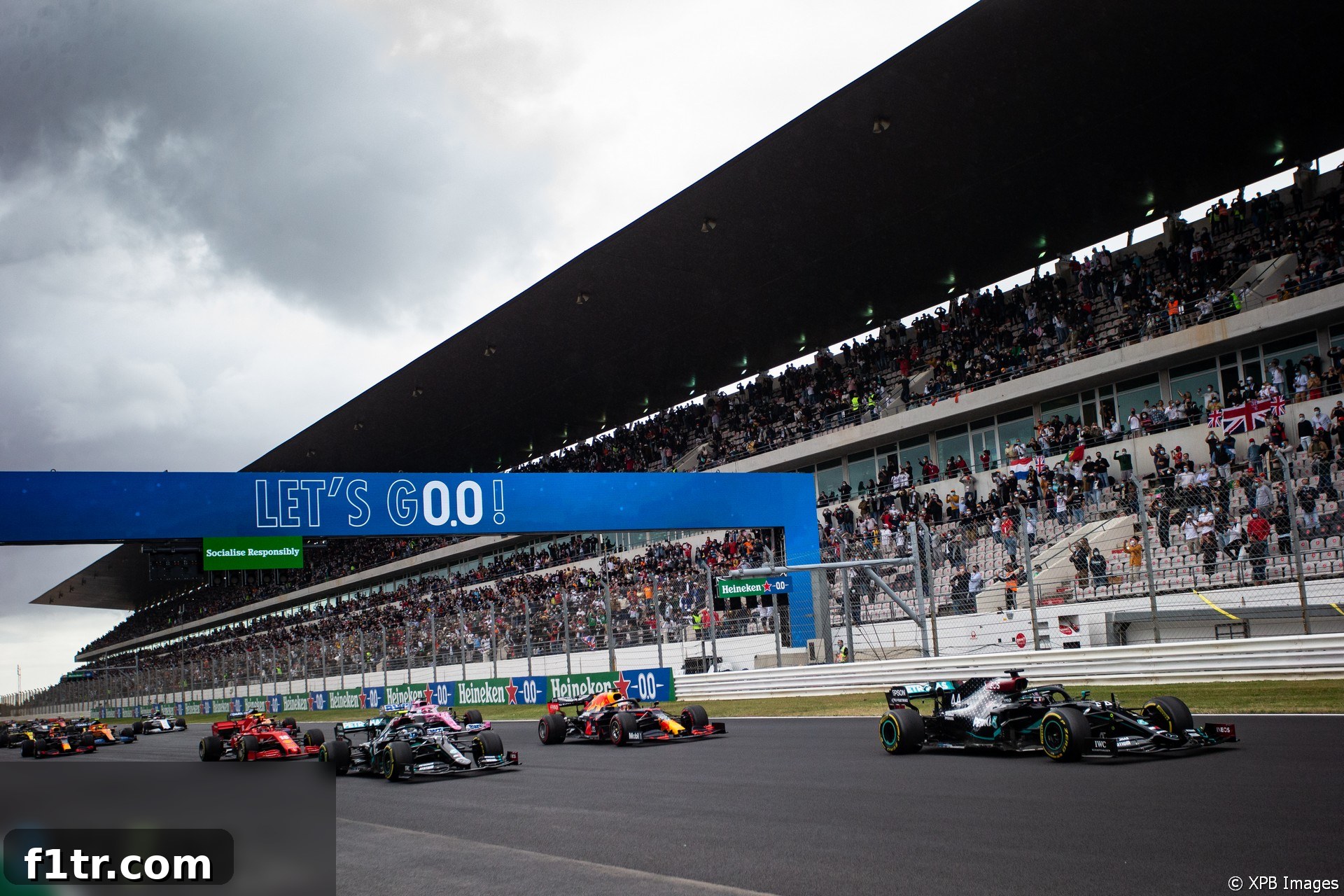
Lewis Hamilton etched his name deeper into the annals of Formula 1 history at the Portuguese Grand Prix, securing his record-breaking 92nd career victory. This momentous achievement saw him surpass the legendary Michael Schumacher’s long-standing record for most F1 wins, a benchmark Schumacher himself had held since 2001.
Advert | Become a Supporter & go ad-free
A New Chapter in Formula 1 History: Hamilton’s Unprecedented Achievement
The Algarve International Circuit bore witness to a historic day in motorsport, as Lewis Hamilton navigated a challenging race to claim his 92nd Grand Prix win. This victory was not just another notch on his belt; it represented a paradigm shift in Formula 1 statistics, as Hamilton officially became the most successful driver in terms1 of race wins. Breaking a record held by a titan like Michael Schumacher, who for decades seemed unreachable, underscores Hamilton’s incredible longevity, consistent performance, and unparalleled skill behind the wheel of a Formula 1 car.
Schumacher’s 91 victories, achieved over a career spanning two distinct eras of the sport, set a benchmark that many believed would never be surpassed. His dominance with Ferrari in the early 2000s cemented his status as a legend. Hamilton, however, with the unwavering support of the Mercedes-AMG Petronas F1 Team, has steadily chipped away at that record since his debut in 2007, demonstrating a relentless pursuit of excellence. The 2020 season, in particular, saw him in exceptional form, and the Portuguese Grand Prix provided the perfect stage for this historic moment, further solidifying his claim as one of the greatest, if not the greatest, drivers of all time.
Portimao’s Treacherous Start: Rain, Tyres, and Early Drama
The race at Portimao began with an unexpected twist, as a light sprinkling of rain descended upon the circuit just before the start, creating incredibly treacherous conditions. The already challenging undulations and varying grip levels of the Algarve track were amplified by the damp surface, turning the opening laps into a high-stakes lottery. This sudden change in weather immediately put tyre strategy under the microscope, as drivers who had opted for the soft compound tyres found themselves with a distinct advantage due to their quicker warm-up characteristics compared to those on the medium compound.
The initial chaos saw rapid position changes throughout the field. The softer tyre offered superior initial grip in the damp conditions, allowing drivers to generate heat and confidence more quickly. Conversely, those on mediums struggled to find the operating window for their tyres, resulting in a lack of grip and several hairy moments. This tactical gamble, or misfortune, depending on one’s starting compound, set the stage for an electrifying opening phase of the Portuguese Grand Prix, promising an unpredictable race from the outset.
Early Scramble for Supremacy: Verstappen, Bottas, and Sainz Ignite the Track
As the lights went out, the initial dampness immediately threw the pre-race strategies into disarray. Max Verstappen, starting on the soft tyres, wasted no time in attempting to challenge the Mercedes duo. He aggressively positioned himself among Lewis Hamilton and Valtteri Bottas but ran wide at Turn Three, an error that cost him dearly as Bottas capitalised to reclaim second place. Shortly after, Hamilton himself ceded the lead to his Mercedes teammate, as Bottas appeared to find more immediate rhythm in the tricky conditions.
However, the biggest surprise of the opening laps came from the McLaren drivers, particularly Carlos Sainz Jnr. Benefiting hugely from their soft tyres and Sainz’s brilliant car control, the Spaniard launched a stunning attack, skillfully weaving his way past both Mercedes cars and into the lead of the Grand Prix. His teammate, Lando Norris, also found himself briefly in third place behind Bottas, showcasing McLaren’s impressive early pace. This unexpected surge to the front sent shockwaves through the paddock, proving that in such changeable conditions, bravery and timely tyre choice could momentarily upset the established order. Yet, as the track gradually began to dry and the medium tyres came into their own, the McLarens’ advantage diminished, allowing the Mercedes pair to reassert their dominance and pull away from Verstappen and the chasing pack.
Hamilton Asserting Dominance: A Masterclass in Race Management
After the early skirmishes and the brief McLaren surge, order was eventually restored at the front, with the Mercedes cars once again leading the charge. Lewis Hamilton, having initially lost out to Bottas, meticulously began to reel in his teammate. Displaying characteristic patience and supreme race craft, Hamilton retook the lead halfway through his first stint, executing a decisive overtake that signalled his intent to control the race. From that moment on, despite reporting cramp late in the race – a testament to the immense physical demands of modern Formula 1 – Hamilton never looked likely to be headed, demonstrating a masterclass in pace management and strategic driving.
His ability to maintain a comfortable gap to Bottas, even under physical duress, highlighted his formidable mental strength and experience. Meanwhile, Valtteri Bottas, after his sole pit stop, found himself struggling significantly with a lack of grip upon returning to the track. This setback prevented him from mounting any serious challenge to Hamilton, ultimately consigning him to a distant second place. Max Verstappen, while consistent and pushing hard, simply lacked the outright pace to truly contend with the Mercedes drivers, settling for a commendable third place. This result underlined Mercedes’ superior package and Hamilton’s undeniable ability to extract maximum performance, even when facing physical discomfort, consolidating his lead in the championship.
Midfield Mayhem and Strategic Plays: The Battles Beyond the Podium
The Portuguese Grand Prix was not just about the front-runners; the midfield delivered its own compelling narratives, filled with intense battles, strategic gambles, and dramatic overtakes.
Perez’s Valiant Recovery
One of the standout performances came from Sergio Perez. His race began in disastrous fashion, as he was unfortunately knocked into a spin by Max Verstappen on the very first lap. This incident dropped the Racing Point driver to the very back of the field, making his prospects for points seem bleak. However, Perez embarked on a truly remarkable recovery drive, showcasing exceptional pace and brilliant tyre management. He systematically picked off car after car, climbing through the field with determination. By the final laps, he had fought his way back into a strong fifth position, a testament to his skill and perseverance.
Tyre Degradation and Late Overtakes
Despite his incredible comeback, Perez’s long stints and hard-charging meant his tyres were heavily degraded towards the end of the race. This led to significant tyre graining, which severely compromised his pace. In the thrilling final two laps, he was ultimately unable to defend against the charging Pierre Gasly and the resurgent Carlos Sainz, both of whom executed brilliant overtakes to demote Perez to seventh. Gasly, in particular, delivered another strong performance for AlphaTauri, cementing his reputation as a formidable midfield contender. Sainz’s late charge further demonstrated McLaren’s competitive edge once their tyres were in the optimal window.
Renault’s Solid Performance
The Renault team also had a quietly effective race. Esteban Ocon, in particular, opted for a very long first stint, a strategy that paid dividends. Emerging from his belated pit stop, Ocon found himself ahead of his teammate Daniel Ricciardo. The Renault drivers maintained their positions, finishing in that order, securing valuable points for the French constructor and demonstrating strong race management.
Ferrari’s Recovery and The Final Point Battle
Further down the order, Charles Leclerc delivered a strong recovery drive for Ferrari, fighting back brilliantly after losing ground on the chaotic first lap to secure a respectable fourth place. This result was a significant boost for the Scuderia, indicating improvements in their package. The battle for the final point was a classic veteran showdown, with Sebastian Vettel ultimately beating Kimi Raikkonen to tenth place, showcasing their enduring competitive spirit. Alexander Albon, meanwhile, endured a challenging weekend for Red Bull, struggling to find pace and finishing a disappointing twelfth, highlighting a difficult period for the young Thai driver.
Controversial Incident: Norris and Stroll Clash
The Portuguese Grand Prix was not without its share of controversy, notably a mid-race collision involving Lando Norris and Lance Stroll. Both drivers were engaged in a fierce battle for position when their paths converged, resulting in significant contact. The stewards investigated the incident, deeming Stroll primarily responsible for the collision. The impact left both cars with damage, severely compromising their races. Norris, despite running strongly in the top three during the chaotic early laps, ultimately nursed his damaged McLaren to a disappointing 13th place. Stroll’s race, however, came to a more definitive end; after dropping to last place and sustaining irreparable damage, he was forced to retire, becoming the race’s only casualty. This incident further fuelled discussions about aggressive driving and racing etiquette in the heat of competition.
Concluding Thoughts: A Memorable Race and a Historic Milestone
The 2020 Portuguese Grand Prix will forever be remembered as the race where Lewis Hamilton transcended a statistical benchmark, becoming Formula 1’s most successful driver in terms of Grand Prix victories. But beyond the record-breaking headline, Portimao delivered a thrilling spectacle, from the rain-soaked, chaotic opening laps that saw unexpected leaders emerge, to intense midfield battles and valiant recovery drives. The conditions tested every driver and team, highlighting the importance of adaptability, strategic brilliance, and sheer driving talent.
Hamilton’s commanding performance, coupled with the dramatic events unfolding throughout the grid, solidified the Portuguese Grand Prix as a memorable fixture in the Formula 1 calendar. It was a race that celebrated not only individual excellence but also the unpredictable and exhilarating nature of motorsport, reminding fans why they tune in. As the season continued, the implications of Hamilton’s record-breaking achievement resonated deeply, cementing his legacy and inspiring future generations of racers.
Advert | Become a RaceFans supporter andgo ad-free
2020 Portuguese Grand Prix Reaction
- This comprehensive recap provides an in-depth analysis of the key moments and performances from the 2020 Portuguese Grand Prix, including driver reactions and strategic breakdowns.