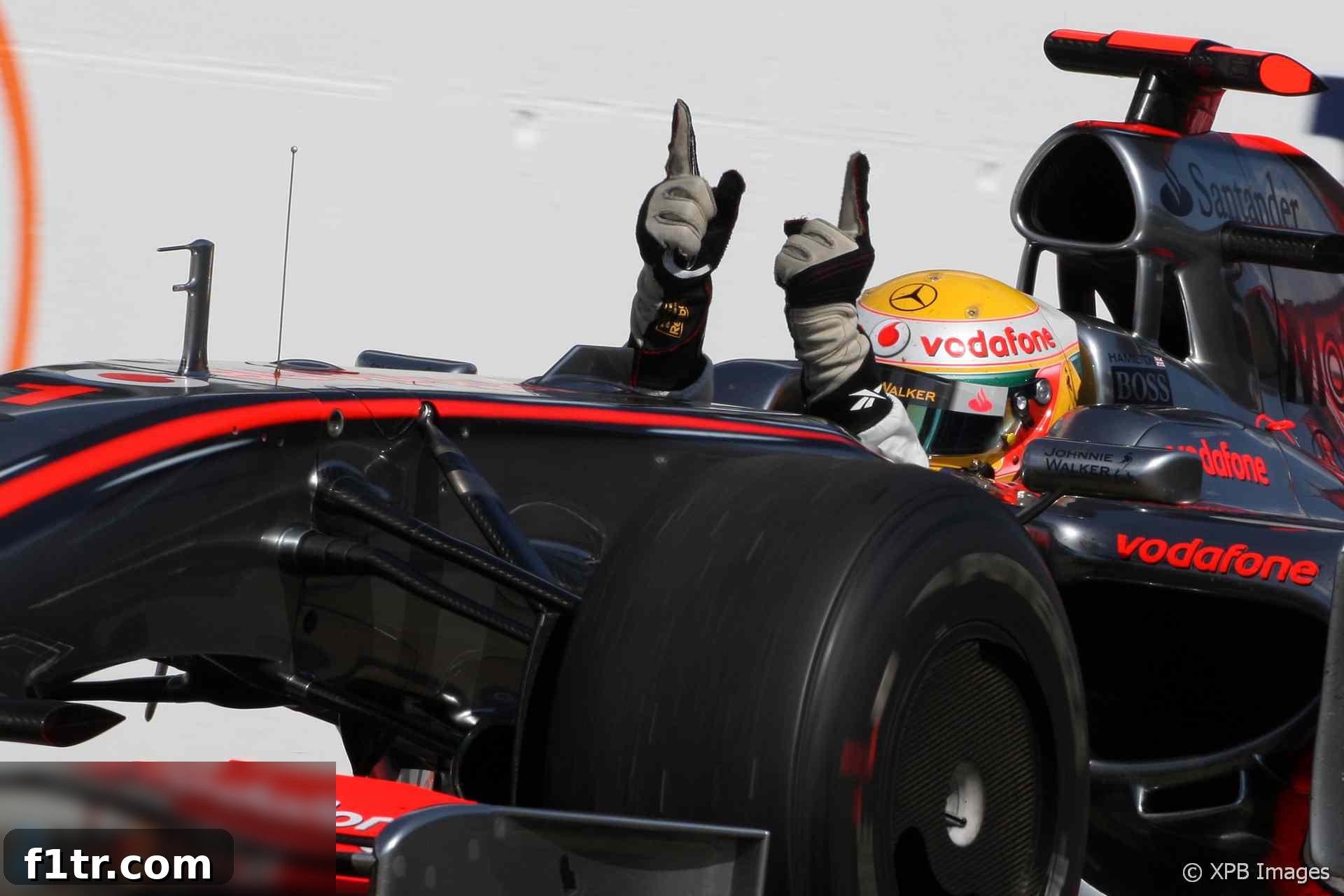
Lewis Hamilton Secures Dominant Victory at Hungarian Grand Prix: A McLaren Resurgence
The 2009 Formula 1 season had been a rollercoaster of fortunes, with Brawn GP initially dominating the championship, closely followed by the resurgent Red Bull Racing squad. McLaren, the reigning champions, had endured a torrid start, struggling to adapt to the new aerodynamic regulations and the introduction of Kinetic Energy Recovery Systems (KERS). However, the Hungarian Grand Prix proved to be a pivotal moment, signaling a dramatic turnaround as Lewis Hamilton delivered a stunning, controlled performance to seize victory for McLaren, breathing new life into his own and his team’s championship aspirations.
Hamilton’s victory was not merely a standalone triumph; it represented McLaren’s first win of the challenging 2009 campaign, providing a much-needed morale boost and demonstrating the efficacy of their development efforts. The Hungaroring race also notably featured KERS-powered cars occupying the top two spots on the podium for the very first time, with Kimi Raikkonen expertly guiding his Ferrari to a hard-fought second place.
A Championship Landscape in Flux
Heading into the Hungarian Grand Prix, the championship narrative was primarily focused on Jenson Button’s impressive lead for Brawn GP and the intensifying challenge from Red Bull’s dynamic duo, Mark Webber and Sebastian Vettel. The undulating Hungaroring circuit, known for its tight corners and limited overtaking opportunities, was expected to test the cars’ aerodynamic efficiency and driver skill.
Qualifying itself offered a tantalizing glimpse into the race’s potential drama, with Fernando Alonso unexpectedly snatching pole position for Renault, highlighting the car’s competitive edge with a lighter fuel load. Hamilton, demonstrating McLaren’s improving pace, secured fourth place on the grid, positioning himself perfectly for a strong challenge. Championship leader Button, however, found himself starting a modest eighth, hinting at potential struggles for the Brawn GP machine on this particular circuit. The stage was set for a truly unpredictable race.
The Race Commences: High Stakes and Early Drama
As the lights went out, the Hungarian Grand Prix exploded into action. Fernando Alonso, from pole, made an impeccable start, swiftly establishing an early lead. Behind him, however, the midfield erupted into a thrilling, albeit chaotic, spectacle. Four cars barreled towards the first corner side-by-side, a testament to the drivers’ aggressive intent. Mark Webber, in his Red Bull, initially managed to regain a position over Hamilton, who had unleashed his McLaren’s KERS boost for a characteristic rocket-like getaway from the line.
Kimi Raikkonen, also benefiting immensely from his Ferrari’s KERS unit, surged through the pack with remarkable speed. As the cars streamed towards Turn 2, Raikkonen found himself battling for fourth place alongside Hamilton, but the critical incident of the opening lap involved Raikkonen and Sebastian Vettel. In a tight squeeze, the Ferrari made contact with Vettel’s Red Bull. This collision resulted in damage to Vettel’s front wing and potentially more structural issues, forcing him to drop down the order, ceding positions to drivers like Nico Rosberg and Heikki Kovalainen. The stewards immediately noted the incident for investigation post-race, with Vettel unequivocally placing the blame squarely on Raikkonen’s shoulders for the contact.
Further back, Jenson Button’s start was less auspicious. He was beaten off the line by Kazuki Nakajima and initially fell to ninth place. However, mirroring his determined drives at Bahrain and Sepang earlier in the season, Button executed a crucial overtake on the Williams driver on the second lap, regaining his lost ground and settling back into a more competitive rhythm.
Alonso’s Heartbreak: A Race Ruined by Pit Stop Misfortune
Despite his lighter fuel load, Fernando Alonso showcased impressive pace in the early laps, darting ahead and attempting to build a cushion. However, Lewis Hamilton, carrying significantly more fuel, began a relentless pursuit. On lap four, another perfectly timed deployment of the KERS button allowed Hamilton to draw alongside the Red Bull of Mark Webber and execute a decisive overtake around the outside of Turn 2. This move positioned him in second place, hot on Alonso’s heels.
Hamilton steadily chipped away at Alonso’s lead. A 2.9-second advantage on lap five was reduced to a mere 1.2 seconds by lap nine. While Hamilton couldn’t get much closer immediately, the unfolding drama was not on track, but rather in the pit lane. Alonso was soon due for his first pit stop, a routine procedure that would tragically unravel his entire race.
The pit stop became a nightmare scenario. As Alonso pulled away, it became horrifyingly clear that the front-right wheel had not been properly attached to his Renault R29. By the second corner, the wheel fairing detached and blew free, creating a dangerous piece of debris. Even more alarmingly, and in light of recent serious accidents in Formula 1, the wheel then completely detached from the car, bouncing precariously across the track. Miraculously, no other driver made contact with the loose wheel, averting what could have been a catastrophic incident. Alonso’s race was irrevocably ruined; he limped back to the pits on three wheels for a replacement, but the damage was done, and he was forced to retire shortly after. This incident would later lead to severe repercussions for the Renault team, highlighting the critical importance of pit lane safety protocols.
Hamilton Takes Command as Rivals Falter
With Alonso’s unfortunate exit, Lewis Hamilton inherited the lead, and from that moment, his control over the race was absolute. He quickly began to extend his advantage over the chasing pack, demonstrating the McLaren MP4-24’s vastly improved performance and his own exceptional driving skill. Despite starting with a heavier fuel load, Hamilton’s pace was relentless.
Red Bull’s Day of Pit Lane Misfortunes
Mark Webber, who had started with more fuel than Hamilton, was scheduled to pit before the McLaren. He came in on the same lap as Kimi Raikkonen, creating a tense moment in the pit lane. Webber’s pit stop also encountered a minor issue, and the Red Bull team released him just as Raikkonen was passing by in the fast lane. Although contact was narrowly avoided, Raikkonen effectively took the position from Webber. This unsafe release did not immediately trigger a penalty but was noted by the stewards for later review, eventually resulting in a reprimand for the Red Bull team.
Sebastian Vettel, already hampered by the early race contact with Raikkonen, faced even more serious problems. After his pit stop on lap 21, he immediately complained to his team that the car felt undriveable. Signs of smoke emanating from the rear of his Red Bull confirmed underlying issues. The team summoned him back to the pits for a thorough inspection, and after a brief return to the track following a new front wing and tyre change, Vettel was forced to retire the car. He attributed his race-ending problem directly to the damage sustained during the opening lap incident with Raikkonen, a bitter blow to his championship aspirations.
Midfield Battles and Tyre Strategy Struggles
Following the initial round of pit stops, Hamilton held a comfortable lead, with Jenson Button temporarily elevated to second place, though he had yet to make his stop. Button, however, was not happy with his car’s performance on the super soft tyres, struggling for grip and pace. A subsequent switch to soft tyres on lap 25 only compounded his problems, leading to a significant drop in performance. He slipped out of the points positions, even being overtaken by Giancarlo Fisichella’s Force India as he emerged from the pits. This marked a difficult race for the championship leader, who looked uncharacteristically off the pace.
Meanwhile, Lewis Hamilton’s hold on the lead remained unshakeable, as did Kimi Raikkonen’s grip on second place, despite a somewhat slow getaway after his second pit stop. Mark Webber, having dropped back from the Ferrari, found himself caught in a tight battle with Heikki Kovalainen and Nico Rosberg. Kovalainen, in the second McLaren, pitted first of the trio, falling behind Rosberg, but Webber skillfully defended his position to retain his valuable points.
Timo Glock, driving for Toyota, executed a brilliant race strategy, opting for two very long stints on his tyres. This paid significant dividends, allowing him to climb through the field, and he might have finished even higher had he not been held up behind Raikkonen for a period. After his final pit stop, Glock emerged ahead of not only his teammate Jarno Trulli but also Button, spending the remainder of the race in a vain pursuit of Kovalainen. Trulli, in turn, had Kazuki Nakajima and Rubens Barrichello close behind him, the latter enduring a compromised race after starting outside the top ten for Brawn GP.
At the very back of the field, newcomer Jaime Alguersuari made his Formula 1 debut for Toro Rosso. Despite finishing towards the rear, he achieved a significant milestone by finishing ahead of his more experienced teammate, Sebastien Buemi, who spun off at Turn 2 late in the race. Both Toro Rossos notably set their fastest laps of the race on the final tour, indicating a strong finish despite their positions.
Championship Implications: A Renewed Battle
The outcome of the Hungarian Grand Prix significantly reshaped the championship standings, injecting fresh excitement into the 2009 title fight. Mark Webber’s strong third-place finish propelled him to second in the drivers’ championship, solidifying his position as Jenson Button’s primary rival. Button’s lead, which had once seemed unassailable, was now trimmed to a more manageable 18.5 points, signaling that the momentum was shifting. Similarly, Brawn GP’s lead in the constructors’ championship narrowed to just 15.5 points, highlighting the growing challenge from Red Bull.
For Lewis Hamilton, this victory was more than just a race win; it was a profound statement of intent. He more than doubled his championship tally, moving into eighth place with 19 points, a remarkable recovery after McLaren’s early season woes. This result firmly announced McLaren’s return to competitiveness and Hamilton’s determination to fight for every possible point in the latter half of the season.
Post-Race Fallout and Controversies
The stewards’ post-race investigations clarified several incidents. Kimi Raikkonen was ultimately not penalized for his opening lap contact with Sebastian Vettel, ruling it a racing incident. However, Red Bull Racing did receive a reprimand for the unsafe release of Mark Webber during his pit stop, underscoring the strict safety regulations in the pit lane.
The most severe repercussion came for Renault. Following a thorough investigation into Fernando Alonso’s wheel detachment, the FIA took unprecedented action, banning the Renault F1 team from participating in the upcoming European Grand Prix. This was a rare and severe penalty, reflecting the gravity of the safety breach and serving as a stark warning to all teams regarding pit stop procedures and car integrity.
Driver of the Race: Hamilton’s Masterclass
Selecting the “Driver of the Race” was an easy task for most observers and fans alike. Lewis Hamilton’s performance was a masterclass in controlled aggression and strategic execution, making him the undisputed choice. His KERS-assisted start, decisive overtake on Webber, and flawless management of the race from the front were exemplary. Many fans echoed this sentiment on social media:
- lukeatherton – hammy baby!!
- dcowlives – Has 2 b Hamilton, expected him 2 take lead but not stay there & in such commandng fashion. 10/10 to the boy from Stevenage.
- rubvic – I think Lewis did the best job, and managed to open a confortable gap.
- shaohanmandy – I should say ….Lewis
- noelinho – Hamilton has to be driver of the race, but a great drive from Rosberg too. He’s definitely worth an honorary mention.
- TweetingSteve – Hamilton no doubt – great start, great overtaking of Weber and great race from the front.
While Hamilton was the clear favourite, other drivers also garnered praise for their efforts. Kimi Raikkonen’s determined drive to second place, extracting maximum performance from his Ferrari, and Nico Rosberg’s consistent points finish were noteworthy. Some also highlighted Timo Glock’s clever tyre strategy as a standout performance. Even Jaime Alguersuari received an honourable mention for finishing ahead of his teammate in his debut Grand Prix.
Who was your driver of the race? Have your say below.
Hungarian Grand Prix Results & Championship Standings
- Hungarian Grand Prix result
- Championship standings after Hungary
Read more: Rate the race: Hungarian Grand Prix