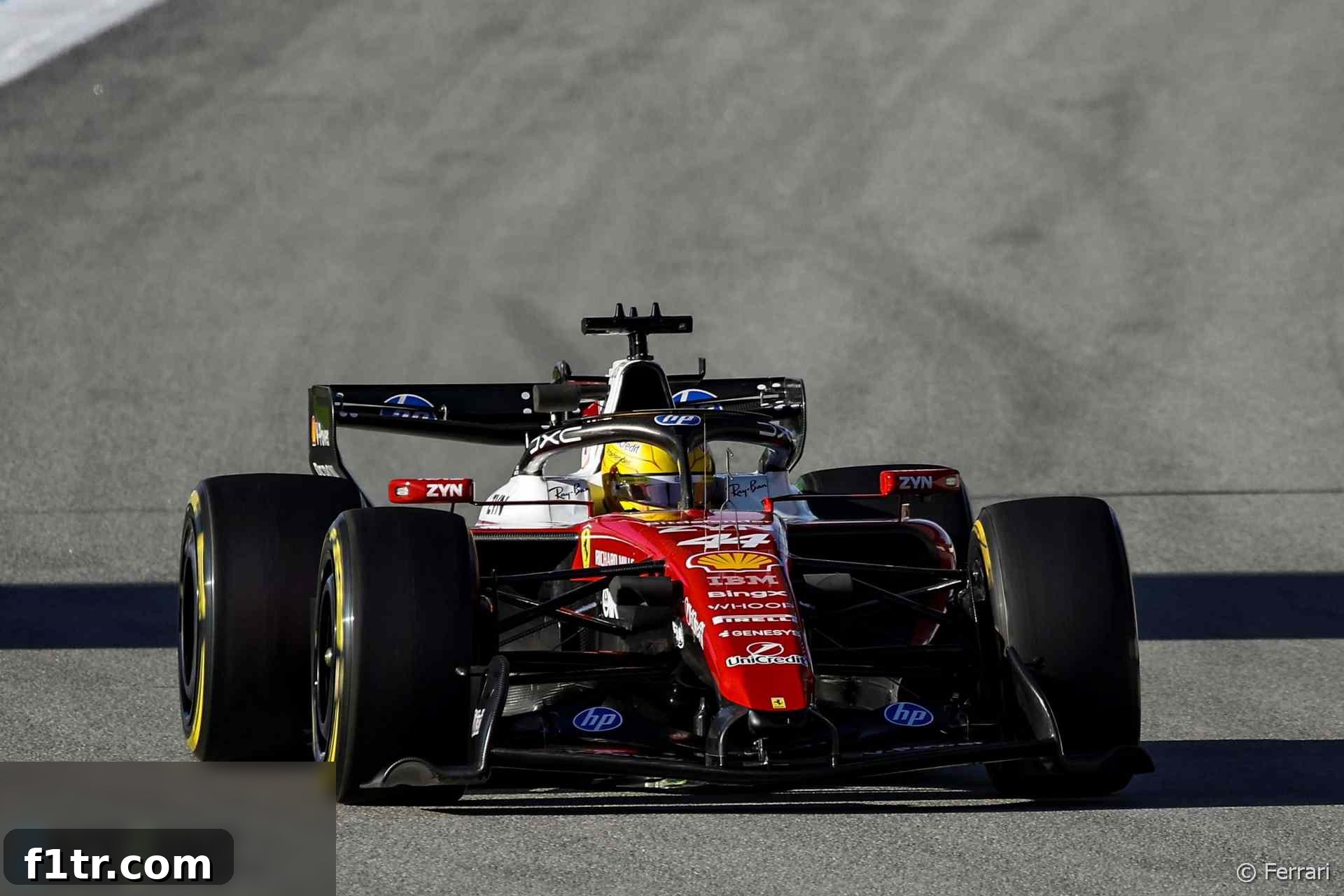
Lewis Hamilton, a prominent figure in Formula 1, has voiced significant concerns regarding the impending 2026 regulations, specifically highlighting the extensive energy saving measures drivers will be compelled to undertake with the new generation of cars. The regulations, aimed at ushering in a more sustainable and technologically advanced era for the sport, appear to be presenting a stark reality that could fundamentally alter the essence of racing. Hamilton’s observations, following his initial experiences with the prototype power units, suggest a future where the delicate balance between outright speed and strategic energy management becomes paramount, potentially at the expense of pure driving spectacle.
The Growing Challenge of Energy Management in 2026 Formula 1 Cars
The core of Hamilton’s apprehension stems from the necessity for drivers to engage in what is known as “lift-and-coast” for unprecedented durations, even during critical qualifying laps. This technique, where a driver lifts off the throttle and coasts into a corner to conserve fuel or, in the 2026 context, electrical energy, is not new to Formula 1. However, its projected prominence under the new rules has raised eyebrows across the paddock. Hamilton recounted his experience at the Circuit de Catalunya, a track known for its high-speed sections, stating that he was forced to lift off the throttle for an astonishing 600 meters on a qualifying lap in the SF-26. This significant period of reduced throttle application, he argues, fundamentally contradicts the very spirit of competitive racing, where every millisecond and every ounce of power is typically utilized to push the limits.
“If you look at Barcelona, for example, we’re doing 600 metres lift-and-coast on a qualifying lap,” Hamilton emphatically stated. “That’s not what racing is about.” This sentiment resonates deeply with fans and purists who envision Formula 1 as the pinnacle of motorsport, where drivers relentlessly attack corners and maximize their speed through every phase of a lap. The prospect of prolonged lift-and-coast phases, which essentially involve intentionally slowing down, could dilute the thrill and raw performance that defines Grand Prix racing. The necessity for drivers to consciously reduce their throttle input to manage electrical energy could lead to a more constrained and less aggressive driving style, potentially impacting the visual dynamism of the sport.
Technical Implications: Lower Gears and Complex Energy Recovery
The complexities of energy management extend beyond just lift-and-coast. Drivers are finding that to effectively recover sufficient electrical energy, teams are resorting to unconventional gear selections. Hamilton explained that the drive to recuperate enough battery power forces them to shift into much lower gears than would typically be optimal for a given corner or speed. “The low gears that we have to go down into is just because we can’t recover enough battery power,” he elaborated. This means engaging second or even first gear in sections where drivers would ordinarily be in higher gears, simply to allow the engine to rev much higher and generate more energy for the battery pack. “We can’t recover enough battery power, so that’s why we have to go and rev the engines very, very, very high. So we’re going down to second and first in some places just to try to recover that extra bit of power.”
This forced use of lower gears presents multiple challenges. Firstly, it adds another layer of cognitive load for drivers, who already manage an incredible array of parameters from tire degradation to brake bias. Secondly, it could impact the car’s stability and balance, as engaging very low gears at high speeds can introduce unwelcome engine braking effects. Thirdly, and perhaps most importantly for the spectacle, it could alter the car’s sound and dynamic behavior, potentially making the driving less fluid and intuitive. While Bahrain, with its abundance of heavy braking zones, provides more natural opportunities for energy recovery and thus reduces the need for extensive lift-and-coast, the issue remains critical for tracks like Barcelona and many others on the calendar that demand continuous throttle application and high cornering speeds.
Complexity: A Barrier for Drivers and Fans Alike
Beyond the physical demands and altered driving styles, Hamilton also raised significant concerns about the sheer complexity of the new power unit’s energy management systems. He believes that the intricate nature of these systems will be bewildering for fans, potentially alienating them from understanding the nuances of the race. “None of the fans are going to understand it,” Hamilton asserted, reflecting on his own struggle to grasp the full scope of the new regulations. He described a recent meeting where the technical specifics were laid out, stating, “I sat in a meeting the other day and they’re taking us through it. It’s like you need a degree to fully understand it all.”
This perceived opacity is a serious issue for a sport that relies heavily on fan engagement and accessibility. If the strategic battles and performance differentiators become so technically convoluted that even seasoned drivers struggle to fully comprehend them, how can casual viewers, or even dedicated followers, be expected to follow along? The risk is that races transform into a mystifying exercise in energy conservation rather than a clear contest of speed, skill, and strategic gambles that are easy to follow. F1 has always sought a balance between showcasing cutting-edge technology and delivering an easily digestible, thrilling narrative. The 2026 regulations, as described by Hamilton, threaten to tip this balance too far towards the former, potentially at the expense of the latter.
The Future of Formula 1: Spectacle Versus Sustainability
The ongoing discourse surrounding the 2026 regulations highlights a critical juncture for Formula 1. The sport is striving to align with global sustainability goals, attract new manufacturers like Audi, and demonstrate technological relevance to the automotive industry. These ambitions are commendable and necessary for F1’s long-term viability. However, the driver feedback, particularly from a multi-world champion like Hamilton, underscores the potential for unintended consequences that could impact the very core appeal of the sport: thrilling, unadulterated racing.
The push for greater electrical power and energy efficiency, while environmentally conscious, introduces a new dynamic where managing resources becomes as crucial, if not more so, than sheer pace. This shift could redefine what it means to be a top F1 driver. While strategic thinking has always been part of the game, the degree to which energy management dictates performance in 2026 could move the emphasis away from raw driving talent and audacious overtakes. The delicate art of balancing battery charge, energy recovery, and deployment during a race, combined with tire management and traditional race craft, will require an extraordinary level of multitasking and cognitive ability.
For the sport’s governing bodies, the FIA and Formula 1 Management, Hamilton’s concerns serve as a crucial early warning. While the regulations are largely set, there may still be opportunities for fine-tuning before their implementation. Striking the right balance between technological innovation and maintaining an exciting racing product will be paramount. The aim should be to create power units that are advanced, sustainable, and attractive to manufacturers, without fundamentally undermining the essence of Formula 1 as a test of speed, skill, and bravery. The challenge is to ensure that the technological sophistication enhances, rather than detracts from, the drama and spectacle of wheel-to-wheel racing. The hope is that by 2026, the sport will have found a way to marry its futuristic vision with the traditional values that have captivated millions of fans for decades, allowing drivers like Hamilton to showcase their talent without being overly constrained by energy conservation mandates.
Formula 1
- One of F1’s greatest races happened 15 years ago today. Or did it?
- “Overtaking is overtaking”: Domenicali denies F1’s yo-yo racing is “artificial”
- The crashes F1 is trying to prevent may be rare – but the danger is obvious
- F1 returning to India soon after 2027 sounds like wishful thinking
- Verstappen loathes F1’s new generation of cars – but what do his rivals reckon?
Browse all Formula 1 articles