Navigating the Apex: Lewis Hamilton on Max Verstappen’s Unique Driving Style in Formula 1
The exhilarating world of Formula 1 is not just a test of engineering prowess and raw speed; it’s a high-stakes arena where driver psychology and on-track etiquette often dictate the outcome of intense wheel-to-wheel battles. Few rivalries in recent memory have encapsulated this dynamic quite like that between seven-time world champion Lewis Hamilton and the fiercely competitive Max Verstappen. Their encounters on track have consistently provided some of the sport’s most memorable, and sometimes controversial, moments. One such incident at the Mexican Grand Prix sparked a candid admission from Hamilton regarding how he approaches racing the Red Bull sensation: a need for a distinctly different strategy.
Advert | Become a Supporter & go ad-free
The Mexican Grand Prix Tangle: A Case Study in Driver Dynamics
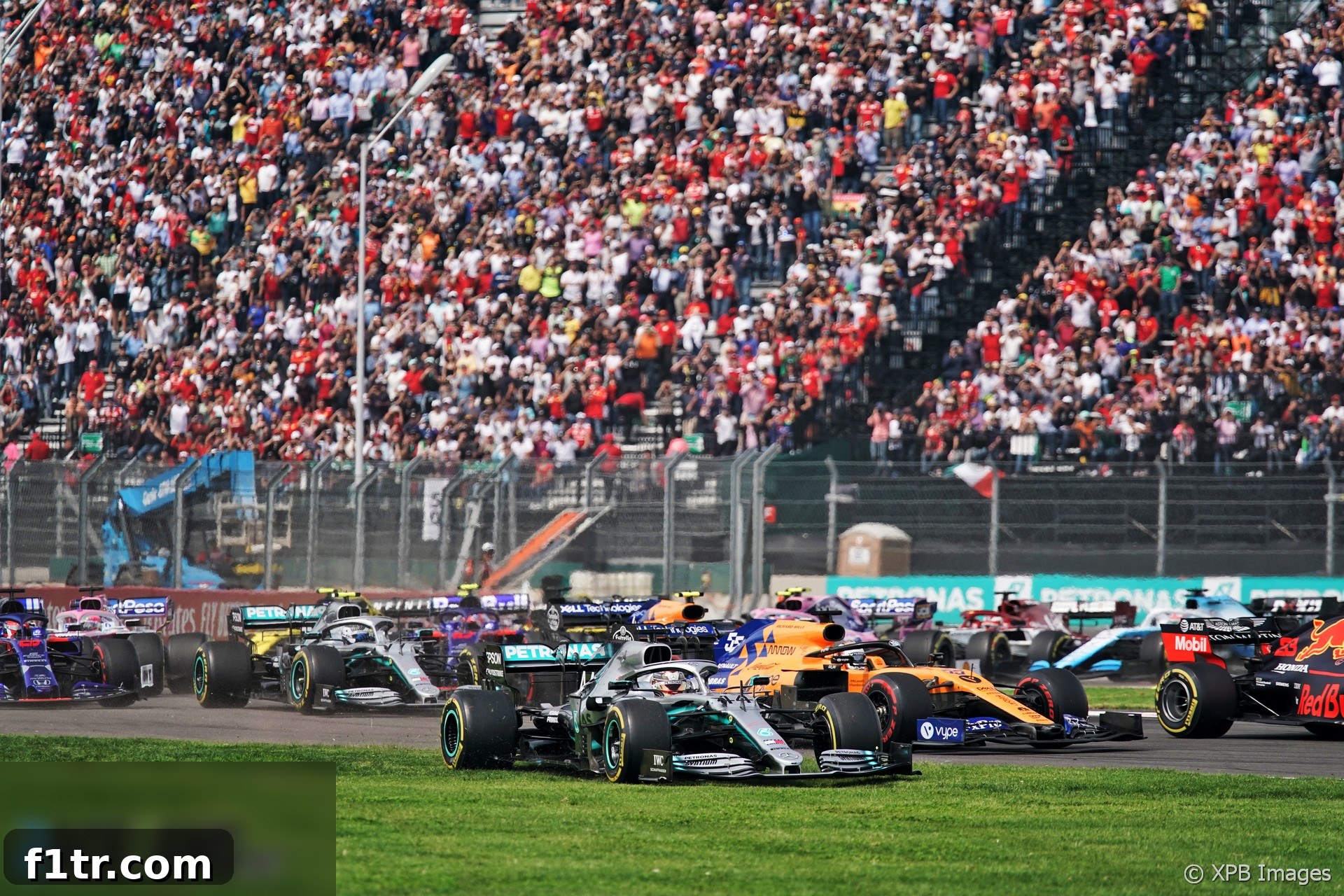
The specific flashpoint occurred at Turn Two on the opening lap of the Mexican Grand Prix. As is often the case in the opening stages of a race, drivers push the limits, vying for crucial track position. In this high-pressure environment, the slightest misjudgment or an overly aggressive maneuver can lead to contact, often with significant consequences for championship aspirations. Hamilton and Verstappen found themselves locked in a classic F1 battle for supremacy, converging into the same piece of tarmac. The ensuing contact was minor but telling, prompting Hamilton to reflect on the nature of racing against a driver who seemingly operates on a different set of rules.
Following the race, when directly asked in the FIA press conference if Verstappen necessitated a different approach compared to other competitors on the grid, Hamilton’s response was unequivocal: “Yep.” This succinct answer opened a window into the mind of one of F1’s most decorated drivers, revealing the tactical considerations that go beyond raw speed and car setup. It highlighted the intricate psychological layer present in top-tier motorsport, where understanding an opponent’s tendencies can be as vital as mastering a corner apex.
Lewis Hamilton’s Philosophy: The Art of Giving “Extra Space”
Hamilton elaborated on his reasoning, explaining, “I think every driver is slightly different. Some are smarter. Some are very smart, aggressive and some are silly with it.” This statement isn’t just an observation; it’s a nuanced classification of driving styles within Formula 1. For Hamilton, a driver who has raced against generations of talent, distinguishing between calculated aggression and impetuousness is crucial for survival and success. He continued, “Through those experiences of racing with people you give some more space. And others you don’t have to, they’re quite respectful.”
This notion of “respect” in racing often translates to a mutual understanding of boundaries, a willingness to back out of a suicidal move, or the expectation that a competitor will leave sufficient room for two cars through a corner. Hamilton suggests that with certain drivers, this implicit understanding is largely absent. His direct assessment of Verstappen was stark: “But Max, it’s very likely you’re going to come together with Max if you don’t give him extra space. So most of the time you do.”
This isn’t necessarily a criticism of Verstappen’s talent, but rather an acknowledgment of his relentless, no-compromise style. Giving “extra space” implies a strategic concession – a willingness to cede a fraction of an inch, or even a position, in order to avoid a collision that could jeopardize one’s own race or championship campaign. It’s a pragmatic approach born out of experience, a defensive tactic designed to mitigate the risks posed by an opponent who consistently pushes the absolute limit, and sometimes beyond. It’s a testament to Hamilton’s maturity and strategic thinking, prioritizing the bigger picture over every single immediate gain.
However, even a master tactician like Hamilton acknowledged the inherent difficulty in always applying this strategy. Reflecting on the Mexican Grand Prix incident, he stated, “In my experience, I didn’t have a lot of space to give him extra space.” This highlights the paradox: while knowing Verstappen’s tendencies dictates caution, the frantic, high-speed nature of F1 racing often leaves no room for such concessions, especially in the tight confines of a first-lap battle. He further clarified, “I don’t think it was intentional or anything like that it was just… it’s a magnet for those kind of things. But nonetheless I managed to keep the car together in a straight line, fortunately.” This phrasing, “a magnet for those kind of things,” subtly paints a picture of Verstappen as an unavoidable force, a driver whose presence on track inherently increases the probability of contact, irrespective of intent.
Sebastian Vettel’s Endorsement: A Shared Perception Among Champions
The sentiment expressed by Hamilton was not an isolated one. Sebastian Vettel, another multiple world champion and a fierce competitor in his own right, echoed Hamilton’s views with a concise yet powerful statement: “Copy and paste.” Vettel’s immediate agreement underscored a widely held perception among the elite drivers in Formula 1. When two legends of the sport, with decades of combined experience and countless battles under their belts, arrive at the same conclusion about a rival’s driving style, it speaks volumes. It suggests that Verstappen’s aggressive approach is not merely a subjective interpretation but a recognized characteristic within the paddock, one that demands a specific, often defensive, response from his peers.
Max Verstappen’s Driving Philosophy: High Risk, High Reward
Max Verstappen’s approach to racing has undeniably been a defining feature of his career. From his early days in Formula 1, he quickly earned a reputation for fearless overtaking maneuvers and an unwavering commitment to holding his line, often to the point of forcing rivals wide or into evasive action. This “no prisoners” mentality has been a significant factor in his success, allowing him to carve out overtakes where others might hesitate and to convert marginal opportunities into podium finishes or victories. It’s a philosophy that champions a proactive, assertive style, prioritizing track position above all else.
While this aggressive stance has thrilled fans and delivered numerous spectacular moments, it has also led to a significant number of controversial incidents throughout his career. Verstappen’s supporters often view this as part of his “Max-imum attack” charm, a sign of his unyielding will to win. Critics, however, sometimes point to a perceived lack of caution or a tendency to push the boundaries of fair racing. Regardless of perspective, it’s clear that Verstappen operates with a singular focus on achieving the best possible outcome for himself, and he expects his rivals to adapt to his intensity, rather than him adapting to theirs. This mindset creates the very dynamic that Hamilton highlighted, making wheel-to-wheel battles with Verstappen uniquely challenging and requiring special consideration.
The Broader Implications for Formula 1 Racing
The discussion around Verstappen’s driving style and the “extra space” phenomenon raises broader questions about the nature of competitive racing in Formula 1. Is there a universally accepted code of conduct, or do individual drivers carve out their own interpretations of what is permissible? Historically, F1 has seen its share of aggressive drivers – from Ayrton Senna’s uncompromising battles with Alain Prost to Michael Schumacher’s often controversial tactics. These drivers, much like Verstappen today, pushed the envelope, often redefining the limits of what was considered acceptable on track.
The ongoing dialogue between drivers, stewards, and the FIA is essential for maintaining a balance between thrilling, hard racing and ensuring driver safety and fair play. The consistency of stewarding decisions, or lack thereof, can also significantly influence how drivers choose to approach their rivals. If a driver perceives that aggressive moves go unpunished, it can embolden them and inadvertently encourage similar tactics from others. Conversely, strict penalties can temper aggression, leading to more cautious racing. The Hamilton-Verstappen dynamic, therefore, isn’t just about two individuals; it’s a microcosm of the continuous evolution of racing standards and the psychological warfare inherent in elite motorsport.
Ultimately, the perception that a driver requires “extra space” is a double-edged sword. While it acknowledges a formidable, uncompromising competitor, it also places a burden on rivals to manage risk differently. For Lewis Hamilton, a driver known for his calculated aggression and strategic thinking, understanding and adapting to Max Verstappen’s unique approach is not just a matter of personal preference but a crucial component of his ongoing quest for championship success.
Don’t miss anything new from RaceFans
Follow RaceFans on social media:
- Join RaceFans on Facebook
- Follow RaceFans on Twitter
- Get daily email updates from RaceFans
Advert | Become a RaceFans supporter andgo ad-free
2019 F1 season
- Crying in the Melbourne car park at 2019 grand prix was my career low – Ocon
- McLaren Racing reports reduced £71 million loss in 2019
- Kvyat: Hockenheim podium last year was “my biggest achievement” so far
- How the FIA’s new encrypted fuel flow meter targets Ferrari’s suspected ‘aliasing-trick/”>How the FIA’s new encrypted fuel flow meter targets Ferrari’s suspected ‘aliasing’ trick
- “He smashed my office door”: 23 must-see moments from ‘Drive to Survive’ season two
Browse all 2019 F1 season articles