The Unprecedented Austrian Grand Prix: Hamilton’s Penalty Woes Amidst a Season of Firsts
The highly anticipated return of Formula 1 in 2020, following an extended hiatus, kicked off with a dramatic and incident-filled Austrian Grand Prix at the iconic Red Bull Ring. The season opener, held under strict health and safety protocols, delivered an immediate dose of high-octane racing and unexpected narratives. Among the most striking headlines was the unusually high number of penalty points accumulated by six-time world champion Lewis Hamilton, placing him at the top of an unwanted list after just the first round of what promises to be an extraordinary championship campaign.
Advert | Become a Supporter & go ad-free
Lewis Hamilton’s Mounting Penalty Points: A Rare Challenge for the Champion
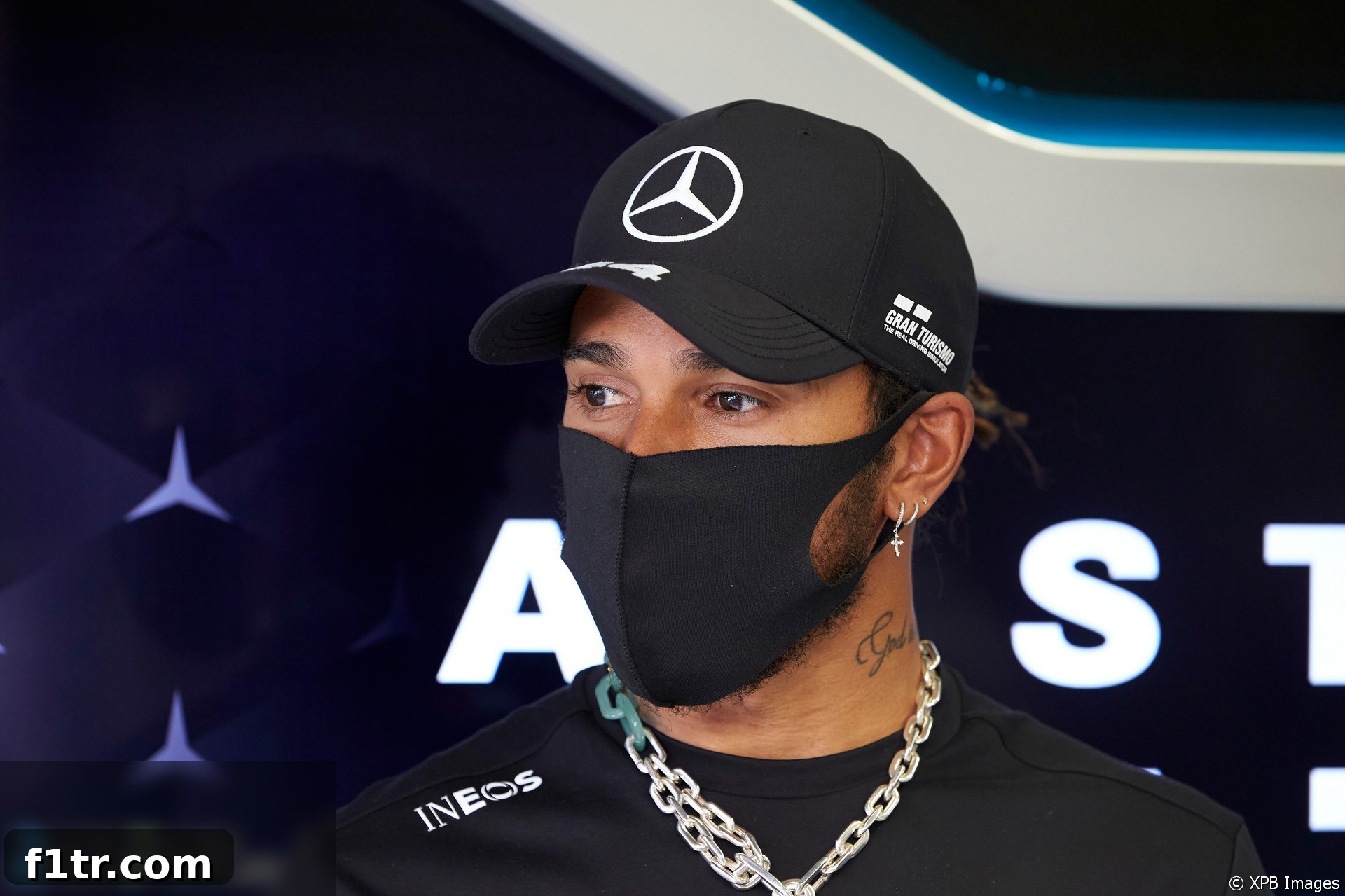
Lewis Hamilton’s weekend at the Red Bull Ring was marked by a series of unusual missteps, culminating in him receiving all four penalty points awarded by the stewards during the Austrian Grand Prix. This pushed his total to seven points on his super licence, an incredibly rare and significant tally for a driver renowned for his clean racing record. To put this into perspective, before June of the previous year, Hamilton had gone over two years without a single penalty point. The incidents at the Red Bull Ring – including a grid penalty for failing to slow sufficiently for yellow flags during qualifying and a five-second time penalty for a collision with Red Bull’s Alexander Albon during the race – highlighted a weekend uncharacteristic of the reigning champion.
With seven penalty points, Hamilton is now well over halfway towards the critical threshold of 12 points, which would automatically trigger a one-race ban from Formula 1. While one point is scheduled to drop from his licence on July 28th, just before the British Grand Prix, he will still carry at least six points until mid-November. This creates a tangible layer of pressure for the Mercedes driver. In a compressed 2020 calendar, featuring an unprecedented run of eight races in just ten weeks and potentially more to follow, Hamilton can ill-afford a repeat of the incident-laden Austrian Grand Prix. Each subsequent race weekend will require meticulous care to avoid further penalties, as any additional transgression could severely jeopardize his pursuit of a record-equalling seventh world title. The weight of these points adds an intriguing psychological dimension to his championship bid, forcing a driver who typically pushes the limits to exercise an extra degree of caution, carefully balancing aggression with the necessity to stay on track.
Valtteri Bottas Dominates the Season Opener
While Hamilton navigated a challenging weekend, his Mercedes teammate Valtteri Bottas delivered a masterful performance, securing victory at the season-opening Austrian Grand Prix for the second consecutive year. Starting from pole position, Bottas flawlessly managed the race from start to finish – a significant first in his Formula 1 career. This commanding drive marked his eighth career win, placing him level with notable names like Max Verstappen, Jacky Ickx, and Denny Hulme in the sport’s illustrious history. His 12th pole position also puts him alongside Gerhard Berger and David Coulthard, underscoring his consistent pace and qualifying prowess. For Bottas, this victory was not merely a race win; it was a crucial statement of intent, signaling his readiness to challenge Hamilton for the championship in a season where every point will be vital. His ability to perform under pressure and convert pole positions into wins will be a key factor in his title aspirations, particularly as the team faces consecutive races at the same venue, offering a unique opportunity for momentum building and fine-tuning.
Charles Leclerc’s Heroic Drive for Ferrari
In stark contrast to his feelings at this same race 12 months prior, Charles Leclerc expressed immense satisfaction with his second-place finish in the 2020 Austrian Grand Prix. Last year, having led 59 of 71 laps, finishing second was a bitter pill to swallow. This year, however, the same result felt like a triumph. He rightfully described it as one of his finest performances in F1, a testament to his exceptional talent and resilience. Starting a modest seventh on the grid, Leclerc skillfully navigated the chaos of the race, making opportunistic overtakes and executing a brilliant strategy to climb through the field. His achievement was made all the more remarkable given the clear struggles of the Ferrari SF1000, which proved significantly less competitive than its predecessor, lacking both aerodynamic efficiency and outright pace. Leclerc’s ability to extract such a result from a difficult car underscored his status as a future champion and provided a much-needed morale boost for the Scuderia, even as they grappled with fundamental performance issues that plagued both their qualifying and race pace.
Lando Norris’s Sensational Maiden Podium
Advert | Become a RaceFans supporter andgo ad-free
The Austrian Grand Prix also witnessed a momentous occasion for McLaren and one of its brightest young stars, Lando Norris. The then 19-year-old secured the final spot on the podium, marking his first-ever visit to an F1 rostrum. This achievement was not only a personal milestone but also McLaren’s second podium in just three races, following Carlos Sainz Jnr’s success in Brazil the previous year. Norris’s spirited drive places him in an elite group as the third-youngest driver to finish in the top three, behind only record-holder Max Verstappen and Lance Stroll. What made his podium finish particularly dramatic was the manner in which it was achieved. On the very final lap of the race, Norris unleashed a blistering fastest lap, ensuring he finished within five seconds of Lewis Hamilton, who had received a penalty. This critical burst of pace allowed him to claim third place after Hamilton’s sanction, mirroring the precise circumstances of Sainz’s podium in Brazil, right down to Hamilton being penalized for a collision with Alexander Albon. This fastest lap was a significant moment for McLaren, marking their first since the 2017 Hungarian Grand Prix and only their third in the V6 hybrid turbo era, underscoring the team’s promising resurgence. Furthermore, an earlier Hamilton penalty during qualifying had already promoted Norris to third on the grid, marking the highest starting position for a McLaren driver since Jenson Button at the same race four years prior, hinting at the strong potential that ultimately translated into his race-day heroics.
A Season of Unprecedented Statistics and Challenges
Beyond the individual performances, the 2020 Austrian Grand Prix was notable for several statistics that highlighted the extraordinary nature of the season. The race saw an unusually high attrition rate, with only 13 drivers classified. This was the lowest number since 12 cars were classified at the Singapore Grand Prix in 2017, suggesting that reliability issues, aggressive racing, and the tight confines of the Red Bull Ring combined to test teams and drivers to their limits. The very start of the Formula 1 season itself was historic, commencing on July 5th – more than a month later than the previous record set when the 1951 season began on May 27th. This unprecedented delay was a direct consequence of the global pandemic, which reshaped the entire sporting calendar. Furthermore, Austria hosting the season-opener marked the first time Europe had done so since the 1966 Monaco Grand Prix; since then, every championship had traditionally begun in distant locales such as Australia, Bahrain, the USA, Brazil, Argentina, or South Africa, adding another layer of historical uniqueness to the event.
Advert | Become a RaceFans supporter andgo ad-free
The 217-day wait between the season-closing Abu Dhabi Grand Prix of the previous year and Sunday’s race at the Red Bull Ring was the third-longest gap between consecutive rounds in the world championship’s 70-year history. Only the immense 266-day gap between the first two seasons of Formula 1 stands longer. Such a prolonged break not only built anticipation but also presented teams with unique challenges in maintaining readiness and developing their cars during uncertain times. The championship now immediately moves on to a second race at the same venue, the Red Bull Ring, a first for the world championship to hold two races at the exact same location in a single season. While holding two races in the same country consecutively is rare but not entirely unprecedented, it is highly unusual that the last two instances of this phenomenon occurred in back-to-back seasons, highlighting the adaptive measures taken in the face of global events.
Historically, F1 held back-to-back races in Japan in 1995 (due to a postponed Pacific Grand Prix) before moving to Australia for the season finale, and then remarkably began the 1996 season in the same country. This unique situation arose because Japan’s Pacific Grand Prix was delayed by an earthquake, and the Australian round transitioned from being a season finale in Adelaide to a season-opener in Melbourne between championships. Both of those Australian races were famously won by Damon Hill. As the F1 paddock prepares for the second Red Bull Ring event, the Styrian Grand Prix, it prompts the intriguing question: can Valtteri Bottas emulate Hill’s feat and secure consecutive victories at the same venue, further solidifying his early championship lead? The answer will undoubtedly add another fascinating chapter to this already unique Formula 1 season.
Go ad-free for just £1 per month>> Find out more and sign up
The 2020 Austrian Grand Prix delivered a thrilling and statistically rich return to racing, setting a compelling stage for the remainder of an unparalleled Formula 1 season. What other interesting facts and figures did you uncover from this memorable race? Share your observations in the comments below.
2020 Austrian Grand Prix Related Articles
- FIA issues new Austrian GP results after correcting Kvyat error
- Russell sees Mercedes as only possible alternative to Williams in 2021
- Hamilton: No “bad blood” with Albon after second collision in three races
- 2020 Austrian Grand Prix interactive data: lap charts, times and tyres
- 2020 Austrian Grand Prix Star Performers
Browse all 2020 Austrian Grand Prix articles