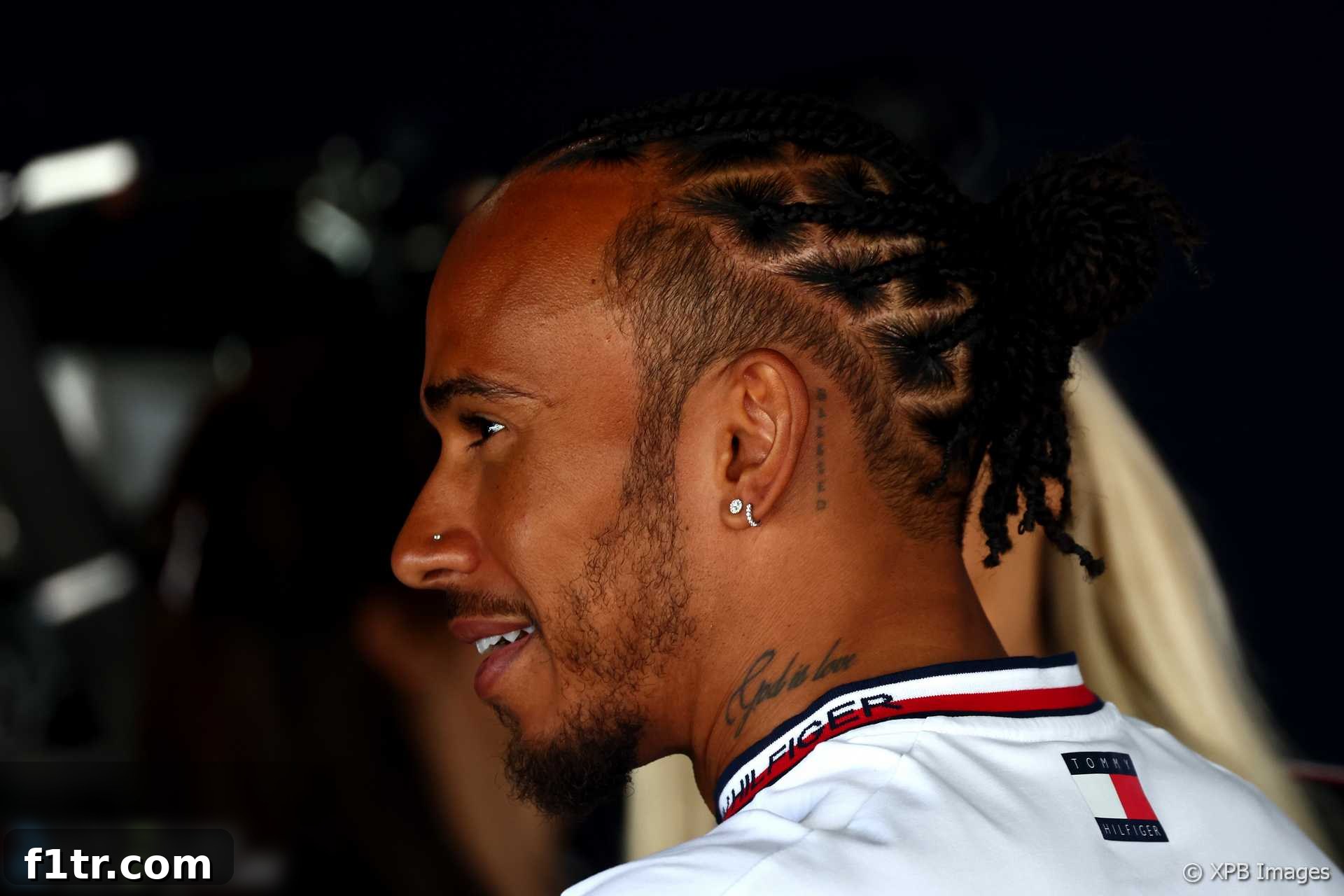
Lewis Hamilton, the seven-time Formula 1 world champion, has expressed his cautious optimism regarding Mercedes-AMG Petronas F1 Team’s prospects for the upcoming Grand Prix. Following a challenging start to the 2023 season, marked by the dominant performance of reigning champions Red Bull Racing, Hamilton is hoping his team can significantly narrow the performance gap, ideally closing within a second of their rivals. This sentiment underscores the intense competition at the pinnacle of motorsport and Mercedes’ determined efforts to reclaim their competitive edge.
The initial two races of the 2023 Formula 1 campaign have seen Red Bull establish a formidable lead, leaving Mercedes and other front-running teams struggling to match their blistering pace. The disparity was particularly evident at the recent Saudi Arabian Grand Prix held at the high-speed Jeddah Corniche Circuit. During qualifying in Jeddah, Hamilton’s team mate, George Russell, managed to qualify over six-tenths of a second behind pole-sitter Sergio Perez. Hamilton himself lined up seventh on the grid, having found himself more than a second adrift of the leading pace. The race itself further highlighted Red Bull’s superiority, as their cars pulled away from the chasing pack, often extending their lead by over a second per lap.
Advert | Become a Supporter & go ad-free
Reflecting on the challenges faced in Jeddah, Hamilton openly acknowledged that his teammate, George Russell, had seemingly done a better job of extracting performance from the Mercedes W14 chassis. Russell’s adeptness at perfecting the car’s setup proved crucial on the demanding street circuit, allowing him to maximise its potential. This candid admission from Hamilton not only highlights Russell’s skill but also provides insight into the intricacies of car setup and its impact on performance, especially when a team is grappling with underlying car characteristics.
Speaking to Sky Sports after the Jeddah race, Hamilton elaborated on the team’s performance. “If you look at the last race, I think it was a decent result given the distance and the pace disadvantage we had in qualifying,” he stated. He continued, praising his teammate, “Obviously George did a fantastic job all weekend, put the car exactly where it needed to be. I struggled a little bit with the balance that I had.” This candid reflection from Hamilton underscores the fine margins in Formula 1 and how even slight differences in car setup can significantly affect a driver’s confidence and ability to push to the limit. Despite his personal struggles with balance, Hamilton maintained a pragmatic outlook on the team’s overall achievement.
Indeed, considering the inherent pace deficit, Mercedes’ fourth and fifth-place finishes in Jeddah were commendable. These results positioned the team second in the constructors’ championship standings, a testament to their consistency and reliability, even when their car lacks outright speed. Hamilton pointed out the significance of this achievement: “We still managed to get fourth and fifth and we’re second in the constructors championship at the moment. We beat the Ferraris, who have definitely started with a better package than we have.” This assessment reveals Mercedes’ ability to capitalise on opportunities and execute solid race strategies, often outperforming competitors like Ferrari, who, by Hamilton’s admission, began the season with a seemingly superior technical package.
Hamilton remains realistic about the timeline required for Mercedes to fully close the substantial gap to their primary rivals. He understands that significant improvements will not materialise overnight and that the team will need to rely on a combination of continuous development, strategic race execution, and potentially favourable track conditions in the interim. The pursuit of performance in Formula 1 is a marathon, not a sprint, and Mercedes’ engineers and strategists are fully immersed in this long-term challenge.
“We’ve got a great group of people that are working really hard back at the factory that are trying to fix the issues that we have,” Hamilton affirmed, emphasizing the dedicated efforts behind the scenes. “It’s not something that’s going to happen in one race, it’s going to take a few races, hopefully as short as possible to get there.” This statement provides a glimpse into the relentless pace of development in Formula 1, where hundreds of engineers are constantly striving to identify weaknesses, design upgrades, and refine the car’s performance. The W14 has shown flashes of potential, but unlocking that consistently and across various track types is the current challenge for the Silver Arrows.
Looking ahead to the next event, which is widely anticipated to be the Australian Grand Prix at Melbourne’s Albert Park Circuit, Hamilton voiced a somewhat unconventional hope. “But this weekend, I think I’m just hoping for some rain, if I’m really honest, because I would make it a little bit more exciting for us from my point of view.” Wet weather conditions often level the playing field, introducing an element of unpredictability where driver skill and car handling in adverse conditions become paramount. For a team currently chasing raw pace, rain could offer a golden opportunity to disrupt the established hierarchy and create chances for an unexpected result. Hamilton’s desire for rain highlights the competitive spirit and the yearning for any advantage that could aid Mercedes in their quest to challenge Red Bull.
Beyond the weather, Hamilton also underscored the critical importance of a strong start to the weekend in terms of car setup. “I’m just hoping the gap isn’t a second and I hope that we can just hit the ground running with the set-up.” Achieving an optimal car setup from the very first practice session is crucial for a successful Grand Prix weekend. It allows drivers to build confidence, fine-tune their approach, and extract maximum performance during qualifying and the race. Any initial struggles with setup can put a team on the back foot, consuming valuable track time and potentially compromising the entire weekend’s performance. Mercedes’ engineers will be working tirelessly to ensure the W14 is in its most competitive trim for the technical and flowing Albert Park circuit.
The 2023 Formula 1 season continues to be a battle of engineering prowess, strategic brilliance, and sheer driving talent. While Red Bull Racing has set an incredibly high benchmark, the Mercedes-AMG Petronas F1 Team, led by the legendary Lewis Hamilton and the formidable George Russell, remains committed to closing the performance deficit. Their journey to reclaim championship contention is a compelling narrative, closely watched by fans worldwide. Every race presents a new opportunity for development and improvement, and the team’s resolve to return to the front of the grid is unwavering. The challenge is immense, but the dedication within the Mercedes camp suggests that they will leave no stone unturned in their pursuit of victory, aiming to transform their cautious optimism into tangible results on track, starting with a strong showing at the upcoming Grand Prix.
Advert | Become a RaceFans supporter andgo ad-free
2023 Australian Grand Prix
- Australian GP to forbid fans from entering track at end of this year’s race
- I only missed one chance to score points this year – Albon
- Formula 1’s stewards should listen to drivers less, not more
- Mercedes unsure whether gains seen in Melbourne were ‘track-specific’
- Why Ferrari saw a ‘real step forward in pure performance’ in point-less Australian GP
Browse all 2023 Australian Grand Prix articles