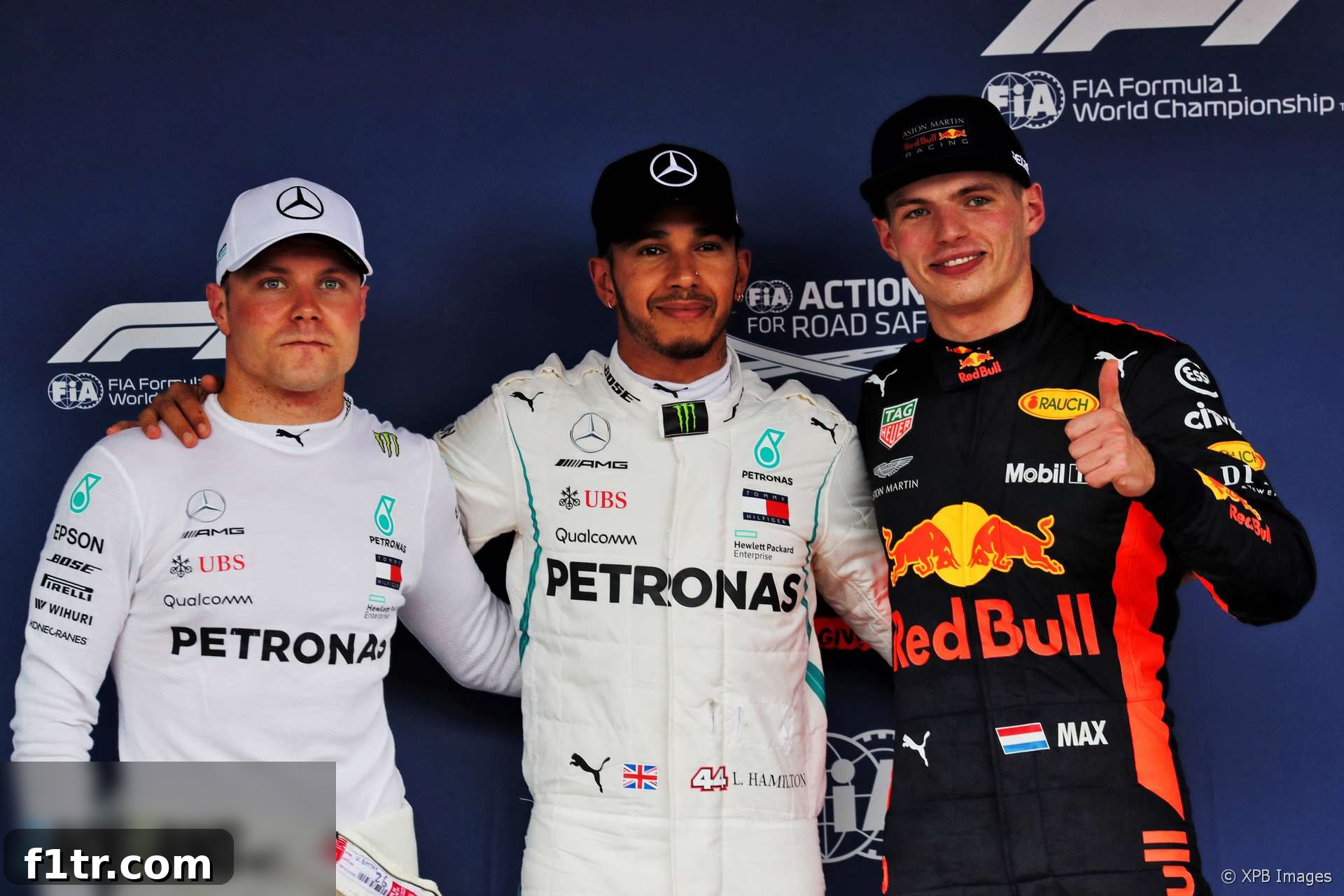
The Suzuka International Racing Course, a legendary circuit renowned for its high-speed corners and demanding layout, hosted the qualifying session for the Japanese Grand Prix with an air of anticipation. As the championship battle between Lewis Hamilton and Sebastian Vettel reached a fever pitch, every lap, every strategic decision, and every weather fluctuation held immense significance. It was a day where fortunes swung dramatically, ultimately seeing Lewis Hamilton seize an emphatic eighth pole position of the season. His rival, Sebastian Vettel, however, endured a calamitous Q3, leaving him stranded in a lowly ninth place on the grid, a considerable blow to his title aspirations. The Mercedes-AMG Petronas Formula One Team asserted its dominance, locking out the front row, with Valtteri Bottas securing second. Meanwhile, Max Verstappen demonstrated his prowess by placing his Red Bull on the second row, alongside Kimi Raikkonen, setting the stage for a thrilling race.
Advert | Become a Supporter & go ad-free
Q1: Early Drama and Unexpected Exits
The first segment of qualifying kicked off under bright skies, with drivers quickly heading out to set their initial benchmark lap times on the grippy Suzuka tarmac. The air was charged with adrenaline as competitors pushed the limits, eager to establish their rhythm. However, the session was abruptly halted when Marcus Ericsson, pushing his Sauber through the challenging Dunlop curve, lost control. His car veered off track, making heavy contact with the barriers, scattering debris across the circuit. The immediate deployment of red flags brought a collective gasp from the paddock, as marshals swiftly moved to assess the damage and recover the stricken vehicle, effectively ending Ericsson’s qualifying efforts prematurely.
Prior to this dramatic interruption, both championship protagonists had already laid down their markers. Hamilton had edged out Vettel by a significant three-tenths of a second, showcasing Mercedes’ strong pace from the outset. Vettel, in his eagerness to respond, endured a quick, heart-stopping spin at the hairpin, though he managed to recover without major incident, rejoining the track just as the red flags were brandished. This brief but crucial stoppage had a ripple effect across the grid, particularly impacting those who had yet to complete a competitive lap.
Sergio Perez was among the drivers whose initial flying runs were compromised by the red flag, along with both Renault drivers. Upon the restart, he managed to put in a strong enough effort to climb to eighth, momentarily easing the pressure. However, the McLaren and Williams contingents found themselves struggling significantly, languishing in the dreaded drop zone alongside the already eliminated Ericsson. Their battle for pace was visibly apparent, highlighting the challenging nature of the Suzuka circuit for teams at the lower end of the grid.
As the session neared its conclusion, a light sprinkling of rain began to fall, adding another layer of unpredictability to the already tense atmosphere. This subtle change in conditions introduced an element of chaos to the final runs, with drivers desperately attempting to improve their times before the track became too slippery. Nico Hulkenberg, whose participation in qualifying had been uncertain after a significant crash in final practice, made a minor but costly error at the hairpin during his crucial last lap. Despite believing he had done enough to secure a spot in Q2 as he crossed the chequered flag, he was ultimately in for a crushing disappointment.
The fluctuating conditions allowed for some last-minute heroics. Lance Stroll delivered a truly excellent final lap, briefly propelling his Williams up to an impressive 11th position, showcasing his talent under pressure. Hulkenberg, conversely, found himself perilously close to the elimination zone, a fate that soon befell his teammate. In a remarkable display of determination, Carlos Sainz Jnr squeezed out every ounce of performance from his Renault on his final attempt, grabbing a precious place in Q2. Yet, this achievement came at the bitter expense of his teammate, Hulkenberg, who fell just short.
Meanwhile, the struggles of the McLaren team continued. While Fernando Alonso once again demonstrated his superior skill by out-qualifying Stoffel Vandoorne for the 17th consecutive time, the underlying lack of pace from their car meant both drivers found themselves at the very bottom of the time sheets, only spared last place by Ericsson’s earlier crash. Their ongoing battle with performance issues remained a somber note in an otherwise thrilling Q1.
Drivers eliminated in Q1
| 16 | Nico Hulkenberg | Renault | 1’30.361 |
| 17 | Sergey Sirotkin | Williams-Mercedes | 1’30.372 |
| 18 | Fernando Alonso | McLaren-Renault | 1’30.573 |
| 19 | Stoffel Vandoorne | McLaren-Renault | 1’31.041 |
| 20 | Marcus Ericsson | Sauber-Ferrari | 1’31.213 |
Advert | Become a RaceFans supporter and go ad-free
Q2: Strategic Gambles and Ricciardo’s Heartbreak
As Q2 commenced, a critical strategic divergence emerged between the leading teams. Mercedes opted for the more durable soft compound tyres, aiming for a longer first stint in the race, while Ferrari gambled on the super-softs, prioritizing outright pace for the initial laps. Despite the ostensibly harder compound, the silver arrows immediately showcased their raw speed, with Valtteri Bottas impressively out-pacing his teammate Lewis Hamilton by a mere three-hundredths of a second, underscoring the strong performance of the Mercedes package.
However, the session was marred by significant misfortune for one of the sport’s top drivers. Daniel Ricciardo, behind the wheel of his Red Bull, was once again plagued by a power-related problem, a recurring issue that had haunted his season. Running Renault’s latest C-spec engine, his car simply lacked the necessary grunt, rendering him unable to set a competitive lap time. This devastating setback meant one of the sport’s leading contenders would not progress to the all-important Q3, adding another chapter to his frustrating campaign.
Adding to the drama, a late shower of rain began to fall across the circuit, effectively preventing any further improvements to lap times in the dying minutes of Q2. This sudden change in conditions proved to be a stroke of luck for some and a bitter blow for others. Toro Rosso, propelled by their Honda power units, capitalized brilliantly on the mixed conditions. Against expectations, both their cars managed to squeeze into Q3 at Honda’s home track, much to the delight of the Japanese fans and the team. The rain, however, dashed the hopes of Charles Leclerc, who, after an impressive sixth-place finish in Q1, spun at the challenging Degner curves. His error proved costly, as he missed the cut, finishing 11th and just outside the top ten.
The gap between Leclerc and the unfortunate Ricciardo was filled by the remaining three eliminated drivers. Kevin Magnussen, in his Haas, was unable to join his teammate Romain Grosjean in Q3, highlighting the competitive nature of the midfield. Meanwhile, Carlos Sainz Jnr and Lance Stroll, having performed admirably in Q1, had reached their limits in the intensifying competition, leaving their respective teammates behind but failing to make the final cut themselves.
Drivers eliminated in Q2
| 11 | Charles Leclerc | Sauber-Ferrari | 1’29.864 |
| 12 | Kevin Magnussen | Haas-Ferrari | 1’30.226 |
| 13 | Carlos Sainz Jnr | Renault | 1’30.490 |
| 14 | Lance Stroll | Williams-Mercedes | 1’30.714 |
| 15 | Daniel Ricciardo | Red Bull-TAG Heuer |
Advert | Become a RaceFans supporter and go ad-free
Q3: Ferrari’s Costly Error in the Rain
The final, decisive segment of qualifying, Q3, began with an air of deceptive calm. The rain that had briefly impacted Q2 had momentarily ceased, and the track appeared to be drying out. However, this fleeting improvement in conditions was to become the focal point of a catastrophic strategic misjudgment by Ferrari. Concerned about lingering damp patches and the unpredictable nature of Suzuka, the Scuderia made the fateful decision to send both Sebastian Vettel and Kimi Raikkonen out on intermediate tyres. This choice proved to be a critical error, as the rest of the field, including championship rivals Mercedes, confidently opted for super-soft slicks, immediately signaling Ferrari’s blunder.
The price of this strategic misstep was immediate and severe. As Hamilton unleashed a blistering lap of 1’27.760 on a track that was predominantly dry and perfectly suited for slicks, the heavens began to open once more. Just as the Ferrari drivers, realizing their mistake, were finally switching to super-softs, the rain intensified, transforming the circuit into a treacherous, slippery surface. The window of opportunity for a clean, fast lap had slammed shut for the red cars.
Kimi Raikkonen was the first of the two Ferraris to embark on his flying lap with the correct tyres. Approaching the sweeping Spoon corner, he encountered a noticeably damp patch. The car slithered wide, a testament to the challenging conditions, yet with his immense skill, he managed to recover, still quick enough to secure a valuable place on the second row of the grid. It was a valiant effort under duress.
Sebastian Vettel, carrying the immense pressure of the championship battle, followed. He encountered the very same damp patch at Spoon, but his car went even wider, a more significant slide that completely compromised his lap. His desperation to recover was palpable, but the damage was done. By the time he crossed the finish line, his time was disappointingly slow, only quicker than Sergio Perez’s Force India, which had also been badly delayed by the worsening conditions. With the rain now growing heavier and heavier, Vettel had no further chance to improve his time. The frustration boiled over as he ran off the track at Degner in the increasingly torrential shower, a poignant image of his championship hopes faltering.
Capitalizing on Ferrari’s misfortune and the rapidly changing conditions, Valtteri Bottas delivered a superb lap to secure second place on the grid, completing a dominant front-row lockout for Mercedes. Max Verstappen, known for his exceptional wet-weather driving, seized the opportunity with both hands, expertly navigating the challenging track to claim a brilliant third place for Red Bull, much to the delight of the Japanese fans.
Further down the grid, Romain Grosjean led the midfield charge, showcasing the Haas team’s potential by taking fifth position. The Honda-powered Toro Rosso pair continued their impressive run, with Brendon Hartley securing sixth place, just ahead of his teammate Pierre Gasly in seventh. Their strong performance on Honda’s home turf was a significant highlight of the session. Esteban Ocon and the aforementioned Sergio Perez completed the top ten, securing important grid positions for Force India despite the challenging and ever-changing conditions.
Top ten in Q3
| 1 | Lewis Hamilton | Mercedes | 1’27.760 |
| 2 | Valtteri Bottas | Mercedes | 1’28.059 |
| 3 | Max Verstappen | Red Bull-TAG Heuer | 1’29.057 |
| 4 | Kimi Raikkonen | Ferrari | 1’29.521 |
| 5 | Romain Grosjean | Haas-Ferrari | 1’29.761 |
| 6 | Brendon Hartley | Toro Rosso-Honda | 1’30.023 |
| 7 | Pierre Gasly | Toro Rosso-Honda | 1’30.093 |
| 8 | Esteban Ocon | Force India-Mercedes | 1’30.126 |
| 9 | Sebastian Vettel | Ferrari | 1’32.192 |
| 10 | Sergio Perez | Force India-Mercedes | 1’37.229 |
Conclusion: A Day of Contrasts and Shifting Fortunes
The qualifying session for the Japanese Grand Prix at Suzuka was a testament to the unpredictable nature of Formula 1, especially when weather plays a decisive role. Lewis Hamilton’s pole position was a masterclass in timing and execution, reaffirming his dominance and strengthening his grip on the championship. Mercedes’ strategic prowess and sheer pace allowed them to capitalize fully on the conditions, securing a commanding front-row start. In stark contrast, Sebastian Vettel and Ferrari’s ill-fated tyre gamble in Q3 proved to be a pivotal, and potentially championship-defining, error. His ninth-place start leaves him with a mountain to climb, placing immense pressure on both driver and team for the race.
Beyond the championship contenders, the session also highlighted the tenacity of drivers like Max Verstappen, who thrives in challenging conditions, and the impressive performance of the Toro Rosso team, who made it into Q3 on home soil. The Japanese Grand Prix qualifying was a thrilling spectacle of strategy, skill, and sheer bad luck, promising an electrifying race where every position gained or lost could have significant implications for the drivers’ and constructors’ championships. The stage is now set for a dramatic showdown at Suzuka, with all eyes on how Hamilton will convert his pole and if Vettel can mount a recovery drive.
2018 Japanese Grand Prix Related Content
- 2018 Japanese Grand Prix team radio highlights
- 2018 Japanese Grand Prix Star Performers
- Mercedes take first back-to-back one-twos since 2016
- Top ten pictures from the 2018 Japanese Grand Prix
- Hamilton on cusp of fifth title as Vettel throws in the towel
Browse all 2018 Japanese Grand Prix articles