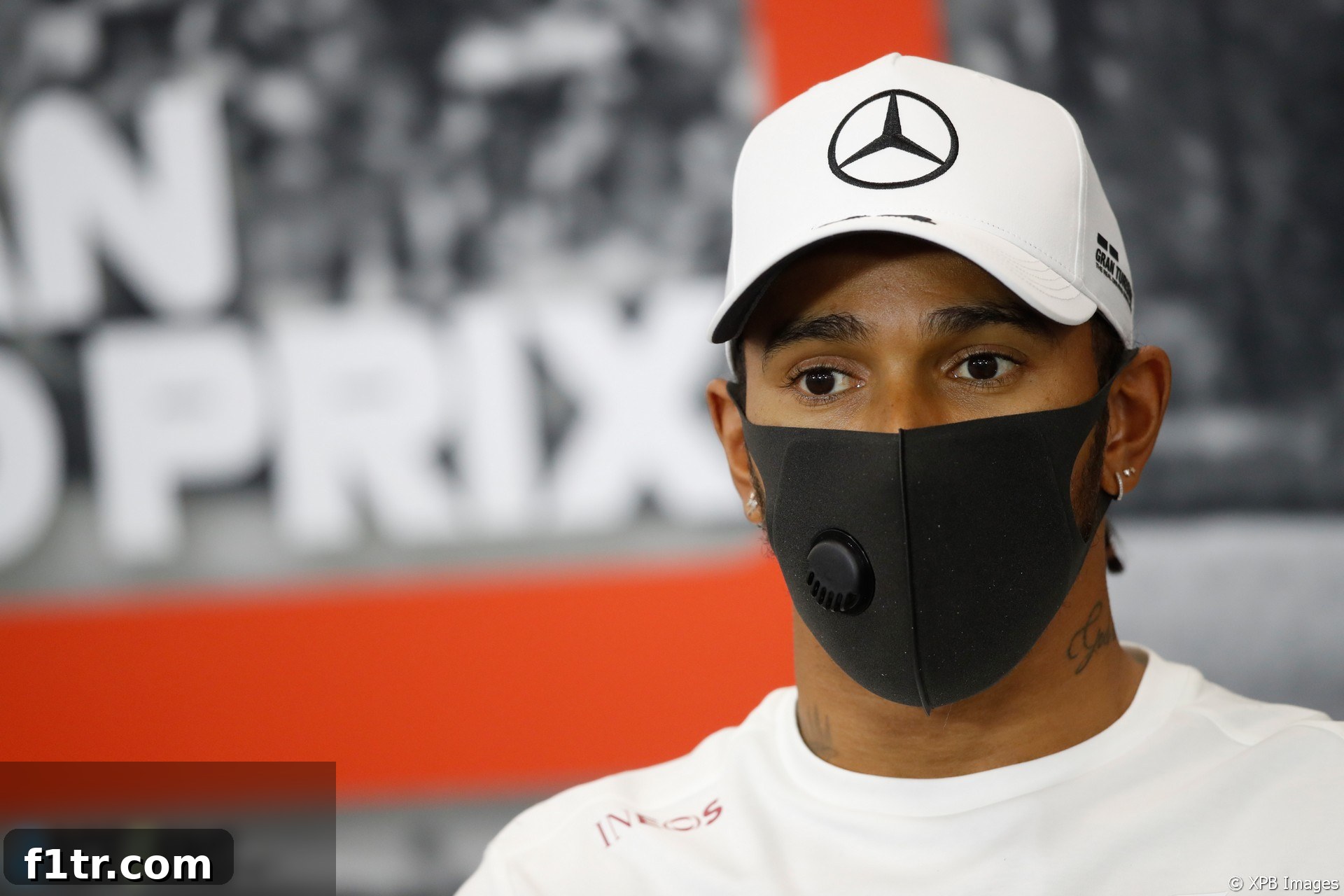
Hamilton and Vettel on F1 Protests: United Against Racism, Divided on Boycotts
Lewis Hamilton, a prominent voice against racial injustice within Formula 1 and beyond, has clarified his stance on potentially boycotting races in solidarity with other sportspeople. While praising athletes in the United States for their impactful protests, Hamilton stated he does not intend to stand down from this weekend’s Belgian Grand Prix.
The decision by top-level baseball, basketball, and football teams in the USA to cancel matches served as a powerful response to the shooting of Jacob Blake, a Black man, by a police officer in Kenosha, Wisconsin. These boycotts sent a clear message, forcing national conversations and highlighting the urgent need for systemic change. Hamilton, deeply connected to the anti-racism movement, shared his admiration for these actions on social media.
Speaking at the FIA press conference ahead of the Belgian Grand Prix, Hamilton articulated his perspective: “Firstly, I think it’s incredible what many out there in the States are doing within their sports. All the way down to the people that are hosting, commentators for example. So many people are standing with the players and really pushing for change. It’s a shame that that’s what’s needed over there to get a reaction.”
However, he drew a distinction between the geographical context of those protests and Formula 1’s presence in Belgium. “But that is in America, and I don’t know if really me doing anything here will particularly have an effect. We’re in Belgium, we’re not in the United States,” Hamilton explained. His comments underline a pragmatic approach, questioning the efficacy of a remote boycott when the immediate impact is geographically distant.
Despite not planning a boycott, Hamilton reaffirmed his unwavering commitment to the cause. “I haven’t spoken to anybody about it, but I am really proud of so many out there, and I do stand unified with them trying to do what I can over here. I don’t really know how us not doing the race – it will still go on – is a thing.” This statement emphasizes his belief that while a race boycott might not be the most effective strategy for F1 in Europe, his advocacy remains strong.
F1’s Ongoing Commitment to Anti-Racism
Formula 1, largely at the urging of Hamilton and other drivers, has instituted a formal pre-race anti-racism ceremony this year. This collective gesture has become a regular feature of Grand Prix weekends, providing a global platform for drivers to express their solidarity and commitment to diversity and inclusion.
Hamilton stressed his ongoing dialogue with senior figures within the sport to ensure these efforts are sustained and impactful. “I’ll still try and speak to Formula 1 to see what else we can do to continue to raise awareness, continue to help push. Naturally, I think as a sport we all need to be aligned, we all need to be supporting one another.” His words highlight a collaborative approach, seeking to leverage F1’s global reach to amplify the message of equality.
Sebastian Vettel: Collective Action and Sustained Message
Sebastian Vettel echoed Hamilton’s sentiments regarding the importance of the anti-racism movement while also expressing a cautious view on boycotting. The four-time world champion emphasized that any decision to boycott a race would be a collective one, made jointly by all drivers.
“I think if so, it’s something that we obviously decide together. Generally, we talk about stuff, we talk about things that are going on and things that are important to us. We’ve grown together as a group of drivers. The more experienced drivers, the young drivers, I think we share our opinions,” Vettel stated, underscoring the unity and shared purpose among the F1 grid.
However, Vettel, like Hamilton, believes that a boycott isn’t currently warranted for Formula 1. “I don’t think it makes much sense now to go as far as that because nothing is on the table or there’s no reason to boycott a race. But I’m sure that if we’re unhappy with something we talk about it first and then take actions accordingly.” This indicates a preference for dialogue and proactive measures before resorting to a disruptive boycott.
The Enduring Power of F1’s Anti-Racism Observance
Crucially, Vettel firmly believes in the continuation of F1’s pre-race anti-racism observance. He sees it as a vital platform for maintaining visibility and sending a consistent message. “If you ask how long are we going to continue, there’s no answer on that. The question is it is important to us to keep sending the message and stand for that. And that’s, I think, what we will continue to do.” This highlights the long-term commitment of the drivers to the cause, recognizing that change is a marathon, not a sprint.
Vettel also drew parallels and distinctions with the US protests. “The measures that have been taken in the US with some players boycotting or going on strike and not going out for the games and therefore the games having to be postponed, I think maybe they are more US-specific. I don’t know the complete backgrounds but I think from where we are we seem to be quite happy as drivers with our actions and want to keep sending that message.”
He emphasized that while the F1 drivers’ actions might seem small, their cumulative impact is significant. “Having said that, we know that it doesn’t change things overnight and it’s only a very, very small contribution. But hopefully, everybody that’s tuned in and sees it gets the point and gets the message, and takes a little bit of that for the next steps that he’s facing in life.”
Vettel concluded with a powerful insight into the distinction between public gestures and private commitment: “Because I think one thing is to take action in public. But more important is what everybody is deciding, or how everybody’s acting and confronting it, once the cameras are off. And that’s true for us being in the spotlight a certain amount during the weekend, but also valid for everyone else.” This highlights the personal responsibility and internal reflection required for true societal change.
The Broader Landscape of Athlete Activism
The shooting of Jacob Blake in Kenosha, Wisconsin, on August 23, 2020, reignited widespread protests across the United States against police brutality and racial injustice. The incident, which left Blake paralyzed, triggered an unprecedented wave of athlete activism across major American sports leagues.
The NBA, MLB, and MLS saw multiple teams collectively decide to boycott games, leading to the postponement of entire slates of matches. These actions, spearheaded by players like LeBron James, sent shockwaves through the sports world and garnered immense media attention, forcing discussions about racial inequality into mainstream discourse in a profound way. Athletes used their platforms not just for statements but for tangible action, demonstrating the power of collective bargaining and solidarity.
Formula 1, as a globally diverse sport, has its own unique context. While the immediate geographical connection to the Jacob Blake shooting is less direct for a European Grand Prix, the underlying message of anti-racism resonates deeply. Lewis Hamilton, as the sport’s only Black driver, has been a pivotal force in pushing F1 to address these issues head-on. His consistent advocacy led to the “We Race As One” initiative, which promotes diversity, inclusion, and environmental sustainability, prominently featuring a rainbow livery and anti-racism messaging.
The drivers’ decision to continue their pre-race observances, kneeling or standing in solidarity, is a deliberate choice to keep the conversation alive. It acknowledges that while boycotts can be powerful tools for immediate impact, sustained engagement, education, and advocacy are equally crucial for long-term change. The F1 paddock, representing a multitude of nationalities and cultures, aims to be a symbol of unity and progress in the fight against all forms of discrimination.
Conclusion: A Unified Message for Lasting Change
Both Lewis Hamilton and Sebastian Vettel, key figures and respected voices in Formula 1, stand united in their commitment to combating racism. Their nuanced positions reflect a strategic understanding of how best to leverage their platforms. While acknowledging and applauding the impactful boycotts seen in US sports, they advocate for a sustained, collaborative approach within Formula 1.
Their emphasis on continued dialogue with F1 leadership, the importance of the pre-race anti-racism ceremony, and the power of individual actions beyond the public eye, underscores a mature and thoughtful approach. The F1 community, led by its most influential drivers, remains dedicated to sending a consistent message of equality, hoping to inspire reflection and positive change both within the sport and among its global audience.
2020 Belgian Grand Prix: Further Insights
- 2020 Belgian Grand Prix Star Performers
- Ricciardo believes Renault’s Spa set-up breakthrough will work on other tracks
- ‘He should have let me pass’: How Raikkonen saw Giovinazzi’s crash
- Sub-54 second laps will produce a “big mess” in qualifying on Bahrain Outer circuit
- McLaren expect Ferrari will “strike back” after Monza
Browse all 2020 Belgian Grand Prix articles