Formula 1’s Evolving Racecraft: Drivers Divided Over New Regulations and the Future of Overtaking
Formula 1 has always been a crucible of speed, skill, and cutting-edge technology. However, the initial rounds of the championship have ignited a fervent debate among its elite drivers regarding the efficacy and fairness of the sport’s latest regulatory changes. While designed to enhance racing spectacle, these new rules, particularly those governing energy management and “Overtake Mode,” have led to a distinct divergence of opinion, challenging traditional notions of racecraft and strategy.
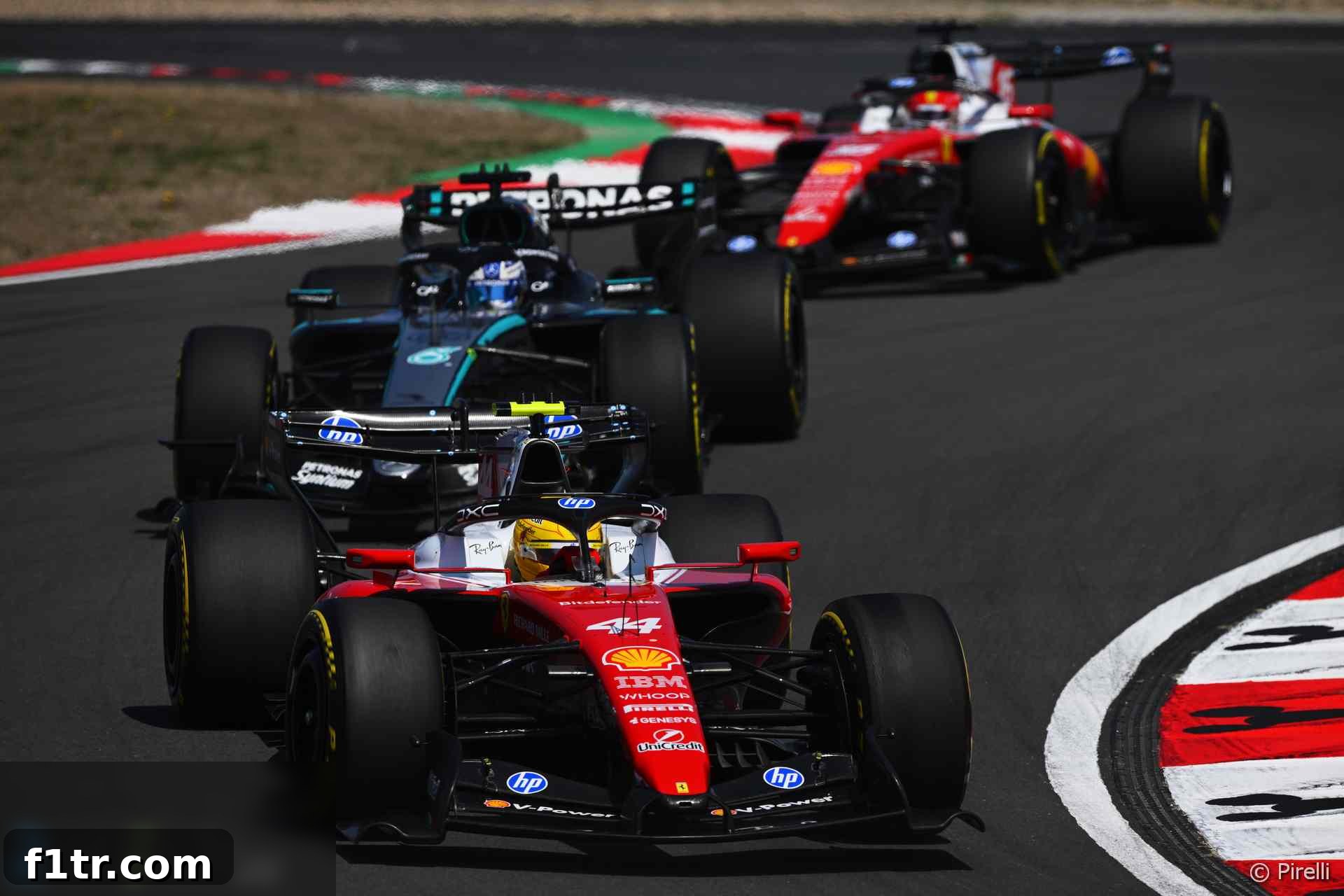
The championship’s early races have showcased a significant increase in on-track position changes compared to previous seasons. Yet, a substantial portion of these overtakes and re-overtakes stem not from sheer driving brilliance or strategic tire management alone, but from the intricate interplay of car-specific energy harvesting capabilities and the activation of power-boosting “Overtake Mode.” This dynamic has sparked a cynical new term within the paddock: “yo-yo racing.” Critics have even gone so far as to liken the high-tech chess match to the whimsical and less serious antics of “Mario Kart,” suggesting a perceived trivialization of Formula 1’s core competitive spirit.
The Critics: Is Modern F1 Racing “Silly” or “Overkill”?
Among the most vocal critics are drivers who often find themselves battling outside the absolute front of the pack, where the marginal gains from energy management can feel more impactful and frustrating. Max Verstappen, Fernando Alonso, and Carlos Sainz Jnr. have all expressed degrees of skepticism or outright criticism regarding the new racing dynamics. However, Lando Norris and Oliver Bearman have offered particularly vivid accounts of their frustrations, articulating concerns that go to the heart of what it means to be a racing driver.
Lando Norris, known for his incisive analysis, has labeled the current state of racing as “silly.” His primary concern revolves around the unsettling ease with which a meticulously planned and expertly executed overtaking maneuver can be immediately nullified by a differential in energy levels. Norris emphasized the fundamental desire of drivers: “As drivers we still just want the best cars to drive and cars that you feel like you’re on the limit, you can go flat-out, you can plan an overtake and you can then defend.” He elaborated on the disorienting feeling of passing an opponent with superior braking or a daring line, only to be helplessly re-overtaken on the subsequent straight at a speed differential of up to 60kph. This helplessness, he argues, strips away the reward for genuine racecraft, leaving drivers “at the mercy of whatever battery you got,” turning what should be a skill-based battle into an energy lottery.
Echoing Norris’s sentiments, Oliver Bearman provided further insight into the defensive challenges posed by the new regulations. He described situations where holding a position becomes virtually impossible, even with the most aggressive and well-timed defensive driving. Recounting an experience from the Chinese Grand Prix, Bearman shared, “I had a bit of experience racing with Franco [Colapinto] in China and you spend a lap thinking about where to plan the move, then you finally go for it and then he just flies past you on the next straight because he’s got so much more battery.” This scenario highlights a significant departure from conventional racing principles, where a strong exit from a corner traditionally translates to a sustained advantage down the straight. Bearman concluded, “It’s not what we’ve been used to throughout our careers. Normally when you get a better exit you get a better run all the way down the straight, but that’s not necessarily the case anymore, which is weird.” Such comments underscore a perceived disconnect between driver effort and on-track outcome.
Bearman further reflected on the overall impact, describing the current situation as “overkill.” He elaborated on the feeling of futility when a well-executed defensive move or a late-braking overtake is rendered meaningless. “As Lando said, if you really give everything, you brake later or you do a great defensive move, it’s not necessarily going to be the case that you hold on to the position because if there’s a long straight afterwards you’re in trouble,” he explained. The sheer speed differential created by energy deployment makes it incredibly difficult, if not impossible, to counter, diminishing the value of traditional racing skills. “Those big over-speeds are tough to really do anything against when the guy is coming past you at such a speed that you can’t hold on to the position,” Bearman concluded, painting a clear picture of driver frustration when fundamental racecraft appears to be undermined by technological assist.
The Defenders: “Real Racing” and Tactical Depth
Conversely, some of the sport’s most successful drivers, particularly those currently enjoying competitive machinery, have emerged as staunch defenders of the new regulatory framework. Lewis Hamilton, who had previously voiced concerns that F1’s power unit changes for 2026 could lead to racing that fans wouldn’t understand, has now become one of the most fervent proponents of the current racing dynamics. Following his best result in 16 months in China, Hamilton dismissed the “yo-yo racing” moniker, asserting, “It happens in kart racing all the time, back and forth, back and forth. No one ever calls it ‘yo-yo racing’. It’s real racing.” His unfinished thought, “So whoever’s coming up with that is…”, suggested a strong disagreement with the critical label, implying that the new dynamics are simply another layer of genuine competition.
Championship leader George Russell has also embraced the comparison to kart racing, but from a position of strategic appreciation rather than derision. Russell, whose strong performances have put him at the forefront of the championship battle, suggests that the tactical management of energy and the activation of Overtake Mode introduce a new dimension of skill and strategy. For proponents like Hamilton and Russell, the constant ebb and flow of position changes, driven by energy deployment, isn’t a flaw but rather an evolution, demanding a different, perhaps more cerebral, approach to racing. They argue that this tactical game adds layers of complexity, where drivers must not only manage their tires and pace but also meticulously plan their energy deployment for both attack and defense throughout a stint, much like the intense, close-quarters combat seen in competitive karting.
Beyond Energy: Car Design and the FIA’s Balancing Act
It’s important to note that the new energy rules aren’t the only changes Formula 1 has implemented to foster more competitive racing. The FIA and F1 management have also undertaken significant revisions to car design, including reducing their width and weight. These alterations were primarily aimed at improving a car’s ability to follow another closely, thereby facilitating more traditional, high-speed overtakes. Oliver Bearman, despite his criticisms of the energy management aspect, acknowledges that some of these broader car design changes have indeed yielded positive results.
The sport’s governing bodies face an inherent dilemma: how to balance the spectacle of close racing and abundant overtakes with the purity of traditional racecraft, where driver skill and car performance are the sole determinants of success. Bearman articulated this challenge with candid observation: “It’s tough because, for F1 and the FIA, it’s not as easy as it looks for them. Because we go from having these amazing cars to drive – qualifying was one of the biggest spectacles – but it was also quite tough to follow and tough to stay close. So we complain a little bit about not being able to overtake.” He continued, highlighting the perpetual nature of driver complaints: “Then we get to this new car where the overtakes have tripled and now we complain that there are too many overtakes. There’s an element of drivers always finding something to complain about.” This self-aware commentary underscores the constant tension between drivers’ desires for perfect racing machines and the sport’s mandate to entertain a global audience.
The Future of F1 Racecraft: A Complex Equation
The ongoing debate reflects a crucial juncture for Formula 1. While the intention behind the new regulations – to create more thrilling, unpredictable races with increased overtaking – is clear, the implementation has yielded unexpected side effects. The “yo-yo racing” dynamic, driven heavily by energy management, has divided the paddock, with some drivers embracing the new tactical layer and others lamenting the perceived erosion of traditional racecraft. The challenge for F1 and the FIA will be to refine these regulations, potentially finding a sweet spot where technological innovation enhances, rather than overwhelms, the fundamental elements of driver skill, car performance, and strategic acumen that have always defined the pinnacle of motorsport. As the season progresses, driver feedback will undoubtedly play a critical role in shaping the future evolution of Formula 1’s racing spectacle.
Related F1 Articles
- Alpine denies “sabotaging” Colapinto and criticises social media “hate” posts
- Verstappen starts season with lowest score over three rounds since his debut in F1
- Poor starts a ‘very high priority’ for Mercedes as drivers lose 21 places in four races
- “Two balls of steel!” How Leclerc won his battery battle with Hamilton and Russell
- Was Bearman right to question Colapinto’s role in his huge Suzuka crash?
Browse all 2026 Japanese Grand Prix articles