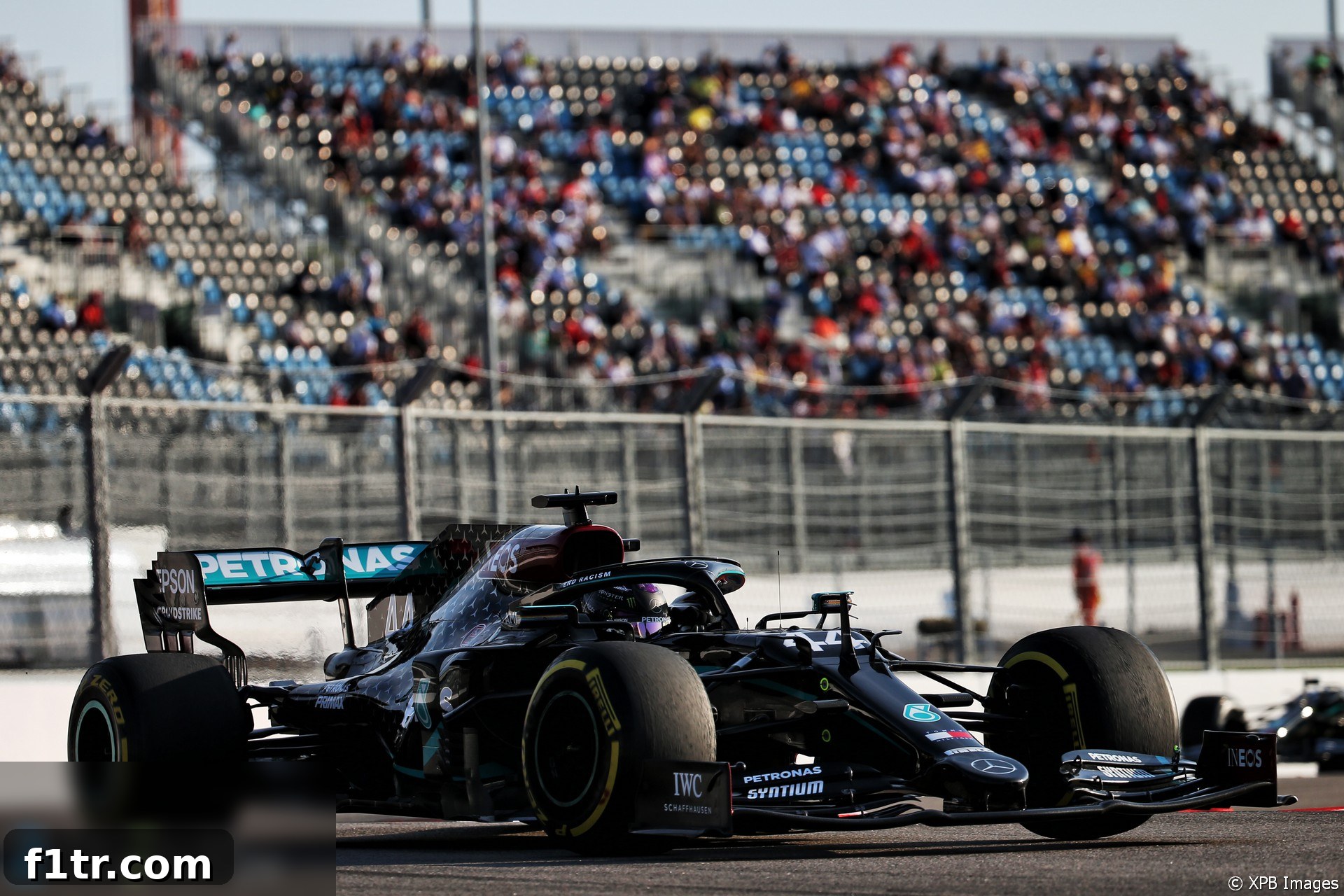
Lewis Hamilton Under Scrutiny: A Deep Dive into Track Limits at Sochi Autodrom
The exhilarating world of Formula 1 often sees drivers pushing the absolute boundaries of performance, speed, and track limits. However, this relentless pursuit of the ultimate lap can sometimes lead to close encounters with the rulebook. Such was the case at the 2020 Russian Grand Prix qualifying session, where seven-time world champion Lewis Hamilton, alongside three other prominent drivers – Nicholas Latifi, Romain Grosjean, and Kevin Magnussen – found themselves under intense scrutiny from the FIA. The investigation centered on alleged infringements of a recently revised and stringent track limits regulation at the challenging Turn 2 of the Sochi Autodrom, reigniting a perennial debate within the sport about consistency and fairness.
The Evolving Landscape of Track Limits in Formula 1
Track limits have long been a contentious and ever-evolving aspect of Formula 1. Designed primarily to ensure fair competition and driver safety, these regulations dictate the precise boundaries within which a car must remain during a competitive lap. While seemingly straightforward in principle, the modern F1 car’s immense grip, aerodynamic efficiency, and the drivers’ instinct to extract every ounce of performance often tempt them to exploit every millimeter of tarmac, and sometimes beyond. This constant push for performance frequently blurs the lines between legitimate racing and gaining an unfair advantage.
Circuits like the Sochi Autodrom, with its mix of fast straights and intricate corners, frequently present unique challenges for drivers to adhere strictly to these often-complex rules. The continuous debate surrounding their enforcement highlights the delicate balance between allowing drivers to race freely and maintaining a level playing field. The role of the race director and stewards becomes paramount in clarifying and consistently applying these rules to uphold the integrity of the sport.
Why Track Limits Matter: Ensuring Fairness and Safety
The primary reasons for enforcing track limits are deeply rooted in the core values of motorsport: maintaining sporting fairness and enhancing driver safety. Allowing drivers to consistently run wide or cut corners could lead to artificially faster lap times, thereby disadvantaging those who adhere strictly to the rules. This practice creates an uneven playing field that fundamentally undermines the competitive integrity of the sport, making the results less about skill within defined boundaries and more about exploiting grey areas.
Furthermore, consistent breaches of track limits, especially in high-speed sections or corners with dangerous run-off areas, can pose significant safety risks. Running off-track can bring cars into contact with barriers, gravel traps, or even other cars, potentially leading to high-speed crashes, dangerous re-entries, or debris on the track. The FIA’s unwavering commitment to safety means that any deviation from the prescribed track boundaries is meticulously monitored and, if necessary, penalized, to ensure driver well-being and consistent safety standards across all racing events.
The Sochi Autodrom Incident: Q1 and Turn 2 Infringements
The specific incident that brought Lewis Hamilton and his fellow competitors under the microscope occurred during the crucial Q1 session of qualifying for the Russian Grand Prix. The focus was squarely on Turn 2, a critical corner at the Sochi Autodrom where drivers were instructed to follow newly clarified guidelines concerning track limits.
Michael Masi’s Revised Directives for Turn 2
Ahead of Saturday morning’s qualifying session, FIA Formula 1 Race Director Michael Masi issued a detailed clarification regarding the enforcement of track limits at Turn 2. This revision was crucial as it outlined specific procedures drivers were expected to follow if they exceeded the defined track boundaries at this particular point. Turn 2 at Sochi is characterized by a distinctive layout: a short orange kerb marks its apex, flanked by longer orange kerbs both before and after it. The new directive emphasized that any driver deemed to have exceeded track limits at this corner must re-join the track by navigating between a specific array of blocks located on the left-hand side.
The updated definition was meticulously clear to remove any ambiguity: drivers would be investigated and potentially penalized if “any part of the car” went over the “first orange kerb element prior to the apex.” This was a significant detail, leaving minimal room for subjective interpretation by the drivers. The instruction further stipulated that if such an infringement occurred, the driver was then obligated to re-join the track by driving around a specific arrangement of blocks, clearly indicated by arrows, before safely returning to the main racing line at Turn 3. This rigorous interpretation aimed to ensure a consistent standard for all competitors and prevent drivers from gaining an unfair advantage by cutting the corner.
Lewis Hamilton’s Q1 Infringement and Subsequent Actions
Replays of Lewis Hamilton’s Mercedes during Q1 clearly showed an instance where the reigning champion cut the corner at Turn 2. Visual evidence confirmed that Hamilton’s car did indeed drive across the first orange kerb element prior to the apex. Crucially, in this instance, he did not adhere to the revised directive to return to the track by navigating between the designated blocks. This specific action, a “failure to follow the Race Directors’ instruction in turn two,” directly contravened the explicit instructions issued earlier by Michael Masi and promptly triggered the investigation by the stewards.
Interestingly, Hamilton also had a moment at the same corner during the subsequent Q2 session. However, on this occasion, he correctly followed the prescribed route back onto the circuit, demonstrating an understanding of the revised rule, albeit after his earlier Q1 lapse. This incident highlighted the immediate learning curve drivers faced with the newly clarified regulation. Adding to his qualifying woes, Hamilton also had another lap time deleted for running wide at a different corner on the circuit, underscoring the pervasive challenges drivers faced in consistently adhering to the precise track boundaries throughout the session, especially when pushing for pole position.
Other Drivers Under Investigation: Latifi, Grosjean, and Magnussen
Lewis Hamilton was not alone in facing the stewards’ scrutiny during the qualifying session. Three other drivers – Nicholas Latifi of Williams, Romain Grosjean driving for Haas, and his teammate Kevin Magnussen – were also flagged for similar infringements at Turn 2 during Q1. Footage from the qualifying session confirmed that all three drivers, much like Hamilton, touched the critical first orange kerb without subsequently driving between all of the designated blocks to re-join the track correctly.
Among the four investigated drivers, only Magnussen made an attempt to navigate around some of the blocks. However, even his attempt was deemed incomplete as he missed the very first one, indicating a collective struggle to adapt to or perfectly execute the revised track limits procedure under the immense pressure of a qualifying lap. These multiple infringements from experienced drivers across different teams underscored the perceived difficulty in consistently interpreting and executing the new rule during high-speed, competitive conditions.
Driver Reactions and the Perpetual Challenge of Track Limits
Facing an investigation shortly after securing pole position is hardly an ideal scenario for any driver, least of all for a championship contender like Lewis Hamilton. When questioned about the looming investigation, Hamilton’s response was telling, betraying a mix of surprise and perhaps a touch of weariness regarding the continuous scrutiny over track limits. “I have no idea what that is,” he stated initially, before adding with a hint of resignation, “But there’s always going to be something isn’t there?”
The Driver’s Perspective: Pushing the Limits
Hamilton’s comment reflects a common sentiment among Formula 1 drivers. They are highly competitive athletes tasked with extracting every ounce of performance from their machinery, often at the very edge of control. In the heat of battle, or during a qualifying lap where fractions of a second can determine grid position, the instinct is to push the car to its absolute limit, which inevitably means flirting with, and sometimes exceeding, the defined track boundaries. The constant revisions to track limits rules, combined with varying interpretations across different circuits and even different corners within the same circuit, often lead to frustration and a sense of ambiguity for drivers striving for consistency.
For drivers, the challenge is not just about raw speed but also about precision and adaptability. They must process real-time information, manage tire degradation, battle rivals, and simultaneously remember highly specific and often last-minute rule changes for particular corners. This intricate balancing act means that occasional infringements, even by the most experienced drivers, are almost an inevitable consequence of the sport’s high-stakes nature. Hamilton’s remark underscores the constant tension between the drivers’ relentless pursuit of performance and the FIA’s mandate to uphold strict regulations for fairness and safety.
FIA’s Role: Ensuring Fair Play and Consistent Enforcement
The FIA, through its race director and stewards, plays a crucial role in maintaining the integrity of Formula 1. The decision to issue revised guidance for Turn 2 at Sochi, and subsequently to investigate infringements, highlights the organization’s commitment to ensuring fair play and consistent enforcement of regulations across the grid. However, this task is far from simple, often facing criticism for perceived inconsistencies.
Challenges in Rule Application and Communication
One of the persistent challenges for the FIA is the consistent application of rules across different circuits and race weekends. What might be deemed acceptable at one corner could be a penalty at another, depending on the specific track design, run-off areas, and potential for gaining an advantage. Communicating these nuances effectively to all teams and drivers, sometimes with very short notice, is vital. Michael Masi’s clear directives ahead of qualifying were an attempt to provide such clarity, yet the multiple investigations underscore the difficulty drivers face in internalizing and executing these instructions flawlessly under high-pressure race conditions.
The use of technology, such as sophisticated timing loops and CCTV footage, aids the stewards in making precise judgments. However, the human element—both in the drivers’ execution and the stewards’ interpretation—remains central to the process. The objective is always to strike a balance between strict adherence to rules and acknowledging the dynamic, fast-paced nature of Grand Prix racing. The ongoing dialogue between drivers, teams, and the FIA is essential for refining these rules and ensuring they serve the spirit of fair competition.
Potential Consequences and Broader Implications for F1
Investigations into track limit infringements can carry significant weight, particularly during a crucial qualifying session. While the immediate outcome for Hamilton was securing pole position, the ongoing investigation held the potential for various penalties, ranging from a reprimand to time penalties or even a grid drop, which could dramatically alter the starting order for the Grand Prix. For other drivers, even minor penalties can have a substantial impact on their race strategies and championship aspirations, potentially costing valuable points.
Impact on Race Strategy and Championship Battle
Any penalty, regardless of its severity, has ripple effects. A grid penalty for Hamilton, for instance, would have elevated his rivals, potentially changing the complexion of the race and the championship battle. In a tightly contested season, every point and every grid position can make a significant difference. For the other drivers involved, a lower starting position could hinder their ability to score points, affecting team standings and individual reputations within the paddock. These incidents highlight how meticulous the FIA must be in its judgments, as even small decisions can have far-reaching consequences in the highly competitive environment of Formula 1.
The Ongoing Debate: Technology vs. Driver Skill
The Sochi incident also feeds into the broader, ongoing debate within Formula 1 about the role of technology in enforcing rules versus allowing drivers to police themselves. Some argue that excessive policing of track limits, particularly through digital sensors, stifles natural racing instincts and creativity, turning the sport into an overly regulated exercise. Others contend that strict enforcement is necessary to prevent an ‘anything goes’ mentality and ensure competitive fairness. The debate also encompasses the design of circuits, with the use of various elements like kerbs, asphalt run-offs, and traditional gravel traps each presenting different challenges and solutions to the track limits dilemma. Incidents like this at Sochi often prompt further discussion on the optimal approach for future circuit designs and regulations.
Conclusion: A Constant Balancing Act in Grand Prix Racing
The investigations at the 2020 Russian Grand Prix qualifying, particularly involving a high-profile figure like Lewis Hamilton, serve as a potent reminder of the intricate rules governing Formula 1 and the constant vigilance required from both drivers and officials. The incident at Turn 2 of the Sochi Autodrom underscored the persistent challenge of defining and enforcing track limits in a sport where every millisecond counts and every centimeter of track is fiercely contested.
While Hamilton and the other drivers would ultimately face the stewards’ decision, the event highlighted the FIA’s dedication to maintaining a level playing field through clear, albeit sometimes controversial, regulations. It also brought to the forefront the perpetual tightrope walk for drivers: pushing the absolute boundaries of speed and skill while remaining strictly within the confines of the rulebook. As Formula 1 continues to evolve, the debate over track limits, their interpretation, and their enforcement will undoubtedly remain a central theme, shaping the competitive landscape of Grand Prix racing for years to come.
2020 Russian Grand Prix: Related Coverage
Stay informed with more insights and analysis from the 2020 Russian Grand Prix:
- Despite F1 drivers’ concerns, stewards don’t give penalty points for “minor infringements”
- 2020 Russian Grand Prix Star Performers
- “Slower” Ferrari only beat us because of Q3 tyre rule – Tost
- “I may not always get it right” says Hamilton after penalty criticism
- Why did the stewards make their second U-turn this year on a Hamilton penalty call?
Browse all 2020 Russian Grand Prix articles
Enhance your Formula 1 experience: Become a RaceFans Supporter and enjoy an ad-free browsing experience.