Chasing Greatness: The Formula 1 Records Set to Fall in 2021
In the fiercely competitive world of Formula 1, achieving a world championship is the pinnacle of a driver’s career. Yet, to transcend this, to win more titles than anyone else, represents an unparalleled legacy. Throughout F1’s rich 72-year history, only a handful of extraordinary talents have pushed the boundaries of what’s possible, setting benchmarks that inspire generations.
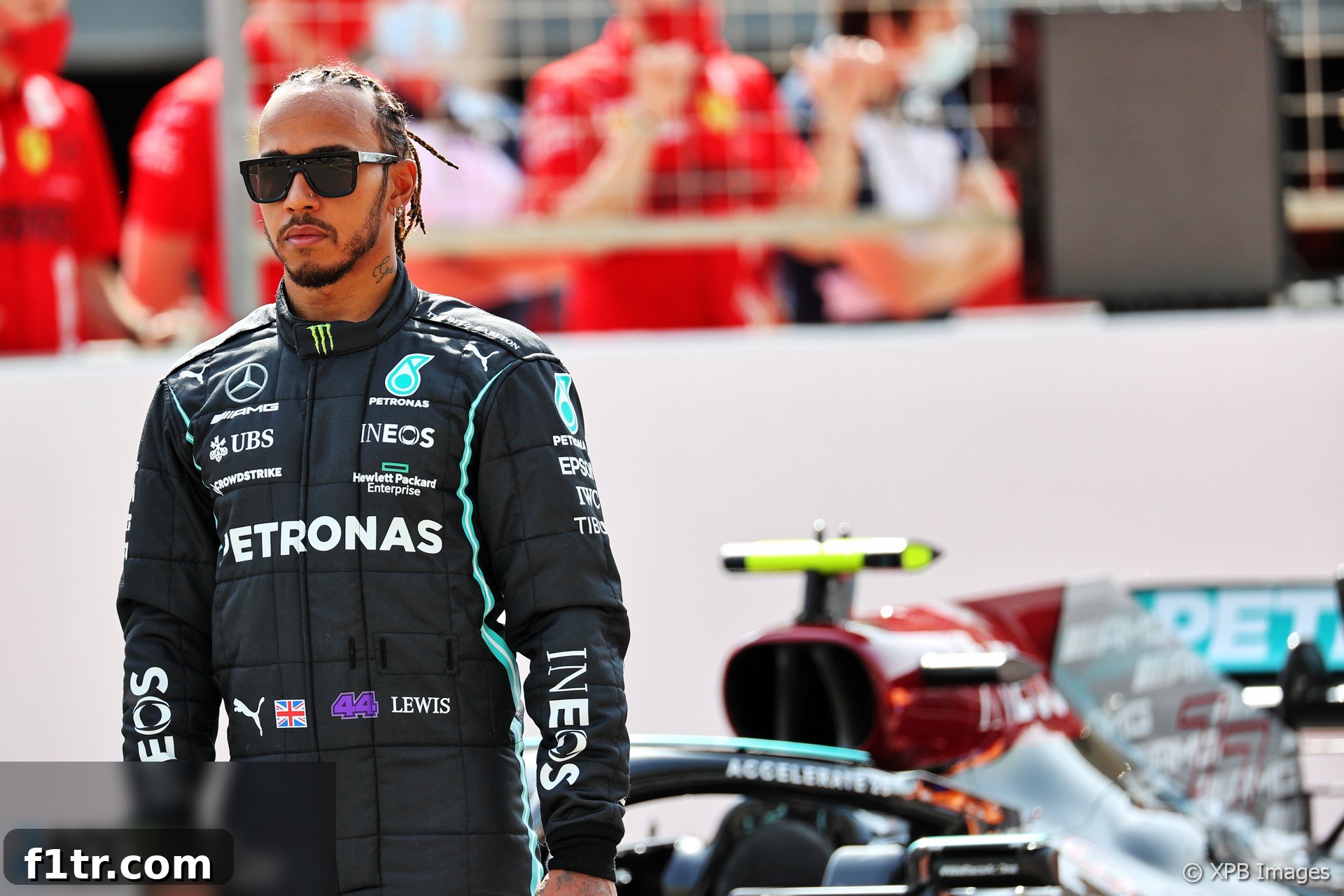
The journey began with Alberto Ascari, who became the sport’s first multiple world champion in 1953. Later, legends like Juan Manuel Fangio, with five titles, and Michael Schumacher, with an astounding seven, further elevated the standard. In recent years, Lewis Hamilton has emerged as a dominant force, drawing level with Schumacher’s seven championship victories in 2020. As the 2021 season unfolds, Hamilton stands on the precipice of history, aiming for an unprecedented eighth world championship – a feat that would solidify his status as the most successful driver of all time.
But the pursuit of greatness isn’t limited to Hamilton. The 2021 season promises a thrilling spectacle of drivers old and new chasing various records and milestones, each striving to carve their names deeper into the annals of Formula 1 history. From veteran comebacks to rookie debuts, the year is set to redefine numerous statistical benchmarks.
Lewis Hamilton: Running Out of Records to Break
Lewis Hamilton’s career has been a relentless assault on the record books. Having already surpassed Michael Schumacher’s record for most wins (currently 95) and most pole positions (currently 98), Hamilton is now poised to achieve a monumental century in both categories. Considering his track record of securing at least nine victories in each of the last seven seasons, it would be a major surprise if he doesn’t reach 100 wins and 100 pole positions before the summer break. This double century would be an unparalleled achievement, underscoring his consistent excellence and enduring speed over more than a decade at the sport’s elite level.
However, the ultimate prize remains the eighth world championship. Only Hamilton and Schumacher have reached seven titles, a testament to their sustained dominance. While Schumacher came agonizingly close to an eighth in 2006, Hamilton has the unique opportunity in 2021 to become the first driver ever to achieve this monumental feat. Furthermore, should he clinch his fifth consecutive title, he would equal Schumacher’s record for the most consecutive championship wins, a true reflection of sustained excellence in a team-based sport.
Beyond these headline-grabbing achievements, Hamilton is steadily chipping away at the few remaining significant records. If he manages to lead just a dozen laps over the course of the season, he will surpass Schumacher’s record for the most laps spent at the front of the field. This statistic highlights not just raw speed, but the ability to control races from start to finish, a hallmark of Hamilton’s strategic prowess.
Another impressive record held by Schumacher is for the most ‘hat-tricks’ – a win, pole position, and fastest lap in a single Grand Prix. Hamilton currently needs four more to equal this impressive tally, showcasing his capability to extract maximum performance across all critical metrics of a race weekend. Similarly, he is only two shy of Jim Clark’s 53-year-old record for the most ‘grand slams,’ which denotes a win, pole, fastest lap, and leading every single lap of the race. Achieving a grand slam is the ultimate display of absolute dominance, leaving no doubt about a driver’s superiority on a given day.
Consistency is another area where Hamilton shines. A single victory in 2021 will see him equal Schumacher’s record of winning at least one race in 15 consecutive seasons. This remarkable streak speaks volumes about his longevity, adaptability, and unwavering competitive spirit. And if he manages to conquer the Hungarian Grand Prix once more, he will become the first driver in F1 history to win nine times at the same race and on the same track, breaking a record currently held by Schumacher for his nine victories at the French Grand Prix held at Magny-Cours. These niche records further illustrate the depth of Hamilton’s impact on the sport.
Hamilton’s recent success has often come at the expense of his Mercedes teammate, Valtteri Bottas. If Mercedes continues its dominance and Bottas finishes as championship runner-up for a third consecutive season, he will enter an exclusive club. The last driver to achieve this unenviable distinction was Graham Hill between 1963 and 1965. Interestingly, two of those titles were won by Jim Clark, with John Surtees claiming the 1964 championship, highlighting the challenge of competing against a generational talent within the same team.
Fernando Alonso: The Return of a Legend and the Longest Drought
The 2021 season marks the highly anticipated return of two-time world champion Fernando Alonso to Formula 1. After a two-year hiatus, his comeback with Alpine (formerly Renault) presents a unique opportunity to break several long-standing records related to the gaps between victories. The current record for the longest interval between consecutive wins, measured in days, is held by Riccardo Patrese, who endured a staggering 2,402-day wait between his triumphs at Kyalami in 1983 and Imola in 1990. Should Alonso win a race on his return, he would shatter this record, as the 2021 season opener comes 2,877 days after his last victory at the Circuit de Catalunya in 2013.
In terms of races, Kimi Raikkonen currently holds the record for the longest gap between wins, achieved when he won the United States Grand Prix three years ago, 114 races after his previous triumph. Alonso’s last win was 153 races ago, 115 of which he actually entered. A victory for the Spaniard would therefore establish a new record in this category as well, highlighting the sheer difficulty and rarity of such a prolonged return to the top step of the podium.
Furthermore, an Alonso victory would set a new benchmark for the longest interval between a driver’s first and last career win. This record is also currently held by Raikkonen, whose 2018 victory occurred a remarkable 15 and a half years after his maiden triumph at Sepang in 2003. Alonso’s first win dates back even further, to 2005, meaning a win in 2021 would push this record significantly higher, further cementing his legendary longevity and enduring skill.
Alonso, Raikkonen, and Sebastian Vettel all share the potential to win a race with a fourth different constructor in 2021. The record for wins with the most different teams is five, a testament to adaptability and versatility, held by the iconic Stirling Moss. Following his switch to Aston Martin, Vettel also has the opportunity to win with a third different engine manufacturer, bringing him one shy of Juan Manuel Fangio’s unparalleled record of four different engine manufacturers. These records underscore the ability of these seasoned veterans to adapt to different machinery and team philosophies.
Kimi Raikkonen: The Magnificent Seven and Enduring Longevity
True to his “Iceman” moniker, Kimi Raikkonen remained characteristically unfazed upon becoming the most experienced driver in Formula 1 history last year. However, his journey continues into 2021, presenting further opportunities for the Finn to set new milestones. This season marks his 19th year of competition, a remarkable achievement that will see him equal the record jointly held by the legendary Michael Schumacher and Rubens Barrichello. Such longevity in a sport as physically and mentally demanding as F1 is truly extraordinary.
Raikkonen will also celebrate his 42nd birthday before the conclusion of the season, a testament to his enduring passion and fitness. The last F1 driver to compete at such an advanced age was Michael Schumacher, who was 43 by the time of his final retirement in 2012. This places Raikkonen among a select group of drivers who have defied age to continue competing at the highest level of motorsport.
A unique record awaits Raikkonen when he starts his eighth race of the year, currently scheduled to be the French Grand Prix. This will mark his 163rd start using car number seven, establishing a new record for the most races started with the same car number. He will surpass Romain Grosjean, who started 162 races with number eight. In an era where drivers choose permanent numbers, Raikkonen’s consistent use of number seven has become synonymous with his presence on the grid, adding a distinct personal touch to his storied career.
More Numbers and Stats for 2021: Newcomers and Team Dynamics
The 2021 season welcomes three exciting rookies to the Formula 1 grid, bringing fresh talent and new narratives. Among them is Mick Schumacher, carrying the legendary name of his father, Michael, and aiming to carve out his own legacy. He will be racing with car number 47, a number that has seen very limited action in points-scoring F1 races outside of the Indianapolis 500. Its only previous appearance was when Stoffel Vandoorne used it while substituting for Fernando Alonso at the 2016 Bahrain Grand Prix. Coincidentally, Vandoorne’s teammate that day was Jenson Button, who raced with number 22, the very number chosen by another promising 2021 newcomer, Yuki Tsunoda.
Haas F1 Team enters the season with an all-rookie driver line-up, pairing Mick Schumacher with Nikita Mazepin. This marks the first time since 2016 – when Manor fielded Pascal Wehrlein and Rio Haryanto – that a team has entrusted its season entirely to debutant drivers. Adding to the intrigue, Mazepin is just 20 days older than Schumacher, making them an unusually closely-aged pair of rookies, suggesting a spirited internal rivalry from the outset. It’s also worth noting Mazepin’s unique situation where he is not permitted to race under Russia’s flag for 2021 or 2022 due to WADA sanctions.
In a significant shift, Ferrari begins the 2021 season without a world champion in its driver line-up for the first time since 2007. The last time the Scuderia started a season without a driver who would eventually go on to become a world champion was way back in 1995, when Jean Alesi and Gerhard Berger were at the wheel. This places new pressure and opportunity on their current pairing of Charles Leclerc and new recruit Carlos Sainz Jnr. Sainz’s move to the illustrious Italian team bodes well for his prospects of joining Formula 1’s roster of race winners. Historically, only Ivan Capelli, in 1992, has started a season with Ferrari and gone on to end his career without a single F1 victory, suggesting a strong likelihood of Sainz achieving a win during his tenure.
Remarkably, half of the 20 drivers on the grid for 2021 are already Grand Prix race winners. This statistic is even more impressive when considering that three of the remaining ten drivers are rookies, who naturally haven’t had the chance to win yet. This high proportion of race-winning talent promises thrilling competition throughout the field.
The Calendar, New Formats, and Key Milestones
The 2021 F1 calendar is tentatively scheduled to be the longest in the sport’s history, boasting 23 races. However, the world remembers that the 2020 calendar also promised a record 22 races before the COVID-19 pandemic necessitated significant revisions. This ambitious schedule reflects Formula 1’s global reach and its continuous effort to expand into new markets. The championship will notably feature the first-ever Formula 1 Grand Prix in Saudi Arabia, to be held on the brand new and highly anticipated Jeddah Street Circuit, adding another fresh challenge for the drivers and teams.
Beyond new venues, 2021 may also introduce an experimental format: the first-ever ‘Sprint Qualifying’ races. These shorter, non-championship races are proposed to be held on Saturdays at three selected rounds. This innovative format poses interesting questions for statisticians and fans alike: will the F1 season officially comprise 23 Grand Prix races, or will the inclusion of these sprint events effectively mean 26 competitive outings? The outcome will undoubtedly generate much discussion and reshape how we perceive a Grand Prix weekend.
Several other prominent drivers are also heading towards significant career milestones in 2021:
- Race Four: Daniel Ricciardo’s 200th participation in a Grand Prix weekend, a testament to his vibrant and extensive career.
- Race Six: Sergio Perez’s 200th participation in a Grand Prix weekend, marking his journey through various teams to a top-tier seat.
- Race Nine: Perez’s 200th Grand Prix start, a significant benchmark for any Formula 1 driver, showcasing his enduring presence.
- Race Twelve: Ricciardo’s 200th Grand Prix start, further highlighting his impressive longevity and experience in the sport.
- Race Twenty-One: Lance Stroll’s 100th participation in a Grand Prix weekend, a key moment marking his progress in F1.
- Race Twenty-Two: Stroll’s 100th Grand Prix start, solidifying his position as an established driver on the grid.
The Thrill of the Chase
The 2021 Formula 1 season is shaping up to be an extraordinary year, not just for the battles on track, but for the profound impact it promises on the sport’s historical records. From Lewis Hamilton’s pursuit of an eighth world title and century of wins to Fernando Alonso’s audacious comeback aiming to rewrite longevity records, and Kimi Raikkonen’s quiet accumulation of milestones, the narrative of greatness continues to unfold. With new talents emerging, innovative race formats being trialed, and historic benchmarks within reach, this season is poised to be one of the most statistically significant in Formula 1’s illustrious history, captivating fans worldwide with every lap and every race.