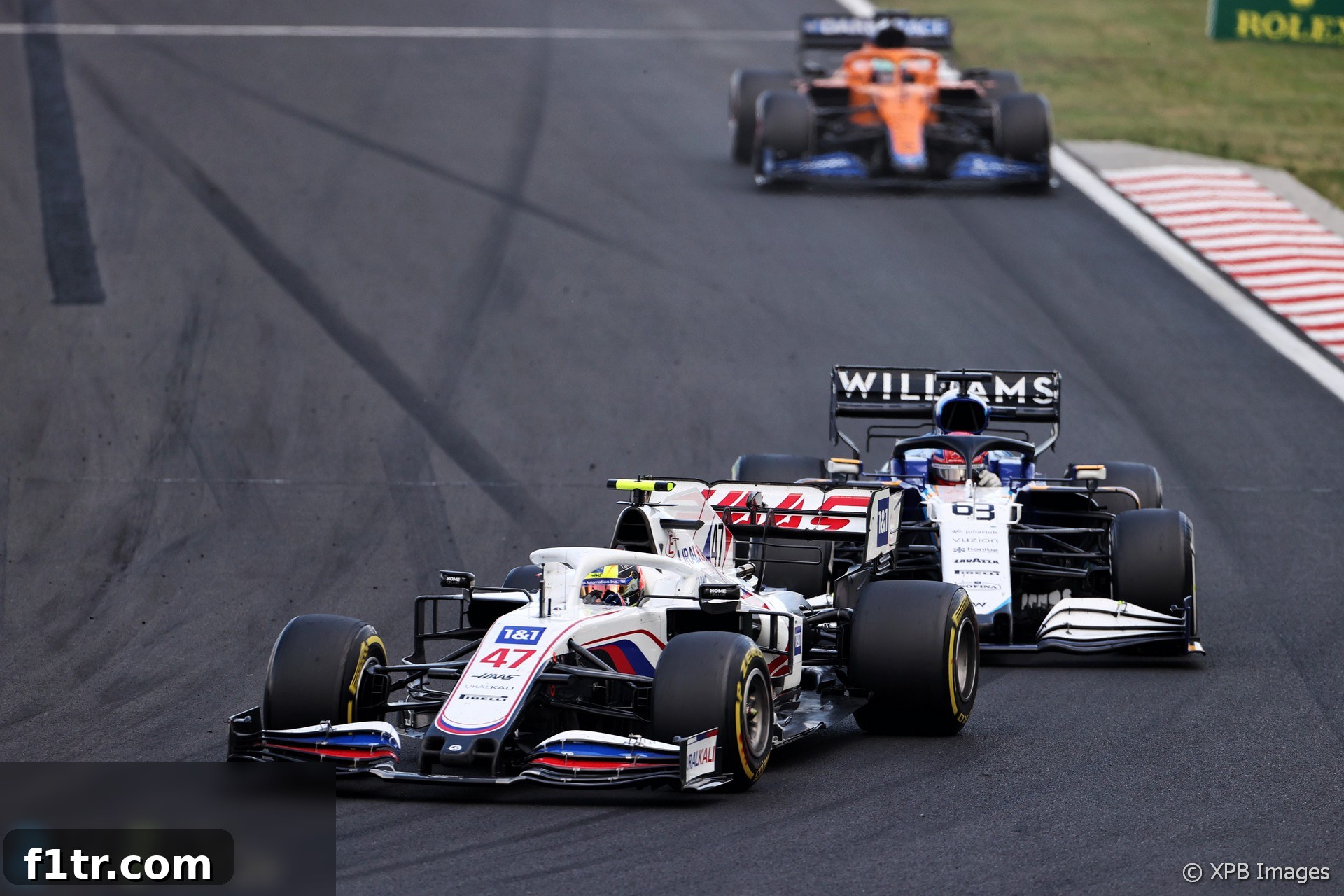
Haas F1 Team’s Uphill Battle: Guenther Steiner’s Realistic Outlook on 2021 Points Prospects
The 2021 Formula 1 season has proven to be a challenging one for the Haas F1 Team, a period marked by significant strategic decisions and the development of two rookie drivers. As the championship passed its halfway point, team principal Guenther Steiner offered a remarkably candid assessment of their chances of escaping the bottom of the constructors’ standings and scoring their first points of the year. His outlook is one of unwavering realism, acknowledging the formidable obstacles that lie ahead for the American outfit.
Steiner’s Unwavering Realism: Low Chances for 2021 Points
Following the Hungarian Grand Prix, a race that saw unexpected results for several teams, Steiner articulated his belief that Haas’s prospects for scoring points in the remaining races are “very, very low.” This blunt assessment highlights the inherent difficulties faced by a team that consciously opted to make the 2021 season a transitional year, dedicating minimal development resources to their current car in favor of the radical new regulations set for 2022.
The Harsh Realities of Formula 1
Formula 1 is a sport where opportunities are rare, and seizing them is paramount. Steiner’s pragmatism stems from a deep understanding of the sport’s competitive landscape. He recognizes that while unexpected scenarios can sometimes open doors for midfield and backmarker teams, relying on such fortune is not a sustainable strategy. Haas’s VF-21 car has consistently lacked the pace to challenge for top-10 finishes, and even in chaotic races, the margin for error and the ability to capitalize on incidents are narrow. The team’s current focus is primarily on driver development and laying the groundwork for a more competitive future, rather than an aggressive pursuit of points in a season where their machinery is simply not up to the task.
Seizing Opportunities: A Double-Edged Sword
Steiner reflected on how other teams, like Williams, managed to capitalize on the unpredictable nature of the Hungarian Grand Prix. “Williams didn’t expect to make the points they make. They did a good job and ended up in a good place at the right time. That’s how racing happens,” he explained. This sentiment underscores a core principle of Formula 1: while raw pace is crucial, preparedness and opportunistic driving can yield significant rewards when the circumstances align. For Haas, however, consistently putting themselves in a position to benefit from such events has been a struggle. Despite their best efforts, the foundational performance deficit of their car often means they are fighting a losing battle, even when chaos unfolds around them. Steiner’s reluctance to “bet that we get more points than them” speaks volumes about the current performance differential.
The Shifting Landscape of the Constructor’s Championship
The Hungarian Grand Prix proved to be a pivotal moment for the lower end of the constructors’ championship, significantly altering the gaps between the teams striving to avoid the very last position. Williams, Haas’s closest competitor for much of the season, enjoyed a transformative weekend that propelled them significantly ahead in the standings, further isolating Haas at the very bottom.
Williams’s Unexpected Triumph
Prior to the Hungarian Grand Prix, Williams Racing was embroiled in a tight battle with Haas, both teams desperately seeking to break their duck for the season. However, the chaotic multi-car pile-up at the start of the race, coupled with strategic decisions and George Russell’s exceptional performance, saw both Williams cars finish in the points. Nicholas Latifi secured a remarkable seventh place, while Russell finished eighth. This combined effort yielded a crucial 10 points for the British team, immediately moving them a significant margin ahead of Haas. Such a windfall result demonstrates the often-unpredictable nature of Formula 1, where a single race can dramatically reshape a team’s championship fortunes. For Williams, it was a testament to their perseverance and readiness to seize a rare opportunity, ending years of waiting for points.
The Aston Martin Variable
The picture, however, remained somewhat fluid due to the disqualification of Aston Martin’s Sebastian Vettel, who initially finished second at the Hungarian Grand Prix. If Aston Martin successfully overturns this decision, Williams’s lead over Haas would be reduced from 10 points to six, as points would be reallocated further down the grid. Despite this potential adjustment, Steiner’s conviction remains unchanged. He believes that even if Williams’s points tally is slightly reduced, the fundamental gap in performance and the remaining race calendar make it highly improbable for Haas to bridge the divide. The points scored by Williams represent a significant psychological and tangible advantage, solidifying their position above Haas.
The Gap to Alfa Romeo
Adding another layer to Haas’s predicament is the presence of Alfa Romeo Racing, who sit between Haas and Williams in the championship standings with three points. While the gap to Alfa Romeo is not as vast as that to Williams post-Hungary, it still represents a formidable challenge for a team yet to open its scoring account. Alfa Romeo has demonstrated flashes of pace and reliability that have allowed them to secure points in select races, a feat that has so far eluded Haas. The presence of two other teams ahead in the standings underscores the sheer scale of the task facing Guenther Steiner’s squad in the latter half of the 2021 season.
Haas’s 2021 Season: A Developmental Year
The 2021 Formula 1 season was always earmarked by the Haas F1 Team as a unique and challenging year. With the conscious decision to field two rookie drivers and to divert significant development resources away from the current car and towards the drastically overhauled 2022 regulations, the team embraced a transitional phase. This strategic pivot meant prioritizing long-term stability and competitiveness over immediate results, shaping their approach to every race weekend.
Nurturing Young Talent: Mick Schumacher and Nikita Mazepin
At the core of Haas’s 2021 strategy was the development of its all-rookie lineup: Mick Schumacher and Nikita Mazepin. Both drivers faced the monumental task of adapting to Formula 1 in a car that was widely acknowledged as the least competitive on the grid. This environment, while difficult, provided an intense learning curve, forcing them to maximize every opportunity for track time, data analysis, and race experience. The team’s focus was not on securing points, but on enabling Schumacher and Mazepin to grow into accomplished Formula 1 drivers, preparing them for a potentially more competitive future.
Mick Schumacher’s Steady Progress
Mick Schumacher, son of seven-time world champion Michael Schumacher, has shown flashes of impressive potential throughout the season. His best result came at the Hungarian Grand Prix, where he skillfully navigated the chaotic opening laps and maintained a strong pace to finish 12th. While outside the points, this performance was significant for several reasons. It demonstrated his ability to handle pressure, manage race conditions, and extract the maximum from his package, even in an uncompetitive car. For Schumacher, these races are vital for building confidence, understanding race craft, and proving his capabilities, even if the ultimate reward of championship points remains out of reach for now. His consistent efforts and measured approach have been a highlight for the team.
Nikita Mazepin’s Challenges and Learning Curve
Nikita Mazepin’s rookie season has been equally challenging, marked by a steeper learning curve and a series of incidents. Despite the difficulties, the primary objective for Mazepin, much like Schumacher, is to accumulate experience and refine his skills. Every lap, every practice session, and every race is a crucial learning opportunity in the high-pressure environment of Formula 1. The team’s commitment to his development remains steadfast, understanding that significant improvement over a single season requires consistent effort and resilience. His journey in 2021 is about building foundational knowledge and adapting to the demands of elite motorsport, with an eye on applying these lessons in future seasons.
Hungary’s Race Day: Missed Opportunities and Lessons
While the Hungarian Grand Prix offered Haas F1 Team’s Mick Schumacher his best result of the season, the race was not without its frustrations and an unfortunate early exit for Nikita Mazepin. This incident, while disappointing, further highlighted Guenther Steiner’s perspective on the team’s overarching priorities for the 2021 season.
Mazepin’s Unfortunate Retirement
Nikita Mazepin’s race at the Hungaroring came to an abrupt and premature end after he was involved in a collision with Kimi Raikkonen during a pit lane incident. As Mazepin was exiting his pit box, Raikkonen, having just served a penalty, veered into his path, resulting in contact that forced the Haas driver to retire. Steiner expressed his disappointment succinctly: “It was very disappointing because it was no need for it. Sometimes these things happen, they shouldn’t happen.” This frustration is understandable, as such incidents are often avoidable and disrupt a team’s race plan and, more importantly for Haas, a driver’s invaluable track time.
Learning Over Points: The True Value of Race Time
Despite the incident, Steiner remained pragmatic about the implications for the team’s points tally. He didn’t view it as a missed opportunity to score their first points of 2021, stating, “For me, making points would have been difficult even without the crash.” This reinforces the team principal’s realistic outlook on their current performance level. However, Steiner’s bigger concern revolved around Mazepin’s loss of critical race experience. “But for me, the biggest thing is Nikita missed another race where he can learn a lot of things. That is my bigger concern than the points in the moment,” he emphasized. For a rookie driver like Mazepin, every race lap is an opportunity to deepen his understanding of the car, the tires, race strategy, and battling with other drivers. Missing out on these valuable learning experiences due to an avoidable incident is, in Steiner’s view, a more significant setback than the slim chance of scoring points. The team’s philosophy prioritizes driver development and preparing for the future, making track time an invaluable commodity that cannot be easily replaced.
Gazing Towards 2022: A New Chapter
Despite the current challenges and the realistic assessment of their 2021 performance, the Haas F1 Team remains steadfast in its long-term vision. The ongoing season, while difficult, is seen as a crucial stepping stone towards a potentially more competitive future, with all eyes firmly set on the radical regulatory changes slated for 2022. This strategic decision underpins every choice the team makes, from resource allocation to driver development.
Strategic Investment in the Future
Haas’s decision to minimize development on their 2021 car was not a sign of surrender but a calculated gamble. By diverting significant financial and engineering resources early in the 2021 season towards the design and development of their 2022 contender, the team aims to gain a head start on the new regulations. This forward-thinking approach, while sacrificing immediate performance, is designed to ensure that when the new era of Formula 1 dawns, Haas is in a much stronger position to compete. It’s an investment in the team’s long-term sustainability and competitiveness, a philosophy that requires patience and resilience.
The Promise of New Regulations
The 2022 regulations are perhaps the most significant overhaul in Formula 1’s recent history, introducing new aerodynamic concepts, simplified car designs, and budget caps designed to level the playing field. For smaller, independent teams like Haas, these changes represent a genuine opportunity to reset their competitive standing. The hope is that the new rules will allow ingenuity and efficient development to shine, rather than simply raw financial power. Guenther Steiner and the entire Haas F1 team are banking on this paradigm shift, believing that their early focus on the 2022 car will allow them to emerge from the back of the grid and reclaim a more competitive position within the sport. The current season’s struggles, therefore, are viewed not as an end, but as a difficult but necessary prelude to a more promising chapter.
Conclusion: Perseverance Amidst Challenges
Guenther Steiner’s assessment of Haas F1 Team’s 2021 prospects for scoring points is a stark reminder of the immense challenges faced by teams at the very back of the Formula 1 grid. While the team navigates a season with minimal development and two rookie drivers, their focus remains firmly on the long game. The unexpected points scored by Williams at the Hungarian Grand Prix only underscored the difficulty of their task. Yet, despite the slim chances for points, Haas continues its mission of developing young talent and strategically preparing for the 2022 regulations, hoping that perseverance through these lean times will ultimately pave the way for a more competitive future in Formula 1.
2021 F1 Season Insights
- Masi ‘basically gifted the championship’ to Verstappen says 2021 FIA steward Sullivan
- Las Vegas race backers looking to extend F1 deal beyond 2025
- Why Mercedes put ‘a reminder of joy and pain’ on display in their factory lobby
- Verdict on error in GT race suggests Mercedes would have lost 2021 Abu Dhabi GP appeal
- Title ‘stolen’ from Mercedes made us ‘underdogs people cheer for’ – Wolff
Browse all 2021 F1 season articles