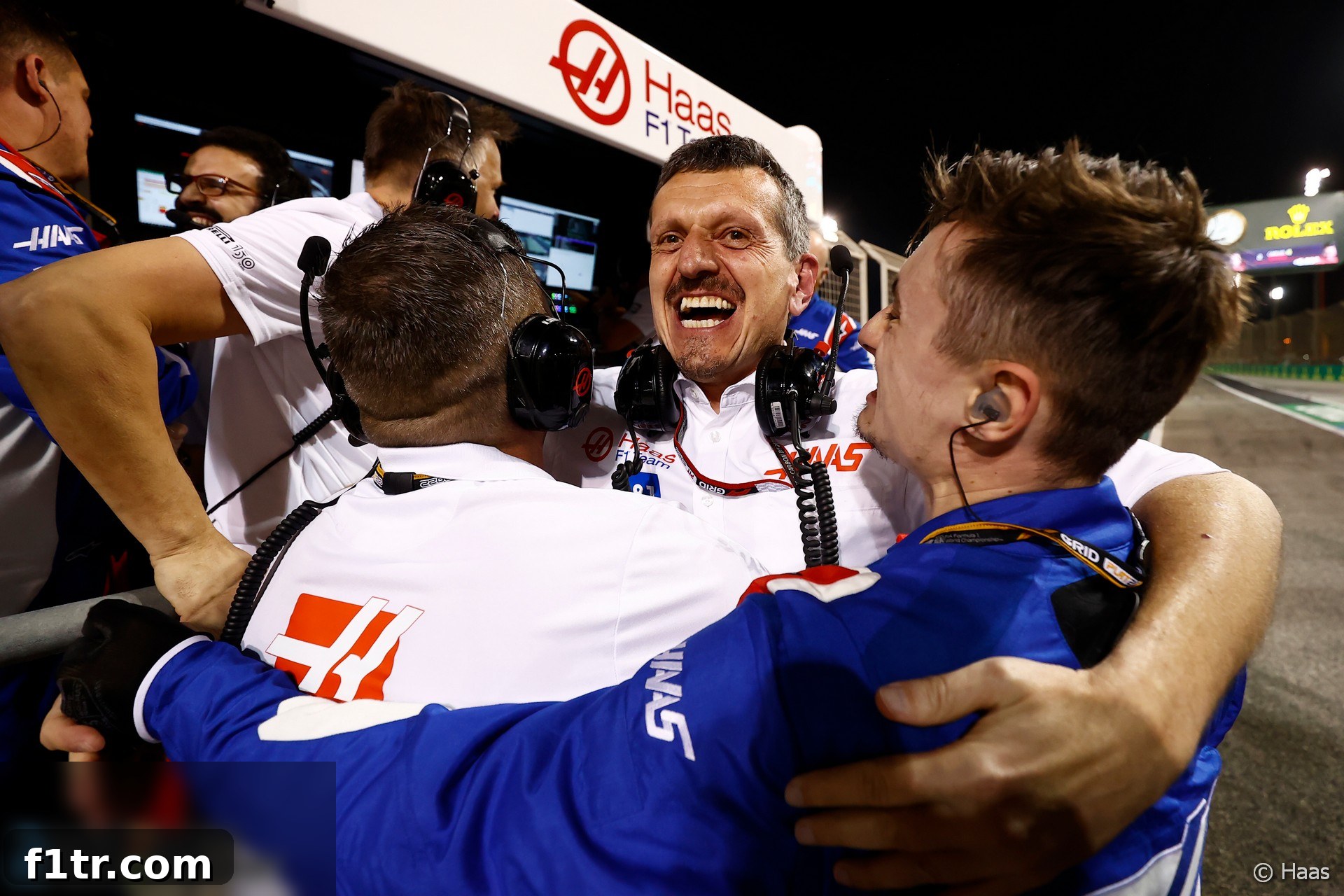
The 2024 Formula 1 season marks a pivotal moment for the Haas F1 Team, as it begins its campaign under new leadership, breaking an eight-year tenure where Guenther Steiner was the undeniable face and voice of the operation. Since its inception, Haas has navigated the high-octane world of Formula 1 with a distinctive spirit, marked by moments of breathtaking triumph, profound disappointment, and often, highly publicized internal and external conflicts. From challenging the established order with surprising results to enduring seasons mired in the depths of the constructor standings, and from high-stakes clashes with sponsors to witnessing a driver miraculously escape a fiery inferno, Haas’s journey has been anything but ordinary. Without Steiner’s charismatic and often unfiltered presence at the helm, the team is set to embark on a new chapter, feeling distinctly different to fans and competitors alike.
2016: A Dream Debut and Promising Start
The Haas F1 Team’s inaugural season in 2016 commenced with a bang that few could have predicted. Making their debut at the Australian Grand Prix, Romain Grosjean steered his VF-16 to an astounding sixth-place finish, securing crucial points in the team’s very first race. This sensational start immediately etched Haas into the F1 history books as the first new team since Toyota in 2002 to score points on debut. The paddock was abuzz with admiration for the American outfit’s unprecedented performance.
Team owner Gene Haas himself was present to witness and celebrate this remarkable achievement, a moment of immense pride for a team built on a unique model of collaboration with Ferrari and Dallara. The initial success was not a fluke; incredibly, Grosjean went on to surpass his Australian performance at the subsequent race in Bahrain, claiming an even more impressive fifth place. These back-to-back strong finishes showcased the car’s unexpected pace and Grosjean’s skill, solidifying Haas’s position as a serious contender, at least initially, for mid-field honors.
However, the challenge of sustaining such a high level of performance throughout an entire Formula 1 season proved to be a steep learning curve for the fledgling team. While the early results were spectacular, maintaining consistency over multiple races, especially with limited resources compared to established giants, was difficult. Grosjean managed to score their final point of the year at the United States Grand Prix in Austin, a fitting location for the American team. His teammate, Esteban Gutierrez, unfortunately, struggled to trouble the scorers throughout the season, failing to register a single point. Despite this, the team’s 29 points secured an commendable eighth place in the Constructors’ Championship, an extraordinary feat for a brand-new entrant and a clear signal of their potential.
2017: Solidifying Their Place in the Midfield
For the 2017 season, Haas sought to build on their promising debut, making a significant driver change. Kevin Magnussen joined the team, replacing Esteban Gutierrez, bringing with him a reputation for aggressive driving and a hunger for points. Magnussen quickly made an impact, scoring points in just his second start for Haas at the Chinese Grand Prix in Shanghai, demonstrating his ability to extract performance from the VF-17.
While Romain Grosjean couldn’t quite replicate the sensational fifth-place finish of 2016, he delivered a strong sixth-place result in Austria, a circuit where the team consistently demonstrated good form. This performance underscored the team’s capability to deliver strong individual results when conditions aligned. The season saw Haas consistently battling within the competitive midfield, often locked in close contests with teams like Renault, Toro Rosso, and McLaren.
Guenther Steiner, ever the pragmatic team principal, had reason to be pleased with the team’s continued progress in their second year. They once again finished eighth in the Constructors’ Championship, matching their debut season’s standing. This steady performance indicated that the initial success was not merely a flash in the pan but rather a testament to the team’s operational model and growing understanding of Formula 1. They amassed 47 points, a significant improvement from 2016, showcasing greater consistency across both cars, with Magnussen contributing vital points alongside Grosjean.
2018: Best of the Rest Ambitions and Setbacks
Haas’s third season, 2018, began with an ominous and ultimately frustrating start. At the season opener in Australia, both drivers, Magnussen and Grosjean, retired within moments of each other following pit stops. The culprit was found to be problems with their wheel nuts, an agonizingly simple yet catastrophic error that cost the team a likely double points finish and left them utterly deflated after showing impressive pace throughout the weekend. It was a stark reminder of the precision required in F1 and the fine margins between success and failure.
However, the team demonstrated remarkable resilience, swiftly erasing those painful memories at the very next race in Bahrain. Kevin Magnussen delivered a superb fifth-place finish, a powerful statement of intent and a testament to the car’s genuine performance. This strong result proved to be the catalyst for what would become Haas’s best season to date in Formula 1. The VF-18 was a genuinely competitive package, capable of challenging the established midfield and even occasionally the front-runners on its day, frequently demonstrating pace that suggested “best of the rest” potential.
The Spanish Grand Prix presented a bittersweet affair for the team. Magnussen continued his strong form by taking sixth place, adding valuable points to their tally. However, Grosjean’s race ended prematurely and controversially when he caused a first-lap pile-up, his car eventually returning to the pits on a flatbed truck. These incidents, while frustrating, highlighted the intense competitive nature within the team and the pressure on both drivers to perform.
Romain Grosjean soon redeemed himself, particularly in Austria, a circuit that had previously been kind to Haas. There, the team achieved its best-ever result, with Grosjean securing fourth place and Magnussen following closely in fifth. This stunning double points finish showcased the VF-18’s true potential and demonstrated the team’s ability to capitalize on opportunities, firmly establishing them as a formidable midfield force.
Throughout 2018, both Grosjean and Steiner had plenty more to smile about, as the team consistently challenged for points and moved into the top half of the championship table, far exceeding expectations for a privateer outfit. They were locked in a fierce battle with Renault for fourth in the constructors’ standings, a testament to their improved performance and ambition.
By the season finale, Haas continued to score points, demonstrating their improved consistency. They ended the year with an impressive 93 points, securing a remarkable fifth place in the Constructors’ Championship – their highest ever finish. This season solidified their reputation as a capable, lean, and effective team, proving that their unique operational model could indeed yield significant success in Formula 1.
2019: Sponsorship Woes and Internal Friction
The 2019 season began with a fresh look for the Haas F1 Team, thanks to a new title sponsorship deal with the energy drink brand Rich Energy. The black and gold livery evoked memories of classic F1 cars, and the team harbored high hopes for continuing their upward trajectory. However, what started as a promising partnership and a new chapter for the team soon turned sour, plagued by controversy, legal disputes, and ultimately, a premature termination that overshadowed their on-track performance.
Kevin Magnussen’s sixth-place finish at the season opener in Australia initially appeared to be a continuation of their 2018 form. Yet, this proved to be a false dawn. The VF-19 car suffered from baffling inconsistencies, particularly struggling with tire management over race distances. The team was frequently mystified by how the car treated its tires, leading to strong qualifying performances often being undone by significant drop-offs in pace during the Grand Prix. Points became incredibly hard to come by, and the season quickly spiraled into frustration for both drivers and the team.
The British Grand Prix at Silverstone marked a definite low point for the team, both on and off the track. While Guenther Steiner was busy fielding difficult questions from the media regarding critical comments made by their erratic title sponsor, Rich Energy, an internal crisis unfolded during the race. Teammates Romain Grosjean and Kevin Magnussen collided with each other, forcing both cars to pit and severely compromising their races. This incident prompted a furious dressing-down by Guenther Steiner, captured vividly by Netflix’s “Drive to Survive” series, which instantly became notorious and solidified Steiner’s reputation as one of F1’s most candid and entertaining personalities.
Indeed, Steiner’s blunt, often expletive-laden telephone exchanges with team owner Gene Haas, perfectly showcased in “Drive to Survive,” resonated with audiences globally. These candid glimpses behind the scenes, revealing the raw emotions and pressures of Formula 1, transformed Steiner into one of the paddock’s most popular and recognizable figures, endearing him to a new generation of F1 fans despite the team’s struggles on track.
The team’s troubled sponsorship deal with Rich Energy was eventually cancelled before the season concluded, leaving Haas without a title sponsor and further highlighting the financial and operational challenges faced by smaller teams in F1. The season ended with Haas finishing ninth in the Constructors’ Championship, a significant drop from their fifth-place finish in 2018, accumulating a mere 28 points.
2020: The Pandemic, Struggles, and a Miraculous Escape
The 2020 Formula 1 season presented unprecedented challenges for all teams due to the global Covid-19 pandemic, and Haas was hit particularly hard. With limited resources and a car that carried over many of the issues from its predecessor, the team faced an uphill battle from the outset. At the heavily delayed season opener in Austria, both Haas cars disappointingly retired with persistent brake problems, setting a grim tone for the year ahead.
Amidst a challenging season, Kevin Magnussen managed to score one of the team’s meager three points at the Hungarian Grand Prix. However, even this small victory was marred by controversy, as he lost one point due to a penalty incurred for an illegal radio message, underscoring the team’s difficult circumstances. The VF-20 was fundamentally uncompetitive, consistently placing Haas at the back of the grid and making any points finish a rare and hard-fought achievement.
As dire as the season had been on the track, the team and the entire Formula 1 community had reason to feel an overwhelming sense of fortune and relief during the Bahrain Grand Prix. Romain Grosjean endured a truly horrifying first-lap crash, his car violently piercing the barrier and erupting into a terrifying fireball. The scenes were amongst the most shocking witnessed in modern F1 history, leaving everyone fearing the worst. Miraculously, Grosjean, with incredible courage and aided by the swift actions of the marshals and medical team, managed to extricate himself from the burning wreckage, suffering burns to his hands but otherwise surviving the appalling incident.
His survival was a testament to the immense safety advancements in Formula 1, particularly the strength of his car’s chassis, the integrity of his helmet, and the halo device, which undoubtedly played a crucial role. The immediate response from the medical car crew, led by Dr. Ian Roberts, and local marshals was exemplary, proving critical in preventing a far worse fate. This moment transcended sport, becoming a stark reminder of the inherent dangers of racing and the constant pursuit of safety in Formula 1.
Pietro Fittipaldi stepped in to substitute for the injured Grosjean in the final two races of the season, marking his Formula 1 debut. However, the team remained well off the pace, unable to add to their points tally. Haas finished the year with just three points, placing ninth in the Constructors’ Championship, only narrowly avoiding last place. The season was a brutal learning experience, highlighting the immense challenges faced when performance is lacking and external factors compound the difficulties.
2021: A Strategic Sacrifice and Rookie Season
The 2021 season heralded a significant overhaul for the Haas F1 Team, both in terms of its driver lineup and its commercial partnerships. Another new title sponsor arrived in the form of Uralkali, a Russian potash producer, which coincided with the entry of new driver Nikita Mazepin, whose father owned the company. Haas made the bold decision to replace both their experienced drivers, Romain Grosjean and Kevin Magnussen, with an all-rookie lineup, also bringing in reigning Formula 2 champion Mick Schumacher, son of F1 legend Michael Schumacher. This move was a strategic one, aimed at securing vital funding from sponsors and nurturing young talent for the future.
Both Schumacher and Mazepin understood the immense challenge ahead: the team had deliberately committed minimal development resources to the 2021 car, the VF-21, in order to channel all their efforts into designing a competitive car for the radical new technical regulations arriving in 2022. Consequently, the 2021 season was openly acknowledged as a learning year for both rookies, with expectations for points extremely low. The season got off to a difficult start for Mazepin, who crashed out just three corners into the very first race in Bahrain, an unceremonious debut that unfortunately set a tone for a year of struggles.
Mick Schumacher, despite demonstrating flashes of potential and outperforming his teammate, also struggled significantly with the uncompetitive VF-21. The car’s inherent lack of pace meant that both drivers were often detached from the rest of the field, making it difficult to gain meaningful race experience in competitive scenarios. For the first time in its history, Haas ended a Formula 1 season without scoring a single point, dropping to last place in the Constructors’ Championship. It was a painful but calculated sacrifice. The team placed all its hopes on the new regulations for 2022, gambling that their early focus and development effort on the next-generation car would pay off and propel them back into contention.
2022: A Resurgent Comeback and Unforeseen Changes
The 2022 season was meant to be Haas’s redemption, building on their strategic sacrifice of 2021. They intended to continue with the same driver lineup of Mick Schumacher and Nikita Mazepin, alongside their Uralkali title sponsorship, and began pre-season testing with the VF-22 sporting the familiar white, blue, and red livery.
However, geopolitical events drastically altered these plans. Russia’s invasion of Ukraine prompted Haas to take immediate and decisive action, severing all ties with Uralkali and, consequently, Nikita Mazepin. This sudden void left the team needing a new driver and financial backing just weeks before the season began. Fortunately for Haas, a familiar face was available: Kevin Magnussen, who had previously raced for the team, made a sensational return. His comeback proved to be a masterstroke, as he immediately repaid the team’s faith with a superb fifth-place finish at the Bahrain season-opener, securing vital points and signaling a remarkable turnaround in form for the team.
While Magnussen thrived, Mick Schumacher’s first points took longer to materialize. He endured a challenging start to the season, marked by heavy crashes in Jeddah and Monaco that put significant strain on the team’s resources and budget. He also retired from a strong points-scoring position in Canada due to technical problems, adding to his frustrations. Despite showing flashes of speed, consistency and avoiding incidents proved difficult for the young German.
A visibly relieved Schumacher finally bagged his long-awaited first Formula 1 points at the British Grand Prix, followed by another points finish in Austria. These performances demonstrated his potential and the VF-22’s capabilities, but unfortunately, they were not enough to secure his place in the team for the following season, as Haas sought more experienced hands for 2023.
By this point in 2022, Guenther Steiner’s popularity had soared even further, arguably making him a bigger star in his own right than his drivers. His colorful personality and memorable quotes from “Drive to Survive” had cemented his cult status, making him a central figure in the team’s public identity.
The season culminated in a historic moment at Interlagos, Brazil, where Kevin Magnussen, in challenging wet conditions, masterfully claimed the team’s first-ever pole position, albeit for a sprint race. It was a monumental achievement for the small American team, sparking jubilant celebrations. Although Magnussen was unfortunately taken out on the first lap of the Grand Prix, Haas went on to secure a respectable eighth place in the Constructors’ Championship, a significant improvement from their winless 2021 campaign and a validation of their gamble on the new regulations.
2023: Tire Troubles and Another Setback
For the 2023 season, Haas continued its evolution, replacing Mick Schumacher with the experienced German driver Nico Hulkenberg, who returned to a full-time F1 seat after several years as a reserve driver. Hulkenberg quickly made his presence felt, delivering a strong seventh-place finish in just his third start for the team at the Australian Grand Prix, showcasing his renowned ability to extract single-lap pace and score points when opportunities arose. This early success suggested that Haas might be able to maintain its improved form from 2022.
However, the initial promise soon gave way to a familiar struggle. The VF-23 car proved to be notoriously tough on its rear tires, suffering from severe degradation issues during race stints. This inherent flaw meant that while the drivers, particularly Hulkenberg, often qualified impressively high up the grid, they would inevitably slip down the order during the Grand Prix as the tires faded, making it incredibly difficult to convert strong starting positions into meaningful points. This recurring problem became the Achilles’ heel of the 2023 campaign, frustrating both drivers and the engineering team.
In a desperate bid to address the car’s fundamental issues, the team introduced a major upgrade package for their home event, the United States Grand Prix in Austin. The updated car also featured a patriotic paint job, hoping to symbolize a turning point. Unfortunately, the upgrades failed to deliver the anticipated improvements, and the tire degradation problems persisted. Hulkenberg, in a stark illustration of the package’s ineffectiveness, soon reverted to the older specification of the car, indicating the team’s struggles to find a solution. Despite their best efforts, Haas was unable to prevent AlphaTauri from out-scoring them in the latter half of the season, leading to a disheartening slide down the standings. They ultimately finished last in the Constructors’ Championship for the second time in three years, accumulating a mere 12 points, a stark contrast to their 2018 peak.
The Abu Dhabi Grand Prix thus marked the end of an era, serving as Guenther Steiner’s last race in charge at Haas. His departure signaled a significant shift for the team, closing a chapter defined by his unique leadership style, memorable soundbites, and an unwavering commitment to making a lean, American F1 team a reality, often against considerable odds. Haas now looks to the future, seeking to write a new chapter of competitiveness and stability in the challenging world of Formula 1.
Formula 1
- Sprint races may delay fixes to 2026 F1 rules – Permane
- GT driver killed in multi-car crash at Nurburgring Qualifiers
- Should F1 change tracks or racing guidelines to tackle dangers in 2026 rules?
- Controversies, Norris, Newey and more: Five new motorsport books reviewed
- One of F1’s greatest races happened 15 years ago today. Or did it?
Browse all Formula 1 articles