Haas F1 Navigates Crucial Driver Decision and Financial Headwinds for the 2022 Season
As the countdown to the 2022 Formula 1 season intensifies, the Haas F1 team finds itself at a pivotal juncture, grappling with an unexpected driver vacancy. Team owner Gene Haas has confirmed that “several candidates” are being actively considered to fill the crucial spot, emphasizing the urgency and strategic importance of this decision for the upcoming campaign.
The Unexpected Departure of Nikita Mazepin and its Geopolitical Ramifications
The sudden vacancy arose following the departure of Nikita Mazepin, whose contract with Haas F1 was terminated over the weekend. This development was a direct consequence of the escalating geopolitical tensions surrounding Russia’s invasion of Ukraine, leading to significant complications and sanctions impacting Russian entities and individuals. Mazepin, who was initially slated to continue partnering Mick Schumacher for his second season in Formula 1, had even participated in the opening pre-season test in Spain, which tragically coincided with the outbreak of the conflict. The termination of his contract was a difficult but necessary step for the team, given the widespread condemnation and the severe financial and logistical pressures stemming from the sanctions imposed by the United States, United Kingdom, and the European Union.
Mazepin’s departure not only created an immediate need for a new driver but also led to the termination of the team’s title sponsorship deal with Uralkali, a Russian potash producer. This double blow undoubtedly presents a significant challenge for Haas, forcing them to re-evaluate their operational strategies and quickly adapt to a dramatically altered landscape just weeks before the season opener. The team’s principal, Guenther Steiner, had previously indicated that Haas’s long-standing test and reserve driver, Pietro Fittipaldi, would have “first call” on the seat should Mazepin be unable to race. However, Gene Haas’s recent statements suggest a broader and more considered approach to finding a long-term solution, looking beyond an immediate fill-in to secure a driver who can contribute significantly throughout the demanding 2022 season.
The Urgent Search for an Experienced Driver: A Strategic Priority
Gene Haas underscored the team’s commitment to finding the right fit, telling the Associated Press, “We’re in the process of looking at several candidates, we’ll see who is available and what we have to deal with, but we’ll have somebody by Wednesday.” This tight deadline highlights the immense pressure on the team to make a swift yet informed decision. With the second pre-season test in Bahrain scheduled to begin shortly, securing a driver who can quickly adapt to the new regulations and the VF-22 car is paramount for Haas’s preparations.
After fielding two rookie drivers, Mick Schumacher and Nikita Mazepin, during the 2021 season – a year characterized by learning and limited competitive performance – Gene Haas explicitly stated the team’s desire for a more experienced hand. “I think we’d obviously like to get someone with a bit more actual experience,” he remarked, adding, “We just have to see what’s available.” This strategic shift reflects an understanding that in a season defined by sweeping new technical regulations, an experienced driver can be an invaluable asset. Such a driver brings not only proven race craft but also critical feedback for car development, helping the team navigate the complexities of the new aerodynamic package and tire compounds. An experienced driver can accelerate the learning curve for the entire engineering team, potentially translating into improved performance and a more competitive position on the grid, which Haas desperately seeks after finishing last in the constructors’ standings in 2021.
Pietro Fittipaldi: The Immediate Solution and Long-term Question Mark
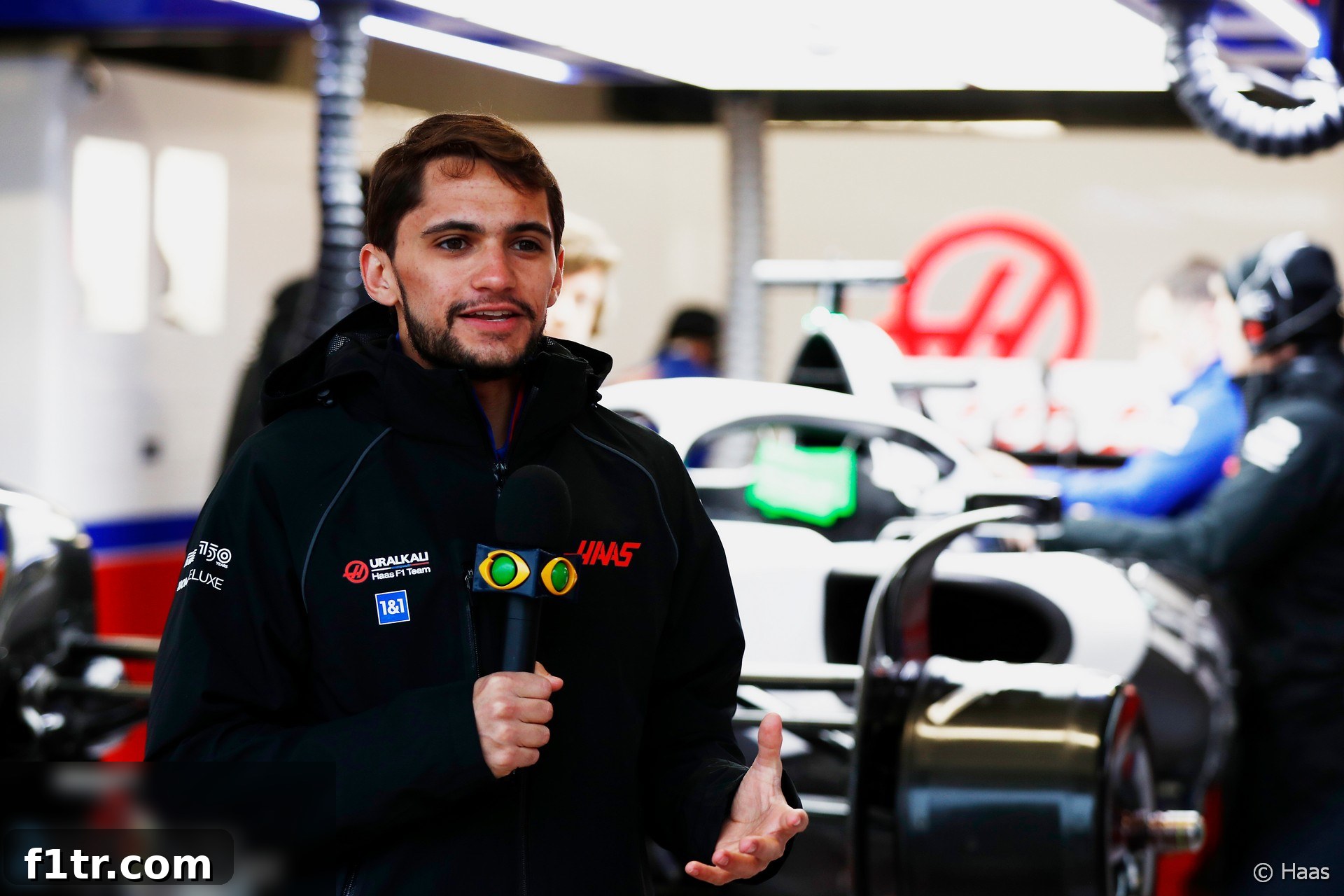
Pietro Fittipaldi, Haas’s seasoned test and reserve driver, naturally emerges as the most immediate and logical candidate for the interim role. His familiarity with the team’s operations, personnel, and even previous F1 machinery makes him an ideal choice to step in for the crucial Bahrain pre-season test. Gene Haas confirmed Fittipaldi’s participation, stating, “Pietro will definitely be in it, that’s what he’s for, he’s the test driver.” Fittipaldi has prior Formula 1 race experience, having made his debut for Haas at the end of the 2020 season as a substitute for Romain Grosjean following his fiery accident at the Bahrain Grand Prix. He competed in the final two races of that season, demonstrating his capability to handle the pressures of F1 racing.
However, while Fittipaldi offers a known quantity and a seamless transition for testing purposes, the question remains whether he will be the team’s long-term choice for the entire 2022 season. His limited F1 race starts and lack of recent competitive mileage in top-tier motorsport might be seen as a drawback compared to other potentially available drivers with more current experience. Haas’s explicit desire for “more actual experience” suggests they might be looking for someone who can consistently challenge for points, contribute significantly to car development, and provide a strong benchmark for Mick Schumacher over a full season. While Fittipaldi’s dedication and understanding of the team are undeniable, the complex demands of the new F1 era might push Haas to explore options that bring a broader spectrum of recent top-level racing insights.
Exploring External Talent: Antonio Giovinazzi and Other Prospects
Beyond Pietro Fittipaldi, the F1 paddock offers a limited but intriguing pool of talent for Haas to consider. A prominent name in contention is Antonio Giovinazzi, the Ferrari reserve driver. Giovinazzi brings three full seasons of Formula 1 experience, having competed for Alfa Romeo Racing until the end of 2021. His strong ties to Ferrari, Haas’s engine supplier, make him a particularly attractive candidate. Giovinazzi’s knowledge of current F1 machinery, working relationships with a major engine manufacturer, and his recent race experience could provide the invaluable “actual experience” that Gene Haas is seeking. His performance at Alfa Romeo, though often in midfield, showcased flashes of speed and consistency, making him a credible option to pair with Mick Schumacher.
Other potential candidates are likely to be evaluated on a case-by-case basis, considering factors such as availability, contractual obligations, recent racing form, and potentially, any commercial backing they might bring. However, the window of opportunity is incredibly narrow. It is considered unlikely that Haas would recall former drivers like Romain Grosjean or Kevin Magnussen. Both drivers left the team at the end of 2020 and have since embarked on successful careers in American motorsport, with commitments in series such as IndyCar and IMSA. Their return to F1 would require significant contractual negotiations and a rapid readjustment to single-seater racing, making them less probable options given the team’s immediate needs and desire for fresh, relevant F1 experience.
Haas F1’s Financial Resilience and Gene Haas’s Outlook
The loss of a title sponsor, especially one as significant as Uralkali, would be a major blow to any Formula 1 team. However, despite the heavy sanctions placed on Russian businesses by global powers, Gene Haas insists that the team remains financially stable and is prepared to navigate this challenge. “We’re good. We’re fine,” Haas affirmed. “We’d like more money, of course, but we’re fine. This just gives us a bigger negative number.” This pragmatic outlook from the team owner highlights the deep pockets and long-term commitment that Gene Haas himself has demonstrated towards his F1 venture.
Operating without a primary title sponsor can significantly impact a team’s budget, potentially limiting development funds for the car throughout the season. However, Haas F1, while often operating on one of the smaller budgets in the paddock, has historically relied heavily on its close technical partnership with Ferrari, which provides numerous non-listed parts. This allows them to allocate resources more efficiently. Gene Haas’s personal financial backing and the revenue generated from Formula 1’s prize money and commercial rights will likely form the bedrock of their financial operations for the 2022 season. While the loss of Uralkali is undeniably a setback, Haas’s resilience and determination suggest they will continue to compete, albeit potentially under increased financial scrutiny. The team’s ability to attract new sponsorship in the current climate will be a key factor in their long-term stability.
Crucial Pre-Season Testing in Bahrain and the Road Ahead for Haas
The second three-day pre-season test, set to commence on Thursday at the Bahrain International Circuit, is now more critical than ever for the Haas F1 team. This test will not only be the first opportunity for the new driver – whether Fittipaldi or another candidate – to get acquainted with the VF-22 but also the final major shakedown for the car before the season officially begins. With radical new technical regulations taking effect in 2022, every minute of track time is invaluable for understanding the car’s behavior, collecting data, and optimizing setups. The engineers and designers will be keen to gauge the real-world performance of their new challenger and identify any areas requiring immediate attention before the racing starts.
The pressure is immense, as the season-opening Bahrain Grand Prix will take place the following weekend at the same circuit. This means the team has barely a week between the conclusion of testing and the start of competitive racing to implement any last-minute adjustments. A smooth and productive test session will be vital for Haas to hit the ground running, especially with a new driver adapting to unfamiliar machinery under intense time constraints. The performance observed during this test will offer the first true indication of Haas’s competitive standing for the 2022 season and the efficacy of their pre-season development work.
The Strategic Importance of Driver Choice for Haas’s Future Success
The decision regarding the second driver extends far beyond merely filling a seat. For Haas F1, it is a strategic choice that could significantly influence their trajectory in the new era of Formula 1. After a challenging 2021 season where they consciously focused resources on the 2022 car, the team aims for a significant uplift in performance. An experienced driver can provide invaluable technical feedback, helping to guide the development direction of the VF-22 throughout the season. This is particularly crucial with the new regulations, as teams will be continuously discovering and exploiting performance gains.
Furthermore, an experienced driver offers a strong benchmark for Mick Schumacher. Having a seasoned teammate who can push him and provide insights from years of racing can accelerate Schumacher’s development and maximize his potential. The right driver pairing can foster a positive competitive environment, driving both individuals and the team forward. Gene Haas’s emphasis on “actual experience” is a clear signal that the team is looking for immediate impact, consistency, and the ability to contribute to points scoring opportunities. Success in 2022 could attract new commercial partners and strengthen Haas’s position within the sport, moving them away from the back of the grid and towards a more consistent midfield presence, which is the ultimate goal for this determined American team.
Related Articles: 2022 F1 Season Insights
- Mercedes told me “you’re wrong” about 2022 car’s problems – Hamilton
- FIA confirms all 10 F1 teams complied with 2022 cost cap
- Steiner “not ashamed” of panning “slow” Schumacher in Drive to Survive
- Albon believes year out of F1 improved him as a driver
- Hamilton sees diversity gains in F1 years on from his ‘traumatising’ experience of racism
Browse all 2022 F1 season articles