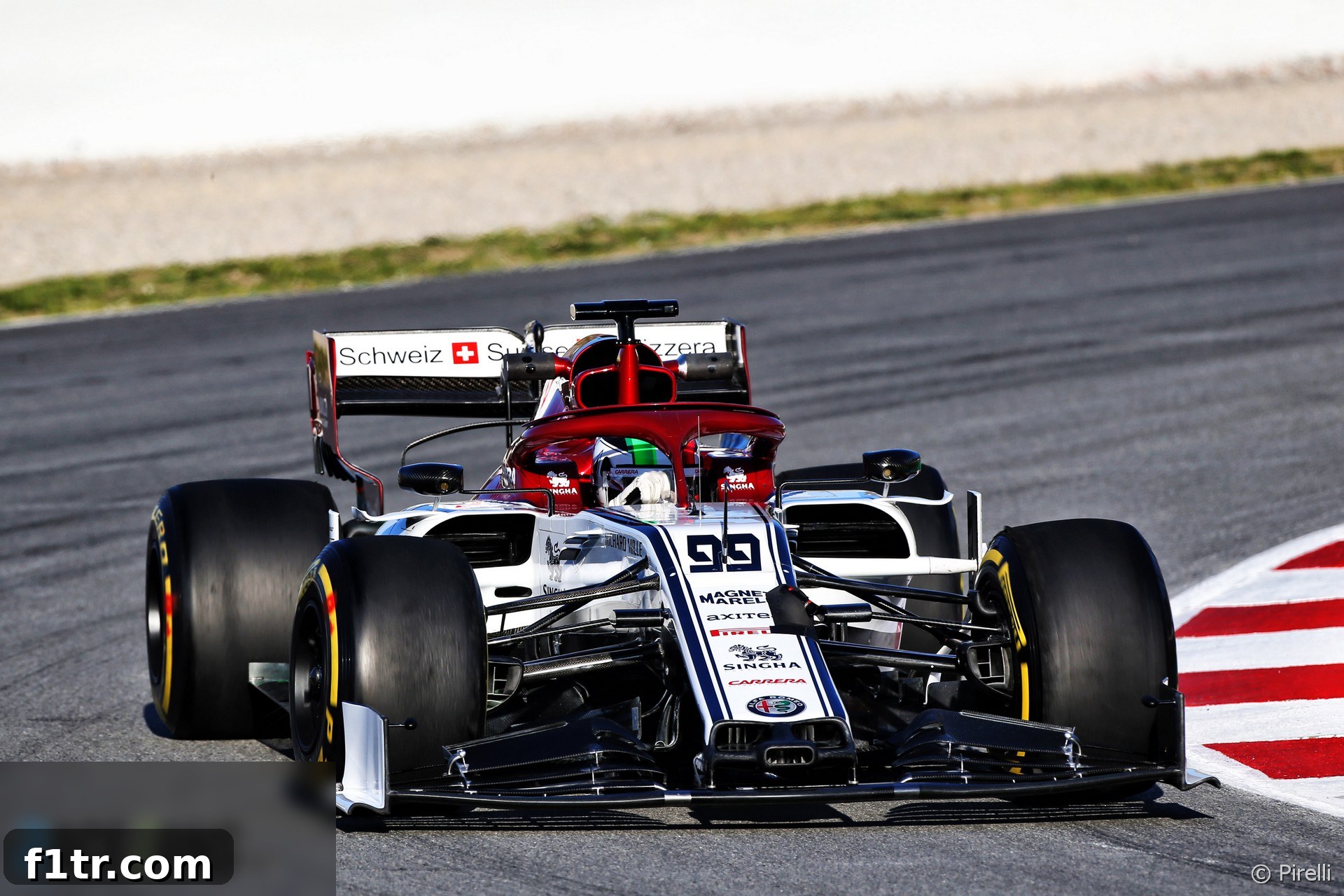
Alfa Romeo’s Antonio Giovinazzi Dominates Morning Session of 2019 F1 Pre-Season Test Day 5 in Barcelona
As the highly anticipated 2019 Formula 1 season draws nearer, teams gathered in Barcelona for a crucial week of pre-season testing. The morning session of Day 5 proved to be an eventful one, offering intriguing glimpses into the potential pecking order and reliability of the new cars. Unexpectedly, it was Antonio Giovinazzi who propelled Alfa Romeo Racing to the top of the timesheets, marking a significant statement from the revitalized team. This session, held under clear skies at the Circuit de Catalunya, was vital for teams to fine-tune their machines, validate aerodynamic theories, and conduct extensive reliability runs ahead of the opening Grand Prix.
Giovinazzi and Alfa Romeo Deliver a Surprise Statement of Intent
Antonio Giovinazzi, in the Alfa Romeo C38, delivered an impressive performance, clocking a best lap time of 1’18.589. This blistering pace put Alfa Romeo firmly ahead of some of the sport’s heavyweights, demonstrating the team’s promising form. While this time was eight-tenths of a second shy of the team’s absolute best from the previous week of testing, it was achieved on C4 tyres and signifies a strong foundation for the Italian driver and his team. For Alfa Romeo, a team with rich history and renewed ambitions, topping a pre-season session is an invaluable morale booster and an indicator that their development over the winter has been effective. Giovinazzi’s 56 laps also showcased solid reliability, a critical factor for any team aiming for consistent points finishes in the demanding 2019 F1 season.
This early performance suggests that Alfa Romeo could be a significant player in the midfield battle. Their ability to extract strong single-lap pace, combined with what appears to be a robust package, puts them in a competitive position. While pre-season testing times should always be taken with a grain of salt, Giovinazzi’s achievement certainly captured attention and generated buzz, forcing rivals to take note of the newly rebranded Swiss outfit.
Red Bull and Ferrari Show Glimpses of Potential (and Early Challenges)
Following closely behind Giovinazzi was Red Bull Racing’s Pierre Gasly. The Frenchman posted Red Bull’s best time of pre-season testing so far with a 1’18.647, just 0.058 seconds off the top spot. This performance, achieved over 61 laps on C3 tyres, highlights Red Bull’s consistent progress and their adaptation to the new Honda power unit. Gasly’s pace signals a positive trajectory for the team as they continue to integrate the Japanese engine, offering a strong indication of their potential to challenge at the front of the grid.
Ferrari’s Charles Leclerc secured the third-fastest time, a 1’18.651, a mere 0.004 seconds slower than Gasly. However, Leclerc’s morning session was not without its troubles. The team experienced their first significant hiccup of testing, as a cooling problem limited the young Monegasque driver to just 29 laps. While the issue was quickly addressed, the reduced track time would have been a slight frustration for Ferrari, who have otherwise enjoyed a remarkably smooth testing period. Sebastian Vettel was scheduled to take over the SF90 for the afternoon session, with the team eager to regain lost ground and continue their performance and reliability assessments.
Intensifying Midfield Battle: Key Improvements and Consistent Runners
The midfield battle looks set to be incredibly tight in 2019, and the morning session provided further evidence of this. Lance Stroll, driving for Racing Point, put in a commendable performance, setting a new best time for his team with a 1’19.139. This improvement, recorded over 44 laps on prototype tyres, suggests that Racing Point is finding its stride and could be a strong contender for points. Their ability to extract pace on less familiar tyre compounds also points to a robust understanding of their new RP19 chassis.
Haas F1 Team continued their solid, if unspectacular, testing program. Kevin Magnussen ended the session fifth-fastest with a 1’19.644, but more notably, completed a staggering 84 laps – the highest of any driver in the morning. This phenomenal lap count underscores Haas’s commitment to reliability and gathering extensive data, a strategy that often pays dividends once the season begins. Their VF-19 appears to be a consistent and durable package, capable of long stints and offering valuable feedback to the engineers.
Further down the timesheets, but with significant improvements, was George Russell for Williams Racing. The rookie driver managed to improve Williams’ previous best time by over 1.3 seconds, posting a 1’19.662. This was a much-needed morale boost for the struggling British team, who have faced considerable challenges during pre-season testing. While they still have a mountain to climb, Russell’s performance, just two-hundredths ahead of Alexander Albon’s Toro Rosso, offered a glimmer of hope. Albon himself completed 39 laps with a respectable 1’19.689, showing the Toro Rosso STR14’s potential.
Mercedes Unveils Upgrades; McLaren Faces Early Setback
Mercedes-AMG Petronas Motorsport brought a heavily revised W10 to the track, featuring significant aerodynamic updates including a new nose, front wing, and engine cover. Reigning world champion Lewis Hamilton completed 83 laps, a testament to the reliability of the updated package, though his best time of 1’20.332 was not indicative of ultimate pace. Mercedes typically focuses on long runs and data collection during testing, often running higher fuel loads and conservative engine modes, making their true speed difficult to ascertain. Their relentless pursuit of development, even during testing, highlights their ambition to maintain their dominance.
On the other hand, McLaren’s morning session was cut short by an unforeseen issue. Lando Norris caused the only red flag of the morning when his McLaren MCL34 came to a stop on track with an unspecified fault. While testing is precisely for identifying and resolving such problems, any lost track time is a concern, especially for a team looking to bounce back from challenging seasons. Norris completed 38 laps before the incident, and the team will be working tirelessly to understand the cause and ensure it doesn’t hinder their progress further.
Detailed Morning Session Analysis: Unpacking the Timesheet
Pre-season testing times are notorious for being misleading, as teams operate on varying fuel loads, engine modes, and test programs. However, patterns in lap counts, tire compounds used, and consistent pace can offer valuable insights. Giovinazzi’s C4 time indicates a performance run, while Gasly and Leclerc on C3s were also pushing for faster laps. The variety of tire compounds seen – from C2 (hardest) to C5 (softest) – across the grid suggests different testing objectives. Mercedes on C2s, for instance, were clearly focused on longer runs and understanding tyre degradation rather than outright speed. The “Prototype” tyre used by Racing Point indicates experimental work or a compound not yet officially classified, further illustrating the diverse approaches teams take.
Lap counts are often a better indicator of a team’s progress than raw speed. Magnussen’s 84 laps and Hamilton’s 83 laps demonstrate excellent reliability, allowing their teams to gather vast amounts of data. In contrast, Leclerc’s limited 29 laps due to a cooling issue, and Norris’s 38 laps cut short by a fault, highlight the challenges faced by some. Every lap counts in testing, as it provides crucial data for engineers to refine setups, understand car behavior, and validate simulations before the competitive season begins.
2019 Pre-Season Test Day Five Morning Times
| Pos. | Car number | Driver | Team | Model | Best time | Gap | Laps | Tyres |
|---|---|---|---|---|---|---|---|---|
| 1 | 99 | Antonio Giovinazzi | Alfa Romeo | C38 | 1’18.589 | 56 | C4 | |
| 2 | 10 | Pierre Gasly | Red Bull | RB15 | 1’18.647 | 0.058 | 61 | C3 |
| 3 | 16 | Charles Leclerc | Ferrari | SF90 | 1’18.651 | 0.062 | 29 | C3 |
| 4 | 18 | Lance Stroll | Racing Point | RP19 | 1’19.139 | 0.550 | 44 | Prototype |
| 5 | 20 | Kevin Magnussen | Haas | VF-19 | 1’19.644 | 1.055 | 84 | C2 |
| 6 | 63 | George Russell | Williams | FW42 | 1’19.662 | 1.073 | 46 | C5 |
| 7 | 23 | Alexander Albon | Toro Rosso | STR14 | 1’19.689 | 1.100 | 39 | C3 |
| 8 | 44 | Lewis Hamilton | Mercedes | W10 | 1’20.332 | 1.743 | 83 | C2 |
| 9 | 27 | Nico Hulkenberg | Renault | RS19 | 1’20.348 | 1.759 | 80 | C3 |
| 10 | 4 | Lando Norris | McLaren | MCL34 | 1’22.306 | 3.717 | 38 | C3 |
The Strategic Importance of F1 Pre-Season Testing
Pre-season testing is far more than just setting fast lap times; it is a critical phase for Formula 1 teams to prepare for the rigorous demands of the championship. The primary objectives include validating data from factory simulations, understanding the car’s real-world aerodynamic characteristics, and ensuring the reliability of every component. Teams conduct various test programs, from short performance runs to full race simulations, collecting thousands of data points on tire wear, fuel consumption, engine performance, and component stress. It’s also an opportunity for drivers to get accustomed to their new machinery and work closely with their engineers to fine-tune car setups. The ability to complete high lap counts without issues is often a more accurate predictor of season success than raw pace, as reliability directly translates to championship points.
Looking Ahead: What to Expect from the Afternoon Session and Beyond
As the morning session concluded, attention quickly shifted to the afternoon’s activities. With Sebastian Vettel stepping into the Ferrari SF90 and other drivers continuing their programs, there was anticipation for even faster times and further insights into the teams’ preparations. The afternoon would likely see more race simulations, giving teams a clearer picture of their car’s long-run pace and tyre degradation characteristics. The 2019 F1 season promises to be an exciting one, with new regulations, driver changes, and a fiercely competitive grid. The performances witnessed on Day 5, particularly the surprising pace of Alfa Romeo and the steady progress of Red Bull, have only heightened the excitement for the opening race in Australia.
Key Takeaways from Barcelona Day 5 Morning
The morning session of Day 5 of the 2019 F1 pre-season testing provided several crucial insights:
- Alfa Romeo’s Strong Showing: Antonio Giovinazzi’s top time on C4 tyres suggests Alfa Romeo could be a genuine midfield threat this season.
- Red Bull’s Progress: Pierre Gasly set Red Bull’s fastest test time, indicating positive strides with the Honda power unit.
- Ferrari’s Minor Glitch: A cooling issue for Charles Leclerc marked Ferrari’s first significant hiccup, though their overall testing form remains strong.
- Reliability is Key: Kevin Magnussen (Haas) and Lewis Hamilton (Mercedes) completed the most laps, focusing on data acquisition.
- Mercedes’ Development: Mercedes introduced significant upgrades, continuing their rigorous development program.
- McLaren’s Setback: A reliability issue caused a red flag for Lando Norris, highlighting areas for improvement.
- Williams’ Glimmer of Hope: George Russell’s improved lap time offered some encouragement for Williams.
Related Formula 1 Insights from the 2019 F1 Season
For more detailed analyses and updates on the 2019 F1 season, explore these articles:
- Crying in the Melbourne car park at 2019 grand prix was my career low – Ocon
- McLaren Racing reports reduced £71 million loss in 2019
- Kvyat: Hockenheim podium last year “my biggest achievement” so far
- How the FIA’s new encrypted fuel flow meter targets Ferrari’s suspected ‘aliasing’ trick
- “He smashed my office door”: 23 must-see moments from ‘Drive to Survive’ season two
Browse all 2019 F1 season articles