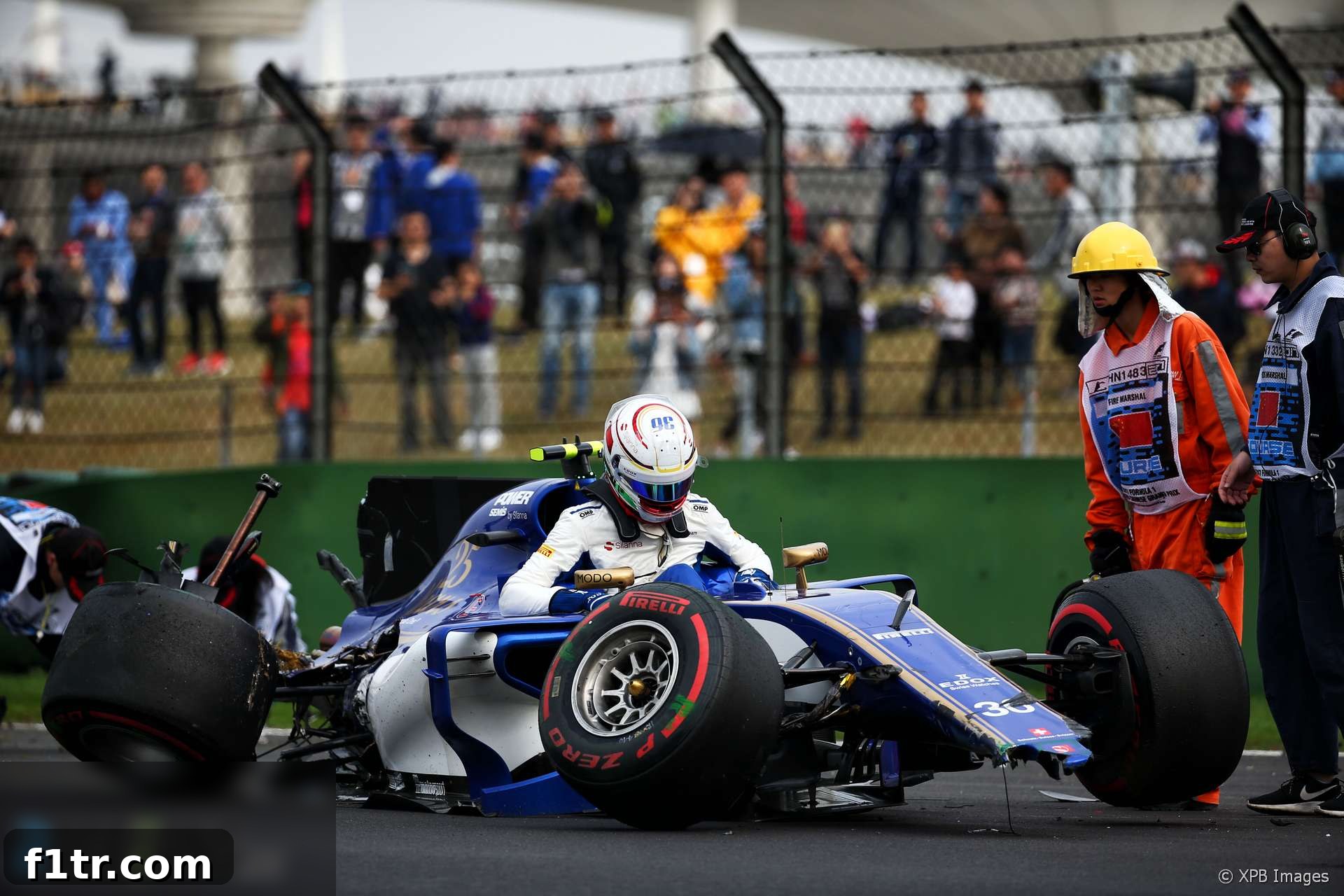
As the Formula 1 circus rolls into the bustling metropolis of Shanghai, anticipation builds not just for the spectacle of racing, but for the narrative unfolding around one particular driver. For Antonio Giovinazzi, the Chinese Grand Prix represents more than just another race weekend; it’s an opportunity for redemption, a chance to rewrite a difficult chapter from his past, and crucially, to score his inaugural Formula 1 points. The young Italian is determined to banish the ghosts of his dismal 2017 visit to the Shanghai International Circuit and establish himself as a consistent contender in the top tier of motorsport.
Antonio Giovinazzi: From Rookie Trials to Full-Time Aspirations
Giovinazzi’s journey to Formula 1 has been anything but conventional. His initial foray into the sport came under challenging circumstances in 2017, when he was called upon to substitute for the injured Pascal Wehrlein at Sauber. That year, his Chinese Grand Prix experience was particularly brutal, marred by two significant incidents. He crashed during qualifying, losing control at the final corner, and then again in the race due to aquaplaning on a treacherous straight. These events, born from a combination of inexperience, immense pressure, and unforgiving conditions, cast a shadow over his nascent F1 career. However, two years on, Giovinazzi returns to Shanghai not as a last-minute stand-in, but as a full-time driver for Alfa Romeo Racing (formerly Sauber), armed with newfound confidence and a resolute focus.
The Tumultuous Debut: A Baptism of Fire in China 2017
The 2017 Chinese Grand Prix was only Giovinazzi’s second Formula 1 outing. His debut had come just weeks prior in Melbourne, where he was unexpectedly drafted in after Wehrlein pulled out due to fitness concerns. While he managed to finish 12th in Australia, the lack of preparation was evident. The situation in Shanghai was equally challenging, if not more so. Poor visibility during Friday practice meant he missed crucial track time, severely hindering his ability to familiarize himself with the circuit and the car’s setup. Rookies, particularly those stepping in at short notice, rely heavily on every available minute of practice, and Giovinazzi was denied this luxury.
Recalling that fateful weekend, Giovinazzi candidly addressed the past. “I was sure this question would come up,” he admitted when asked about his previous visit to Shanghai. He detailed the incidents with a reflective tone: “Qualifying was the last corner, but then in the race was on the straight aquaplaning so nothing I could do.” These weren’t mere racing incidents; they were pivotal moments that could define a young driver’s perception within the cutthroat world of F1. The qualifying crash, especially, showcased the razor-thin margins in Formula 1, where a single mistake can have significant consequences for a driver striving to prove their worth. The aquaplaning incident, while less indicative of driver error, underscored the unpredictable nature of racing in challenging conditions and the sheer difficulty of mastering an F1 car.
Despite the adversity, Giovinazzi wisely viewed the experience as a vital learning curve. “I think it’s past now,” he reflected. “Of course it was not the best weekend [for] me. But was just experience for my side. It happened, I think not forget [it] because in the end was still there, that weekend, but was something that made me better I would say.” This perspective highlights a mental fortitude crucial for any elite athlete, transforming setbacks into stepping stones for future growth.
Two Years in the Wilderness: Forging a “Different Driver”
Following his brief F1 stint in 2017, Giovinazzi handed the Sauber seat back to Wehrlein and spent the next two seasons away from full-time Grand Prix racing. This period, often referred to as “the wilderness” for drivers aspiring to an F1 seat, was far from idle for the Italian. He dedicated himself to extensive work as a simulator and test driver for Ferrari, accumulating invaluable experience that honed his skills and deepened his understanding of modern F1 machinery. This rigorous development behind the scenes proved instrumental in shaping the “different driver” he proudly claims to be today.
The role of a simulator driver in contemporary Formula 1 cannot be overstated. It involves countless hours refining car setups, developing new components, and running through race scenarios, often providing crucial feedback that influences the on-track performance of the main team drivers. This detailed, analytical work, combined with numerous test sessions with Ferrari, allowed Giovinazzi to develop a profound technical understanding and a heightened sense of car control, without the immediate pressure of a race weekend. It also instilled in him a greater sense of confidence and maturity, attributes that are now evident in his approach to his full-time return.
The Full-Time Comeback with Alfa Romeo Racing
Giovinazzi’s perseverance paid off, leading to his highly anticipated full-time return with Alfa Romeo Racing at the beginning of the 2019 season. This marked a significant milestone, giving him the stability and consistent opportunity that his 2017 debut lacked. He was finally in “his car” with a team he knew well, having undertaken extensive winter testing alongside his seasoned teammate, Kimi Räikkönen. This foundation dramatically altered his situation compared to his previous ad-hoc appearances.
The initial two races of the 2019 season in Melbourne and Bahrain provided a glimpse of Giovinazzi’s potential. While he didn’t score points, he demonstrated promising pace and consistency, often running very close to the top ten. These outings were vital for reintegrating him into the competitive environment of F1, allowing him to shake off any remaining rust and fine-tune his race craft. The experience gained in these initial rounds has undoubtedly fuelled his determination for China.
A Renewed Confidence and Clear Objectives for the 1000th Grand Prix
Entering the Chinese Grand Prix, Giovinazzi’s mindset is distinctly different. “Now for sure I’m in a different situation,” he affirmed. “I did already two grands prix [as an] official driver. I did my winter test. So it’s a different situation.” This shift in circumstance translates directly into his self-belief and performance expectations. He elaborates on his increased comfort and understanding: “I didn’t know the team quite well. It was not my car. Now I’m just more confident.” The years spent meticulously driving simulators and performing tests with Ferrari have undeniably contributed to this transformation, allowing him to approach each race with a higher degree of self-assurance and technical prowess.
The Shanghai race carries additional weight as it marks a monumental occasion: the 1000th Formula 1 World Championship Grand Prix. This historic milestone adds an extra layer of prestige and pressure to the event, making any significant achievement even more memorable. For Giovinazzi, scoring his first F1 points at such a landmark race would not only be a personal triumph but also a fantastic way to solidify his place in Formula 1 history. “I’m looking forward to this weekend to be honest,” he stated. “After Melbourne and Bahrain where I was really close to get points now for sure the target for this weekend is to get some points, first points for me in F1.”
His objective is clear and unwavering. For a driver like Giovinazzi, securing those initial points is not just about personal achievement; it’s a critical validation of his talent, dedication, and the faith placed in him by Alfa Romeo Racing. It can be a powerful psychological boost, alleviating pressure and allowing him to drive with greater freedom and consistency in subsequent races. Furthermore, points contribute directly to the Constructors’ Championship, a crucial battle for every team in the paddock. “I know what happened two years ago but it’s a weekend like Bahrain or like Melbourne so I need to enjoy and try to make the best result for the team,” he concluded, emphasizing his professional and focused approach.
The Shanghai International Circuit: A Stage for Opportunity
The Shanghai International Circuit is a challenging and dynamic track, known for its unique layout that includes demanding high-speed corners, a signature snail-shaped Turn 1-2 complex, and an incredibly long back straight. These characteristics place a premium on a well-balanced car that can handle both aerodynamic efficiency and mechanical grip. The circuit’s often unpredictable weather, famously contributing to Giovinazzi’s aquaplaning incident in 2017, adds another layer of complexity. However, for a driver with renewed confidence and extensive simulator experience, such conditions could also present an opportunity to shine and showcase his improved car control and race management skills.
Alfa Romeo Racing, with their C38 challenger, has shown flashes of potential in the early 2019 season. A strong performance in China could significantly boost the team’s morale and build momentum for the challenging season ahead. Giovinazzi’s ability to extract performance and, critically, bring the car home in the points would be a testament to both his personal growth and the team’s development.
The Road Ahead: Building Momentum in the 2019 Season
The importance of scoring first F1 points cannot be understated for any driver, but particularly for one making a significant comeback. It’s a tangible measure of success that can underpin a long and fruitful career. For Giovinazzi, a strong showing in China would not only mark a personal milestone but also send a clear message to the F1 paddock that he is a force to be reckoned with. It would solidify his position within Alfa Romeo Racing and provide a robust platform from which to build consistent performances throughout the remainder of the 2019 F1 season.
The narrative of redemption is a powerful one in sports, and Antonio Giovinazzi is poised to write a compelling new chapter in Shanghai. With two years of dedicated development, a clear understanding of his machine, and a mature outlook, he stands ready to transform past misfortune into future success, aiming to finally see his name amongst the coveted point-scorers in Formula 1.
Related 2019 F1 Season Articles
Explore more insights and stories from the 2019 Formula 1 season:
- Crying in the Melbourne car park at 2019 grand prix was my career low – Ocon
- McLaren Racing reports reduced £71 million loss in 2019
- Kvyat: Hockenheim podium last year was “my biggest achievement” so far
- How the FIA’s new encrypted fuel flow meter targets Ferrari’s suspected ‘aliasing’ trick
- “He smashed my office door”: 23 must-see moments from ‘Drive to Survive’ season two
Browse all 2019 F1 season articles