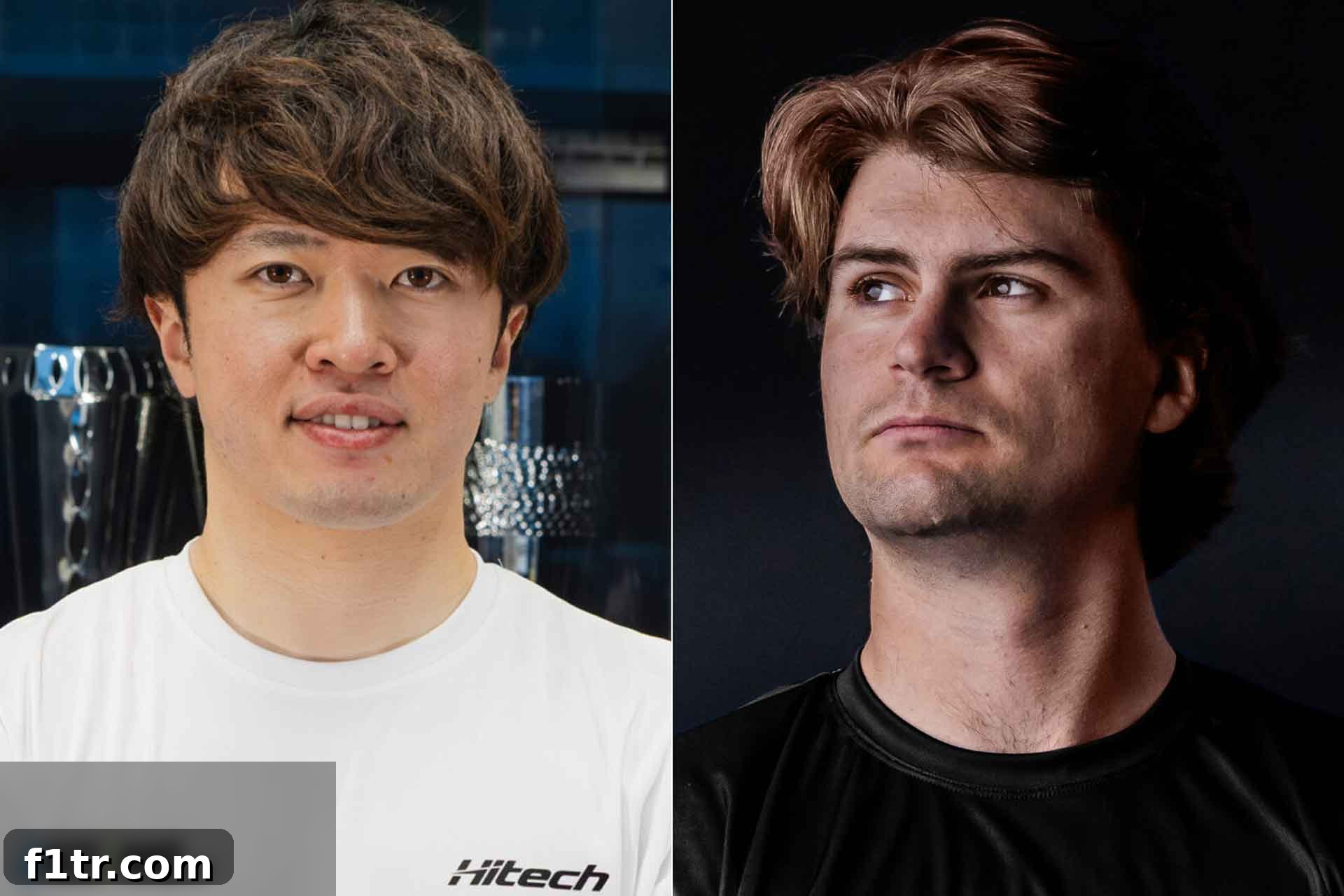
In a move that has sent ripples through the international motorsport community, IndyCar race-winner Colton Herta is set to make a highly unusual career transition for the 2026 season. After seven years competing at the pinnacle of North American single-seater racing, Herta will leave the prestigious IndyCar series to race in Formula 2, the primary feeder category for Formula 1.
Advert | Become a Supporter & go ad-free
Herta’s decision immediately stands out for several reasons. Firstly, at 26 years old by the time the 2026 Formula 2 season-opener arrives, he will be significantly older than the typical F2 driver, many of whom are still teenagers or in their early twenties. This age profile is compounded by his extensive experience; having competed in 100 IndyCar races and secured nine victories, he brings a level of top-tier single-seater expertise rarely seen in a junior category. This makes his upcoming F2 campaign a unique experiment, challenging the conventional progression model in motorsport.
Adding another layer to this narrative, Herta’s teammate at Hitech for 2026, Ritomo Miyata, is already 26. This means the Hitech team will field an unusually mature and experienced driver lineup compared to their F2 rivals, most of whom are nurturing younger talent through the ranks. While F1 teams occasionally promote drivers younger than those still competing in F2, Hitech’s 2026 pairing of Herta and Miyata represents a particularly striking anomaly within the junior motorsport landscape.
A Striking Age Comparison Across the Motorsport Ladder
The age dynamics become even more fascinating when comparing the Hitech F2 duo to the established grid of Formula 1. Miyata, for instance, is older than at least ten drivers who are confirmed to contest the 2026 F1 season, including current world champions and prominent race winners like Lando Norris. Similarly, Colton Herta, despite making a ‘step down’ to F2, is older than eight of the drivers currently slated for F1 seats in 2026. This stark comparison highlights the unconventional nature of Hitech’s lineup and prompts questions about the evolving definition of a ‘junior’ driver.
Intriguingly, an analysis of the average age of driver lineups in Formula 1 reveals that five F1 teams will have pairings that are, on average, older than Hitech’s F2 duo. This list includes motorsport giants such as reigning champions McLaren, along with 2025 race-winners Red Bull and Mercedes. This data challenges the perception that F1 is exclusively a domain for the youngest and freshest talent, suggesting a valuable role for experience, even at the highest level.
Conversely, teams like Racing Bulls and Haas are projected to have F1 driver lineups that are younger, on average, than the Hitech pair, despite some of their drivers having prior Formula 2 experience. This diverse age distribution across the F1 grid underscores the varied strategies teams employ in driver selection, balancing raw potential with proven track record. The below chart, which visually represents these age comparisons, further emphasizes Hitech’s unique position:
(Chart depicting average driver ages of F1 teams compared to Hitech’s F2 lineup)
Advert | Become a RaceFans supporter andgo ad-free
The Superlicence Hurdle and a Glimmer of F1 Hope
Colton Herta’s path to F2, while unconventional, is deeply rooted in his aspirations for Formula 1. Despite his impressive record in IndyCar, which includes becoming the youngest driver ever to win an IndyCar race at the Circuit of the Americas in 2019 at just 18 years old, he previously faced a significant barrier: the FIA superlicence points system. Despite securing nine victories and finishing as championship runner-up last year, Herta was unable to accumulate the requisite number of superlicence points to qualify for an F1 seat, a frustrating setback for a driver widely considered to possess the talent for the premier class.
However, the narrative took a hopeful turn following Herta’s confirmation of his F2 move. The FIA announced a critical change to its superlicence regulations, increasing the number of points awarded to IndyCar drivers starting from 2026. This significant policy shift reflects a growing recognition of IndyCar’s competitive standing and could pave a smoother path for future talents from the American series to enter F1. While this change comes too late to directly benefit Herta’s immediate superlicence shortfall for 2026, it undeniably signals a more accessible route for his potential future F1 entry. This F2 stint, therefore, isn’t just a detour; it’s a strategic repositioning to garner F1 attention and secure the necessary licence credentials.
Adding further intrigue to his future, Herta will also serve as a test driver for the new Formula 1 entrant, Cadillac, next year. This role positions him strategically for a potential race seat with the team in 2027. Cadillac, making its much-anticipated debut, is set to enter the grid with a distinctive strategy, planning to field the oldest driver lineup on the F1 grid next year, featuring seasoned veterans like Sergio Perez and Valtteri Bottas, potentially alongside other experienced drivers such as Nico Hulkenberg if current reports hold true. Herta’s involvement suggests a long-term plan for the American team to integrate promising talent, bridging the gap between their experienced initial lineup and future prospects.
F1 Drivers’ Ages at the First Race of 2026: A Detailed Overview
The following table provides a comprehensive look at the ages of current Formula 1 drivers at the expected date of the first race of the 2026 season. This data offers crucial context to understand just how unconventional Hitech’s F2 lineup, with Colton Herta and Ritomo Miyata, truly is within the broader motorsport ecosystem. It highlights the stark difference between the youthful drivers progressing through F2 and the established, and in some cases significantly older, veterans of Formula 1.
| Rank | Driver | Team | Age at first race |
|---|---|---|---|
| 1 | Arvid Lindblad | Racing Bulls | 18 years, 217 days |
| 2 | Andrea Kimi Antonelli | Mercedes | 19 years, 200 days |
| 3 | Oliver Bearman | Haas | 20 years, 309 days |
| 4 | Gabriel Bortoleto | Audi | 21 years, 150 days |
| 5 | Isack Hadjar | Red Bull | 21 years, 166 days |
| 6 | Franco Colapinto | Alpine | 22 years, 291 days |
| 7 | Liam Lawson | Racing Bulls | 24 years, 31 days |
| 8 | Oscar Piastri | McLaren | 24 years, 342 days |
| 10 | Lando Norris | McLaren | 26 years, 122 days |
| 12 | Lance Stroll | Aston Martin | 27 years, 137 days |
| 13 | George Russell | Mercedes | 28 years, 28 days |
| 14 | Charles Leclerc | Ferrari | 28 years, 150 days |
| 15 | Max Verstappen | Red Bull | 28 years, 166 days |
| 16 | Esteban Ocon | Haas | 29 years, 179 days |
| 17 | Alexander Albon | Williams | 29 years, 357 days |
| 18 | Pierre Gasly | Alpine | 30 years, 37 days |
| 19 | Carlos Sainz Jnr | Williams | 31 years, 196 days |
| 20 | Sergio Perez | Cadillac | 36 years, 50 days |
| 21 | Valtteri Bottas | Cadillac | 36 years, 201 days |
| 22 | Nico Hulkenberg | Audi | 38 years, 211 days |
| 23 | Lewis Hamilton | Ferrari | 41 years, 70 days |
| 24 | Fernando Alonso | Aston Martin | 44 years, 233 days |
For comparison, Colton Herta will be 25 years, 349 days old at the start of the 2026 F2 season, while Ritomo Miyata will be 26 years, 217 days old. This places both drivers firmly in an age bracket typically associated with experienced F1 campaigners, rather than F2 aspirants.
Advert | Become a RaceFans supporter andgo ad-free
Conclusion: A Bold Gamble for F1 Ambition
Colton Herta’s decision to leave the competitive crucible of IndyCar for a Formula 2 campaign in 2026 represents a bold and calculated gamble. It is a testament to his unwavering F1 ambition and a strategic move to overcome the regulatory hurdles that have previously kept him out of the premier series. Alongside Ritomo Miyata, Herta forms an F2 lineup that defies convention, bringing a wealth of experience to a category traditionally dominated by youth.
This unusual path, combined with the FIA’s recent adjustments to superlicence points and Herta’s test driver role with the incoming Cadillac F1 team, paints a compelling picture of a driver carving out a unique route to the pinnacle of motorsport. The 2026 F2 season will not only be a proving ground for Herta’s adaptation skills but also a fascinating case study in how a seasoned talent navigates the junior ranks, potentially setting a new precedent for career progression in a sport obsessed with youth. All eyes will be on Herta and Hitech as they embark on this intriguing chapter, with the ultimate prize of an F1 seat firmly in sight.
Miss nothing from RaceFans
Get a daily email with all our latest stories – and nothing else. No marketing, no ads. Sign up here:
Formula 2
- Formula 2 to debut in Miami and Montreal after Iran war cancellations
- Ex-McLaren junior Dunne’s move to Alpine finally confirmed
- Schumacher says his IndyCar feels like ‘an F2 car, just with better tyres’
- The Formula 2 team with an older driver line-up than almost half the F1 grid
- FIA to award more F1 superlicence points to IndyCar drivers from 2026
Browse all Formula 2 articles