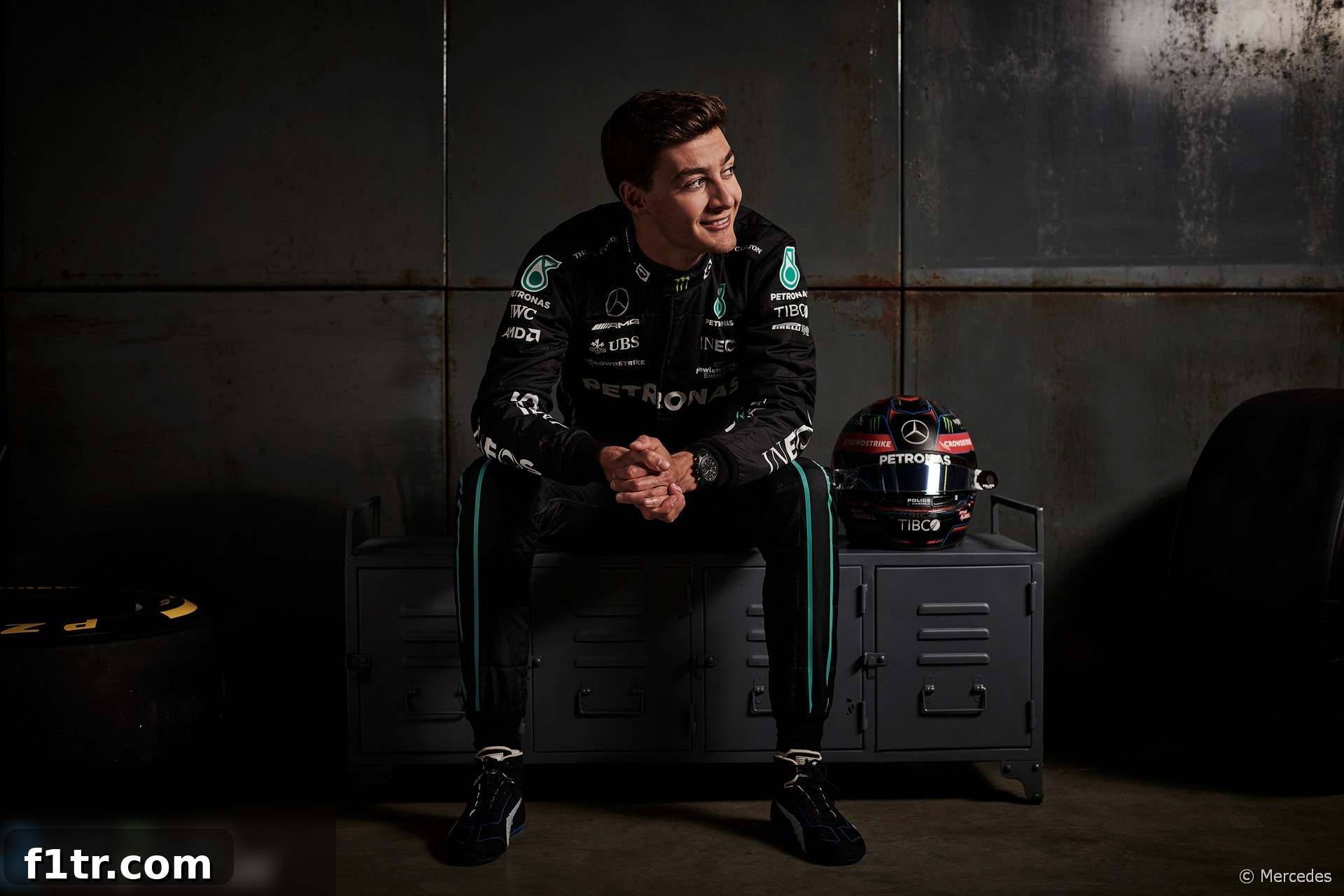
George Russell Hails FIA’s Monumental Reforms for F1 Race Control
Mercedes driver George Russell, who also serves as the esteemed President of the Grand Prix Drivers’ Association (GPDA), has expressed his strong endorsement for the comprehensive changes introduced by the FIA concerning the handling of incidents in Formula 1. These significant reforms, spearheaded by FIA President Mohammed Ben Sulayem, are set to revolutionize race officiating, aiming for greater fairness, consistency, and transparency. The move comes in the wake of mounting pressure and controversies surrounding critical decisions in recent F1 seasons, most notably the contentious conclusion of the 2021 Abu Dhabi Grand Prix, which spurred a widespread demand for systemic improvements.
Advert | Become a Supporter & go ad-free
The overhaul of Formula 1’s race control protocols marks a pivotal moment for the pinnacle of motorsport. Following a period riddled with debates over penalties and incident judgments, the sport’s governing body has taken decisive action. FIA President Mohammed Ben Sulayem officially announced a raft of substantial adjustments to how incidents will be assessed and managed, beginning with the highly anticipated upcoming season. These foundational changes underscore a clear commitment to modernizing officiating practices, fostering an environment of equitable competition, and reinforcing the trust of all stakeholders—from teams and drivers to the millions of passionate fans globally.
A New Era of Officiating: Introducing Virtual Race Control and Shared Leadership
At the heart of these transformative reforms lies the introduction of a cutting-edge virtual race control room. This innovative system draws direct inspiration from the Virtual Assistant Referee (VAR) technology that has become a ubiquitous and often discussed feature in football over the last decade. The virtual race control room is designed to function as a crucial support mechanism, enabling a dedicated team of experienced officials to meticulously analyze on-track incidents in real-time. Utilizing an array of advanced camera angles, telemetry data, and slow-motion replays, this team will provide invaluable input and assistance to the primary race director, facilitating more informed, accurate, and swift decision-making. This initiative is a direct response to the urgent need for enhanced objectivity and a significant reduction in the singular burden and pressure previously placed on an individual overseeing the myriad complexities of a live Grand Prix.
Adding to the structural changes, the FIA has also announced a critical modification to the leadership of race control itself. Michael Masi, who had previously served as the sole race director, will step down from the role. The demanding responsibilities will now be effectively shared between two highly seasoned and respected figures: Eduardo Freitas, renowned for his extensive experience as the World Endurance Championship race director, and Niels Wittich, the accomplished DTM race director. This novel dual-leadership model is strategically implemented to distribute the immense workload, harness diverse perspectives, and establish a more robust and resilient framework for overall race management. By sharing the duties, the FIA aims to mitigate the potential for isolated errors or misjudgments and ensure a consistent standard of officiating across the Formula 1 calendar.
The Grand Prix Drivers’ Association: A Voice for Reform
George Russell’s dual role as a prominent Mercedes driver and the president of the Grand Prix Drivers’ Association (GPDA), an influential body representing all 20 Formula 1 drivers, placed him in a unique position to influence these critical discussions. He confirmed the FIA’s proactive engagement with the sport’s key participants, stating that the governing body actively sought the views and invaluable insights of the drivers before finalizing the architecture of the new systems. This consultative approach highlights the FIA’s dedication to inclusive governance and ensuring that the operational changes are not only theoretically sound but also practically resonant with those who directly experience the intricacies of racing on track.
“The GPDA did speak with the FIA,” Russell affirmed, underlining the constructive dialogue that took place between the drivers’ union and the governing body. He went on to commend the FIA’s immediate and decisive response following the contentious events in Abu Dhabi, recognizing their swift commitment to identify and implement superior solutions. “But to be fair to them, they were incredibly proactive straight away after Abu Dhabi to find better solutions,” Russell added, acknowledging the commendable speed and resolution with which the new leadership of the FIA addressed the pressing issues, emphasizing their dedication to moving the sport forward responsibly.
Embracing Innovation: The “VAR” Solution for a Modern F1
Russell expressed particular optimism and enthusiasm for the new virtual race control room, drawing a clear and understandable parallel to the established VAR system in football. “I think the ‘VAR’ solution is great and it makes total sense to have further assistance, people analysing live and more input to get a quicker view and decision to be made,” he articulated. This sentiment reflects a growing consensus within the Formula 1 community that contemporary technology offers indispensable tools for significantly enhancing the accuracy and expediency of officiating. The capability for multi-faceted, detailed analysis provided by the virtual room is expected to dramatically reduce instances of subjective interpretation, thereby ensuring a much higher degree of consistency in applying regulations across all races and incidents.
The Mercedes driver also provided insightful commentary on the perpetual evolution of Formula 1 and the imperative for its officiating mechanisms to adapt and keep pace. He shrewdly observed that drivers are inherently driven to continually seek out every legitimate avenue and advantage within the defined parameters of the rulebook. “Times progress, things move on. The way that drivers are exploiting the rulebook is understandable and, equally, the FIA need to do more to compensate for that, because every team, every driver, is always going to look for a way to get the upper hand,” Russell candidly stated. This frank assessment underscores the dynamic and ever-present tension between the innovative strategies conceived by racing teams and the absolute necessity for robust, adaptable regulations and unwavering enforcement by the sport’s governing body to maintain competitive balance and integrity.
A Positive Trajectory: Continuous Refinement is the Ultimate Goal
While George Russell unequivocally views these sweeping changes as a profoundly positive and necessary development for Formula 1, he maintains a pragmatic and realistic perspective regarding their immediate, real-world impact. He wisely acknowledges that the intricate process of fully refining and seamlessly integrating these new systems will inevitably demand time, patience, and a sustained, concerted effort. “I think it will take some time to really refine, but I think it’s definitely a step in the right direction,” Russell commented, signaling that while a strong foundation has been laid, ongoing iterative improvement will be absolutely vital for their ultimate success. The inherent complexity of Formula 1, characterized by its blistering speeds, extraordinarily intricate regulations, and immense pressure cooker environment, means that achieving perfect officiating remains an ambitious and elusive aspiration.
Nevertheless, Russell’s overarching message is one of profound optimism coupled with an unwavering commitment to perpetual improvement within the sport. He emphatically stressed that the pursuit of enhanced fairness, heightened precision, and unimpeachable integrity in race officiating is not a finite destination, but rather an unending, continuous journey. “But it’s never enough. It’s always going to need more. And I think the ‘VAR’ and the more things we can do virtually can only be beneficial,” he concluded with foresight. This forward-looking perspective distinctly underscores the inherently dynamic nature of Formula 1, where relentless technological advancements and groundbreaking strategic innovations constantly challenge existing frameworks, thereby necessitating a consistently proactive, adaptive, and progressive approach from the FIA.
The strategic introduction of a sophisticated virtual race control room, meticulously combined with the responsible sharing of duties among highly experienced race directors, undeniably represents a transformative moment in Formula 1’s illustrious history. These reforms transcend mere procedural adjustments; they stand as a profound and unequivocal statement of intent by the FIA to vigorously bolster the integrity of the sport, rigorously ensure equitable competition for all participants, and meticulously regain the unwavering trust and confidence of its vast and passionate global fanbase. As the eagerly anticipated new season rapidly approaches, all eyes across the motorsport world will be intently focused on how these groundbreaking changes manifest in practical application, with the collective hope that they usher in a truly enlightened era of clearer, more consistent, and utterly unimpeachable race control decisions, elevating the sport to new heights of fairness and excitement.
Advert | Become a RaceFans supporter andgo ad-free
Further Reading: 2022 F1 Season Insights
- Mercedes told me “you’re wrong” about 2022 car’s problems – Hamilton
- FIA confirms all 10 F1 teams complied with 2022 cost cap
- Steiner “not ashamed” of panning “slow” Schumacher in Drive to Survive
- Albon believes year out of F1 improved him as a driver
- Hamilton sees diversity gains in F1 years on from his ‘traumatising’ experience of racism
Browse all 2022 F1 season articles