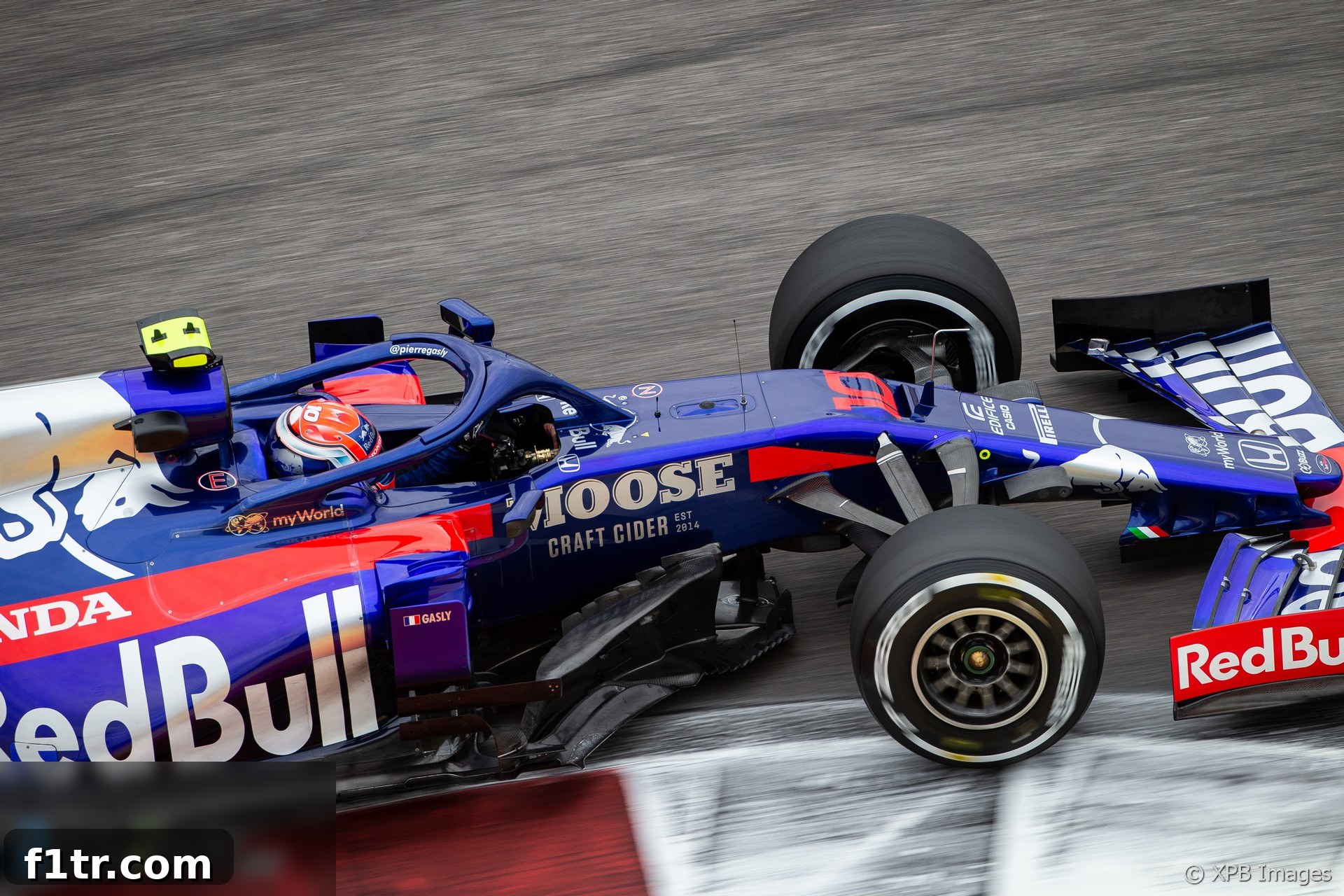
In the latest motorsport round-up, Pierre Gasly has openly shared his renewed confidence, stating he has been able to drive exactly the way he desires since his return to Toro Rosso. This declaration comes amidst a noticeable uptick in his on-track performances, sparking considerable discussion among fans and pundits alike.
Pierre Gasly’s Resurgence: Finding His Rhythm Back at Toro Rosso
Pierre Gasly’s journey in Formula 1 has been a rollercoaster, particularly his transition between Red Bull Racing and its sister team, Toro Rosso (now AlphaTauri). After a challenging stint at Red Bull, where he struggled to match the pace of his then-teammate Max Verstappen, his return to Toro Rosso has evidently reinvigorated his career. His race performances, which had appeared subdued earlier in the season, have since shown significant improvement, marking a notable turnaround.
“I think it’s more the fact that we managed to get a car that suits the way I drive a bit more. So I just feel like I can really push the way I want naturally, without really trying to copy someone, or feeling like I needed to massively change the way I drive slowly. The opportunities that came to me during the Grand Prix in Singapore gave me the chance to try new things. So I believe it’s many factors put together that allowed me to demonstrate that I can race as I’ve always raced.”
Gasly’s candid reflection highlights several crucial aspects of a driver’s relationship with their car and team. The concept of a car “suiting” a driver’s natural style is paramount in Formula 1. When a driver is forced to adapt excessively to a car that doesn’t align with their instincts, it can undermine confidence and performance. Gasly’s comments suggest that the Toro Rosso chassis and setup provided a more conducive environment, allowing him to express his inherent driving technique without compromise or the pressure to emulate another driver’s approach.
Furthermore, the mention of “opportunities” during the Singapore Grand Prix points to the psychological impact of positive experiences. A strong race, the chance to battle and experiment, can unlock a driver’s potential and reaffirm their capabilities. This combination of a more compatible car, reduced external pressure, and timely opportunities appears to have been the catalyst for Gasly’s remarkable resurgence, proving that a change in environment can sometimes be the key to unlocking dormant talent. His improved form underscores the complex interplay of technical fit, mental state, and team support in the high-stakes world of Formula 1.
Quotes: Dieter Rencken
Advert | Become a RaceFans supporter andgo ad-free
Social Media Highlights: Connecting with the F1 World
Social media continues to be an indispensable tool for Formula 1 teams and drivers to connect directly with their global fanbase, offering a glimpse behind the scenes and sharing crucial updates. Platforms like Twitter and Instagram provide an immediate conduit for engagement, allowing fans to feel closer to the action and the personalities involved. Recent notable posts have offered fans unique perspectives on the sport.
Take a look behind the scenes with @alex_albon on a typical race day… 👀🏁 #givesyouwings pic.twitter.com/fkzJpGKl37
— Oracle Red Bull Racing (@redbullracing) October 4, 2019
This particular post from Oracle Red Bull Racing, featuring Alex Albon, exemplifies the type of content that resonates with fans. It offers an intimate look at the preparations and routines of a Formula 1 driver on race day, fostering a sense of connection and allowing fans to experience the world of F1 beyond the track. Such content is vital for building community and maintaining fan interest throughout the season.
- For those looking to dive deeper into the social media presence of Formula 1, a comprehensive resource is available: the F1 Twitter Directory, where you can find more official F1 accounts to follow and stay updated.
Motorsport Insights: Key Developments Across the Racing World
Beyond the immediate headlines, the broader world of motorsport is constantly evolving with strategic decisions, exciting new venues, and intense on-track rivalries. Here’s a deeper look into some of the most compelling stories and discussions from across the racing spectrum.
Advert | Become a Supporter & go ad-free
Abiteboul: Managing Ocon-Ricciardo relationship will be a ‘challenge’ (F1)
Cyril Abiteboul, then-team principal of Renault F1, openly discussed the anticipated dynamics between his two formidable drivers, Esteban Ocon and Daniel Ricciardo. His quote, “(Esteban) will want to beat Daniel. And I know that we will have some challenges from a driver management perspective on the pit wall to manage that. But that’s also a nice problem to have,” encapsulates the eternal dilemma of team principals: balancing healthy competition with team cohesion. In Formula 1, a driver’s primary rival is often their teammate, and while this internal competition can push a team forward, it also demands careful management to prevent detrimental internal friction. The arrival of a highly competitive driver like Ocon alongside the established star Ricciardo promised an intriguing power dynamic, a challenge many teams would welcome as a sign of strong talent within their ranks.
Vietnam ready to join Singapore in F1 firmament (Reuters)
The prospect of new venues joining the Formula 1 calendar always generates excitement, and Vietnam was no exception. With the country poised to host its first Grand Prix, there was a strong sense of national pride and readiness. The statement, “(It’s) just the perfect time to join Formula One with our robust economics, with our traditions, with our culture, with our people, with our food, so everything is just right,” painted a vibrant picture of a nation eager to embrace the global spectacle of F1. This sentiment highlighted Vietnam’s confidence in its economic stability and cultural richness to provide a unique and successful event. The inclusion of new markets like Vietnam signifies F1’s ongoing commitment to global expansion, tapping into new fan bases and diversifying its event locations, promising fresh challenges and experiences for teams and fans alike.
- Further insights into the progress of the circuit can be found here: Why the Vietnam Grand Prix is “on track” to hit its 2020 deadline.
Toyota Confused by Gap to Rebellion Despite Handicaps (Sportscar365)
In the highly competitive world of the World Endurance Championship (WEC), balance of performance (BoP) and success handicaps are critical tools used to ensure close racing. Toyota Gazoo Racing, a dominant force in the LMP1 category, expressed genuine bewilderment regarding the significant performance gap to their rivals, Rebellion Racing. “What is really surprising, and what we have no explanation for, is the really bad performance of the Rebellion. They have lost nearly two seconds compared to last year,” highlighted a peculiar situation where even with applied handicaps, the expected competitive convergence wasn’t materializing. This raises questions about the effectiveness of the handicap system in specific scenarios or underlying issues with Rebellion’s own performance development, adding an intriguing layer of strategic complexity to endurance racing. The quest for parity often leads to these perplexing situations, keeping teams, engineers, and fans constantly engaged in analyzing performance metrics.
DTM Hockenheim Race Two Highlights (DTM via YouTube)
For fans of intense touring car action, the DTM (Deutsche Tourenwagen Masters) consistently delivers thrilling races. The highlights from the DTM Hockenheim Final 2019, showcasing the battle between Marco Wittmann and René Rast, are a prime example. The series is renowned for its close-quarters racing, strategic pit stops, and unpredictable outcomes. This particular race offered a nail-biting showdown that captivated audiences, demonstrating the competitive spirit and high level of driving talent present in the championship. Such highlights are essential for showcasing the excitement of motorsport to a broader audience, demonstrating that compelling action is not limited to Formula 1.
We always endeavour to credit original sources. If you have a tip for a link to feature in the next RaceFans round-up, please send it in via the contact form.
Advert | Become a RaceFans supporter andgo ad-free
F1’s Future Landscape: New Teams, Franchises, and Strategic Stability
One of the most pressing and frequently debated topics in Formula 1 circles revolves around the prospect of new teams joining the grid, particularly in the context of significant regulatory changes expected in 2021. The question of why Liberty Media, F1’s commercial rights holder, seemed to be playing it cool on the possibility of new entrants sparked considerable discussion among fans and experts. A particularly insightful fan comment offered a compelling strategic perspective on this cautious approach.
“I suspect the other reason is that Liberty may be quite concerned that one or two of the current teams might elect to withdraw from F1 once the rules are finalised. By holding back and keeping quiet on accepting new entrants, they may well be entertaining the idea that if a team withdraws, they might be able to broker a deal for the new entrants to purchase those that withdraw as ongoing turnkey concerns in the same way that Brawn/Mercedes did when Honda withdrew.”
“I recall an article suggesting that they were keen to develop the financial arrangements so that teams acquired a “franchise” style of value and I imagine their first priority for 2021 is to ensure that there are still 10 teams/20 cars. The best way to do that would be to hold back new entrants until 2021 and its structures settle in with the option of bringing them on stream as new “franchise” owners of any teams that withdraw rather than add to the list.”
DB-C90 (@Dbradock)
This astute analysis delves into the strategic intricacies of F1’s commercial management. The concept of “franchise value” is central here; by establishing F1 teams as valuable assets that can be bought and sold, Liberty Media aims to foster greater financial stability and attract long-term investment. If existing teams were to withdraw due to the new regulations or other financial pressures, it would be far more beneficial for the sport’s image and stability to facilitate the acquisition of these existing operations by new investors, rather than simply adding more entries to a potentially shrinking grid.
Maintaining a stable number of teams (historically 10 teams and 20 cars) is a key objective for F1. A fluctuating grid size can impact television deals, race formats, and overall perceived value. Therefore, Liberty Media’s reluctance to immediately welcome new teams might be a calculated move to ensure the health of the existing ecosystem. This approach allows them to have ready-made solutions for continuity, should any current team decide to exit, thereby preserving the competitive structure and financial integrity of the sport. It’s a strategic chess game, with long-term stability and value creation at its core.
Engaging with the Formula 1 community is a vital part of the fan experience. There’s still time to join in this weekend’s Caption Competition and showcase your wit – enter here:
- Caption Competition 159: Young fan’s first F1 car
Happy Birthday Shout-Outs!
A special happy birthday goes out to Gaston_Pdu! The Formula 1 community is a vibrant one, and we love celebrating milestones with our dedicated fans.
If you wish to receive a birthday shout-out on our platform, please inform us of your special day via the contact form or by adding your date to our community list here. We appreciate your continued support and passion for motorsport!
On This Day in F1 History: Remembering a Tragic Day and a Championship Triumph
- Exactly 45 years ago today, Formula 1 witnessed a tragic event at the United States Grand Prix at Watkins Glen, where the promising young Austrian driver Helmuth Koinigg lost his life in a devastating crash. This somber day serves as a stark reminder of the inherent dangers of motorsport, especially in an era before many of the advanced safety features we see today were implemented. Koinigg’s accident, following closely on the heels of other fatalities, played a significant role in accelerating calls for improved driver and circuit safety measures within the sport.
- Amidst this tragedy, the same race saw Emerson Fittipaldi secure his second world championship by finishing fourth. Fittipaldi, driving for McLaren, cemented his legacy as one of the sport’s greats with this triumph. His ability to maintain focus and deliver a championship-winning performance under such circumstances underscores the mental fortitude required at the pinnacle of motorsport. This day in history encapsulates the bittersweet nature of Formula 1: the relentless pursuit of glory often unfolds alongside profound challenges and poignant moments of loss.