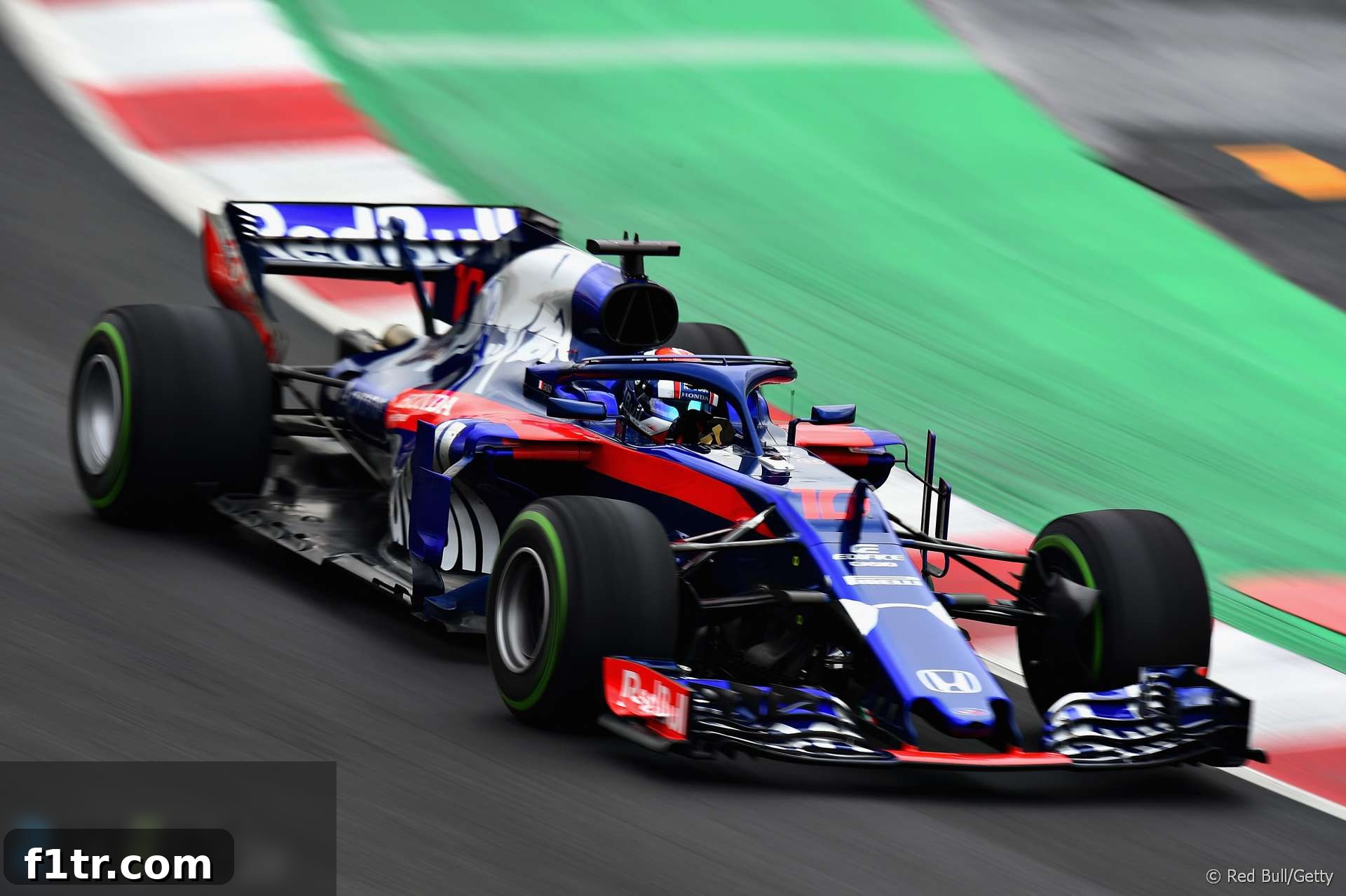
The exhilarating spectacle of Formula 1 pre-season testing at the iconic Circuit de Catalunya is always a hotbed for speculation, predictions, and the first hints of the competitive landscape for the upcoming season. As teams meticulously refine their machinery and drivers push the limits, one of the most keenly watched metrics is lap time. In a recent observation that has sent ripples of anticipation through the F1 community, Pierre Gasly, then driving for Toro Rosso, boldly predicted that lap times at the Barcelona track would continue their downward trend, potentially breaching the elusive 1’17 mark when Formula 1 returns for the highly anticipated Spanish Grand Prix later in the year.
The Quest for Speed: Gasly’s Bold Prediction for Barcelona Lap Times
The Circuit de Catalunya, with its demanding mix of high-speed corners, technical sections, and a long main straight, serves as a crucial benchmark for Formula 1 car performance. It’s a track where aerodynamic efficiency, mechanical grip, and engine power are all rigorously tested, making pre-season testing here an invaluable indicator of a car’s fundamental strengths and weaknesses. Gasly’s prediction of a 1’17 lap time represents a significant leap in performance, underscoring the relentless pursuit of speed that defines Formula 1.
During the initial phase of pre-season testing, the fastest recorded time was a formidable 1’19.333, clocked by reigning champion Lewis Hamilton in his Mercedes. This impressive early benchmark was already less than two-tenths of a second slower than the pole position time from the previous year’s Spanish Grand Prix. Such a narrow margin in testing conditions immediately signaled that the 2018 cars possessed inherent speed and that teams had made substantial strides in development over the winter break.
Gasly’s foresight wasn’t an isolated belief. His prediction resonated with the expert opinion of Pirelli’s sporting director, Mario Isola, who also publicly indicated his expectation that lap times would drop into the 1’17 range. This alignment between a driver at the sharp end of competition and a key technical partner like Pirelli, responsible for the crucial tire compounds, lent significant weight to the possibility. Gasly, reflecting on Hamilton’s early pace, stated with conviction, “Looking at Lewis, he’s already in 1’19, so it will be possible. Mercedes are really good to hide their potential so I think it’s going to be possible.” This statement not only highlighted the raw speed already demonstrated but also acknowledged the strategic element of pre-season testing, where top teams often refrain from showing their full hand.
Mercedes’ Strategic Hand and the Art of Sandbagging
The practice of “sandbagging,” or deliberately underperforming during testing to conceal true potential, is a well-known tactic among Formula 1 teams, particularly the front-runners. Mercedes, with their dominant track record, are master practitioners of this art. Their testing programs typically focus on reliability, data gathering, and understanding new components, rather than chasing headline-grabbing lap times. Hamilton’s 1’19.333, while quick, was widely understood to be just a glimpse of the W09’s capabilities. Gasly’s astute observation that “Mercedes are really good to hide their potential” speaks volumes about the perception of the Silver Arrows within the paddock. This strategic approach ensures rivals remain guessing and provides Mercedes with a psychological edge, allowing them to reveal their true pace only when it truly matters – during qualifying for the first race of the season.
The continuous evolution of Formula 1 regulations and technology contributes significantly to these ever-decreasing lap times. Each season brings new aerodynamic packages, refined power units, and often, updated tire compounds from Pirelli, all designed to push the boundaries of performance. For the 2018 season, the cars were expected to be faster due to the stable regulations allowing for optimization and development. The 1’17 prediction wasn’t just optimism; it was an informed expectation rooted in the inherent performance gains achieved by the constructors.
Toro Rosso’s Focused Testing Strategy
From the perspective of a team like Toro Rosso, particularly with a new engine partner in Honda for the 2018 season, pre-season testing takes on a different emphasis compared to established front-runners. Gasly clarified that Toro Rosso’s primary focus during the first week of testing was not on outright performance runs or “qualifying simulations.” Instead, their program was geared towards accumulating mileage, understanding the new Honda power unit, and gathering crucial data over longer stints.
“We didn’t have any qualifying simulations. We didn’t really focus on one-lap performance, it was more like on the long runs and obviously we had quite a lot of fuel in the car. I think we have quite a lot still in the car,” Gasly explained. This high-fuel approach is standard practice for reliability testing and assessing a car’s behavior over a race distance. It provides a more accurate picture of fuel consumption, tire degradation, and overall car balance under race-like conditions, which is invaluable for setting up the car for actual Grand Prix weekends.
The partnership with Honda was a crucial narrative for Toro Rosso in 2018, following McLaren’s challenging tenure with the Japanese manufacturer. Gasly’s comments offered a window into the extensive development work underway: “Of course they are testing also things on the engine. Some of them work, some of them don’t. It’s all about understanding what we need for the first race in Melbourne and I think everyone in the team is doing a good job.” This candid insight highlighted the iterative process of engine development, where continuous experimentation and refinement are necessary to unlock performance and ensure reliability. For Toro Rosso and Honda, testing was about forging a strong, effective partnership and laying a robust foundation for the season ahead, rather than chasing ephemeral fast laps.
External Factors: Weather and Track Conditions
Beyond the technical intricacies of the cars and engines, external factors at the Circuit de Catalunya also played a significant role in shaping the testing environment and the representativeness of the lap times. The cool weather conditions experienced during the first week of testing presented a unique set of challenges for drivers and teams.
Cold track temperatures can dramatically affect tire performance. Formula 1 tires are designed to operate within a specific temperature window to generate optimal grip and wear characteristics. In cooler conditions, it’s harder to get the tires up to their ideal operating temperature, leading to reduced grip and different degradation patterns. Gasly acknowledged this, stating, “We don’t get much degradation which is of course going to be different in May when we’re back for the race. There are many things we need to take into account when you test in the winter here but it’s good so far.”
This observation is critical because the Spanish Grand Prix, typically held in May, experiences significantly warmer ambient and track temperatures. The data gathered on tire performance and degradation in cold conditions, while useful for understanding the car’s overall behavior, requires careful extrapolation to be relevant for race weekend setups. Teams must anticipate how the tires will react in warmer weather, which can lead to increased degradation and necessitate different strategic approaches.
Furthermore, the track itself evolves over the course of a testing week and certainly between testing and a race weekend. As more cars run, rubber is laid down on the asphalt, increasing grip levels. This “track evolution” means that lap times naturally improve as the track gets faster. Combine this with warmer temperatures and teams unlocking more performance from their cars, and the 1’17 prediction for the Spanish Grand Prix starts to appear increasingly plausible.
Anticipating the Spanish Grand Prix Showdown
The early predictions and promising lap times from pre-season testing set a thrilling precedent for the 2018 Spanish Grand Prix. The Circuit de Catalunya often marks a crucial point in the F1 calendar, being the traditional start of the European season and frequently the venue where teams introduce their first major upgrade packages. These upgrades, combined with warmer temperatures and a track fully rubbered-in, invariably lead to a significant jump in performance from what was seen in winter testing.
The prospect of lap times dipping into the 1’17s would not only signify the immense advancements in Formula 1 car design and engineering but also promise a truly exhilarating race. Faster cars mean higher cornering speeds, more G-forces for the drivers, and a more spectacular show for the fans. Gasly’s insights, backed by Pirelli’s expectations and the raw pace already displayed by front-running teams like Mercedes, painted a clear picture of an F1 season destined for blistering speed and fierce competition.
As the Formula 1 circus prepared to descend upon Barcelona for the Spanish Grand Prix, all eyes were on the stopwatch, eagerly awaiting whether Gasly’s bold prediction would materialize and if the cars could indeed shatter the 1’17 barrier, further cementing the Circuit de Catalunya’s reputation as a true test of speed and engineering prowess.
Related Articles from the 2018 F1 Season:
- F1 feared “death knell” for Drive to Survive after Ferrari and Mercedes snub
- McLaren staff told us we were “totally crazy” to take Honda engines in 2018 – Tost
- ‘It doesn’t matter if we start last’: How Red Bull’s junior team aided Honda’s leap forward
- Honda’s jet division helped F1 engineers solve power unit problem
- McLaren Racing losses rise after Honda split
Browse all 2018 F1 season articles