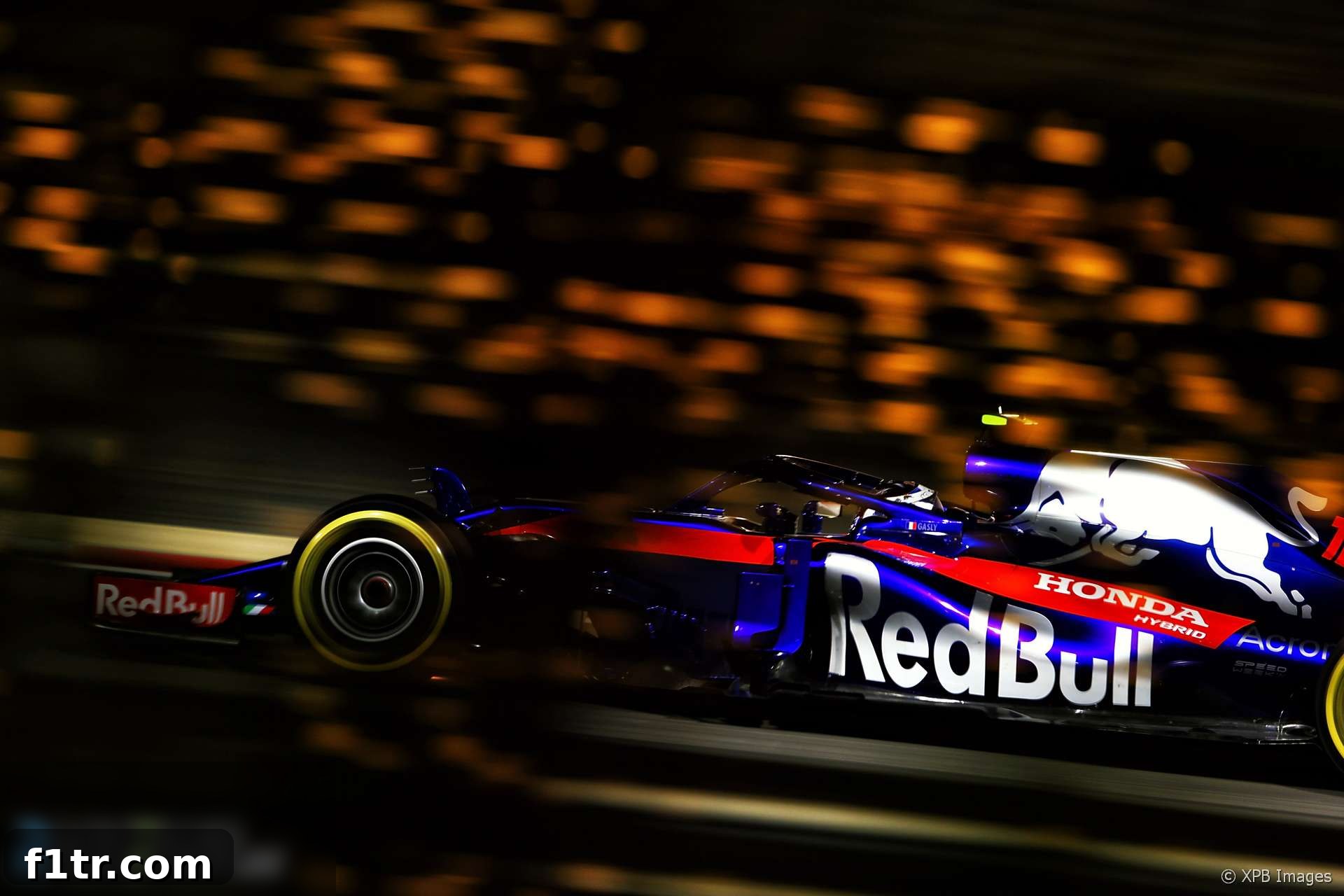
The exhilarating world of Formula 1 is often a crucible of high-speed drama, strategic brilliance, and intense emotional declarations. One such moment that captured headlines and ignited passionate debate among fans in the early stages of the 2018 season involved then-Toro Rosso driver Pierre Gasly and a seemingly innocuous post-race radio message. Following a career-best fourth-place finish at the Bahrain Grand Prix, Gasly declared to his team, “now we can fight.” While seemingly a triumphant exclamation, this particular phrase carried significant weight and historical context, immediately drawing comparisons to a similar utterance by McLaren’s Fernando Alonso just two weeks prior.
The incident quickly escalated into a mini-controversy, prompting Gasly to clarify his intentions amidst a wave of criticism. His explanation shed light on the intricate dynamics of Formula 1, where engine partnerships, team loyalties, and individual rivalries often intersect in unexpected ways. This detailed account delves into the background of the comment, Gasly’s defense, and the broader implications for the teams and manufacturers involved.
Advert | Become a Supporter & go ad-free
The Context: Shifting Alliances and Engine Fortunes
To fully grasp the essence of Gasly’s comment, it’s crucial to understand the dramatic shifts in engine supplier relationships that preceded the 2018 season. McLaren, one of Formula 1’s most storied teams, had endured three challenging years (2015-2017) with Honda as their power unit supplier. This partnership, initially hailed with great optimism as a rekindling of a legendary collaboration from the late 80s and early 90s, ultimately failed to deliver the expected results. Instead, it was plagued by persistent reliability issues and a significant performance deficit, leading to public frustration from McLaren drivers, most notably Fernando Alonso, and ultimately the termination of the agreement.
For the 2018 season, McLaren made a decisive switch to Renault power units, hoping for a return to competitiveness. Concurrently, Red Bull’s junior team, Toro Rosso (now Visa Cash App RB), took a bold gamble by forging a new partnership with Honda. This move was widely seen as a lifeline for the Japanese manufacturer, offering them a chance to redeem their reputation and develop their power unit in a less high-pressure environment than with a front-running team like McLaren. The narrative was clear: Honda needed to prove its capabilities, and Toro Rosso was betting on their resurgence.
Gasly’s Bahrain Breakthrough and the Echoing Phrase
The 2018 Bahrain Grand Prix marked a pivotal moment for both Pierre Gasly and the Toro Rosso-Honda partnership. Gasly, in only his seventh Formula 1 start, delivered an outstanding performance. After qualifying fifth, he capitalized on a chaotic race featuring incidents and retirements from established contenders, masterfully managing his tires and pace to cross the finish line in an incredible fourth place. This result was not just a personal best for the young Frenchman; it was also the best finish for Toro Rosso since the 2015 United States Grand Prix and, crucially, the best result for Honda in the V6 hybrid era at that point, surpassing anything achieved during their McLaren partnership.
It was in the aftermath of this stunning achievement that Gasly uttered the now-famous words over team radio: “now we can fight.” The phrase immediately resonated with F1 fans because Fernando Alonso had used almost identical words just two weeks prior at the season-opening Australian Grand Prix. Following his fifth-place finish in Melbourne, a race where McLaren was powered by their new Renault engines, Alonso had jubilantly declared, “now we can fight.” The parallel was striking: Alonso’s comment was widely interpreted as a dig at Honda, celebrating McLaren’s perceived liberation from their former engine supplier’s struggles. Gasly’s identical phrase, coming from a Honda-powered car achieving a superior result, was instantly seen by many as a direct retort, a triumphant declaration on behalf of Honda, and perhaps a subtle jab back at McLaren and Alonso.
Gasly’s Clarification: A Tribute, Not a Taunt
The online reaction to Gasly’s comment was swift and intense. Social media platforms buzzed with discussions, interpretations, and a flurry of criticism, particularly from Spanish-speaking fans who perceived it as disrespectful to their national hero, Fernando Alonso. Faced with this backlash, Gasly was quick to clarify his intentions.
Speaking to the media, he explained that his radio message was simply “a little joke” and, more importantly, a genuine expression of gratitude and praise for Honda’s monumental efforts. “I think we need to give credit back to Honda,” Gasly stated. He highlighted the “tough three years” Honda had endured with McLaren, emphasizing the significance of achieving such a strong result – P4 – in only their second race with Toro Rosso. “So it was a way to give them credit, because they are working really hard and I think they need credit for the hard work they are doing,” he added, underlining the manufacturer’s dedication and perseverance.
Gasly acknowledged the negative reception, admitting, “I had pretty tough messages after the race, by some Spanish people, what actually are quite crazy.” However, he vehemently denied any disrespect towards Alonso. “I have huge respect for Fernando so I’m just making it clear. Don’t get me wrong. Fernando for sure is one of the best drivers of all time in Formula One, and one of the drivers I looked up to when I was young, one of my idols actually.” He reiterated, “No, I have huge respect for him, so it was nothing related, just a high comment for Honda because I think they deserved the credit.” His explanation aimed to diffuse the tension, portraying the comment as a heartfelt tribute to his team’s engine supplier rather than a calculated insult to a fellow competitor.
Broader Implications and Lasting Impact
The “now we can fight” saga of Bahrain 2018 had several significant implications beyond the immediate controversy:
For Honda: A Resurgence Story
Gasly’s P4 was a massive morale boost for Honda. It provided tangible proof that their power unit, despite its past struggles, had the potential to deliver strong results. This performance validated their decision to partner with Toro Rosso and laid crucial groundwork for their future, more successful, collaboration with Red Bull Racing from 2019 onwards. It silenced many critics and gave the engineers in Sakura renewed motivation and a clear direction for development.
For Toro Rosso (now Visa Cash App RB): Validation of a Risky Move
The result underscored Toro Rosso’s shrewd decision to take on Honda engines. While many in the paddock were skeptical, the team saw potential and was willing to invest in the partnership. The Bahrain result proved that the chassis-engine package could be competitive, bolstering the team’s confidence and attracting more attention to their engineering prowess.
For McLaren and Alonso: A Bittersweet Narrative
While McLaren themselves had a strong start to 2018 with their Renault engines, finishing fifth and seventh in Australia, Gasly’s P4 with a Honda engine undeniably added a layer of complexity to their narrative. For Alonso, who had been so vocal about Honda’s shortcomings, the sight of a Honda-powered car outperforming his McLaren just two weeks later must have been a bittersweet pill, potentially adding fuel to the competitive fire.
For F1’s Dynamic Narratives: The Power of Language
The incident highlighted how deeply intertwined team narratives, driver personalities, and engine manufacturer politics are in Formula 1. A seemingly simple phrase can carry immense weight, especially when juxtaposed against recent history and rivalries. It demonstrated the passion of the fanbase and the intense scrutiny under which drivers and teams operate.
Conclusion
Pierre Gasly’s “now we can fight” radio message in Bahrain 2018 remains a memorable footnote in recent Formula 1 history. What began as a triumphant outburst quickly morphed into a public relations challenge, forcing the young driver to clarify his intentions. His explanation, emphasizing respect for Fernando Alonso and profound gratitude for Honda’s dedication, ultimately defused the situation. More than just a fleeting controversy, the incident symbolized Honda’s arduous journey back to competitiveness and underscored the high-stakes, emotionally charged environment of Formula 1, where every word, especially after a significant performance, can reverberate with multiple meanings and create lasting narratives.
2018 F1 season
- F1 feared “death knell” for Drive to Survive after Ferrari and Mercedes snub
- McLaren staff told us we were “totally crazy” to take Honda engines in 2018 – Tost
- ‘It doesn’t matter if we start last’: How Red Bull’s junior team aided Honda’s leap forward
- Honda’s jet division helped F1 engineers solve power unit problem
- McLaren Racing losses rise after Honda split
Browse all 2018 F1 season articles