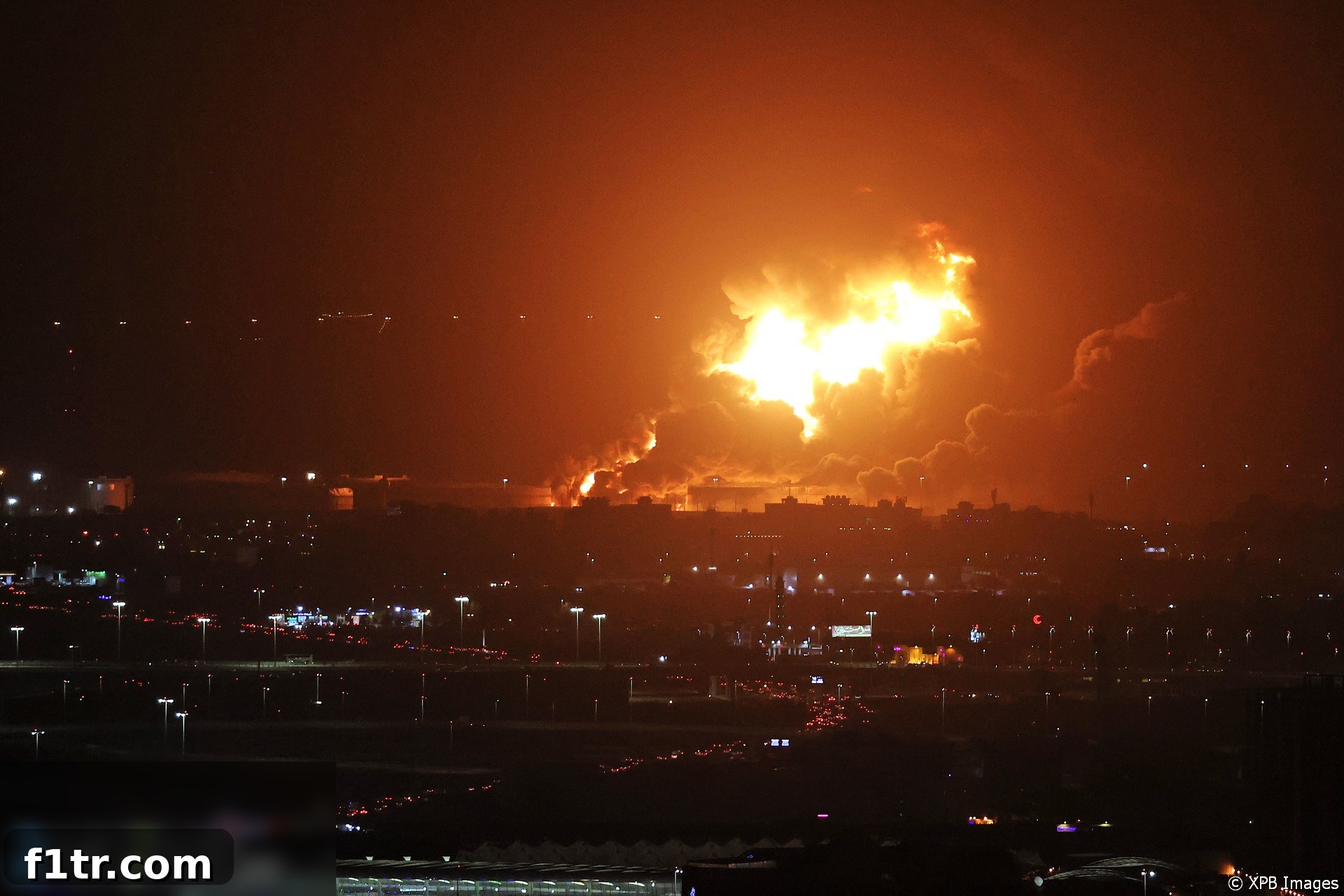
Formula 1 faced an unprecedented challenge during the Saudi Arabian Grand Prix weekend when a missile strike near the Jeddah circuit prompted serious concerns across the paddock. Despite the alarming incident, team principals robustly defended the series’ decision to proceed with the event, emphasizing comprehensive security assurances and the importance of collective dialogue.
Advert | Become a Supporter & go ad-free
Unsettling Developments: Missile Strike Shakes Jeddah Paddock During Practice
The first practice session for the Saudi Arabian Grand Prix was dramatically interrupted by news of a missile strike on an Aramco oil plant, located approximately 10 kilometers from the Jeddah Corniche Circuit. The attack, claimed by the Yemeni rebel group Houthi, sent a visible plume of smoke into the sky, creating an immediate and profound sense of alarm among Formula 1 personnel, teams, and fans alike. This unsettling event cast a long shadow over what was intended to be a weekend of high-speed racing and intense competition.
In the wake of the incident, both Formula 1’s leadership and the International Automobile Federation (FIA) swiftly announced their intention for the event to continue as planned. However, this decision was met with significant apprehension, particularly from the 20 drivers who were scheduled to race. Their concerns regarding safety, security, and the broader implications of competing under such conditions led to an extensive, late-night meeting that stretched into the early hours of Saturday morning. This crucial assembly brought together drivers, team principals, and key figures from F1 and the FIA to address the profound anxieties gripping the paddock.
Addressing Driver Concerns: A Marathon Meeting for Clarity and Confidence
The all-night meeting was a pivotal moment, aimed at addressing the deep-seated concerns of the drivers who were directly impacted by the proximity of the strike. McLaren team principal Andreas Seidl underscored the critical importance of these discussions, acknowledging the severity of the situation. “It was very alarming news yesterday afternoon when we saw the incident,” Seidl commented, reflecting the initial shock. He stressed the necessity of dedicating sufficient time to engage in open and transparent dialogue with all stakeholders – including the drivers themselves, F1, the FIA, and local authorities – to gain a complete understanding of the event and the security measures in place.
Seidl elaborated on the meticulous process undertaken to provide clarity and reassurance. He explained that this period of intensive communication was vital for assessing the immediate and ongoing safety protocols. “That took a bit of time, but it was important to invest that time and have this open and transparent dialogue,” he affirmed. Ultimately, through these thorough discussions and the comprehensive assurances received from the Saudi authorities regarding enhanced security, a collective decision was reached to proceed with the Grand Prix. Seidl expressed comfort with this outcome, highlighting the collaborative effort to ensure the well-being of everyone involved.
Navigating Difficult Choices: The Rationale Behind Race Continuation
Ferrari team principal Mattia Binotto directly tackled suggestions that drivers might have been pressured into competing, or that they faced contractual obligations that made withdrawing difficult. Binotto firmly refuted these claims, insisting that the discussions were a genuine effort to translate legitimate concerns into considered actions. “I don’t think that’s the point,” he asserted. “The drivers met together. Certainly, they were concerned, I think we after the attack yesterday no doubt all of us were concerned because these are not normal facts happening just close to the circuit.”
Binotto emphasized that the concerns, though valid, needed to be processed through detailed considerations and discussions. He explained that team principals had received robust assurances from Formula 1, the Saudi government, and local security agencies that the environment was safe and under control. This critical information then had to be effectively communicated to the drivers. “That was needed to be explained to the drivers and explained to them the situation, make them understand that as a matter of fact we are safe and secure,” Binotto clarified. He highlighted that following these extensive and transparent exchanges, the drivers ultimately understood the updated security landscape and supported the collective decision to remain and continue with the Grand Prix weekend, recognizing the importance of fulfilling their sporting commitments.
Advert | Become a RaceFans supporter andgo ad-free
Commitment and Context: Why Leaving Was Not the Answer
Binotto further articulated the broader rationale behind the collective decision, asserting that departing the country would not have been the appropriate response. “I think by leaving the country would not have been simply the right choice,” he posited. He argued that after receiving extensive assurances and comprehensive explanations regarding the incident and subsequent security enhancements, there was no justifiable reason for the sport to abandon the event. The decision to stay, he implied, reflected a commitment not only to the sporting calendar but also to the relationships with host nations and the responsibilities inherent in hosting a global event like a Grand Prix. The team principals, having thoroughly addressed the drivers’ concerns through detailed explanations and verified security measures, collectively determined that upholding the event was the most responsible and fitting course of action under the circumstances.
Driver Welfare and Contingency: Teams Prioritize Safety and Options
The question of driver autonomy in such an unprecedented situation was paramount, with team principals making it clear that driver well-being was their utmost priority. Aston Martin team principal Mike Krack unequivocally stated that his team would never compel a driver to participate if they felt unsafe or uncomfortable. “Obviously you cannot force someone to drive who doesn’t want to drive or is not comfortable to drive,” Krack asserted during a press briefing held after the resolution of the driver discussions. He emphasized the team’s unwavering commitment to respecting the individual opinions and concerns of their drivers, even if it meant navigating a complex and potentially challenging situation. While Aston Martin ultimately did not face a scenario where a driver refused to race, Krack stressed that in such a hypothetical situation, the team’s approach would prioritize open dialogue, understanding, and, crucially, respecting the driver’s ultimate decision. This principle underscores a fundamental ethical aspect of driver welfare in the high-stakes world of elite motorsport.
Demonstrating proactive contingency planning, Haas team principal Guenther Steiner confirmed that standby driver Pietro Fittipaldi was fully prepared to step in should either of the Haas regular drivers have opted not to participate due to safety concerns. This practical measure highlighted the teams’ preparedness for any eventuality, offering a tangible solution that prioritized driver comfort and personal choice while ensuring the team could still fulfill its competitive obligations. “If a driver doesn’t want to drive we would put Pietro in,” Steiner explained, adding with characteristic directness, “He cannot wait. That would be the solution.” This arrangement provided a clear operational pathway, effectively removing any potential contractual pressure on the primary drivers and reinforcing the message that their personal safety concerns were being taken with the utmost seriousness and that viable alternatives were readily available.
Reinforcing Confidence: The Role of Expert Security Assessments
A crucial element in assuaging fears and building the consensus to proceed with the Grand Prix was the rigorous assessment of security arrangements by qualified defense experts. Mike Krack elaborated on the comprehensive briefings received from “quite a few high-ranked authorities” who provided detailed and credible explanations of the immediate situation and the enhanced security measures put in place. “They explained it to us in a very credible way, and this made all of us – all the 10 of us that were in the room – confident that they take their responsibility very seriously,” Krack stated, underscoring the effectiveness of these thorough briefings in fostering trust and confidence among the team principals.
Further bolstering these crucial assurances, Williams team principal Jost Capito revealed the involvement of an independent defense expert. This individual, operating autonomously and hailing “from a different country,” conducted an independent review of the security protocols and arrangements surrounding the event. “There was also another defense person in there – not from here, from a different country – who looked into that independently and confirmed that everything is in place to have a safe event,” Capito explained. The presence of an independent, external voice verifying the robustness of the security setup was instrumental. It provided an invaluable additional layer of reassurance, lending significant credibility to the assurances given by local authorities and playing a key role in convincing the entire paddock that the race could proceed safely and securely.
Advert | Become a RaceFans supporter andgo ad-free
The Path Forward: Balancing Sport, Safety, and Global Responsibilities
The decision to continue with the Saudi Arabian Grand Prix in the immediate aftermath of a missile attack stands as one of the most challenging and intensely scrutinized in Formula 1’s recent history. It vividly highlighted the complex interplay between elite sport, geopolitical realities, and the paramount imperative of safety. The resolute defense of this decision by team principals stemmed from a confluence of factors: meticulously conducted security assessments, transparent and exhaustive dialogue with all stakeholders – most notably the drivers themselves – and a collective conviction that abandoning the event would not have been the appropriate response given the comprehensive assurances received and the collective understanding fostered.
Ultimately, the consensus to proceed was painstakingly forged through hours of intense discussion, rigorous expert verification of security measures, and an unwavering commitment to address every concern raised. This extraordinary incident served as a stark reminder of the unique challenges Formula 1 faces as a truly global sport operating in diverse and sometimes sensitive regions. However, it also showcased the collective resolve and unity within the paddock to navigate adversity responsibly, prioritizing the safety and well-being of its personnel while upholding its significant sporting and commercial commitments. The Saudi Arabian Grand Prix went ahead, a testament to a robust decision-making process underpinned by extensive security guarantees and open communication, allowing the spectacle of racing to continue under an undeniably heightened sense of awareness.
2022 Saudi Arabian Grand Prix Coverage
- Vettel will return to race for Aston Martin at Australian Grand Prix
- Mercedes “a second per lap” off Red Bull’s pace – Russell
- Transcript: How Verstappen fought Leclerc on his radio and on the track in Jeddah
- F1 intends to keep racing in Saudi Arabia despite missile attack
- Paddock Diary: 2022 Saudi Arabian Grand Prix
Browse all 2022 Saudi Arabian Grand Prix articles