The exhilarating world of Formula 1 geared up for what promised to be another electrifying season in 2020. As a critical prelude to the championship, all ten teams converged upon the iconic Circuit de Catalunya in Barcelona for the crucial second round of pre-season testing. This intensive three-day session served as the final opportunity for teams to fine-tune their new challengers, gather vital data, and assess their performance against rivals before the lights went out for the first Grand Prix. From aerodynamic tweaks to power unit reliability, every lap was meticulously scrutinized, offering fans and pundits a tantalizing glimpse into the pecking order and potential storylines for the season ahead. This comprehensive gallery captures the essence of those pivotal testing days, featuring a fresh collection of images showcasing every team and their drivers in action, pushing the limits on the Spanish asphalt.
Pre-season testing is more than just hot laps; it’s a strategic battlefield where engineers, drivers, and team strategists work in unison to unlock the full potential of their meticulously crafted machines. Circuit de Catalunya, with its diverse mix of high-speed corners, technical sections, and a long main straight, provides an ideal canvas for evaluating every aspect of a Formula 1 car. Teams focused on long-run pace simulations, qualifying runs, aero rake data collection, pit stop practice, and component reliability checks. The 2020 season, in particular, saw several intriguing developments and shifts in dynamics, setting the stage for what many anticipated to be a fierce championship battle. Below, we delve into each team’s presence at the Barcelona test, offering insights into their new cars, drivers, and the key observations from their final preparations.
Mercedes-AMG Petronas Formula One Team
Mercedes arrived in Barcelona as the reigning champions, aiming for an unprecedented seventh consecutive double title. Their W11 EQ Performance car was under intense scrutiny, not least for its revolutionary Dual Axis Steering (DAS) system, which quickly became the talk of the paddock. Both Lewis Hamilton and Valtteri Bottas put in extensive mileage, demonstrating exceptional reliability and blistering pace. The team’s focused approach during testing suggested a strong foundation for their championship defense, meticulously gathering data on various tyre compounds and aerodynamic configurations. The W11 appeared incredibly stable and efficient, further solidifying Mercedes’ position as the team to beat. Hamilton and Bottas consistently topped the time sheets or were very close, indicating that the Silver Arrows were once again poised for a dominant season.
Scuderia Ferrari
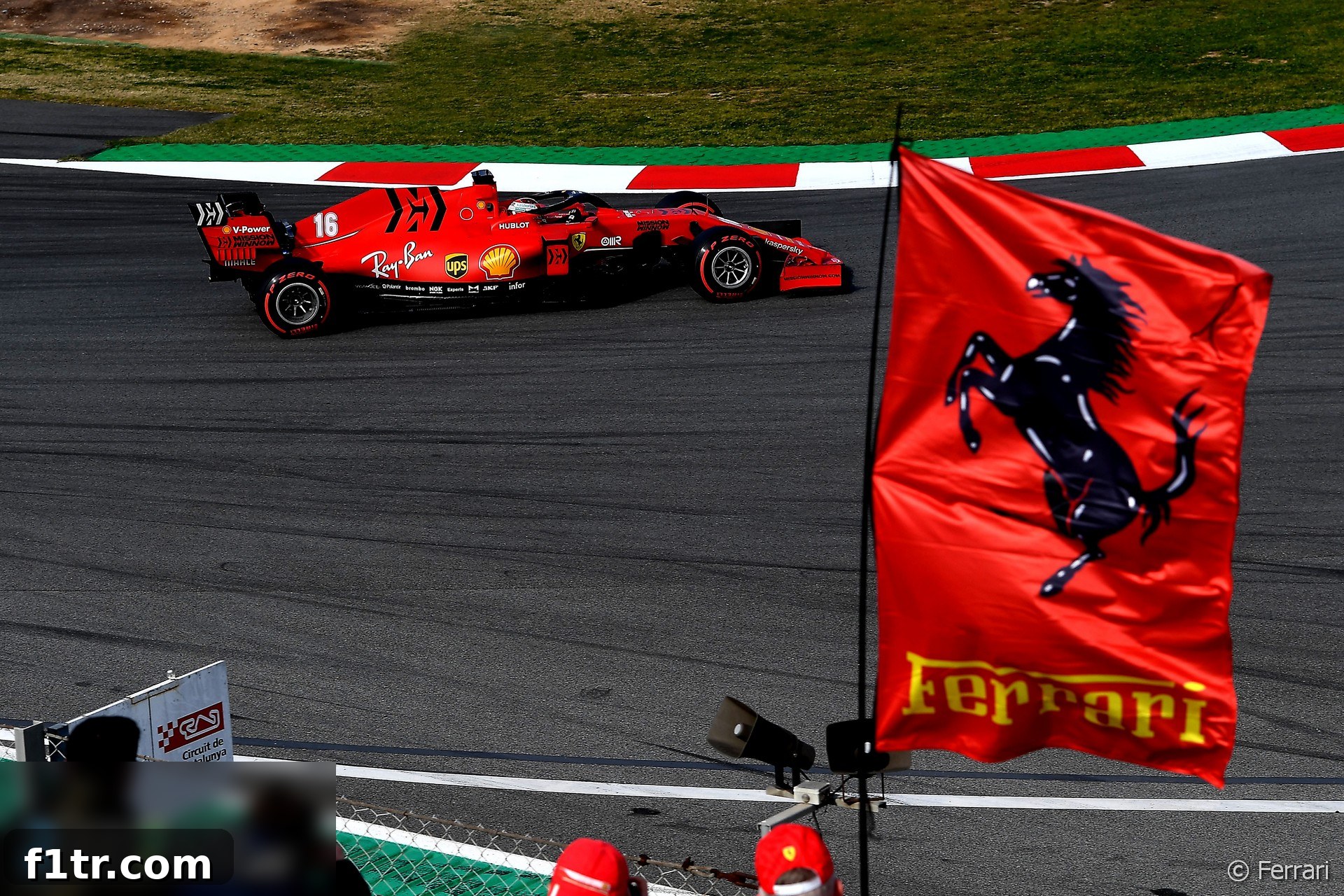
Ferrari entered the 2020 season with their SF1000, a car that had significant expectations following a strong finish to 2019. Charles Leclerc and Sebastian Vettel shared testing duties, each putting in solid mileage. While their reliability seemed promising, the team’s outright pace, particularly on the softer compounds, didn’t appear to match that of Mercedes. Pundits observed that Ferrari seemed to be focusing more on downforce generation compared to their previous straight-line speed advantage, potentially compromising ultimate top-end speed. Both drivers worked tirelessly on understanding the car’s handling characteristics and optimizing race setups. The Maranello squad aimed to address their previous season’s weaknesses, and testing provided crucial data on how well they had succeeded in balancing drag and downforce with the SF1000.
Aston Martin Red Bull Racing
Red Bull Racing’s 2020 contender, the RB16, powered by Honda, was piloted by Max Verstappen and Alexander Albon during the Barcelona tests. The team’s testing philosophy often involves a more conservative approach to showing raw pace, focusing instead on understanding the car’s complex aerodynamics and Honda’s power unit integration. While not consistently at the very top of the time sheets, the RB16 exhibited strong long-run performance and good balance, particularly in Verstappen’s hands. There were initial concerns about some stability issues, which the team quickly worked to resolve. Albon also put in a solid effort, gaining valuable experience with the new machinery. Red Bull’s testing program suggested a potential threat to Mercedes, especially if they could iron out any minor handling quirks before the opening race.
McLaren F1 Team
McLaren continued their resurgence in 2020 with the MCL35, driven by the exciting pairing of Carlos Sainz Jr. and Lando Norris. After a strong 2019 season, expectations were high for the Woking-based outfit. The MCL35 appeared to be a well-sorted machine, demonstrating consistent performance and excellent reliability throughout the testing period. Both drivers racked up considerable mileage, allowing the team to gather extensive data on the Renault power unit and the car’s aerodynamic package. Sainz and Norris showcased solid pace, indicating that McLaren was firmly positioned at the front of the competitive midfield, potentially challenging the established top three on certain circuits. Their testing performance reinforced the positive trajectory the team had embarked upon.
Renault F1 Team
Renault’s 2020 challenger, the R.S.20, was put through its paces by Daniel Ricciardo and the returning Esteban Ocon. The French team was under pressure to show significant improvement, having not fully met expectations in previous seasons. Testing provided a mixed bag of results; while reliability was generally good, their ultimate pace didn’t always stand out against key midfield rivals like McLaren. Ricciardo and Ocon focused on understanding the car’s nuanced handling and working on different setup philosophies. The team spent considerable time evaluating various aerodynamic configurations and trying to extract more performance from their power unit. Renault’s testing indicated they would remain firmly in the competitive midfield battle, with potential for strong points finishes if they could unlock consistent performance.
Scuderia AlphaTauri Honda
Rebranded from Toro Rosso, AlphaTauri launched their new era with the AT01, featuring the same Honda power unit as their sister team Red Bull. Pierre Gasly and Daniil Kvyat were tasked with maximizing the new car’s potential. Testing proved to be a productive period for AlphaTauri, as the AT01 demonstrated solid reliability and a respectable turn of pace. The team focused on understanding the new aerodynamics and ensuring smooth integration with the Honda engine, leveraging the strong synergy with Red Bull. Both Gasly and Kvyat logged many laps, contributing to a comprehensive data collection effort. AlphaTauri appeared poised to be a strong contender in the midfield, looking to build on the impressive performances delivered in 2019.
BWT Racing Point F1 Team
Racing Point caused a stir in the paddock with their RP20, affectionately nicknamed the ‘pink Mercedes’ due to its striking similarities to the 2019 Mercedes W10. Sergio Perez and Lance Stroll helmed the car during testing, and its performance was undeniably impressive. The RP20 consistently showed strong pace, particularly on longer runs, suggesting it could be a formidable midfield challenger. While the design drew some controversy, its on-track performance in Barcelona indicated a significant leap forward for the team. Perez and Stroll focused on maximizing the car’s potential across different conditions, highlighting its stability and predictable handling characteristics. Racing Point emerged from testing as a dark horse, with many predicting they would be a major disruptor in the 2020 season.
Alfa Romeo Racing ORLEN
Alfa Romeo fielded their C39 for the 2020 season, with Kimi Räikkönen and Antonio Giovinazzi behind the wheel, complemented by test driver Robert Kubica. The team focused on consolidating their position in the competitive midfield. During testing in Barcelona, the C39 demonstrated reasonable reliability, allowing the drivers to gather consistent data. While not topping the time charts, both Räikkönen and Giovinazzi worked through comprehensive programs, including aero mapping and long-run simulations. Kubica’s contributions were also valuable in providing feedback and further data points. Alfa Romeo’s testing indicated they would be strong contenders in the midfield battle, looking to capitalize on any opportunities presented during the season. Their approach was methodical, aimed at building a robust and consistent package.
Haas F1 Team
Haas presented their VF-20 for the 2020 campaign, hoping to bounce back from a challenging 2019 season. Romain Grosjean and Kevin Magnussen were once again the driving force for the American outfit. Testing in Barcelona showed a more stable and predictable car compared to its predecessor, which suffered from inconsistent performance. The team concentrated on understanding the new Ferrari power unit package and optimizing the car’s balance across various fuel loads. While they didn’t set the fastest times, the VF-20 appeared to be a more reliable platform, providing consistent feedback for the drivers. Haas aimed to re-establish themselves as strong midfield contenders, and testing indicated they had made progress in addressing their previous issues, focusing on consistency over outright speed.
Williams Racing
Williams Racing, with their FW43, aimed to put a difficult 2019 season behind them. George Russell, alongside rookie Nicholas Latifi, were entrusted with the development work. A key positive from the Barcelona testing was the team’s ability to be on track from day one, unlike the previous year. The FW43 appeared to be a significant step forward in terms of reliability and stability. While still at the back of the grid in terms of outright pace, the gap to the midfield seemed to have shrunk considerably. Russell continued to impress with his consistent feedback, while Latifi gained crucial experience. Williams focused on long-run data and understanding the car’s behavior across different setups, showing a more professional and well-prepared approach. Their testing efforts hinted at a more competitive and encouraging 2020 season for the storied British team.
F1 Pictures: A Glimpse into the World of Motorsport
As the curtains closed on the 2020 F1 pre-season testing at Circuit de Catalunya, the stage was set for an unforgettable championship battle. These captivating images offer a window into the dedication, innovation, and raw speed that define Formula 1. Each snapshot tells a story of preparation, anticipation, and the relentless pursuit of perfection that characterizes every team and driver on the grid. Dive deeper into our extensive collection of F1 photography to relive memorable moments from past races and glimpse into future events.
- 2026 Japanese Grand Prix in pictures
- 2026 Japanese Grand Prix qualifying day in pictures
- 2026 Japanese Grand Prix practice in pictures
- 2026 Chinese Grand Prix in pictures
- 2026 Chinese Grand Prix qualifying and sprint race day in pictures
View more F1 pictures