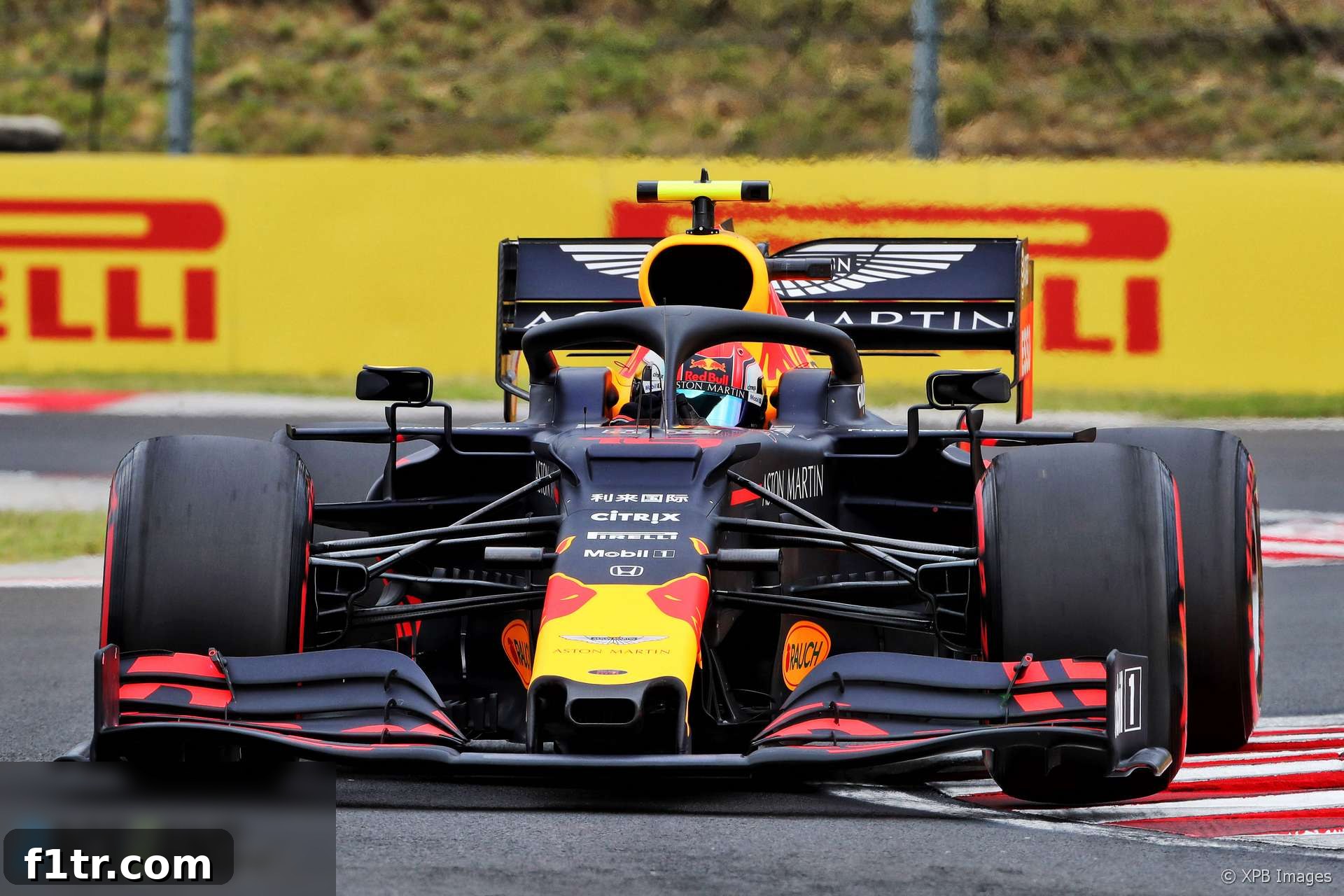
Pierre Gasly’s Challenging Hungaroring Qualifying: A Deep Dive into Tyre Management and Performance Gaps
The intensity of Formula 1 qualifying often exposes the fine margins between triumph and frustration. For Pierre Gasly, the 2019 Hungarian Grand Prix qualifying session at the Hungaroring proved to be a source of considerable disappointment. Despite securing a respectable sixth-place grid slot, the then-Red Bull Racing driver openly admitted his struggles with tyre management, ultimately finding himself over eight-tenths of a second adrift of his pole-sitting teammate, Max Verstappen.
The Quest for Peak Performance: Gasly’s Q3 Struggles
Gasly’s post-qualifying reflections painted a clear picture of a driver grappling to extract the absolute maximum from his machinery and Pirelli tyres. “I struggled quite a bit with the tyres during all qualifying, not really managing to put the lap together,” he confessed. This candid admission highlights a critical aspect of modern F1: the delicate art of bringing tyres into their optimal operating window and maintaining their performance throughout a high-pressure qualifying lap.
The Q3 session, where drivers push to the absolute limit for grid position, was particularly vexing for Gasly. His fastest lap was marred by a series of small, yet significant, errors that collectively cost him valuable tenths. “In the end even the Q3 lap I wasn’t happy with it. I lost a lot at the exit of turn one and lost the car as well in turn two. I’d lost three-and-a-half tenths already coming up to turn four. So it wasn’t a clean lap at all,” he elaborated. This breakdown of his lap underscores the unforgiving nature of the Hungaroring, a circuit renowned for its relentless sequence of corners where even minor mistakes compound rapidly, impacting subsequent turns and overall lap time.
The Hungaroring, often dubbed “Monaco without the walls,” demands precision, exceptional car balance, and superb tyre temperature management. Its tight and twisty layout offers minimal straight-line opportunities, placing a premium on mechanical grip and aerodynamic downforce through its numerous medium-speed corners. For a driver to lose the rear in Turn 1 and struggle through Turn 2, as Gasly described, indicates either an issue with the car’s setup, the driver’s confidence, or a failure to generate and maintain the ideal tyre temperature and grip levels from the outset of the lap.
The Gap to the Frontrunners: Verstappen and Mercedes
Gasly’s frustration was further compounded by the stark performance differential to his teammate and the Mercedes rivals. While Max Verstappen secured a brilliant pole position, showcasing Red Bull’s raw pace, Gasly found himself in a solitary battle, unable to match the front-running pace. “For sure [I’m] not really happy with my lap because I think I had the pace to fight with the Ferraris, not with Max and Mercedes, but at least with the Ferraris,” he stated.
This statement offers crucial insight into Gasly’s mindset and the internal dynamics at Red Bull Racing during that period. The acceptance that challenging Verstappen and the Mercedes drivers was beyond his reach in qualifying, but that he expected to be competitive with Ferrari, illustrates the significant performance gap he was experiencing. For a driver in a top team, consistently being significantly slower than a teammate can be demoralizing and often points to fundamental challenges in adapting to the car or extracting its full potential under pressure. The 0.8-second deficit to Verstappen on a relatively short track like the Hungaroring is a substantial margin, indicative of a day where Gasly simply couldn’t unlock the car’s ultimate speed.
Strategic Advantage? Q2 on Medium Tyres
Despite the qualifying woes, one silver lining for Gasly’s race strategy emerged from Q2. He successfully navigated the second qualifying session using the harder medium compound tyres, a move that placed him in a potentially advantageous position for the start of the race. Starting on mediums typically allows for a longer first stint, offering strategic flexibility compared to drivers starting on the softer, faster-degrading soft tyres.
This decision, however, wasn’t without its initial anxieties. After a slower initial run on the mediums, Gasly considered switching to softs but ultimately stuck with his strategy. “I knew after the first run I wanted to put the medium again because I knew doing a better lap and managing to get the tyres properly I had the pace to go through. We made it through still. [But] it wasn’t great and I struggled a bit with the tyres,” he explained. This demonstrates a strategic gamble that paid off, even if the execution wasn’t flawless. The ability to qualify in the top ten on medium tyres is a testament to a car’s underlying pace, even if the driver isn’t fully in tune with it, and it provides a significant advantage at a track where track position and tyre degradation are paramount.
The Hungaroring is notoriously difficult for overtaking. A good starting position is crucial, but equally important is the ability to manage tyres and execute an effective pit stop strategy. Starting on mediums gives Gasly the flexibility to extend his first stint, potentially leapfrogging competitors who might struggle with early degradation on soft tyres. This tactical foresight could play a pivotal role in the race, offering Gasly an opportunity to recover positions lost in qualifying due to his single-lap pace issues.
The Intricacies of Tyre Management in Formula 1
Pierre Gasly’s remarks underscore the profound importance of tyre management in modern Formula 1. Pirelli’s various compounds (soft, medium, hard) each have a specific operating window – a temperature range within which they deliver optimal grip and performance. Outside this window, tyres can either overheat, leading to blistering and degradation, or remain too cold, resulting in a lack of grip. Finding this sweet spot, not just for one lap but consistently throughout a session, is a monumental challenge for drivers and engineers alike.
Factors influencing tyre performance include track temperature, ambient temperature, car setup (camber, toe, suspension), driver input, and even the number of laps completed on a given set. On a circuit like the Hungaroring, with its continuous series of corners, generating and maintaining tyre temperature is critical. However, over-stressing the tyres through aggressive driving or an imbalanced car can quickly lead to overheating, particularly in the rear, resulting in the “loss of the car” that Gasly described.
The difference between a perfect tyre preparation lap and a suboptimal one can easily be several tenths of a second, as Gasly’s Q3 performance illustrated. This constant battle against thermal degradation and the quest for peak grip is a defining characteristic of contemporary F1, distinguishing the elite from the rest and often determining the outcome of both qualifying and the race.
Looking Ahead to Race Day
Despite the palpable disappointment in his qualifying performance, Gasly’s strategic choice to start on medium tyres offered a glimmer of hope for the race. His primary objective would undoubtedly be to consolidate his position, manage his tyres effectively, and capitalize on any opportunities that arise from the pit stop strategies of his rivals. While overtaking is challenging at the Hungaroring, a well-executed strategy and strong race pace could still see him move up the order, particularly against drivers starting on potentially more fragile soft compounds.
The 2019 season was a challenging one for Pierre Gasly at Red Bull, and his Hungaroring qualifying experience was emblematic of the difficulties he faced in consistently extracting the maximum from the RB15, especially when compared to the exceptional talent of Max Verstappen. However, the true test of a driver often lies in their ability to bounce back and perform under pressure on race day, turning a challenging Saturday into a productive Sunday. Gasly’s focus would shift entirely to maximizing his race potential, leveraging his tyre advantage, and delivering a performance worthy of his Red Bull seat.
For motorsport enthusiasts, Gasly’s candid assessment provided a fascinating glimpse into the unrelenting demands placed upon Formula 1 drivers, where perfection is sought at every turn, and even a minor deviation can have significant consequences. The Hungarian Grand Prix, with its unique challenges, promised to be a compelling battle where strategy, tyre management, and driver skill would ultimately determine success.
Advert | Become a Supporter & go ad-free
More from the 2019 F1 Season
- Crying in the Melbourne car park at 2019 grand prix was my career low – Ocon
- McLaren Racing reports reduced £71 million loss in 2019
- Kvyat: Hockenheim podium last year was “my biggest achievement” so far
- How the FIA’s new encrypted fuel flow meter targets Ferrari’s suspected ‘aliasing’ trick
- “He smashed my office door”: 23 must-see moments from ‘Drive to Survive’ season two
Browse all 2019 F1 season articles