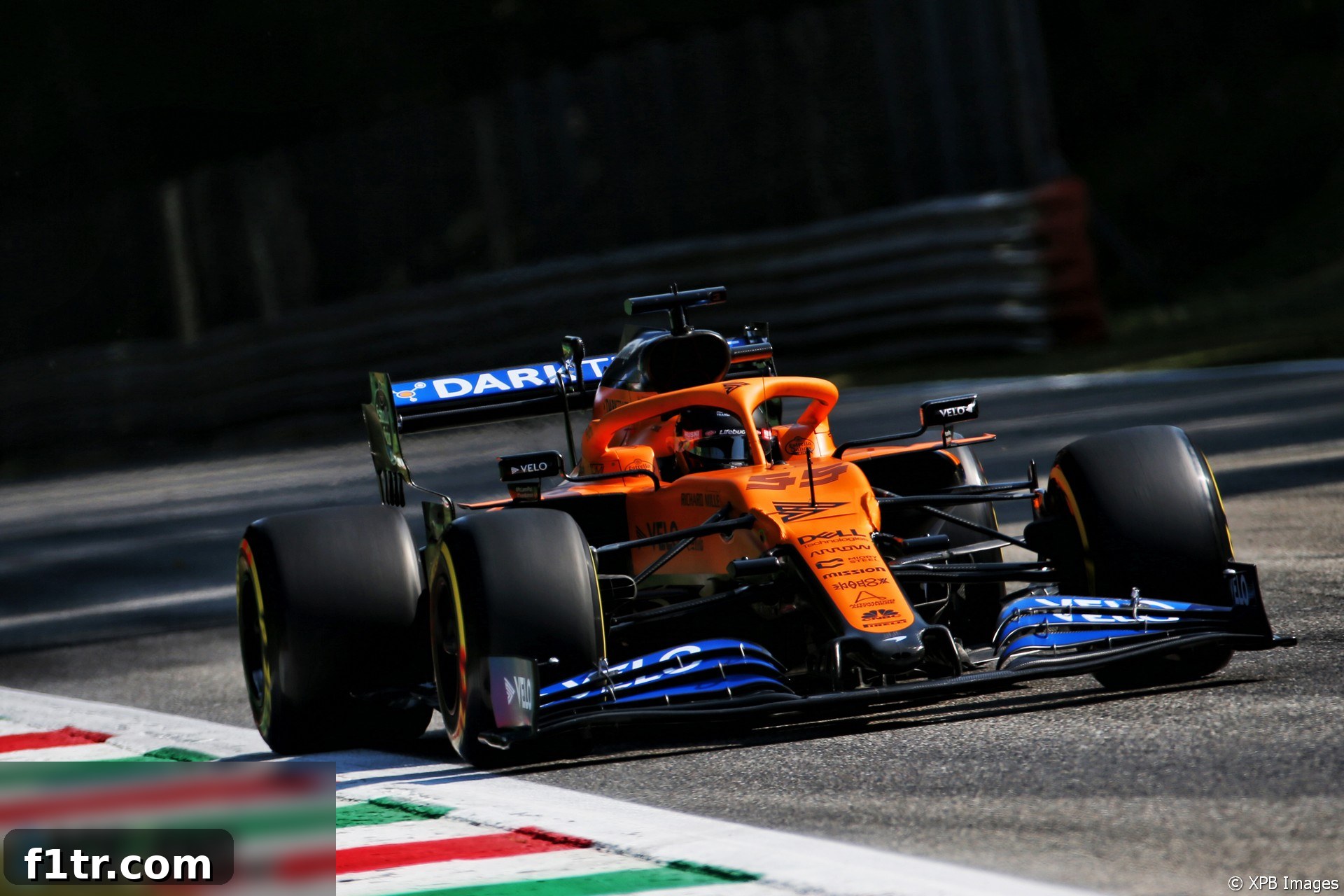
Carlos Sainz’s Season of Setbacks: McLaren’s Andreas Seidl on Resilience and Recovery
McLaren team principal Andreas Seidl has openly acknowledged and shared Carlos Sainz Jnr’s deep frustration concerning the significant number of points the Spanish driver has lost due to circumstances beyond his control throughout the current Formula 1 season. This sentiment underscores the intense pressures and high stakes inherent in top-tier motorsport, where every single point can dramatically alter championship standings and team morale.
Carlos Sainz Jnr, a driver renowned for his consistent performance and fighting spirit, recently voiced his growing exasperation regarding a series of unfortunate incidents that have plagued his 2020 Formula 1 campaign. The highly regarded McLaren driver estimates that these issues have collectively stripped him of approximately 30 crucial championship points – a staggering figure that could significantly impact his standing in the fiercely competitive midfield battle and McLaren’s overall position in the Constructors’ Championship.
“I can obviously understand his disappointment and frustration with how the season went so far after he experienced several different issues on his car,” stated Andreas Seidl, McLaren’s team principal, in a recent interview. Seidl’s candid remarks highlight not just empathy for his driver but also a broader understanding of the collective impact these setbacks have on the entire team. “But with this frustration he’s not alone. It’s the same for every single team member because we lost important points,” he added, emphasizing that the burden of lost opportunities is shared across the Woking-based outfit.
The Cost of Unforeseen Challenges: A Driver’s Perspective
For a Formula 1 driver, consistency is paramount. Each race offers a limited opportunity to score points, and any technical or operational glitch can be profoundly disheartening, especially when the driver feels they have extracted the maximum from the car. Sainz’s frustration is not merely about individual misfortune; it’s about the tangible impact on his championship aspirations and his confidence in the machinery beneath him. Losing 30 points, in a season where the midfield battle is tighter than ever, can mean the difference between fifth and tenth in the driver standings, or several places in the Constructors’ Championship. This kind of points deficit often requires drivers to push harder in subsequent races, sometimes taking greater risks, which can in turn lead to further complications.
The mental fortitude required to bounce back from such a string of setbacks is immense. Sainz, known for his analytical approach and calm demeanor, has now reached a point where his patience is visibly tested. His public statements are a clear signal that the team needs to address these recurring issues with urgency, not just for his individual performance, but for the collective morale and competitive standing of McLaren as a whole. Seidl’s acknowledgment is therefore a crucial step in demonstrating that the team is fully aligned with Sainz’s concerns and committed to finding lasting solutions.
McLaren’s Methodical Approach: Analyzing and Overcoming Adversity
In the high-pressure environment of Formula 1, simply expressing frustration is not enough. Andreas Seidl, a seasoned motorsport professional, outlined McLaren’s robust strategy for tackling these challenges head-on. “It’s important to stick to the facts, to analyse in detail with every incident what happened and try to learn from it and do better,” he affirmed. This philosophy is fundamental to success in F1, where continuous improvement and a data-driven approach are non-negotiable. Every failure, no matter how minor, is viewed as a learning opportunity, meticulously dissected to prevent recurrence.
The Belgian Grand Prix Exhaust Debacle
One of the most recent and public incidents occurred at the Belgian Grand Prix, where Carlos Sainz was cruelly denied a start due to a critical exhaust problem during the laps to the grid. Seidl provided a detailed account of this unfortunate event, explaining the cascading series of failures: “Unfortunately last weekend on Sunday on the laps to the grid there was a sensor issue within the engine which then triggered an engine mode outside of the normal operating conditions which was finally causing explosions in the exhaust which destroyed the exhaust.” This chain reaction, originating from a seemingly small sensor malfunction, highlights the intricate complexity of modern F1 power units and how a single glitch can have catastrophic consequences.
The immediate concern following such an event is often the integrity of the engine itself. Fortunately, there was a glimmer of hope. “At the moment it looks like the engine is still OK so we will start the weekend with this engine today and try to establish if we can then keep using it,” Seidl commented, referring to the subsequent race weekend. The team’s immediate priority was to verify the engine’s health and ensure no long-term damage had been incurred, a critical assessment given the limited engine component allocations per season. Furthermore, the Woking squad has been in close communication with their power unit supplier, Renault, regarding the matter. “Renault said they have measures in place that this doesn’t happen again. So that we need to check today,” Seidl confirmed, indicating a collaborative effort to fortify the reliability of the engine components and software.
Silverstone’s Tyre Trauma
Beyond mechanical engine issues, Sainz has also been a victim of tyre failures, a particularly dramatic and potentially dangerous setback in Formula 1. A significant loss of points occurred at Silverstone due to a critical tyre failure, an incident that affected other teams as well during what was a dramatic British Grand Prix weekend. “If you look then further back obviously he lost a lot of points in Silverstone with the tyre failure,” Seidl reflected. Tyre failures are often complex, involving factors such as tyre wear, debris on track, and the specific stresses placed on the tyres by the car’s setup and driver’s style.
Following the Silverstone incident, McLaren engaged in a thorough joint analysis with Pirelli, Formula 1’s official tyre supplier. “After doing the analysis together with Pirelli afterwards, there were explanations why this happened. It’s unlucky, of course, that it happened on his car and one of our cars. But in the end then afterwards Pirelli has put measures in place,” Seidl elaborated. This collaborative investigation is standard practice, aimed at understanding the root cause and implementing preventative actions. Whether through revised tyre pressure recommendations, altered compound usage, or modified car setups, such measures are vital for both performance and, crucially, driver safety.
The Critical Role of Pit Stop Precision
Not all points losses are attributable to external factors or technical component failures. Sometimes, the team itself must shoulder responsibility, particularly in the crucial area of pit stops. A lightning-fast pit stop can gain a driver valuable seconds and track position, while even a fraction of a second lost can have significant repercussions. “Last but not least we obviously need to see look also outside on the team’s side, what we could have done better,” Seidl admitted, demonstrating McLaren’s commitment to internal self-assessment. “We know that we definitely lost some points on this side with pit stops that were not at the speed we want to do pit stops.”
Pit stop performance is a finely tuned operation, involving dozens of highly trained mechanics executing a complex ballet of wheel changes and adjustments in under two seconds. Any minor hitch – a jammed wheel nut, a communication error, or a slight delay in coordination – can cost the team dearly. McLaren’s acknowledgment of these shortcomings is a testament to their pursuit of perfection across all aspects of their racing operation. Addressing these operational inefficiencies requires intense practice, continuous review of procedures, and investment in equipment and personnel training to ensure that the team operates at peak efficiency when it matters most.
The Cumulative Impact and Forward Vision
The combined effect of these incidents – engine sensor issues, tyre failures, and suboptimal pit stops – has undeniably cost Carlos Sainz and McLaren a substantial number of points, impacting their standing in both championships. “Putting all these together, it cost him a lot of points already this year,” Seidl summarized. This cumulative burden underscores the relentless nature of Formula 1, where every detail, no matter how small, contributes to the overall outcome.
Despite these setbacks, McLaren’s focus remains firmly on the future. Seidl’s leadership emphasizes a forward-looking perspective, learning from the past but dwelling on it. “As I said before, it’s important to analyse what happened there, but to do better and simply look now to the back but at this weekend and the rest of the season and hopefully still collect some good points together with him,” he stated. This proactive approach is critical for maintaining team morale and ensuring that past failures pave the way for future successes.
The remainder of the 2020 Formula 1 season presents a challenging but vital opportunity for McLaren and Carlos Sainz to demonstrate their resilience. By meticulously analyzing each issue, implementing robust solutions, and maintaining their unwavering focus, the team aims to convert their evident on-track potential into tangible championship points. Sainz’s talent and McLaren’s engineering prowess are undeniable, and their shared determination to overcome adversity will be key to finishing the season on a high note and building momentum for future campaigns.
Related: 2020 Italian Grand Prix Insights
- Grosjean “obviously jealous” but pleased for Gasly after win
- 2020 Italian Grand Prix Star Performers
- Gasly: I’m ready for Red Bull return
- Ban on ‘quali mode’ reduced overtaking at Monza – Hamilton
- Gasly beats Sainz in closest F1 finish for 10 years
Browse all 2020 Italian Grand Prix articles