The dawn of the 2022 Formula 1 season brought with it a wave of anticipation and significant regulatory changes, promising to shake up the established order. For Mercedes-AMG Petronas F1 Team, a dominant force in the sport for eight consecutive years, this new era has presented an unprecedented challenge. After consistently sweeping the Constructors’ Championship since 2014, the team finds itself in an unfamiliar and uncomfortable position, grappling with a car that is a shadow of its former glory. Team Principal Toto Wolff has openly expressed the gravity of their struggles, drawing stark comparisons to a period nearly a decade ago when the Silver Arrows last found themselves on the back foot.
Toto Wolff’s Stark Warning: Echoes of 2013 Amidst a New F1 Era
Mercedes’ recent history in Formula 1 is nothing short of legendary. From the advent of the V6 hybrid turbo era in 2014, the team embarked on an unparalleled run of success, securing eight consecutive constructors’ titles and seven drivers’ championships. This period of sustained dominance made Mercedes a benchmark for engineering excellence and competitive prowess in motorsport. However, the introduction of radical new technical regulations for the 2022 season, aimed at promoting closer racing through ground effect aerodynamics, has abruptly halted their stride.
The initial races of the 2022 campaign saw Mercedes’ W13 challenger visibly off the pace, struggling profoundly with performance. At the Saudi Arabian Grand Prix in Jeddah, the reigning constructors’ champions qualified a full second behind the front-runners, a staggering margin for a team accustomed to pole positions. Most notably, seven-time world champion Lewis Hamilton failed to progress beyond Q1, a rare and startling occurrence that underscored the severity of their issues. Speaking in the aftermath, Toto Wolff candidly articulated his concerns, stating, “I love competition and I’ve always loved competition. We had a really strong run of eight years where we were leading the pack, not always, but we kind of managed our way into the lead.”
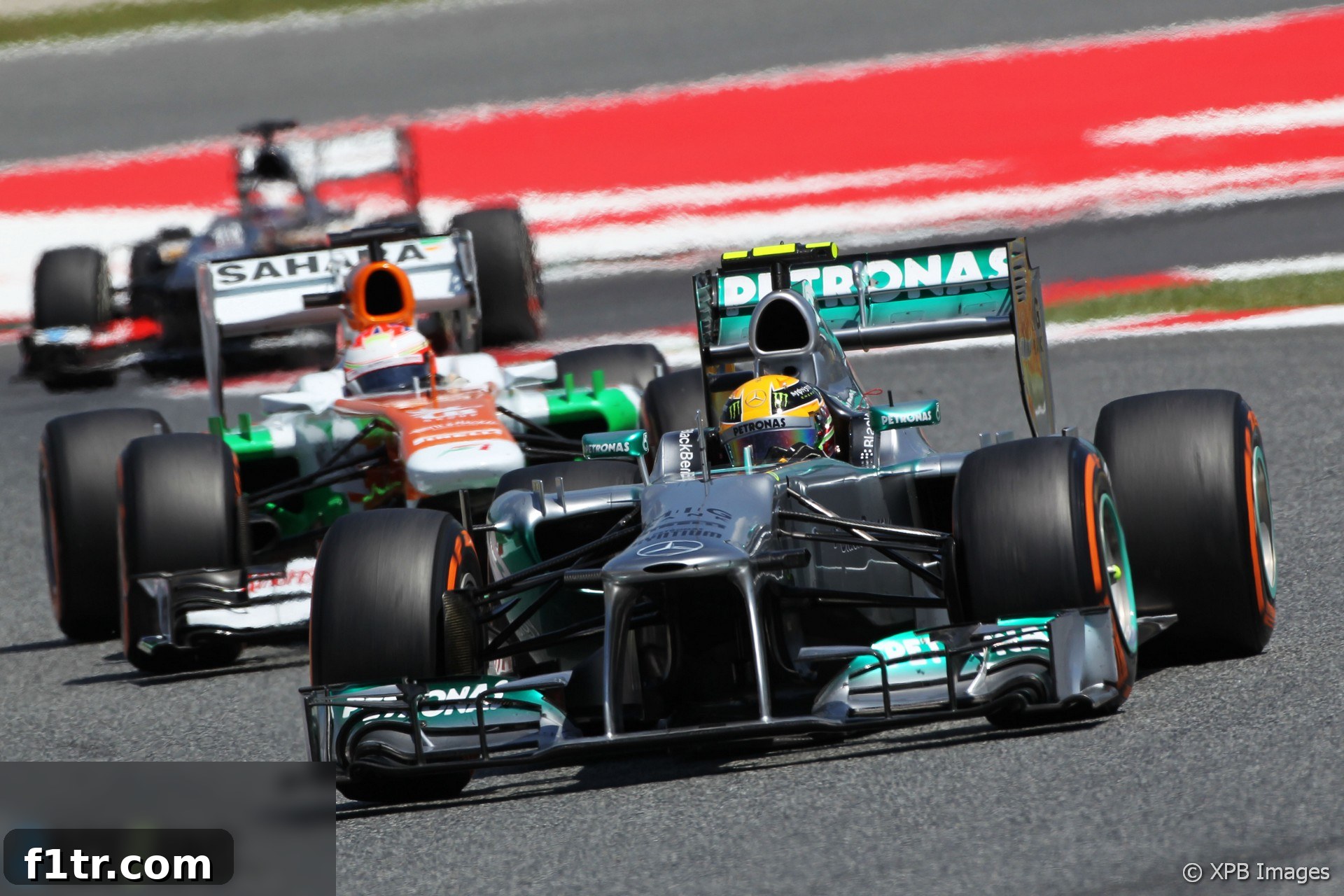
Wolff’s reflections on the current situation led him to a specific moment in Mercedes’ past: the 2013 season. “This time for me feels a little bit like 2013, where we just weren’t up to the speed with the Red Bull and probably also not with the Ferraris but we kept fighting. This is how I feel at the moment.” In 2013, Mercedes, while showing signs of improvement, was still a step behind the dominant Red Bull Racing outfit, which clinched both championships with Sebastian Vettel. They also faced stiff competition from Ferrari. Wolff’s comparison is not merely anecdotal; it signifies a deep-seated recognition within the team that they are facing a fundamental performance deficit, a stark departure from their recent position at the pinnacle of the sport.
Mercedes narrowly edged out Ferrari for second place in the 2013 constructors’ championship, highlighting the intense battle they faced despite not contending for the ultimate title. For Wolff, the current scenario, with Mercedes frequently trailing Red Bull and Ferrari, is “totally unacceptable.” He emphasized the team’s unwavering commitment to recovery: “We are third on the road and sometimes not even [that], like today. It’s just not an option to stay where we are. We need to fight.” This firm declaration sets the tone for a challenging but determined comeback effort from the Brackley-based squad.
The W13’s Core Challenge: Unraveling the ‘Porpoising’ Phenomenon
At the heart of Mercedes’ 2022 struggles lies a complex aerodynamic phenomenon known as ‘porpoising’. This issue, a recurring problem in Formula 1’s ground effect era of the 1970s and 80s, has made an unwelcome return with the sport’s new technical regulations. Porpoising refers to the violent, high-frequency vertical oscillation or bouncing of the car at high speeds, caused by a cyclical loss and re-engagement of aerodynamic downforce. As the car’s underbody creates a low-pressure area, pulling it closer to the track, the airflow underneath becomes choked, leading to a sudden loss of downforce. The car then rises, the airflow reattaches, and the process repeats, creating a jarring bouncing motion akin to a porpoise surfacing and diving in the water.
This aerodynamic instability has severely hampered the W13’s performance potential. George Russell, who despite the car’s challenges, managed to maintain a strong position in the drivers’ championship early in the season, explained the critical impact of this issue. “It’s tricky because we’re putting all of our effort into solving this porpoising issue and it’s not allowing us to focus on other things,” Russell stated. The severity of the bouncing forces Mercedes engineers to compromise the car’s fundamental setup. To mitigate the violent oscillations, the team is compelled to run the W13 at a significantly higher ride height than would be ideal for maximizing aerodynamic performance.
Russell further elaborated on the technical predicament: “We have the porpoising issue. The only way to run is to raise the car very high. And obviously with this ground effect car we lose all of the downforce.” The essence of ground effect aerodynamics is to generate immense downforce by creating a low-pressure zone under the car, essentially sucking it to the track. However, raising the car’s ride height significantly diminishes this effect, resulting in a substantial loss of grip and, consequently, lap time. “So we know that if we can get the car on the ground there is a huge chunk of lap time there. But we can’t achieve at the moment. It’s all well and good saying that, but we can’t physically achieve that right now. So we need to have a rethink.”
The dilemma is clear: solve porpoising to unlock the W13’s true aerodynamic potential, or continue to run it sub-optimally, sacrificing performance. This fundamental technical flaw not only affects the car’s speed but also impacts driver comfort and confidence, making it difficult for both Hamilton and Russell to extract the maximum from the machine.
Drivers Under Pressure: Hamilton’s Frustration and Russell’s Adaptation
The unexpected performance deficit of the W13 has placed immense pressure on Mercedes’ drivers, Lewis Hamilton and George Russell, albeit in different ways. For Lewis Hamilton, a seven-time world champion accustomed to fighting for victories and championships, the initial phase of the 2022 season was a profound shock. His Q1 exit in Jeddah, where he struggled desperately to find pace, was a stark reminder of how far the team had fallen. Hamilton, known for his ability to adapt and perform at the highest level, found himself wrestling with a car that was unpredictable, unstable, and lacked the consistent performance he had become accustomed to throughout his illustrious career at Mercedes.
The mental toll of driving a difficult car, coupled with the pressure of high expectations, is immense. Hamilton, a figure synonymous with F1 dominance, now faced the challenge of extracting points from a midfield contender, a role he hadn’t experienced in years. His frustration was palpable, yet his resolve to work with the team remained strong, reflecting the collective effort required to overcome such hurdles. For a driver who has spent much of his career at the sharp end of the grid, adapting to a car that demands constant compromises and is fundamentally flawed presents a unique psychological and physical test.
On the other hand, George Russell, in his debut season with Mercedes, found himself in a peculiar position. Having moved from Williams, a team that regularly competed at the back of the grid, Russell was perhaps more accustomed to extracting performance from less-than-ideal machinery. His ability to consistently deliver strong results, even with the W13’s inherent issues, was a testament to his talent and adaptability. Russell’s articulate and precise explanations of the porpoising problem offered invaluable insights into the car’s behavior. He highlighted how the continuous bouncing not only hindered the engineers’ ability to fine-tune the car’s balance and setup but also prevented him, as a driver, from focusing entirely on maximizing his driving performance. “As a driver it’s not allowing me to focus on the driving as much. The fine-tuning of the balance, the set-up, we can’t really do because all of our emphasis is on solving this issue. So we’ve got work to do.” Russell’s composed approach, even while fourth in the drivers’ standings despite the car’s struggles, showcased his maturity and strategic thinking.
Both drivers, despite their differing experiences and expectations, were united in their assessment of the W13’s fundamental flaw. Their feedback became crucial for the engineering team in Brackley, providing real-time data and subjective analysis to guide the development efforts needed to rectify the car’s deep-seated issues.
The Path Forward: Mercedes’ Quest for Solutions and Redemption
The challenge facing Mercedes is formidable: to redesign or significantly modify aspects of their W13 to eliminate porpoising and unlock its full aerodynamic potential, all while competing in a fiercely contested Formula 1 season. The engineering team at Brackley, renowned for their innovative solutions, is under immense pressure to deliver. The pursuit of a solution involves complex investigations into various areas, including the car’s floor design, suspension geometry, and overall aerodynamic philosophy.
Potential fixes could range from mechanical adjustments, such as stiffening or softening certain suspension components, to more radical aerodynamic modifications to the floor and diffuser to control airflow more effectively. The dilemma, as Russell pointed out, is that any solution must allow the car to run at an optimal ride height without triggering the bouncing. This is not a simple task, as changes in one area often have unforeseen consequences in another, requiring a delicate balance of compromise and innovation.
The urgency of the development race in Formula 1 means that Mercedes cannot afford to stand still. While they focus on fixing the W13’s fundamental flaws, rival teams like Red Bull and Ferrari continue to refine their own packages, widening the performance gap. The ability to bring effective upgrades to subsequent races will be critical for Mercedes to claw back their lost ground. This season, more than any other in recent memory, will test the depth of their engineering talent and their capacity for rapid problem-solving.
Despite the initial setbacks, Mercedes has a rich history of overcoming adversity. Their track record for relentless development and their vast resources suggest that they are far from giving up on the 2022 season. The team’s resolve, as echoed by Toto Wolff, is to fight their way back to the front. While a championship challenge might seem distant, their immediate goal will be to consistently secure podium finishes and understand their new-generation car better, laying the groundwork for future success.
Redefining Success: Mercedes in the Evolving Landscape of Formula 1
Mercedes’ struggles in the 2022 season have undeniably redefined their journey in Formula 1. From a position of unparalleled dominance, they have been thrust into a situation where fundamental problem-solving takes precedence over fine-tuning for victory. This period of adversity, however, can also be a catalyst for growth and re-evaluation. It forces the team to innovate under pressure, push boundaries, and rediscover the hunger that fueled their initial rise to the top.
The intensified competition from resurgent teams like Ferrari and the continued strength of Red Bull Racing has created a compelling narrative for the sport. Mercedes’ challenges have contributed to a more unpredictable and exciting championship battle, something fans have long craved. While their immediate focus is on the W13’s performance, the broader implications involve securing their long-term vision within Formula 1, adapting to evolving regulations, and continuing to attract top talent.
Ultimately, Formula 1 is a sport of constant evolution, where no team’s dominance is guaranteed forever. Mercedes’ 2022 season serves as a powerful reminder of this truth. Their current predicament is a testament to the brutal competitiveness of the sport and the ingenuity required to stay at the forefront. The path to redemption will be arduous, but for a team with Mercedes’ pedigree, the fight to return to their accustomed position at the pinnacle of motorsport is a challenge they are determined to meet head-on.
Further Reading on the 2022 F1 Season
- Mercedes told me “you’re wrong” about 2022 car’s problems – Hamilton
- FIA confirms all 10 F1 teams complied with 2022 cost cap
- Steiner “not ashamed” of panning “slow” Schumacher in Drive to Survive
- Albon believes year out of F1 improved him as a driver
- Hamilton sees diversity gains in F1 years on from his ‘traumatising’ experience of racism
Browse all 2022 F1 season articles