Winning a championship in motorsport represents the pinnacle of a driver’s career, a culmination of relentless effort, strategic brilliance, and sheer speed. The roar of the crowd, the celebratory spray of champagne, and the hoisting of the trophy are iconic moments etched into sporting history. Yet, for some drivers, the path to glory has been anything but conventional. In the high-stakes world of Formula 1 and its premier support series, alongside other competitive categories, championship conclusions have occasionally deviated from the planned script, leading to moments that were short on traditional action, fraught with confusion, or in some cases, never even reached their intended climax.
This article delves into some of the most memorable and often bewildering championship conclusions in recent memory, where the thrill of victory was unexpectedly tempered by peculiar circumstances. From misinterpretations of complex regulations to unforeseen financial crises and pandemic-induced disruptions, these stories highlight the unpredictable nature of motorsport and the indelible impact such events leave on drivers, teams, and fans alike. They serve as a stark reminder that even at the highest levels of competition, the path to being crowned champion can be paved with unexpected twists and turns.
Formula 1: A Title Clouded by Points Rule Confusion
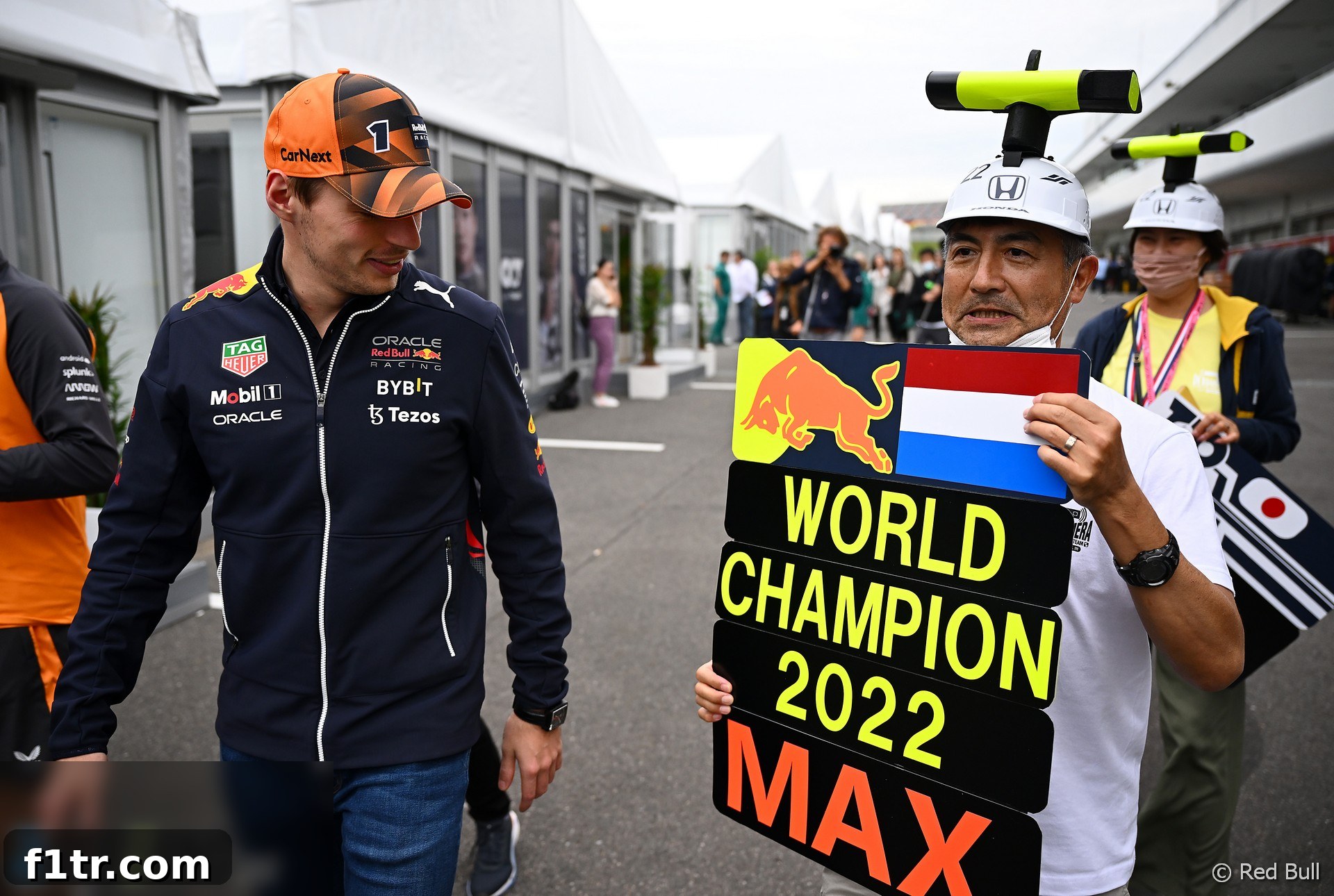
The 2022 Formula 1 season saw Max Verstappen of Red Bull Racing deliver a commanding performance that all but guaranteed him his second consecutive world championship well before the season’s end. His inevitable crowning was widely anticipated to occur at the Japanese Grand Prix, a fitting location given Suzuka’s significance as the home circuit for Honda, Red Bull’s revered power unit designer. The team even amplified Honda’s visibility on their cars for the weekend, setting the stage for a spectacular celebration.
However, the manner in which Verstappen secured the title proved to be anything but straightforward. The race itself was a masterclass from Verstappen, who meticulously edged out the Ferrari drivers for pole position and then charged ahead in a deluge of rain. The treacherous conditions led to the race being red-flagged and halted for several hours, eventually resuming to a shortened distance. This abbreviated format ignited a firestorm of misunderstanding among teams, media, and even the drivers themselves regarding the points that would be awarded for the reduced race length.
Following the widely criticized Belgian Grand Prix of 2021, new regulations had been introduced to clarify how points would be allocated based on the percentage of race distance completed. The prevailing consensus as Verstappen crossed the chequered flag to win was that he had not yet secured the championship, as the race had not reached the 75% distance threshold generally understood to be required for full points. This belief persisted even after his closest rival, Charles Leclerc, was penalized for gaining an advantage by going off-track, which did not immediately alter the championship outcome calculations in the minds of many.
Consequently, when Johnny Herbert informed Verstappen in the post-race interview that he was indeed champion, the Dutch driver’s disbelief was palpable. It took official confirmation from the FIA, who later admitted that an “unintended quirk” in the rules meant full points had, in fact, been awarded for the shortened race under specific conditions not solely tied to distance thresholds, thereby crowning Verstappen as champion. This revelation sparked considerable debate about the clarity and complexity of Formula 1’s sporting regulations, leaving many within the sport and its fanbase feeling bemused.
The aftermath saw immediate calls for a revision of the rule, a process that was promptly initiated to prevent future ambiguity. Even at the FIA’s prize-giving Gala, Red Bull team principal Christian Horner publicly acknowledged the “confusion” surrounding the championship-deciding race. This prompted a swift and defensive response from FIA president Mohammed Ben Sulayem, who insisted, “The FIA was blamed for the points but it was not the FIA which made the rules. It was the teams who made the rules and we were implementing it.” This exchange underscored the intricate relationship between teams, regulators, and the perpetual challenge of crafting unambiguous rules in a high-stakes sport like Formula 1, ultimately culminating in an unforgettable, albeit peculiar, championship moment for Max Verstappen.
Formula 2: A Pit Wall Coronation Amidst Chaos
Much like Verstappen’s commanding lead in F1, Felipe Drugovich’s march to the Formula 2 title in 2022 had long been considered a foregone conclusion. His consistent performance throughout the season, characterized by multiple victories and podium finishes, had put him in an unassailable position, making his eventual championship win a matter of when, not if. However, the manner of his triumph at Monza proved to be far from the celebratory on-track moment typically associated with securing a prestigious title.
Drugovich did not seal the deal with a dominant victory, a hard-fought podium, or even a points finish. Instead, he became the Formula 2 champion while standing on the pit wall, a passive observer to the unfolding events of the Monza sprint race. His journey to this unexpected coronation began with a five-place grid penalty, which relegated him to the midfield at the start of the race. On the opening lap, while aggressively battling for tenth position with Amaury Cordeel, disaster struck, setting in motion the peculiar events that would lead to his title.
Entering the challenging Roggia chicane, Drugovich held the inside line, which then transitioned to the outside line upon exit. As he ran onto the exit kerbs, Cordeel squeezed him off track, leading to an unavoidable wheel-to-wheel contact that critically damaged Drugovich’s steering. Despite his best efforts to limp his broken car back to the pits, the damage was too severe, forcing his retirement from the race. With his championship rival Théo Pourchaire still on track, the fate of the title hung precariously in the balance, resting entirely on Pourchaire’s performance.
For Drugovich, it was an agonizing wait. He could only watch as Pourchaire attempted to keep the championship fight alive with a strong finish. However, Pourchaire’s performance in the sprint race proved underwhelming, as he finished a lowly 17th. This result meant that even with Drugovich’s retirement, the points gap was sufficient for him to be crowned champion. The announcement came as Drugovich stood on the pit wall, surrounded by his team, a poignant and somewhat surreal moment for a driver who had delivered a season of consistent excellence. His championship, though thoroughly deserved, lacked the traditional on-track celebration, becoming instead a testament to the unpredictable nature of motorsport and the unique ways in which championships can be decided, highlighting the drama inherent in every race.
Formula 3: Red Flag Chaos and an Anxious Wait
The conclusion to the FIA Formula 3 Championship season at Monza proved to be an even more convoluted affair than its F1 and F2 counterparts, transforming what should have been a thrilling six-way title showdown into a confusing spectacle. The final race of the 22-lap decider in Monza promised high drama, with multiple drivers mathematically in contention for the coveted championship, but instead delivered a chaotic sequence of events that left everyone, including the eventual champion, reeling.
The race was brought under Safety Car conditions on the 16th lap after two drivers crashed out. At this critical point, if the race had simply concluded behind the Safety Car, Victor Martins, who was running in third place, would have been crowned champion. However, on the very next lap, red flags were suddenly waved, bringing the race to a complete halt due to the ongoing track clearance. The entire field headed to the pit lane, where an agonizing wait began as teams and drivers awaited confirmation on whether a restart would occur, with the championship hanging precariously in the balance.
Adding to the mounting tension, the first message disseminated from race control announced that Martins would be penalized five seconds for exceeding track limits. Initial calculations, based on the gaps behind the Safety Car at the moment of the red flag, suggested that Martins would still clinch the title if the race order remained unchanged after the penalty and no restart happened. But then, the timing screen, the primary source of real-time information for everyone in the paddock, began displaying changed orders multiple times, with other drivers inexplicably receiving penalties without clear explanations. This rapid fluctuation of positions and penalties plunged the entire paddock into a state of profound confusion and frustration.
The uncertainty dragged on for a considerable period. Eventually, it was communicated that the race would not restart, solidifying the standings at the point of the red flag, albeit with all applied penalties factored in. Yet, the timing screen continued its erratic updates, leaving Martins and his team in a torturous limbo: was he champion, or wasn’t he? The confusion only dissipated once penalties had been definitively handed out to a total of six drivers. Finally, the chequered flag was shown on the pit wall, and it was confirmed: Victor Martins, now classified in fourth place, had won the FIA Formula 3 title. His immediate reactions, however, were not of “overjoyed” celebration or “relieved” triumph, but rather, as he himself described, feelings of being “upset” and “angry” – a sentiment shared by many fans who witnessed the chaotic conclusion to a championship that deserved a clearer, more definitive end. This incident served as a potent example of how rule application and communication can deeply impact the emotional climax of a championship.
W Series: A Championship Ended by Cancellation
Jamie Chadwick’s third W Series title victory in 2022 stands out as particularly unconventional, not least because she wasn’t even at a racetrack when she officially clinched it. While her dominance throughout the season made her title inevitable, the manner of its confirmation was far removed from the usual on-track spectacle. Chadwick had demonstrated exceptional talent and consistency, winning every race in the first half of the season and extending her remarkable streak of seven consecutive victories carried over from the 2021 season.
Her winning run was finally brought to an end in round six at the Hungaroring, where a new engineer helped Alice Powell secure pole position and victory over Chadwick, proving that even the most dominant champions can be challenged. Despite this, Chadwick maintained a significant lead heading into the final three rounds, all scheduled as flyaway races. She held a formidable 75-point advantage over Alice Powell, with a total of 100 points still available. Beitske Visser was also tied on points with Powell, making the pursuit for the top spots intense and hinting at a potential championship battle.
In Singapore, Visser capitalized on an opportunity, winning the race while Chadwick, uncharacteristically, crashed out, significantly reducing Chadwick’s points lead. With 50 points now separating the top two drivers and 75 still up for grabs across the remaining events, Chadwick could have mathematically guaranteed her title by finishing no lower than fifth in the remaining three races, even if Visser were to win all of them. However, fate intervened in a way no one could have anticipated, leading to an abrupt end to the season.
Just eight days after the Singapore Grand Prix, a devastating announcement rocked the W Series paddock: due to severe financial problems, the remaining rounds of the 2022 season were officially cancelled. This meant that Jamie Chadwick, already holding an insurmountable lead, was declared champion by default. While her exceptional performance throughout the season undeniably deserved the title, the cancellation robbed her, and the fans, of a proper on-track championship decider. Her third W Series title, a testament to her talent, will forever be associated with the unfortunate circumstances that brought the season to an early and unexpected end, highlighting the fragility of even promising motorsport ventures in the face of economic challenges and the unusual ways championships can conclude when external factors intervene.
British F4: A Cardboard Cut-Out for the Champion
The 2022 British Formula 4 Championship embarked on a new chapter, aligning itself more closely with its European counterparts by adopting a standardized car, engine, and tyre package. This strategic move, while aiming to enhance competition and driver development, also inadvertently encouraged talented British F4 drivers to pursue dual campaigns in international series. One such promising talent was Alex Dunne, a former KCMG junior driver, who signed with Hitech for British F4 and with US Racing for Italian F4, showcasing his versatility and ambition across different single-seater categories.
Dunne’s season was marked by success across both championships, demonstrating his impressive talent, but it presented him with a unique logistical challenge: the British F4 finale at Brands Hatch regrettably clashed with the penultimate round of the Italian F4 season. By this critical juncture of the year, Dunne had amassed an overwhelming points lead in British F4, making his championship victory there all but mathematically assured. In contrast, his fight for second place in the Italian F4 standings was considerably tighter and required his direct participation to maximize his chances.
Faced with this unavoidable scheduling dilemma, Dunne made the pragmatic decision to prioritize his Italian F4 commitments, traveling to Monza to compete in that series. This meant that when the British F4 championship was officially secured following the first race of the Brands Hatch weekend, the actual champion, Alex Dunne, was notably absent. In a moment that was both humorous and somewhat melancholy, a life-sized cardboard cut-out of Dunne was brought to the circuit to receive the champion’s laurels on his behalf. This unusual “coronation” highlighted the increasing demands on young drivers competing in multiple series and the bittersweet reality of winning a championship without being physically present to celebrate with the team and fans. While undoubtedly a testament to his dominance in British F4, the image of a cardboard cut-out champion underscored the peculiar anti-climax of an otherwise brilliant season, making it a truly unique championship moment in junior motorsport.
China: COVID-19’s Lingering Impact on Motorsport Calendars
China’s stringent ‘zero Covid-19’ policy exerted a profound and often disruptive influence on its domestic motorsport schedules throughout the year, standing in stark contrast to many other nations that had largely returned to near-normalcy for hosting large-scale events. This uncompromising policy left the final rounds of its junior single-seater series in an agonizing state of limbo, with organizers, teams, and drivers constantly awaiting clarity on whether races would proceed amidst evolving restrictions.
The third round of the Chinese F4 season, for instance, was initially slated for a new street circuit in Pingtan in September. However, the Pingtan International Racing Festival organizers encountered difficulties in securing all the necessary permissions to run on the planned date, leading to its postponement to the first weekend of November. By that point, the national Covid-19 policy had evolved to make such a large-scale public event impossible to stage. Undeterred, the organizers then explored the possibility of further delaying the race to the second weekend in December, a decision that would re-designate it as the season finale and reposition November’s intended season finale, the prestigious Macau Grand Prix, as round three of the championship.
While the Pingtan event eventually did run, its impact on the championship fight was ultimately negligible, thanks to the overwhelming dominance of one driver: Gerrard Xie. Xie had been the runaway leader in both the Chinese F4 and the Formula Renault Super Challenge series, consistently demonstrating a level of performance far superior to his competitors. His secure second-place finish at the Macau Grand Prix was sufficient to clinch him the F4 title, irrespective of whether the Pingtan races went ahead or not. As if to underscore his commanding performance, Xie then proceeded to dominate all four races held at Pingtan, further cementing his well-deserved championship with undeniable skill.
However, the Formula Renault Super Challenge faced a less resolved fate. Its fourth and final round was originally scheduled for the renowned Shanghai International Circuit, the home of the Chinese F1 Grand Prix, in September. This event was first postponed to the end of October, only to be entirely called off as the circuit remained open solely for testing purposes due to ongoing restrictions. Despite the series organizers’ efforts to find a replacement venue and date, Xie himself expressed doubts about returning to race a FR2.0 car again that year, leaving the championship’s official conclusion ambiguous and unresolved. The prolonged uncertainty and ultimate cancellation highlighted the immense logistical challenges and frustrating anti-climaxes caused by external global events on regional motorsport scenes, denying some drivers a clear path to championship glory.
Formula Ford 1600: Acrimonious Victories and Protracted Disputes
The entry-level single-seater category of Formula Ford 1600, renowned for its fiercely competitive racing and iconic end-of-year classics, experienced two particularly dramatic conclusions that were regrettably overshadowed by paddock drama and protracted disputes. These events, the Formula Ford Festival and the Walter Hayes Trophy, both ended with more contention than celebration, embodying the intense passions and unforgiving nature of grassroots motorsport, where every position and every ruling can spark intense debate.
At the prestigious Formula Ford Festival, the organizing BRSCC club faced significant criticism for failing to reschedule the final of the knockout event, despite clear forecasts predicting heavy rain at Brands Hatch during the race slot. As predicted, a severe storm struck, forcing the highly anticipated winner-takes-all bout to be red-flagged and declared complete after a mere two laps. The application of red flag rules, which often revert standings to a previous lap, then shuffled several drivers up and down the order, leaving a considerable portion of the paddock furious about the perceived injustice. Adding insult to injury, the skies cleared just half an hour after the race was called, but by then the sun was setting. The race had been scheduled later in the day than traditional, raising legitimate questions about whether such a brief, two-lap encounter could truly count as a completed race worthy of a champion. Despite the arguments lingering vehemently in the paddock, Red Bull athlete Max Esterson was ultimately crowned the winner, having led the short-lived race from pole position, but the victory was undeniably tainted by the controversial circumstances.
The controversy surrounding victories continued just two weeks later at the Walter Hayes Trophy, with Max Esterson once again at the center of the storm. He initially won the Silverstone event and celebrated on the podium, only to be promptly summoned to the stewards over a clash with another driver in the final moments of the race. This triggered hours of intense deliberation by the stewards, who eventually penalized Esterson. However, this decision was immediately appealed by his team, initiating a prolonged legal battle within the motorsport hierarchy that extended well beyond the racetrack.
Another few hours of waiting ensued as the appeal was heard. When it failed with the stewards, the case was then escalated to the national court, extending the uncertainty for weeks. A month later, in December, the case was finally heard, and Esterson’s appeal was rejected. The ultimate confirmation of victory was then delivered to the rightful winner, Joey Foster, via a simple phone call. This extraordinarily delayed and undignified manner of determining a champion, weeks after the event, epitomized the complexities and frustrations that can arise from on-track incidents and rigorous sporting governance. It turned a potentially celebratory moment into a protracted legal saga, demonstrating how challenging it can be to definitively declare a winner in the heat of competition, even in grassroots motorsport.