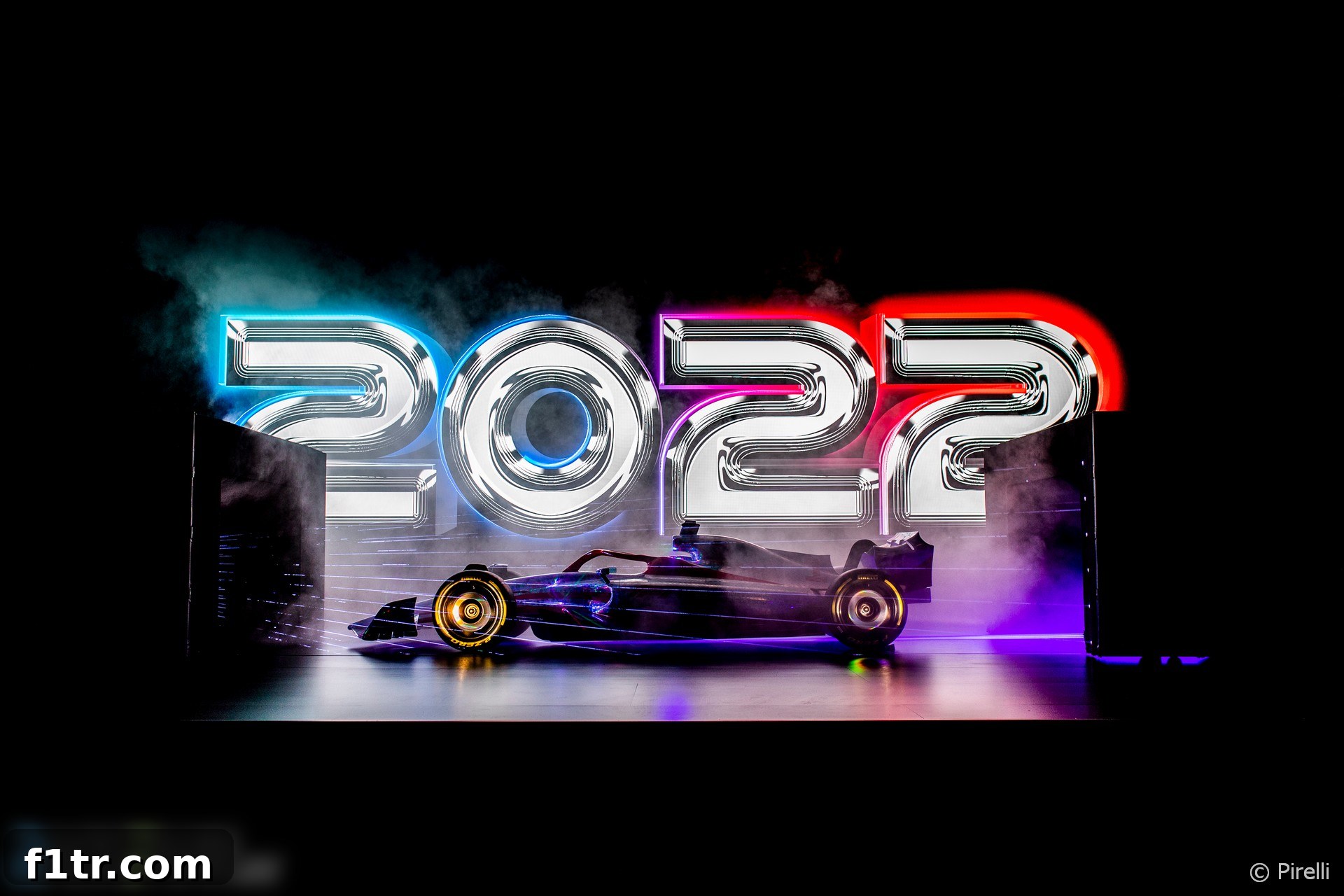
The highly anticipated reveal of Formula 1’s full-size model at last week’s British Grand Prix offered a tangible glimpse into the future of the sport. This innovative prototype showcased cars built to the radically overhauled regulations set to take effect next year, marking a potential paradigm shift in Grand Prix racing.
Advertisement
Originally scheduled for 2021, the comprehensive 2022 technical regulations were delayed by a year due to the global pandemic, giving teams and the sport more time to adapt to their widespread implications. This ambitious regulatory revamp represents Formula 1’s most significant attempt yet to tackle a perennial problem that has plagued the sport for decades: the difficulty drivers face when trying to follow and overtake rivals. The core issue lies in the turbulent “dirty air” generated by a leading car, which significantly reduces the aerodynamic performance of a following vehicle, making close-quarters racing and overtakes a rare spectacle on many circuits.
Beyond simply addressing the “overtaking fix,” these new rules embody a broader vision for Formula 1. The primary objective is to dramatically reduce the performance differential between teams, fostering a more competitive and unpredictable championship. For too long, the sport has been dominated by a handful of constructors, often leading to protracted periods of single-team supremacy. The 2022 regulations aspire to create a more level playing field, where driver skill and strategic acumen play an even greater role, and the outcome of races is less predetermined by sheer budgetary advantage.
However, the journey towards this envisioned future is not without its critics. Several prominent F1 designers and technical directors have voiced concerns regarding the complexity and restrictiveness inherent in the new regulations. They fear that the stringent design parameters might stifle innovation and lead to a field of cars that, while potentially offering better racing, could appear visually very similar. Furthermore, initial projections suggest that next year’s cars will be notably slower, potentially by several seconds per lap, as teams grapple with optimizing performance within the new rulebook. This anticipated loss of outright speed and reduction in design freedom sparks a crucial debate: Will the promised improvements in racing spectacle justify the sacrifices in ultimate performance and technological diversity?
Formula 1’s leadership, along with the FIA, unequivocally believe that this represents a necessary evolution for the sport. They posit that the long-term health and appeal of F1 depend on a more exciting, competitive product. But do fans and stakeholders truly share this vision for Formula 1’s future, as encapsulated by its groundbreaking 2022 rules? The answer to this question will unfold on track, but the discussion is already in full swing.
Arguments For the New Regulations
The strategic direction Formula 1 is embracing for 2022 is far from unprecedented or radical; it’s a proven formula that other successful single-seater series have adopted. The fundamental shift involves significantly reducing the reliance on intricate upper-surface aerodynamics in favor of reintroducing and maximizing the potent effects of larger floor ‘tunnels’ – a concept commonly known as ground effect. This approach is widely regarded as the most effective method for enabling single-seater cars to race each other in incredibly close proximity without suffering debilitating performance loss.
A compelling real-world demonstration of this principle was seen in IndyCar when it revamped its cars’ aerodynamics in 2018. The changes led to a noticeable improvement in the quality of racing, with more overtakes and wheel-to-wheel battles. Similarly, the final generation of Formula Renault 3.5’s Dallara chassis was renowned for producing consistently thrilling circuit racing, a testament that drivers like Sebastian Vettel, Daniel Ricciardo, and other illustrious graduates of the series can readily attest to. These examples provide a strong foundation for optimism that F1 can replicate, and even surpass, such successes.
While teams may indeed have less liberty to develop wildly different aerodynamic solutions, this outcome is not necessarily detrimental. Historically, the relentless pursuit of more downforce, particularly from complex wing elements, did little to inherently aid the racing spectacle, as evidenced by the 2017 season and many others where cars struggled to follow. Furthermore, ultra-complex, high-downforce aerodynamics often have limited real-world road relevance, diverging from F1’s often-touted position as a technological incubator for the automotive industry. By redirecting development focus, F1 can encourage innovation in other, potentially more relevant areas such such as powertrains, sustainable fuels, and advanced materials, all while prioritizing the racing product on track.
Arguments Against the New Regulations
A primary concern among detractors is that the stringent new regulations threaten to undermine Formula 1’s long-held status as the technological pinnacle of motorsport. By confining designers within highly rigid car design parameters, the rules could suppress the very innovation and engineering freedom that have defined F1 for decades. This shift might diminish the breathtaking, boundary-pushing performance that current cars exhibit, to the extent that it could be a significant period before we witness track records being consistently broken again. The pursuit of ultimate speed and cutting-edge design has always been a core tenet of F1, and some fear this might be diluted.
Moreover, the 2022 regulations appear to perpetuate a concerning trend in Formula 1 that has arguably detracted from the quality of racing: the ever-increasing weight of the cars. Despite calls from numerous drivers to reduce vehicle mass for improved agility and dynamics, the new rules will regrettably result in even heavier machines. This added weight can negatively impact braking distances, tire degradation, and the overall nimbleness of the cars, potentially making them less engaging to drive and less spectacular to watch, despite the aerodynamic improvements.
Perhaps the most telling indictment of the new rules’ potential effectiveness lies in the decision to retain the Drag Reduction System (DRS). DRS – widely criticized as F1’s somewhat artificial “sticking plaster” solution for overtaking – remains in the rule books for next year. Its continued presence raises legitimate doubts about the FIA and Formula 1’s true confidence in the new regulations’ ability to genuinely promote closer, organic racing. If the ground effect and simplified aerodynamics are truly successful in facilitating overtakes, then the need for an artificial aid like DRS should diminish, not persist. Its retention suggests a hedging of bets, implying that even the sport’s governing bodies are not entirely convinced the core problem of dirty air will be fully resolved.
My Perspective
Like many fans, I didn’t fully grasp the depth of my anticipation for Formula 1’s upcoming rules changes until their postponement early last year. While the ultimate efficacy of these regulations remains to be proven, they unequivocally appear to be the culmination of extensive research, sound reasoning, and a clear understanding of what makes for compelling racing. Having witnessed firsthand how well other, conceptually similar cars have raced in series like IndyCar and Formula Renault, I find myself cautiously optimistic about the potential for F1. The shift towards ground effect aerodynamics feels like a return to a fundamental principle of vehicle design that has historically produced great racing.
A legitimate concern, however, revolves around the possibility of a grid filled with largely identical cars from next year. While the aim for competitive balance is noble, the visual distinction and unique design philosophies of each team are also part of Formula 1’s allure. Nevertheless, F1 and the FIA have consistently stated their belief that there is sufficient scope within the rulebook for teams to develop substantially different-looking cars, allowing for distinct engineering interpretations. The true test of this claim will, of course, arrive when the covers finally come off the real machines during pre-season testing next year, and we see how different each team’s interpretation of the regulations truly is.
Your Voice Matters: The Verdict on F1’s Future
Will Formula 1’s new technical regulations for 2022 prove a change for the better?
- No opinion (2%)
- Strongly disagree (5%)
- Slightly disagree (7%)
- Neither agree nor disagree (9%)
- Slightly agree (51%)
- Strongly agree (27%)
Total Voters: 188
To participate in future polls and debates, a RaceFans account is typically required. If you do not have one, you might register an account here or read more about registering here. Once the voting period concludes, the final results will be prominently displayed instead of the interactive voting form.
Advertisement
Related Debates and Polls
Dive deeper into the ongoing discussions surrounding the sport’s direction and technical evolution with these related articles and polls:
- What must Formula 1 fix with its new rules – and what should it leave unchanged?
- ADUO: Do F1 teams who fall behind deserve to get help to catch up?
- F1 is considering doubling its sprint races. Do you want more or fewer?
- Will this be a fight or a rout? 20 questions for the 2026 Formula 1 season
- Which Formula 1 team has the best-looking car – and the worst – for the 2026 season?
Browse all debates and polls