Formula 1’s Resurgent 2020 Season: Unveiling the Initial Calendar Amidst Global Challenges
After an unprecedented and lengthy delay, Formula 1 has officially unveiled the initial details of its much-anticipated 2020 season, bringing a wave of excitement to motorsport enthusiasts worldwide. The championship, significantly impacted by the global COVID-19 pandemic, is set to roar back to life next month with an ambitious and compact schedule designed to deliver thrilling racing while prioritizing health and safety. This announcement marks a crucial step in the sport’s efforts to navigate the challenges posed by the pandemic, setting the stage for a unique and memorable championship year.
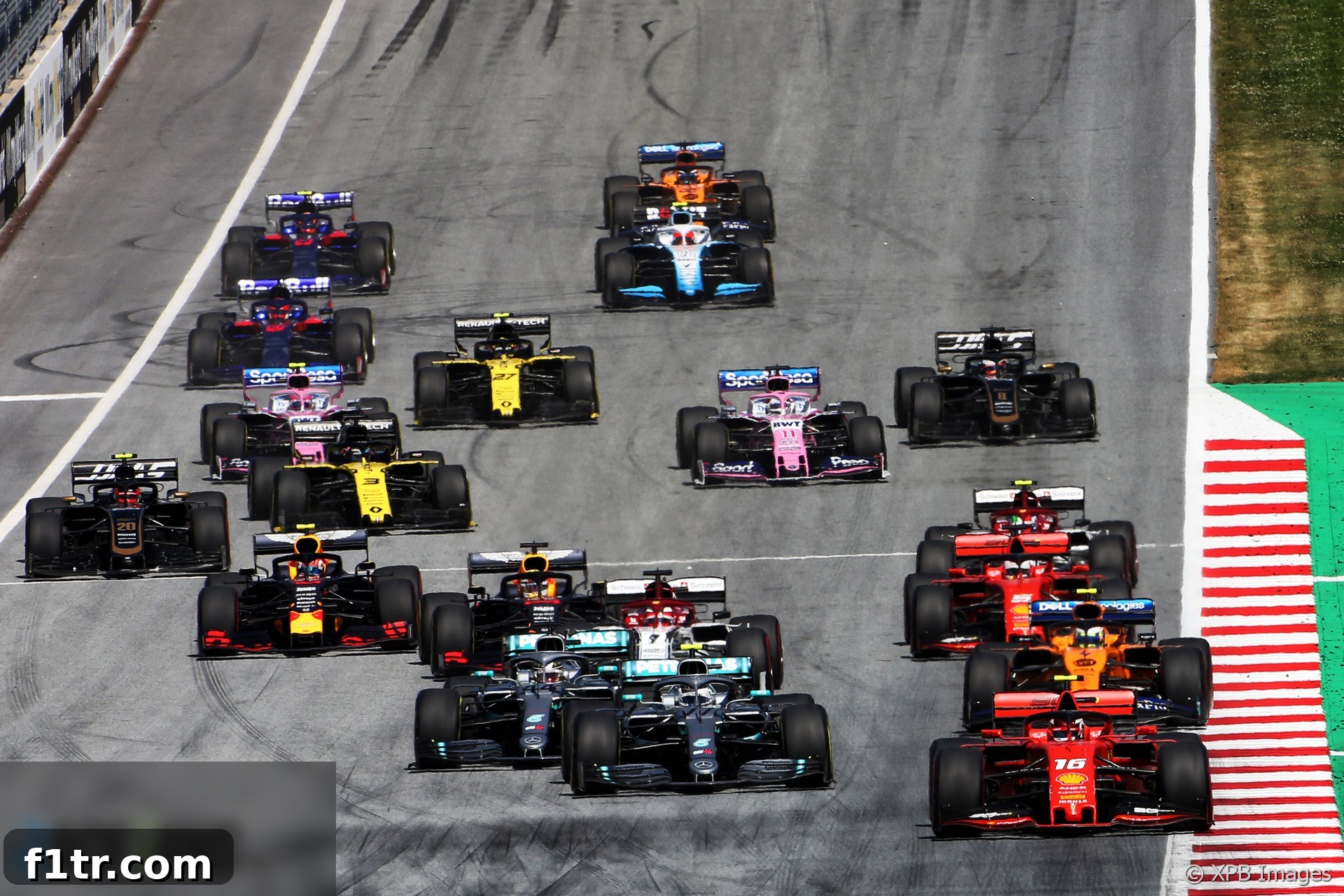
The championship will commence with a spectacular return to the Red Bull Ring in Austria, featuring back-to-back races on July 5th and 12th. This innovative approach allows for maximized racing action in a controlled environment, reducing extensive travel during the initial phase of the season. Following the Austrian double-header, the F1 circus will swiftly move to the Hungaroring for a third race on July 19th. This inaugural segment will form the first of two “triple-headers” in the revised calendar, a demanding feat that will test the resilience and logistical capabilities of every team and individual involved.
The decision to host multiple races at the same venue, particularly in Austria, is a strategic move to manage the complexities of international travel and health protocols. The Red Bull Ring, nestled in the picturesque Styrian mountains, is a familiar and popular circuit, known for its elevation changes and fast corners, promising an exciting start to the season. The first race will retain its traditional title as the Austrian Grand Prix, while the second event at the same venue will be uniquely named the “Steiermark Grand Prix,” honoring the region that hosts the circuit. This creative naming strategy not only differentiates the two events but also provides a nod to the local heritage.
Two weeks later, the intensity will ramp up once more with a second triple-header. The iconic Silverstone circuit in Great Britain is slated to host two Grands Prix on August 2nd and 9th. As the spiritual home of Formula 1, Silverstone’s inclusion for a double-header is highly significant, offering a fitting backdrop for the sport’s return. The second race at Silverstone will be a special occasion, designated as the “70th Anniversary Grand Prix,” commemorating seven decades since the first Formula 1 World Championship race was held in 1950. This historical tribute underscores F1’s rich legacy even as it navigates its most challenging period.
Immediately following the British double-header, the paddock will travel to the Circuit de Catalunya for the Spanish Grand Prix, which was originally postponed. This race, set for one week later, completes a grueling sequence of six races within seven weeks. Such a compressed schedule raises considerable logistical and operational challenges for teams. Concerns have already been voiced regarding the potential strain on resources, particularly the availability of spare parts. The relentless pace, coupled with the usual attrition of motorsport, could lead to teams facing unprecedented difficulties in repairing and rebuilding cars between events, adding an unpredictable element to the early rounds of the championship.
Health, Safety, and the “Closed Event” Concept
Throughout the planning process, Formula 1 has unequivocally stated that “the health and safety of all involved will continue to be priority number one.” This commitment underpins every decision made regarding the revised calendar and operational procedures. The initial rounds of the championship are expected to be “Closed Events,” a term adopted by the sport to signify races held without spectators. This measure is a critical component of the extensive health and safety protocols implemented to create a secure environment for teams, drivers, and essential personnel.
Operating as a “bubble” with rigorous testing, social distancing, and stringent hygiene practices, F1 aims to minimize the risk of virus transmission. While the absence of passionate fans will undoubtedly alter the atmosphere, the focus remains firmly on ensuring the safe resumption of competitive racing. There is a glimmer of hope, however, as RaceFans understands that Monza, the venerable home of the Italian Grand Prix, is actively exploring possibilities of accommodating a limited number of fans at its race if it can be done safely and in adherence to local regulations. This demonstrates a cautious optimism and a desire to gradually reintroduce the fan element when conditions allow.
The Confirmed Initial Eight-Race Schedule
Following the intense initial six races, the championship will observe a two-week break, offering a much-needed respite for teams and personnel. The action will then resume with two more classic European rounds, held on their originally scheduled dates. The Belgian Grand Prix at the legendary Spa-Francorchamps circuit will take place on August 30th, followed by the Italian Grand Prix at the historic Monza track on September 6th. These two circuits are beloved by fans and drivers alike, promising high-speed drama and challenging racing.
The confirmed eight-race schedule forms the backbone of the revised 2020 Formula 1 season. This foundation provides a clear path forward for the championship, allowing teams to finalize their preparations for an extraordinary year of racing. The sport has indicated its intention to confirm the details of its remaining races “in the coming weeks,” keeping the door open for additional events later in the year, potentially exploring new venues or returning to others that were initially postponed.
| Round | Race | Location | Dates | Support Races |
|---|---|---|---|---|
| 1 | Austrian Grand Prix | Red Bull Ring | July 3rd-5th | Formula 2, Formula 3 |
| 2 | Steiermark Grand Prix | Red Bull Ring | July 10th-12th | Formula 2, Formula 3 |
| 3 | Hungarian Grand Prix | Hungaroring | July 17th-19th | Formula 2, Formula 3 |
| 4 | British Grand Prix | Silverstone | July 31st-August 2nd | Formula 2, Formula 3 |
| 5 | 70th Anniversary Grand Prix | Silverstone | August 7th-9th | Formula 2, Formula 3 |
| 6 | Spanish Grand Prix | Circuit de Catalunya | August 14th-16th | Formula 2, Formula 3 |
| 7 | Belgian Grand Prix | Spa-Francorchamps | August 28th-30th | Formula 2, Formula 3 |
| 8 | Italian Grand Prix | Monza | September 4th-6th | Formula 2, Formula 3 |
Support Races: A Boost for Emerging Talent
Adding further depth and excitement to the race weekends, Formula 2 and Formula 3 have confirmed their participation as support races at all eight of the initial rounds. These junior categories are vital breeding grounds for future F1 stars, and their inclusion ensures a full program of motorsport action throughout each weekend. The presence of F2 and F3 not only offers aspiring drivers crucial track time and competitive experience but also provides additional entertainment for those following the events from home. Further events for their respective calendars are expected to be announced at a later date, mirroring F1’s flexible approach.
The Shifting Global Calendar: Cancellations and Postponements
The revised 2020 F1 calendar reflects the harsh realities of the global health crisis, leading to the unfortunate cancellation of several highly anticipated Grands Prix. The races in Australia, the Netherlands, Monaco, and France will not be rescheduled this year. The cancellation of iconic events like the Monaco Grand Prix, a jewel in the crown of motorsport, and the eagerly awaited return of the Dutch Grand Prix at Zandvoort, underscores the profound impact of the pandemic on the sport’s traditional schedule. These decisions, while regrettable, were deemed necessary due to logistical complexities, local restrictions, or the sheer impossibility of staging the events safely and viably.
However, there remains hope for other rounds that were initially postponed. The Grands Prix in Bahrain, Vietnam, China, Azerbaijan, and Canada are all actively seeking new dates later in the year. Should conditions improve and logistical challenges be overcome, these races could potentially be incorporated into the latter half of the season, adding further variety and expanding the championship beyond its European start. The flexibility shown by Formula 1 management, in collaboration with the FIA and local promoters, highlights a determined effort to maximize the number of races in what promises to be an extraordinary and condensed championship battle.
A Season Like No Other: Looking Ahead
The 2020 Formula 1 season is poised to be an unparalleled chapter in the sport’s illustrious history. From its heavily delayed start to the innovative double-headers and stringent health protocols, every aspect of this championship will be unique. The focus on safety, combined with the unwavering commitment to delivering world-class racing, reflects F1’s adaptability and determination. As the teams prepare for the intense challenges of multiple races in quick succession, fans around the globe eagerly await the return of their beloved sport. The confirmation of these initial eight races is more than just a calendar announcement; it’s a testament to the resilience of Formula 1 and its enduring appeal in a world yearning for excitement and competition.