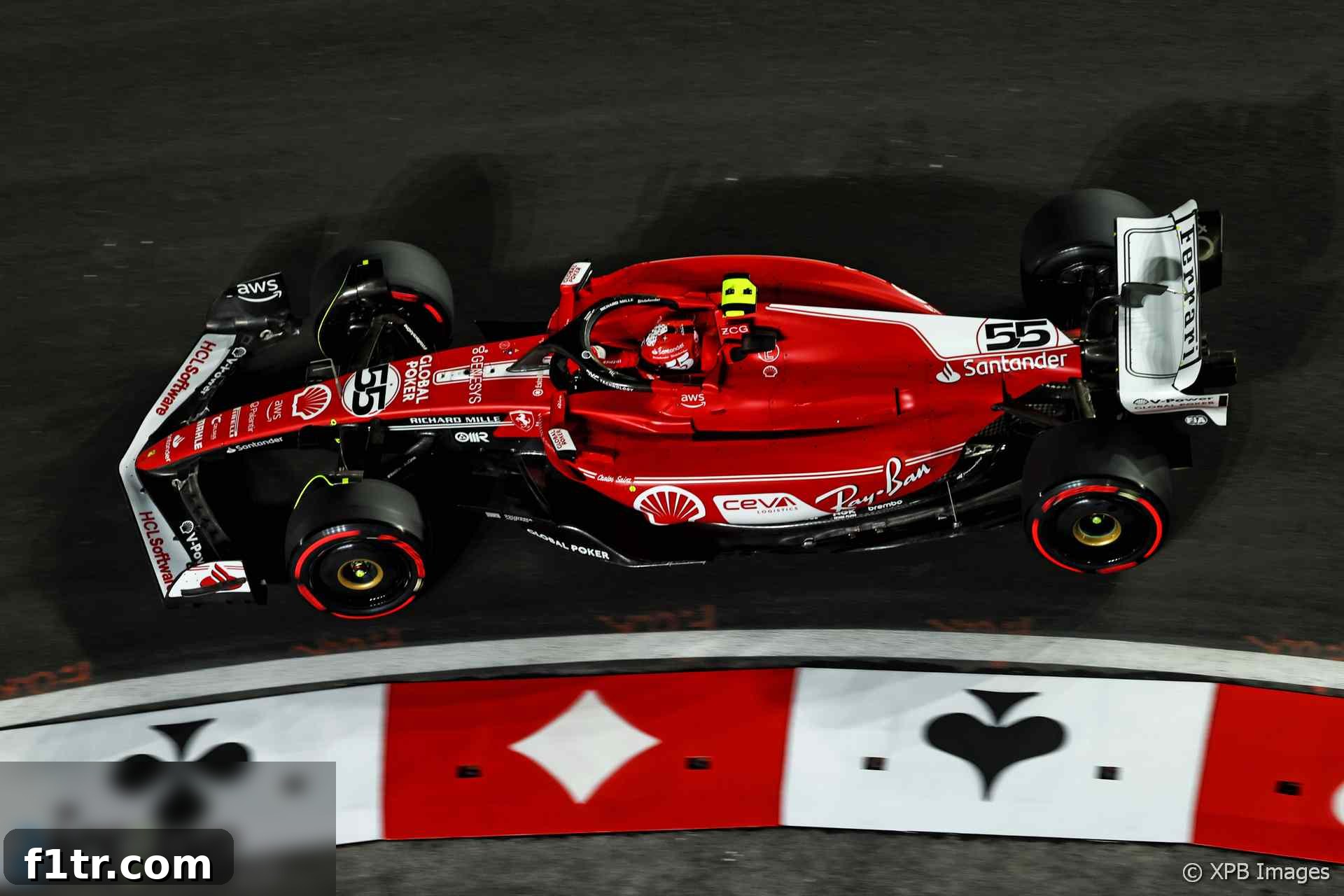
The highly anticipated Formula 1 Las Vegas Grand Prix burst onto the scene with immense fanfare, nearly 600 days and half a billion dollars in the making. Drivers finally unleashed their machines on the iconic Las Vegas Strip Circuit for the very first time in an official capacity. However, the initial excitement of first practice was short-lived, as the session was abruptly halted just eight minutes in, lasting less time than drivers received during an emergency acclimatisation session at the Qatar Grand Prix just a month prior. This unforeseen interruption, caused by a loose manhole cover, cast an early shadow over the spectacular event, raising questions about track readiness and setting a tense tone for the weekend.
Despite the challenging start, the unwavering commitment and tireless efforts of an army of dedicated professionals ensured that second practice eventually commenced. This pivotal session, extended to a crucial 90 minutes, got underway in the early hours of Friday morning, albeit after fans had been told to leave due to safety concerns and logistical complexities. Over this extended period, the entire field covered an impressive combined distance of 5,000 kilometres, gathering an invaluable trove of data around the newest and arguably most glamorous circuit on the F1 calendar. This extensive running was vital for teams and drivers to understand the unique characteristics of the Las Vegas Strip Circuit, providing the first real insights into performance, tyre degradation, and car setup ahead of the inaugural midnight qualifying session.
Unveiling the Las Vegas Strip Circuit: Speed, Temperature, and Grip Dynamics
Ahead of the Las Vegas Grand Prix weekend, there were numerous unknowns surrounding the brand-new street circuit. However, a few key factors were widely anticipated among experts and fans alike: the track was expected to be exceptionally fast, incredibly cold, and notoriously low on grip. The extended second practice session offered the first comprehensive opportunity to validate these predictions and understand the circuit’s true nature.
The initial assessments proved correct regarding speed. The cars truly flew down the long straights of the Strip, with top speeds during the session clocking in at over 340 kilometres per hour. This blistering pace is more than seven times the Strip’s standard 30 mph speed limit, a stark contrast that went unchallenged by the local Las Vegas Metropolitan Police Department, who were no doubt observing the spectacle with keen interest. The high-speed sections, particularly the famous Strip itself, immediately stood out as key performance differentiators and prime overtaking opportunities, demanding both raw power and aerodynamic efficiency.
However, the anticipated bone-chilling temperatures were not quite as severe as many had feared. Ambient temperatures hovered around a relatively mild 14 degrees Celsius in the 2 AM air, while track temperatures remained consistently around 16 degrees. This slight reprieve from the expected arctic conditions was a small but significant mercy for teams and drivers. It allowed them to conduct more direct and meaningful comparisons between different tyre compounds and car setups, understanding precisely how the three Pirelli compounds – soft, medium, and hard – responded to the unique demands of the Las Vegas asphalt. This consistent temperature data was crucial for refining tyre strategies and optimizing car balance for the cool night conditions.
As for grip, the predictions held true: there was indeed very little to be found. While not reaching the extreme difficulty levels experienced by many drivers in their careers or even earlier in the current season, the low grip levels were immediately evident. It came as little surprise when even the reigning world champion, Max Verstappen, voiced complaints about the lack of adhesion over the team radio during his initial laps around the circuit. Verstappen was one of at least 10 drivers recorded running off track at some point during the session. A particularly challenging spot was the tricky left-hander of Turn 12, leading directly onto the iconic Strip. At least six other drivers, including Verstappen, failed to make its apex, having to use the spacious run-off area to correct their cars and regain control. This low grip environment underscored the importance of driver skill and precise car control, particularly on a street circuit with unforgiving barriers looming large.
Team Dynamics and Performance Insights: Ferrari’s Prowess vs. Red Bull’s Long-Run Focus
The extended second practice session provided a fascinating glimpse into the competitive landscape for the Las Vegas Grand Prix, with divergent strategies and impressive individual performances shaping the early narrative. Among the front-runners, the battle between Red Bull and Ferrari immediately captured attention.
The Red Bull duo of Verstappen and Sergio Perez adopted a staggered tyre strategy for their first runs of the extended session, opting for the medium compound before switching to the softer tyres later on. This approach suggested a focus on gathering data across different compounds and potentially prioritizing longer-run performance. In contrast, the Ferraris of Charles Leclerc and Carlos Sainz Jnr began their session running three separate sets of soft tyres, a clear indication of their intent to extract maximum single-lap pace. Remarkably, the fastest times for both Leclerc and Sainz came from their third sets of softs, highlighting the importance of tyre preparation and multiple push laps on this unique surface. Ultimately, Charles Leclerc stole the show, posting the day’s quickest time with a blistering 1’35.265, a phenomenal lap that saw him go half a second quicker than the rest of the field, signaling Ferrari’s strong potential for qualifying.
Leclerc’s post-session comments reflected a cautious optimism: “It looks good for now,” he stated. “We look quite strong for now. It’s difficult to understand exactly where we are in race pace, but in terms of quali pace we seem strong. However, we still have to work on trying to come forward for tomorrow – but it’s a good start.” His words underscored the uncertainty surrounding race pace on a brand-new track, but confirmed Ferrari’s immediate advantage in single-lap performance.
Decoding Leclerc’s Dominance: Tyre Management and Strategic Cornering
Several aspects of Leclerc’s fastest time were particularly eye-opening, especially given the extensive pre-weekend discussions about the challenges of heating up tyres in the cold conditions. Perhaps more intriguing than his ultimate fastest lap was the flying lap that preceded it. Around the same point in the session, Verstappen, Perez, Sainz, and Leclerc all ventured out on fresh soft tyres. While Verstappen, Perez, and Sainz all improved their best times with immediate push laps straight after their out-laps, Leclerc adopted a different approach. He took a second lap to meticulously warm up his new rubber, demonstrating patience and a nuanced understanding of tyre dynamics on the cold track. After executing his push on the third lap out of the pits, Leclerc’s strategy paid dividends. He went quicker than all of them, including gaining a crucial tenth in the opening sector compared to his rivals, showcasing the effectiveness of his extended tyre warm-up process.
This insightful observation about tyre preparation was further supported by Lewis Hamilton. The seven-time world champion abandoned a push lap attempt after a single out-lap, reporting over the radio that his rear tyres were simply not ready. This suggests a pattern emerging on the Las Vegas Strip Circuit: the optimal window for setting the fastest times on fresh soft tyres might not be on the traditional second lap, but rather on the third, requiring drivers to adapt their preparation strategies for maximum performance in qualifying.
Beyond tyre management, Leclerc’s remarkable half-second advantage over his closest rivals was predominantly forged in a specific sequence of corners. He made up the bulk of that crucial time entering the challenging sequence between Turns 7, 8, and 9, which will undoubtedly become known as the ‘Sphere section’ due to its proximity to the iconic Las Vegas Sphere. By braking significantly later and harder into the tricky curved entry of Turn 6, Leclerc managed to carry substantially more speed through Turn 7 and then accelerate out of Turn 8 with superior traction. This aggressive yet precise approach allowed him to gain many tenths of a second on his competition in a relatively short section of the track, showcasing both his driving prowess and potentially Ferrari’s strong front-end grip.
Furthermore, down the extensive Strip straight, Leclerc continued to gain time on Verstappen, benefiting from a notable straight-line speed advantage of approximately 4 kilometres per hour over the Red Bull. Interestingly, Verstappen was observed to be slower down the Strip than his own teammate, Sergio Perez. This discrepancy suggests that Verstappen might have been running a slightly higher downforce wing setup compared to his sister Red Bull, or perhaps was not utilizing his power unit to its full potential during his fastest runs. These subtle differences in setup and engine modes could be critical factors in qualifying and the race.
Leclerc’s impressive pace was closely mirrored by his teammate, Carlos Sainz, who ended the 90-minute session as the closest driver to the quicker Ferrari. Typically, Ferrari would feel significantly emboldened by such a strong showing, especially given their historical strengths in low-downforce configurations at previous rounds like Baku and Monza. The Las Vegas circuit, with its long straights and relatively few high-speed corners, was widely expected to suit the Ferrari package, and the practice results certainly reinforced that expectation.
Sainz’s Unjust Penalty: A Bitter Blow for Ferrari
However, nothing in Formula 1, especially when it concerns Ferrari, ever seems to be straightforward. Frustratingly, Carlos Sainz will be condemned to start Sunday’s Grand Prix—or rather, Saturday’s Grand Prix, given the unique schedule—a full 10 places lower than wherever he qualifies at midnight. This devastating penalty stems from the unfortunate incident in first practice where his car sustained significant damage, including to his battery, after hitting a loose manhole cover. The irony and injustice of the situation are palpable, as neither Sainz nor his team had any realistic control over the incident that necessitated the component change and subsequent penalty.
Sainz’s frustration was evident after practice: “We seem to be on the competitive side this weekend and I’m looking forward to tomorrow,” he said. “On the negative side, we have been given a 10-place penalty for Sunday after the manhole cover damaged, amongst other things, my battery and we had to replace it. I honestly cannot understand it and I think an exemption to the rule should have been considered given what happened, but we’ll have to deal with it.” This penalty is a bitter blow for Ferrari, particularly as they appear to be the sole team capable of offering a genuine challenge to Red Bull thus far in the Las Vegas weekend. It drastically impacts their potential for a strong two-car result, despite their impressive pace.
Midfield and Beyond: McLaren’s Reality Check and Mercedes’ Quiet Progress
While Ferrari led the charge, other top teams faced their own challenges and evaluations. McLaren, who have consistently held the position of Red Bull’s closest challengers at so many rounds since the summer break, did not feature prominently at the very front throughout the session. Lando Norris openly admitted his team was “a long way off where we’ve been the last few weekends, but probably where we expected.” This realistic assessment suggests McLaren understood the unique demands of the Las Vegas circuit might not perfectly suit their current car philosophy, and they may be focusing on optimizing their package for race day rather than single-lap heroics.
Mercedes, meanwhile, expressed a degree of satisfaction with their first two extended practice sessions. However, they acknowledged the need to unlock significantly more speed over a single lap if they harbored aspirations of snatching a top-five grid position for either Lewis Hamilton or George Russell. Their focus likely revolves around refining the car’s balance and finding that crucial extra tenth or two to be competitive with the front-runners in qualifying.
The Stage is Set: Anticipating Midnight Qualifying and Race Day Drama
With the initial practice sessions concluded, the stage is now set for a thrilling inaugural Las Vegas Grand Prix qualifying. While Charles Leclerc and Ferrari showed undeniable single-lap pace, all signs point to Red Bull, and specifically Max Verstappen, focusing very much on their longer-run performance. The world champions’ race pace seemed as robust as ever, hinting at their traditional strength on Sunday despite not topping the Saturday timesheets. Verstappen may not have featured at the very top of the practice times, but his consistent performance and the team’s strategic approach suggest he will be a formidable force when it truly counts.
However, the Las Vegas Strip Circuit is still an unknown quantity, an all-new event yet to reveal all of its secrets. The unique combination of cold temperatures, low grip, and a mixture of long straights with tight street circuit corners makes for an incredibly complex challenge. With track evolution expected to be rapid and tyre performance a delicate balance, only a true gambler would be willing to confidently bet where the chips will fall come the midnight qualifying session. The inaugural Las Vegas Grand Prix promises unpredictability and excitement, ensuring that fans worldwide will be on the edge of their seats as Formula 1 lights up the Strip.
Combined practice times
| P. | # | Driver | Team | FP1 time | FP2 time | Gap | Laps |
|---|---|---|---|---|---|---|---|
| 1 | 16 | Charles Leclerc | Ferrari | 1’40.909 | 1’35.265 | 43 | |
| 2 | 55 | Carlos Sainz Jnr | Ferrari | 1’45.824 | 1’35.782 | 0.517 | 43 |
| 3 | 14 | Fernando Alonso | Aston Martin-Mercedes | No time | 1’35.793 | 0.528 | 40 |
| 4 | 11 | Sergio Perez | Red Bull-Honda RBPT | 1’46.793 | 1’36.085 | 0.820 | 40 |
| 5 | 77 | Valtteri Bottas | Alfa Romeo-Ferrari | 1’47.147 | 1’36.129 | 0.864 | 40 |
| 6 | 1 | Max Verstappen | Red Bull-Honda RBPT | 1’44.397 | 1’36.183 | 0.918 | 41 |
| 7 | 27 | Nico Hulkenberg | Haas-Ferrari | 1’43.446 | 1’36.489 | 1.224 | 37 |
| 8 | 18 | Lance Stroll | Aston Martin-Mercedes | No time | 1’36.496 | 1.231 | 42 |
| 9 | 44 | Lewis Hamilton | Mercedes | 1’48.513 | 1’36.663 | 1.398 | 46 |
| 10 | 23 | Alexander Albon | Williams-Mercedes | No time | 1’36.688 | 1.423 | 44 |
| 11 | 4 | Lando Norris | McLaren-Mercedes | 1’48.947 | 1’36.864 | 1.599 | 36 |
| 12 | 63 | George Russell | Mercedes | 1’45.497 | 1’36.890 | 1.625 | 41 |
| 13 | 20 | Kevin Magnussen | Haas-Ferrari | 1’44.261 | 1’36.917 | 1.652 | 41 |
| 14 | 81 | Oscar Piastri | McLaren-Mercedes | No time | 1’36.987 | 1.722 | 37 |
| 15 | 10 | Pierre Gasly | Alpine-Renault | 1’48.253 | 1’37.134 | 1.869 | 38 |
| 16 | 31 | Esteban Ocon | Alpine-Renault | 1’45.365 | 1’37.241 | 1.976 | 42 |
| 17 | 22 | Yuki Tsunoda | AlphaTauri-Honda RBPT | 1’45.908 | 1’37.412 | 2.147 | 46 |
| 18 | 24 | Zhou Guanyu | Alfa Romeo-Ferrari | 1’48.822 | 1’37.656 | 2.391 | 41 |
| 19 | 3 | Daniel Ricciardo | AlphaTauri-Honda RBPT | 1’48.650 | 1’37.680 | 2.415 | 44 |
| 20 | 2 | Logan Sargeant | Williams-Mercedes | No time | 1’38.140 | 2.875 | 42 |
2023 Las Vegas Grand Prix
- Tost blames track inspection oversight for Sainz’s damage in Las Vegas
- Hard to repeat “rare” combination of factors behind Vegas shunt – Norris
- Las Vegas Grand Prix “got a lot more hate than it deserved” – Sargeant
- Williams’ “incredible” Vegas qualifying made us “poor” in race – Vowles
- Piastri is first rookie to take two fastest laps in a season since Hamilton
Browse all 2023 Las Vegas Grand Prix articles