FIA’s Unyielding Commitment: Elevating Motorsport Safety Standards After Tragic F2 Incident
The motorsport community was plunged into profound sadness following the tragic crash that claimed the life of promising Formula 2 driver Anthoine Hubert. In the wake of this devastating event, Michael Masi, the FIA’s Race Director, unequivocally stated the sport’s governing body’s unwavering dedication to continuously enhancing safety standards. This incident, which unfolded during Saturday’s feature race, served as a stark reminder of the inherent risks in motorsport, even as safety measures have evolved dramatically over decades.
The horrific multi-car collision on the second lap of the feature race at Spa-Francorchamps not only resulted in Hubert’s fatal injuries but also left fellow competitor Juan-Manuel Correa with severe broken legs and a spinal injury. Correa’s condition, though serious, showed signs of improvement, with expectations for him to transition out of intensive care in the following days. The incident sent shockwaves throughout the paddock and beyond, prompting a collective reflection on the relentless pursuit of driver protection.
The Evolution of Safety: A Core Pillar of the FIA
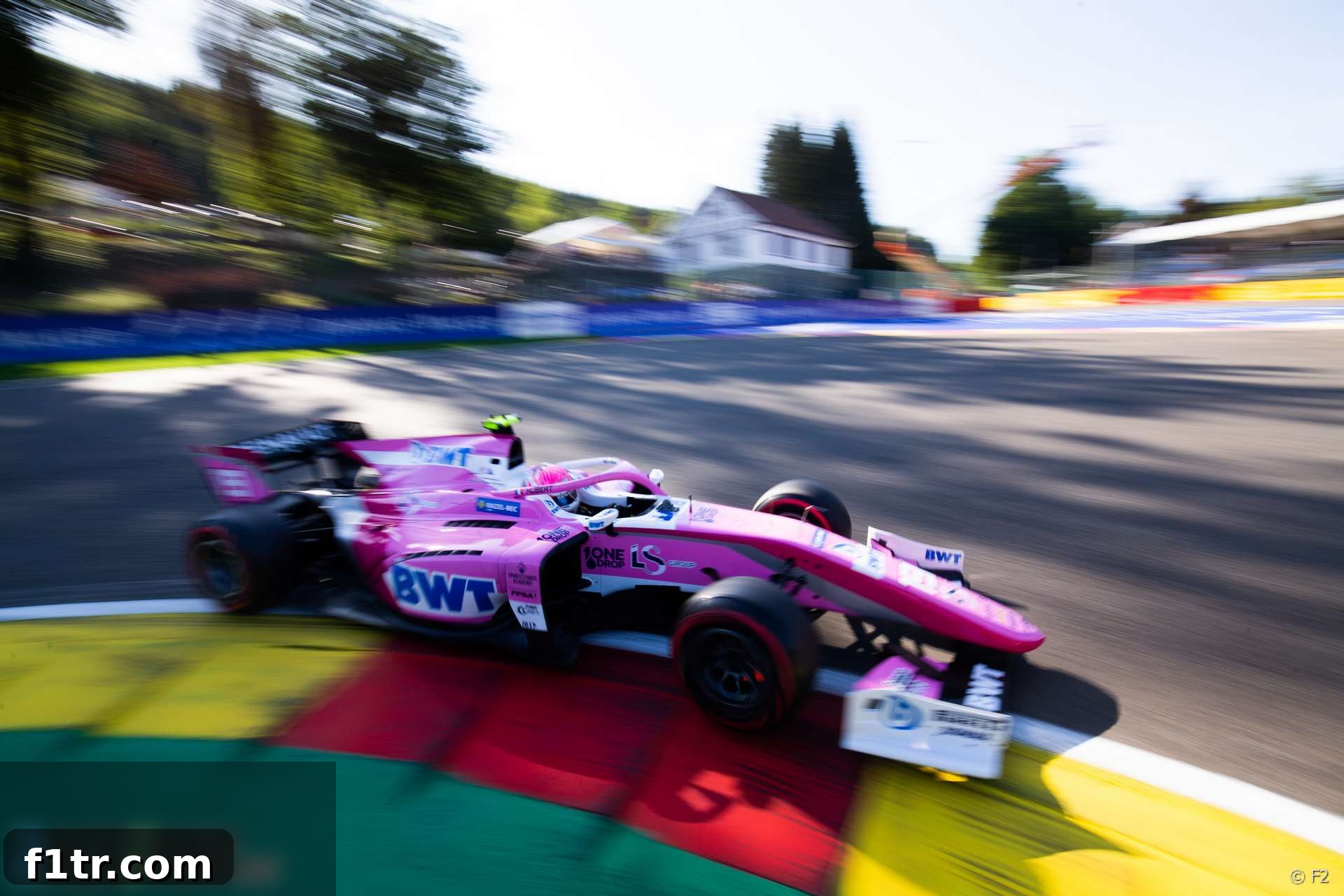
The chassis used in the Formula 2 championship, specifically the Dallara F2 2018 model, is engineered to meet the rigorous safety benchmarks set for Formula 1. A cornerstone of this design is the Halo, the FIA’s most significant recent safety innovation, which was integrated into both F1 and F2 cars last year to provide superior head protection for drivers. Its introduction, initially met with mixed reactions, has since proven its worth in numerous incidents, demonstrating its critical role in mitigating severe injuries.
Immediately following the tragic incident involving Hubert, the FIA launched a comprehensive investigation. Race Director Michael Masi emphasized that the research into safeguarding drivers will never cease. “Safety is ever evolving,” Masi asserted, articulating the FIA’s long-standing philosophy. He elaborated, “Once different technologies become available, different materials become available, safety is an ever evolving process. For me it is something that will never end.”
Masi further underscored the fundamental importance of safety within the FIA’s mandate. “I’ve said it before and I’ll repeat it: Safety is one of the core pillars of the FIA, part of why they exist. That was something that just won’t stop. We’ll continue to research and look at things and improve things as best we can.” This steadfast commitment reflects the organization’s intrinsic role in not only regulating but also continually innovating for the welfare of all participants in motorsport.
Driver Perspectives: Acknowledging the Risks and Praising Progress
In the aftermath of Hubert’s passing, six-time Formula 1 World Champion Lewis Hamilton offered his insights, highlighting a perceived lack of appreciation among some fans and even individuals within the sport regarding the profound dangers inherent in motor racing. Hamilton, a vocal advocate for safety, lauded the extensive efforts made by the FIA to elevate safety standards, specifically acknowledging the instrumental contributions of Masi’s predecessor, the late Charlie Whiting.
“There’s a huge amount of work that the FIA have done up to this point,” Hamilton stated, emphasizing the continuous dedication behind the scenes. “I think they’ve been working incredibly hard and we’ve seen big steps already. Obviously, particularly when Charlie was here he made massive steps forward so we will continue in that direction.” Hamilton’s comments resonate deeply within the sport, acknowledging both the brave strides taken and the somber reality that risks, however minimized, remain an undeniable part of racing.
The sentiment shared by Hamilton echoes throughout the racing community, where drivers, teams, and fans alike understand that while the thrill of speed is captivating, it comes with a profound responsibility to protect those behind the wheel. The drivers themselves are acutely aware of the dangers, yet they continue to push the boundaries of performance, placing immense trust in the ongoing advancements in vehicle safety and track design orchestrated by bodies like the FIA.
The Halo: A Testament to Proactive Safety Innovation
The introduction of the Halo device in 2018 across F1 and F2 championships marked a significant leap in driver head protection. Initially controversial for its aesthetics and perceived impact on visibility, the Halo has unequivocally demonstrated its life-saving potential in multiple high-speed incidents. Designed to withstand tremendous forces, this titanium structure shields the driver’s head from flying debris, tire impacts, and other severe collisions, proving invaluable in scenarios that might have previously resulted in catastrophic injuries.
The decision to implement the Halo was the culmination of years of intensive research and development by the FIA, driven by a deep commitment to learning from every incident and proactively addressing potential vulnerabilities. This process involved extensive simulations, crash testing, and collaboration with teams and drivers. The ongoing refinement of such safety devices, along with continuous improvements to chassis integrity, energy-absorbing structures, and track safety barriers, underscores the multifaceted approach the FIA employs to ensure the safest possible racing environment.
Ongoing Investigations and Future Prospects for Motorsport Safety
The investigation into Anthoine Hubert’s fatal crash is not merely about understanding what happened; it is fundamentally about learning how to prevent similar tragedies in the future. These meticulous inquiries involve scrutinizing every detail: telemetry data, on-board camera footage, track conditions, and car components. The findings from such investigations are crucial for identifying areas where further improvements in car design, safety regulations, and circuit layouts can be made.
The FIA’s commitment extends beyond immediate responses; it encompasses a long-term vision for a safer future in motorsport. This involves fostering innovation in materials science, biomechanics, and impact engineering. From advancements in helmet technology to the development of more resilient chassis and improved trackside safety measures, the pursuit of optimal driver protection is a never-ending journey. The tragic events serve as a poignant reminder that while motorsport has become significantly safer over the decades, the fight to mitigate risks and protect its heroes remains paramount.
The collaborative spirit within the motorsport community — involving engineers, drivers, team principals, and governing bodies — is essential in driving this continuous safety evolution. Every incident, every technological breakthrough, and every shared insight contributes to building a stronger, safer foundation for the sport. The legacy of Anthoine Hubert, and the dedication of figures like Michael Masi and Charlie Whiting, will undoubtedly continue to inspire relentless progress in motorsport safety for generations to come.
Become a RaceFans supporter andgo ad-free
Related Articles: 2019 F1 Season Insights
- Crying in the Melbourne car park at 2019 grand prix was my career low – Ocon
- McLaren Racing reports reduced £71 million loss in 2019
- Kvyat: Hockenheim podium last year was “my biggest achievement” so far
- How the FIA’s new encrypted fuel flow meter targets Ferrari’s suspected ‘aliasing’ trick
- “He smashed my office door”: 23 must-see moments from ‘Drive to Survive’ season two
Browse all 2019 F1 season articles