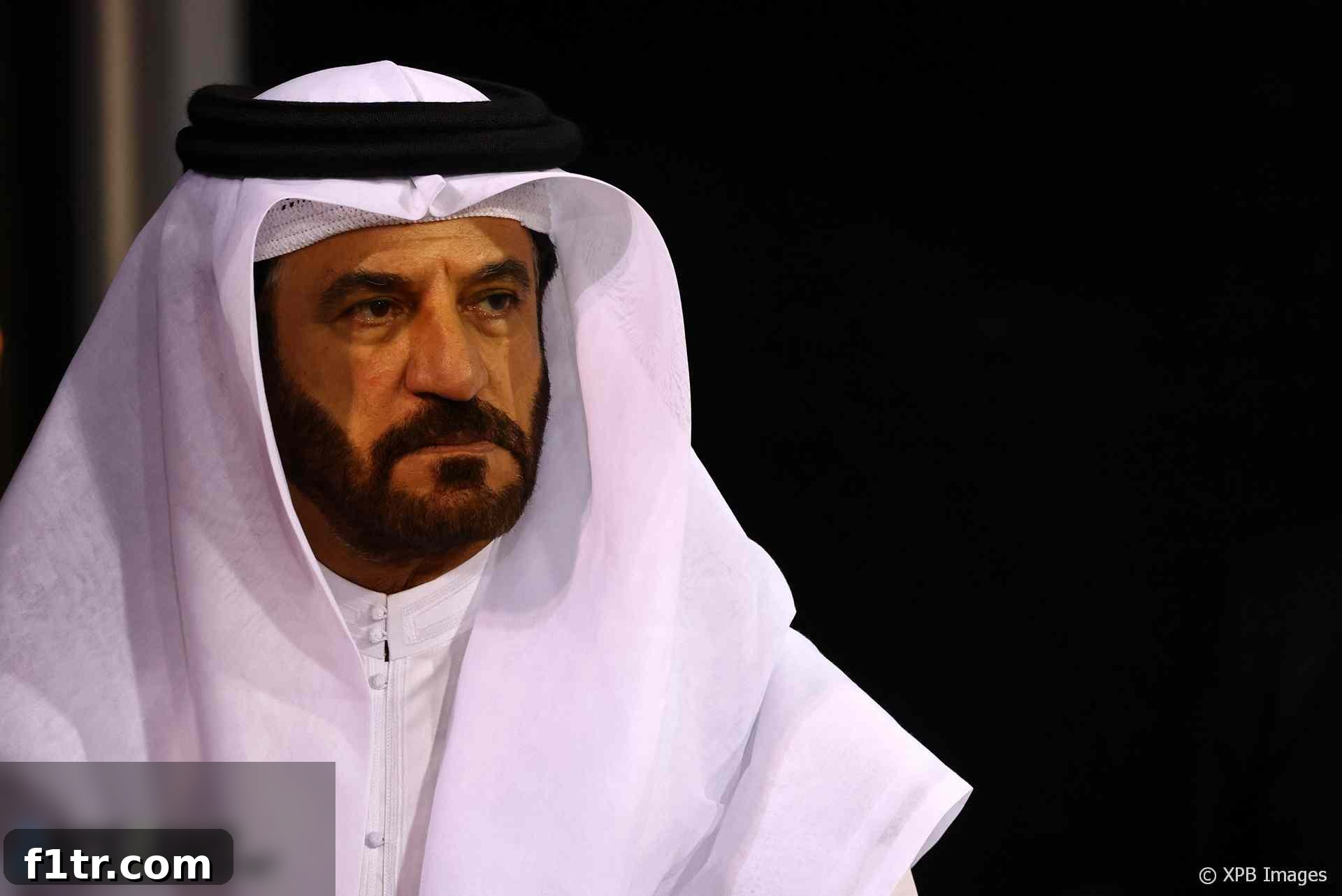
FIA President Mohammed Ben Sulayem Faces Investigation Over Alleged F1 Penalty Interference
The integrity of motorsport’s global governing body, the Fédération Internationale de l’Automobile (FIA), has been thrust into the spotlight following reports that its President, Mohammed Ben Sulayem, is under formal investigation. The serious allegations concern his purported interference in a crucial penalty decision during the 2023 Formula 1 Saudi Arabian Grand Prix, potentially undermining the impartiality and authority of the sport’s judicial processes.
According to comprehensive reports, Ben Sulayem is alleged to have attempted to overturn a post-race penalty imposed on Aston Martin driver Fernando Alonso. This claim, if proven, would represent a significant breach of the FIA’s operational protocols and a direct challenge to the independence of race stewards, who are fundamental to maintaining fair competition within Formula 1.
The core of the investigation stems from a detailed report submitted by Paolo Basarri, the FIA’s compliance officer, to the organization’s ethics committee. Basarri’s report reportedly outlines claims made by a whistleblower, indicating direct pressure from the FIA President to reverse the penalty against Alonso. The involvement of the ethics committee underscores the severe nature of these allegations, initiating a formal process to examine the conduct of the FIA’s highest office holder.
The incident in question occurred at the 2023 Saudi Arabian Grand Prix, where Fernando Alonso was initially issued a ten-second time penalty. This additional penalty was levied because stewards deemed he had failed to correctly serve an earlier five-second time penalty. Specifically, the stewards noted that an Aston Martin team member had made contact with Alonso’s car using a jack while the initial five-second penalty was being served in the pit lane. The precise interpretation of what constitutes “working on the car” during a pit stop penalty has historically been a grey area, often leading to contentious discussions and varied applications of the rules.
Following this decision, the Aston Martin team, with remarkable alacrity, successfully petitioned the stewards to review and ultimately overturn their original ruling. Their compelling case involved presenting evidence of previous instances where other teams had touched cars with jacks under similar penalty-serving circumstances without incurring further penalties. This demonstration of inconsistent application of the rules by the stewards themselves proved pivotal in Aston Martin’s appeal.
Upon reviewing the evidence, the stewards conceded that there was indeed no “clear agreement” or universally understood guideline regarding whether a jack touching a car should unequivocally be considered “working on the car.” This lack of clarity, which had been previously suggested to the stewards but not definitively resolved, prevented them from relying on a consistent precedent. Consequently, in the spirit of fairness and consistent rule application, the stewards concluded that their original decision to impose the penalty on Car 14 (Fernando Alonso) needed to be reversed, and they acted accordingly, reinstating Alonso’s third-place finish.
While the stewards’ reversal brought a resolution to that specific sporting dispute, the alleged involvement of the FIA President in influencing this decision introduces a far graver concern. Such interference, if substantiated, would call into question the entire governance structure and the impartiality that the FIA strives to uphold. The FIA has been formally approached for comment on the unfolding investigation, indicating the seriousness with which these claims are being addressed by external parties and the media.
Under Mohammed Ben Sulayem’s presidency, which began in December 2021, the FIA has publicly championed significant efforts to enhance and streamline its decision-making processes during Grand Prix weekends. These reforms were largely initiated in response to the highly controversial conclusion of the 2021 Formula 1 World Championship, a pivotal event that occurred just four days prior to Ben Sulayem’s election. That season finale saw the FIA’s then-Formula 1 race director incorrectly apply safety car rules, leading to a final-lap restart that dramatically influenced the outcome of the title fight, sparking widespread criticism and a crisis of confidence in the sport’s governance.
In the wake of this contentious episode, Ben Sulayem’s administration introduced several key structural and procedural reforms aimed at preventing similar controversies. A new race director was appointed to oversee Formula 1 events, signaling a fresh approach to race management. Additionally, a dedicated team of staff was hired to provide extensive support to the race director, thereby reducing the immense burden on a single individual and ensuring a more robust decision-making framework. The FIA also meticulously revised its sporting regulations and formulated clearer driving guidelines to provide teams and drivers with unambiguous rules of engagement.
Furthermore, a groundbreaking Remote Operations Centre (ROC) was established, designed to function as an additional layer of support for the officials on-site at races. The ROC leverages advanced technology and a team of experts to analyze race data, monitor incidents, and provide real-time guidance, aiming to ensure greater consistency and accuracy in stewarding decisions. These wide-ranging reforms were specifically designed to foster an environment of transparency, fairness, and consistent application of the rules, thereby restoring faith in the FIA’s ability to govern the pinnacle of motorsport effectively.
The current investigation into President Ben Sulayem’s alleged conduct directly challenges the very principles these reforms were intended to uphold. The credibility of the FIA as an impartial regulator of motorsport relies heavily on the perceived independence of its officials and decision-making bodies. Any hint of executive interference in sporting judgments can severely erode this trust, not only among teams and drivers but also with the global fanbase. The outcome of this ethics committee investigation will, therefore, be crucial for the future leadership of the FIA and the enduring perception of fairness within Formula 1.
This evolving situation highlights the delicate balance between administrative leadership and the independent application of sporting regulations. As the investigation progresses, the motorsport world will be keenly watching for a transparent and definitive resolution. The FIA’s ability to thoroughly and impartially investigate allegations against its own president will serve as a critical test of its commitment to good governance and its foundational role in motorsport.
2024 Saudi Arabian Grand Prix – Further Reading
- Bearman’s 2024 Jeddah debut performance makes him ‘feel like an absolute idiot’
- Vowles being patient with Sargeant but expects to see “progress”
- “So I’ve got nothing to worry about?” – The best unheard team radio from Jeddah
- “Shock” of poor start to season showed need for change at Alpine – Famin
- “My tyres are dying”: Stroll’s short-lived struggle until he hit the wall
Browse all 2024 Saudi Arabian Grand Prix articles